
TL;DR:
- Strategic event communication boosts employee engagement, reinforces culture, and makes gatherings memorable.
- Using targeted channels, timely messaging, and inclusive language enhances participation and emotional impact.
- Incorporating storytelling and peer involvement creates lasting cultural value beyond logistics.
Most HR teams treat event communication as a checklist item: send the invite, book the room, done. But that approach leaves enormous value on the table. Strategic event communication is one of the most underused levers for driving employee engagement, reinforcing culture, and making people feel genuinely seen. When you shift from broadcasting logistics to crafting purposeful messages, ordinary gatherings become moments employees actually remember. This guide breaks down the frameworks, channels, message design principles, and measurement tools that turn your next company event into a real cultural win.
Table of Contents
- Why effective communication elevates company events
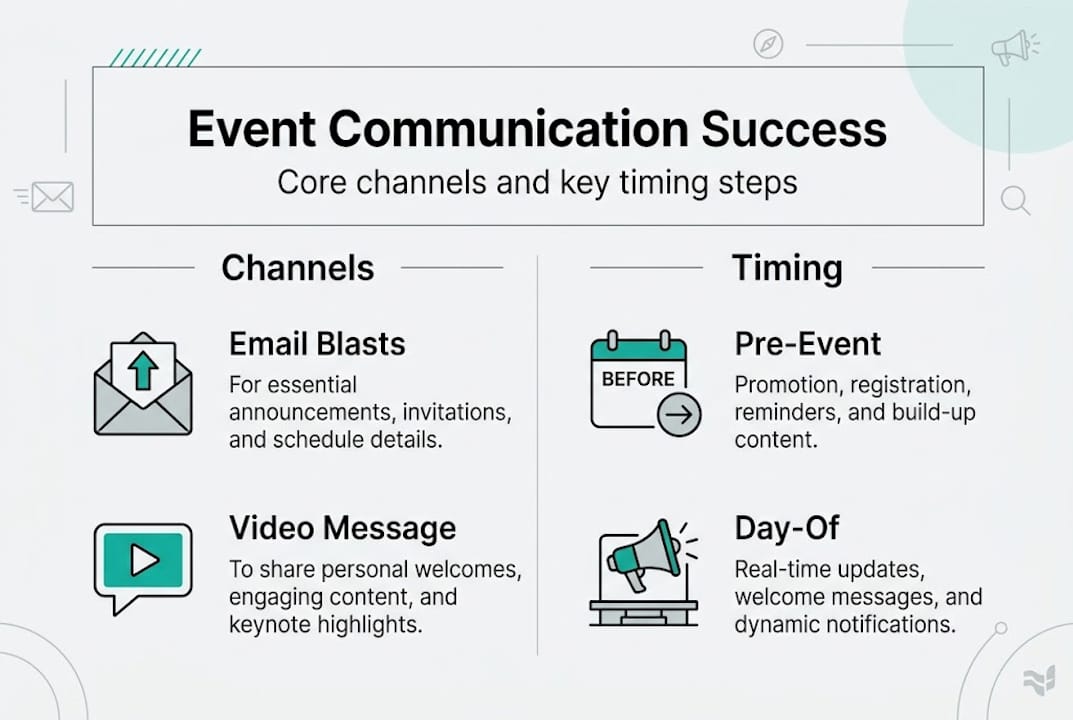
- Core frameworks: Communication channels and timing for maximum impact
- Designing inclusive and motivational messages
- Measuring and refining your event communication strategy
- A fresh perspective: Why memorable events depend on emotional storytelling, not just logistics
- Power up your next event with a celebration and recognition platform
- Frequently asked questions
Key Takeaways
| Point | Details |
|---|---|
| Strategic communication matters | Well-planned communication turns events into engagement-building opportunities for your team. |
| Multiple channels boost results | Mixing digital, in-person, and video communication increases participation and recognition. |
| Storytelling drives motivation | Involving employees in storytelling or videos during events enhances emotional impact and morale. |
| Continuous improvement | Measuring employee feedback and event outcomes helps refine communication strategies over time. |
Why effective communication elevates company events
There is a difference between announcing an event and communicating about it. An announcement says "there is a party Friday at noon." Strategic event communication builds anticipation, explains why the event matters, and connects it to something employees care about. That distinction is not minor. It is the gap between a room that fills up enthusiastically and one that people attend out of obligation.
For HR leaders, events serve multiple goals at once: they recognize contributions, reinforce shared values, and give people a reason to feel proud of where they work. When communication is treated as an afterthought, those goals go unmet. When it is treated as a strategic layer, the results are measurable.
"Recognition and milestone celebrations embedded in events enhance morale and strengthen organizational culture in ways that standard performance programs rarely achieve."
This matters especially in hybrid and distributed teams, where employees can easily feel disconnected from the broader organization. A well-communicated event signals that leadership pays attention, that people's contributions are noticed, and that belonging is not just a talking point.
Here is what strategic communication actually does for your events:
- Builds anticipation before the event, increasing voluntary participation
- Frames the purpose so employees understand why they are being celebrated
- Amplifies recognition by naming contributions publicly and specifically
- Extends the impact through post-event storytelling and follow-up
- Strengthens culture by connecting events to company values and team identity
You can read more about this in our event engagement guide and explore practical ways to boost team culture through structured event planning.
The research backs this up. Incorporating recognition into event design is consistently linked to higher morale and stronger cultural cohesion. The mechanism is simple: people who feel seen at work are more engaged, and events are one of the most visible ways to make that happen.
Core frameworks: Communication channels and timing for maximum impact
Knowing why communication matters is one thing. Knowing which channels to use and when is where strategy gets real. Not every message belongs in every channel, and timing your communication poorly can undermine even the best event concept.
Here is a side-by-side look at how different channels perform for event communication:
| Channel | Best use case | Engagement outcome |
|---|---|---|
| Bulk email | Logistics and reminders | Low emotional impact, high reach |
| Team meetings | Announcements and Q&A | Moderate energy, personal touch |
| Personal invites | Key contributors and honorees | High impact, strong recognition signal |
| Leadership videos | Major milestones and awards | Highest emotional resonance |
| Peer storytelling | Culture moments and team wins | Deep belonging and morale boost |
Timing is just as important as channel selection. Think in three phases:
- Pre-event: Build anticipation two to three weeks out. Share the purpose, not just the logistics. Tease the recognition moments. Let people know their peers will be celebrated.
- During the event: Use live communication to keep energy high. Shoutouts, real-time polls, and peer nominations keep people engaged rather than passive.
- Post-event: This is where most HR teams drop the ball. A recap message, a photo gallery, or a short video summary extends the emotional impact for days. It also reaches people who could not attend.
Pro Tip: For major milestones like work anniversaries, promotions, or team achievements, a short video message from a senior leader or a peer who worked closely with the honoree will outperform any written announcement. Leadership videos and award ceremonies consistently rank among the highest-impact recognition tools available to HR teams.
For teams managing multiple events across departments, having dedicated celebration management tools makes a real difference in keeping communication consistent and timely without burning out your HR staff.
Designing inclusive and motivational messages
Selecting the right channel is only part of the equation. How messages are worded matters just as much. An event invitation that speaks only to in-office employees, or a recognition message that uses language unfamiliar to international team members, sends an unintended signal about who belongs and who does not.
Inclusive event messaging starts with a few core principles:
- Write for your whole audience. If you have remote, hybrid, and in-person staff, your message should acknowledge all three groups explicitly.
- Recognize diverse contributions. Not everyone contributes in the same visible way. Highlight behind-the-scenes work, cross-functional support, and long-term consistency, not just big wins.
- Acknowledge cultural milestones. Birthdays, work anniversaries, and life events carry different weight in different cultures. When in doubt, ask rather than assume.
- Use plain, warm language. Corporate jargon creates distance. Simple, direct language builds connection.
- Avoid one-size-fits-all scripts. A message to a 10-year veteran should feel different from one to a new hire celebrating their first quarter.
Common mistakes HR teams make include writing messages that are too generic ("Thanks for everything you do!"), focusing only on outcomes rather than people, and forgetting to invite employees to participate in the celebration itself rather than just attend it.

Milestone celebrations with employee involvement consistently show higher engagement than top-down recognition events. When employees help shape the celebration, they feel ownership over the culture it represents.
Pro Tip: Before finalizing any event messaging, run it by a small cross-functional group. Ask them: does this feel like it is talking to you? Their answers will catch blind spots faster than any internal review.
For teams looking to streamline this process, group celebration coordination tools can help gather input without creating more meetings. You can also explore different types of celebration events to match your message style to the right format.
Measuring and refining your event communication strategy
Delivering great messages is an ongoing practice. Measuring how well your communication lands lets you improve every cycle instead of repeating the same approach and hoping for better results.
Start with the feedback channels you already have access to:
- Pulse surveys: A three-question survey sent 24 to 48 hours after an event captures fresh impressions. Ask about clarity of communication, sense of recognition, and likelihood to attend future events.
- Suggestion boxes: A standing anonymous channel lets employees share thoughts between events, not just in the heat of the moment.
- Informal follow-ups: Managers checking in with their teams after events often surface the most honest feedback. Equip them with two or three simple questions to ask.
Here is a simple framework for the metrics that matter most:
| Metric | When to measure | What it tells you |
|---|---|---|
| Participation rate | Day of event | Reach and appeal of communication |
| Pre-event RSVPs | One week before | Effectiveness of anticipation-building |
| Sentiment score | 24 hours post-event | Emotional impact of messaging |
| Follow-on engagement | One week post-event | Whether the message had lasting effect |
| Manager-reported morale | Two weeks post-event | Cultural impact on team level |
Employee involvement and feedback are not just nice to have. They are the mechanism by which your event strategy gets smarter over time.
A simple three-step refinement process:
- Collect: Gather data from surveys, attendance records, and informal conversations within one week of the event.
- Analyze: Identify one thing that worked well and one thing that fell flat. Focus on patterns across multiple events, not single data points.
- Adjust: Make one specific change to your next event's communication plan based on what you learned. Document it so the improvement compounds.
For a full breakdown of how to structure this process, our celebration planning steps guide walks through each phase in detail.
A fresh perspective: Why memorable events depend on emotional storytelling, not just logistics
Here is what most event planning guides will not tell you: a perfectly executed event with no emotional core is forgettable within a week. We have seen HR teams spend months on catering, venue, and scheduling, only to produce an event that employees describe as "fine." Fine does not build culture. Fine does not make people feel proud to work somewhere.
The events people remember are the ones where someone told a true story, where a peer stood up and said something real about a colleague, or where a leader admitted that a particular team's work genuinely changed the company's direction. That is what storytelling videos and peer involvement actually do. They create the emotional anchor that makes everything else stick.
Procedural checklists are necessary but not sufficient. Our practical advice: build at least one peer-led or story-based moment into every major event. It does not need to be elaborate. A two-minute video from a teammate, a handwritten note read aloud, a specific memory shared by a manager. These moments cost almost nothing and return enormous cultural value. Explore more ideas in our team celebration strategies resource.
Power up your next event with a celebration and recognition platform
If these strategies resonate, the next challenge is execution. Coordinating messages, collecting contributions, managing wishlists, and keeping celebrations a surprise while involving the whole team is genuinely hard to do with email threads and spreadsheets.
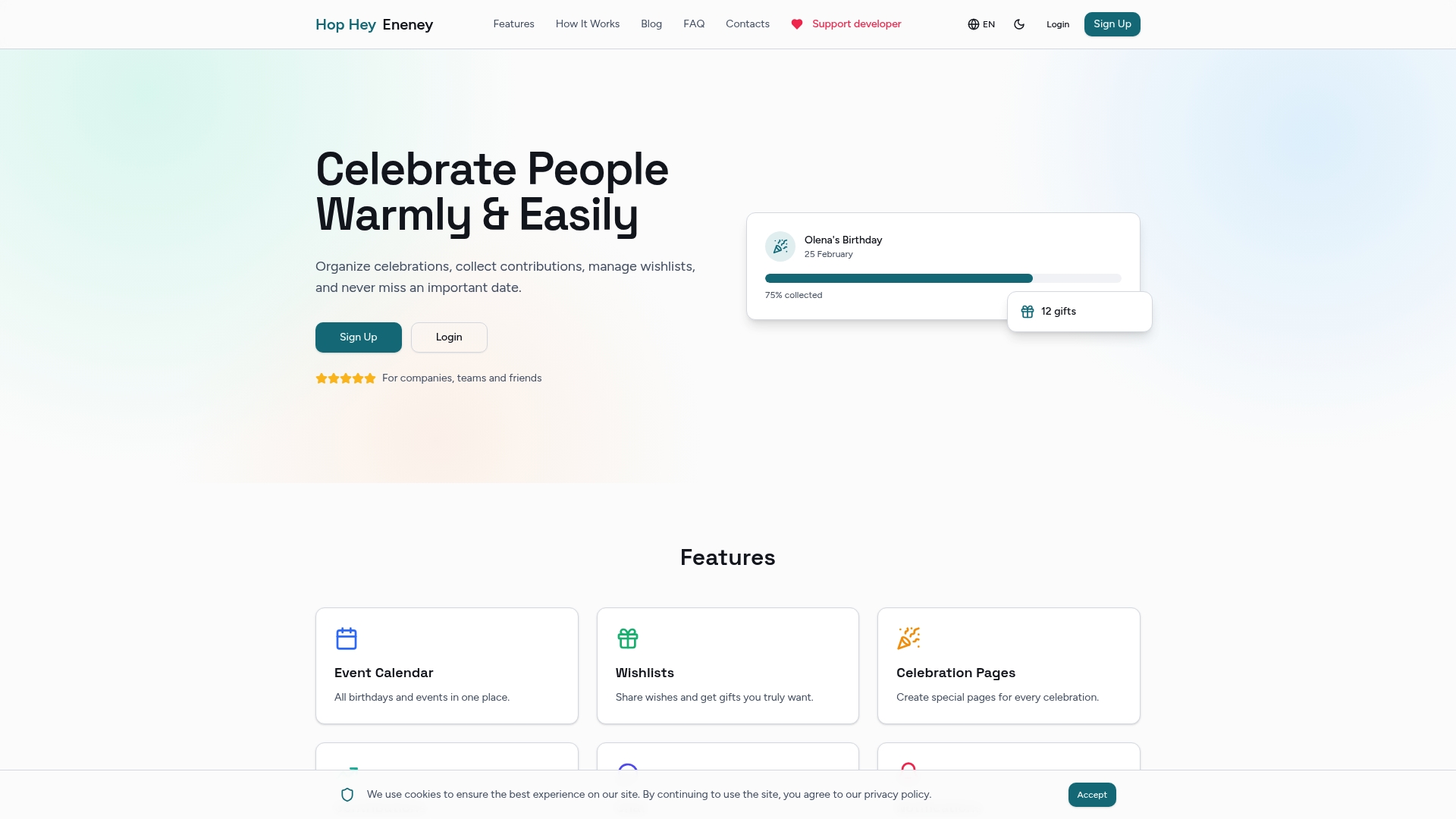
That is exactly what Hop Hey recognition platform was built for. Hop Hey Eneney gives HR teams a single place to create private celebration pages, coordinate gift contributions transparently, send automated reminders via email and Telegram, and manage events across multiple teams without losing track of anything. Whether you are planning a quarterly team celebration or a surprise milestone recognition, the platform removes the coordination chaos so you can focus on making the moment meaningful.
Frequently asked questions
What are the most effective communication channels for company events?
The best approach combines email for logistics, in-person meetings for energy and Q&A, and leadership videos for recognition moments. Leadership videos and award ceremonies consistently deliver the highest emotional impact for milestone events.
How can HR measure event communication success?
Track participation rates, pre-event RSVPs, and post-event sentiment scores using pulse surveys. Employee involvement and feedback gathered within 48 hours of an event give you the clearest picture of what landed.
What role does storytelling play in event communication?
Storytelling creates the emotional anchor that makes events memorable beyond the day itself. Storytelling videos and peer involvement amplify recognition in ways that generic announcements simply cannot match.
How can event messages be made more inclusive?
Use plain language, acknowledge contributions from all employee groups, and involve diverse voices in shaping the message. Milestone celebrations with employee involvement consistently outperform top-down recognition in engagement and belonging scores.