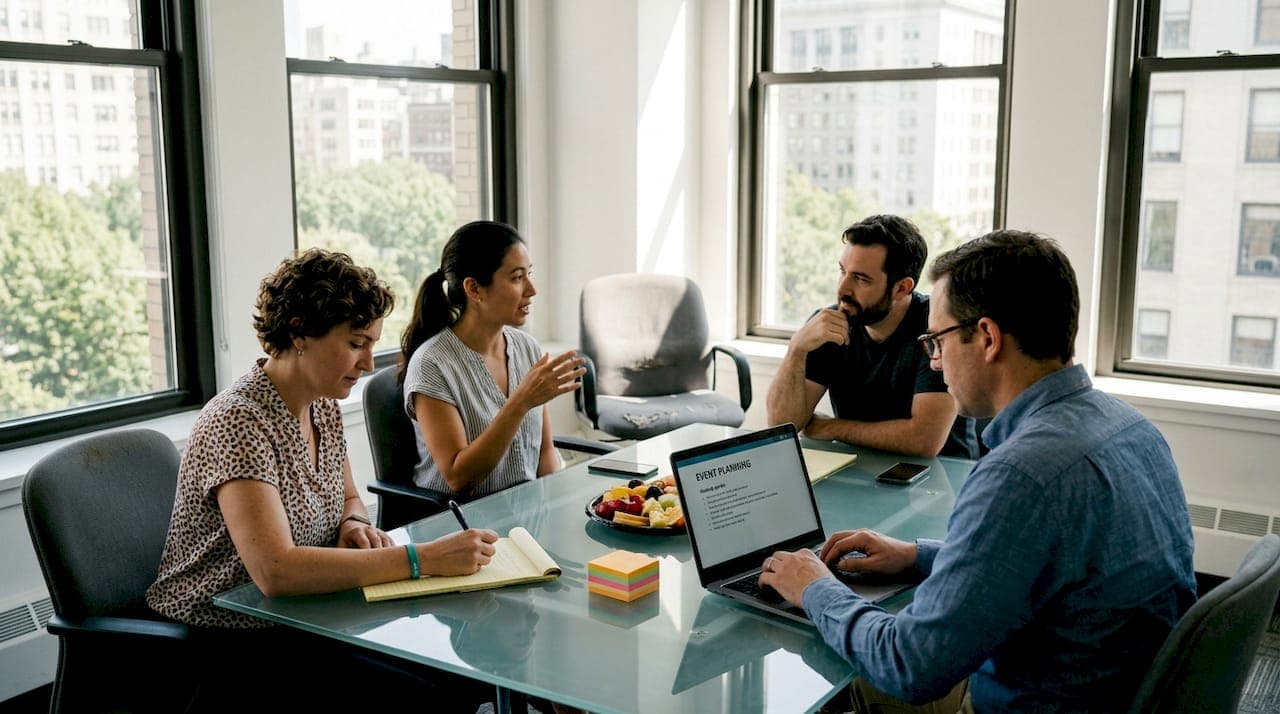
Organizing office events that genuinely strengthen team culture and collaboration can feel overwhelming for HR managers and team leaders. Between juggling budgets, coordinating schedules, and ensuring meaningful engagement, many events fall flat despite good intentions. This guide walks you through a structured approach to planning and executing office events that employees actually enjoy and that measurably improve workplace relationships. You’ll learn how to overcome common obstacles, prepare effectively, execute engaging activities, and measure real impact on your team culture. Whether you’re planning your first company gathering or refining your approach, these proven strategies will help you create memorable experiences that bring your team closer together.
Table of Contents
Key Takeaways
| Point | Details |
|---|---|
| Intentional planning | Successful office events start with clear objectives and deliberate preparation aligned to culture. |
| Three outcomes guide planning | Define three specific cultural outcomes before planning to guide decisions and measurement. |
| Budget planning early | Gather cost estimates for venues, catering, entertainment, and supplies and set aside a contingency of ten to fifteen percent. |
| Team input boosts engagement | Survey employees about timing, activities, and food to boost relevance and buy in. |
Understanding the challenges of organizing office events
Many HR managers and team leaders struggle with organizing a birthday at work and other office celebrations because engagement often disappoints. Common challenges include lack of engagement, budget constraints, and logistical issues that derail even well-intentioned plans. Without connecting events to genuine team interests, attendance becomes obligatory rather than enthusiastic, and the cultural benefits you’re seeking never materialize.
Budget limitations create another significant barrier. You want to provide memorable experiences without overspending, but finding that balance requires creativity and strategic resource allocation. When financial constraints force you to cut corners, the event quality suffers, and employees notice the lack of investment in their experience.
Coordination complexities multiply quickly. You’re managing venue availability, dietary restrictions, scheduling conflicts across departments, and vendor communications simultaneously. One missed detail can cascade into larger problems that distract from the event’s purpose. The administrative burden often discourages teams from organizing events frequently enough to maintain cultural momentum.
Perhaps most critically, events without clear objectives become social gatherings that consume time and resources without delivering measurable value. When you can’t articulate why you’re hosting an event beyond “team building,” you can’t design activities that genuinely strengthen relationships or align with company values. This vagueness leads to generic experiences that employees forget within days.
Pro Tip: Before planning any office event, write down three specific cultural outcomes you want to achieve, such as improving cross-department collaboration or recognizing recent achievements. This clarity will guide every subsequent decision.
Preparing for successful office events: what you need to know
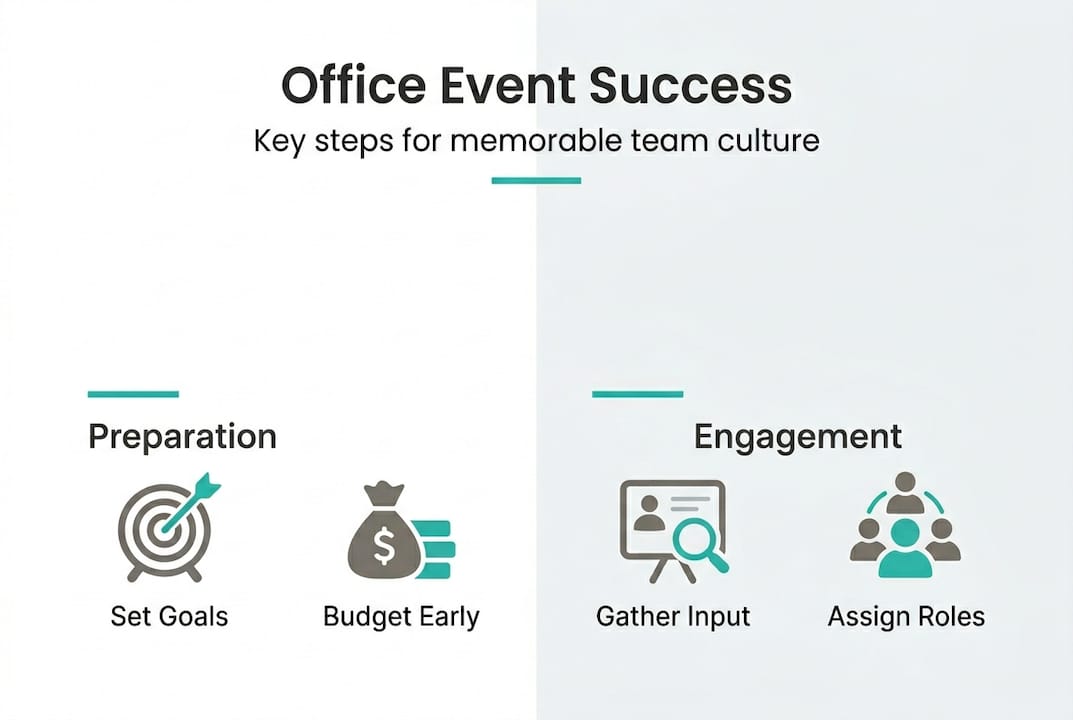
Effective preparation separates memorable office events from forgettable ones. Start by identifying event goals that align directly with your company culture and current team needs. Are you celebrating achievements, improving interdepartmental relationships, or simply providing stress relief? Your objectives should be specific enough to guide activity selection and measure success afterward.
Budget planning requires early attention. Collect cost estimates for venues, catering, entertainment, and supplies before committing to an event scope. Building a detailed budget prevents mid-planning surprises and helps you make informed tradeoffs. Consider allocating 10 to 15 percent as a contingency buffer for unexpected expenses or last-minute adjustments.
Gathering team input ensures event relevance and boosts participation significantly. Survey employees about their preferences for timing, activities, and food options. This input not only improves the event experience but also increases buy-in because team members feel heard. A simple anonymous survey can reveal preferences you might never have anticipated.
| Preparation element | Timeline | Key considerations |
|---|---|---|
| Define objectives | 6-8 weeks before | Align with company values and current team needs |
| Budget approval | 5-6 weeks before | Include contingency fund of 10-15% |
| Team preference survey | 4-5 weeks before | Keep anonymous to encourage honest feedback |
| Venue and vendor booking | 3-4 weeks before | Confirm dietary accommodations and accessibility |
| Communication plan | 2-3 weeks before | Multiple channels and reminders |
Venue and date selection deserve careful thought. Choose locations accessible to all team members, including those with mobility considerations. Check for scheduling conflicts with major deadlines, holidays, or other company events. Weekday afternoons often work better than after-hours events because they demonstrate that the company values employee time and doesn’t expect unpaid social participation.
Using a team celebration platform or project management tool streamlines task coordination. Assign specific responsibilities to team members, set deadlines, and track progress transparently. Digital tools prevent important details from falling through the cracks and make it easier to delegate effectively.
Pro Tip: Create a reusable event planning checklist that captures lessons learned from each event. This living document becomes increasingly valuable as you refine your approach over time.
Step-by-step guide to executing engaging office events
Executing a successful office event requires systematic attention to detail and flexibility to adapt as circumstances change. Follow these steps to ensure smooth implementation:
-
Create a detailed timeline with assigned roles. Break down every task from setup to cleanup, assigning specific team members to each responsibility. Include buffer time between activities to accommodate delays without derailing the schedule. Clear ownership prevents confusion and ensures accountability.
-
Communicate event details effectively. Send initial invitations three weeks ahead, followed by reminders at two weeks, one week, and two days before. Use multiple channels like email, team chat, and calendar invites to reach everyone. Include all essential information: location, timing, parking instructions, dress code, and what to bring.
-
Incorporate interactive and inclusive activities. Design activities that accommodate different personality types and physical abilities. Mix structured group activities with informal socializing time. Avoid competitions that create winners and losers, focusing instead on collaborative challenges that build connections. Clear communication and inclusive activities increase event engagement substantially.
-
Prepare for contingencies. Identify potential problems like weather issues for outdoor events, technology failures for presentations, or dietary restrictions you missed. Have backup plans ready and communicate them to your coordination team. Bring extra supplies like phone chargers, first aid items, and dietary alternatives.
-
Capture feedback during and after the event. Observe participation levels and energy throughout the event. Take notes on what works well and what falls flat. Within 48 hours, send a brief feedback survey while the experience remains fresh in participants’ minds.
Pro Tip: Designate a “culture champion” whose sole responsibility is observing interactions and noting moments of genuine connection. Their insights often reveal the event’s real impact beyond surface-level metrics.
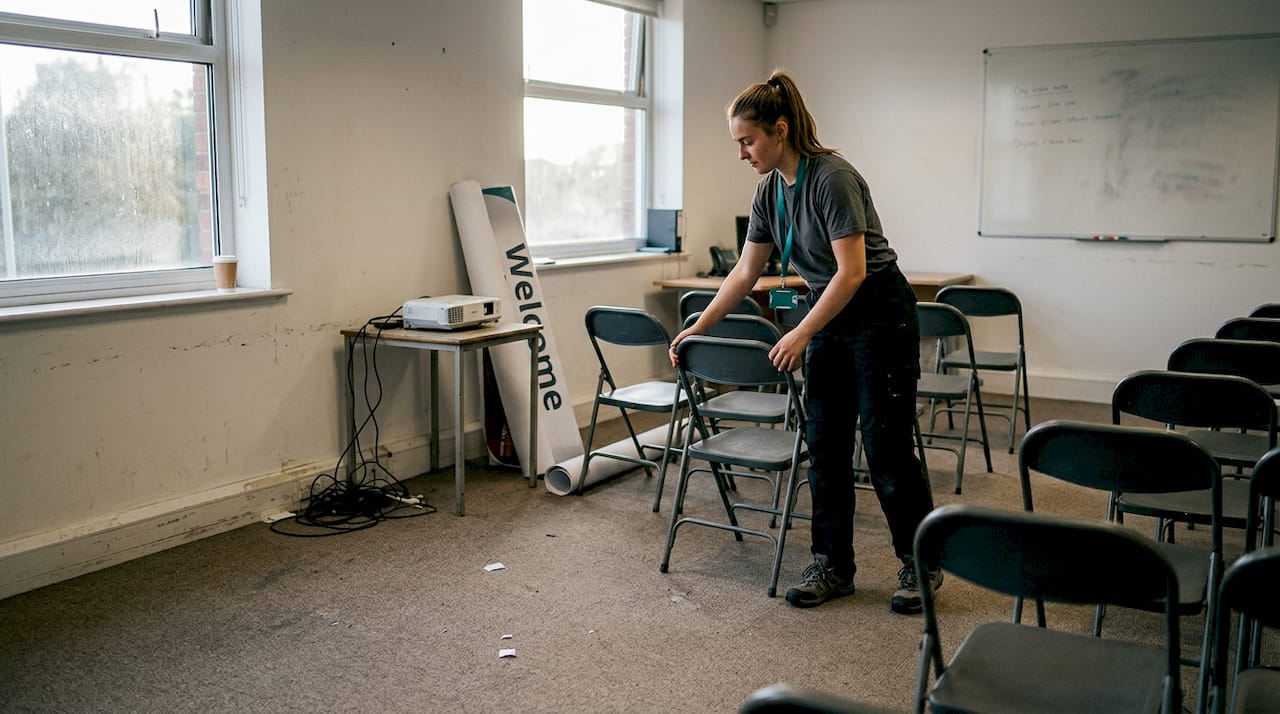
The setup phase deserves special attention. Arrive early enough to test technology, arrange seating to encourage mixing, and create welcoming signage. First impressions matter, and a well-prepared space communicates that you value attendees’ time and experience.
During the event, remain visible and approachable while allowing natural interactions to unfold. Resist the urge to over-program every minute. Some of the most valuable relationship building happens during unstructured conversation time. Monitor energy levels and be willing to adjust the schedule if activities run long or interest wanes.
Documentation serves multiple purposes. Capture photos and videos (with permission) that you can share afterward to extend the positive feelings. These materials also provide content for internal communications and recruiting efforts, showcasing your company culture authentically.
Measuring success and learning from office events
Verifying event effectiveness requires both quantitative metrics and qualitative feedback. Start by collecting participant feedback through surveys that ask specific questions about what worked, what didn’t, and how the event impacted their feelings about the team and company. Keep surveys brief, focusing on 5 to 7 targeted questions that provide actionable insights.
Attendance and engagement levels offer important data points. Compare actual attendance to RSVPs, noting any patterns in who participated versus who declined. During the event, track participation in activities, noting which generated enthusiasm and which fell flat. These observations inform future planning decisions.
Post-event surveys and participation data are key indicators of success that help you refine your approach. Ask employees to rate how the event affected their connection to colleagues, understanding of company values, and overall job satisfaction. These metrics directly measure cultural impact rather than just event enjoyment.
| Success metric | Measurement method | Target benchmark |
|---|---|---|
| Participation rate | Attendees divided by invitations | 75% or higher |
| Activity engagement | Observation and photos | 80% actively participating |
| Feedback score | Post-event survey rating | 4.0 or higher out of 5.0 |
| Cultural impact | Follow-up survey after 2 weeks | 60% report improved team connections |
| Return on investment | Cost per attendee vs. engagement | Under $50 per person for high engagement |
Alignment with event goals provides the most meaningful success measure. Review the specific objectives you defined during preparation and honestly assess whether you achieved them. If your goal was improving cross-department collaboration, did employees from different teams interact meaningfully? If you aimed to recognize achievements, did team members feel genuinely appreciated?
Identifying lessons learned creates continuous improvement. Schedule a debrief meeting with your planning team within one week of the event. Discuss what surprised you, what you’d change, and what you’ll definitely repeat. Document these insights in your planning checklist so future events benefit from accumulated wisdom.
Sharing successes reinforces positive culture. Communicate event highlights and their impact through internal channels, including photos, testimonials, and specific examples of connections formed. This visibility demonstrates leadership’s commitment to culture and encourages ongoing participation. When employees see their feedback implemented in future events, they recognize that their input genuinely matters.
Pro Tip: Create a simple scorecard that tracks the same metrics across all events. Over time, you’ll identify trends that reveal which event types deliver the strongest cultural impact for your specific team.
Enhance your office events with Hop Hey Eneney
Planning memorable office events becomes significantly easier when you have the right tools supporting your efforts. Hop Hey Eneney celebration platform simplifies the entire process of organizing celebrations, managing contributions, and coordinating gifts for birthdays, work anniversaries, and other important moments that strengthen team bonds.
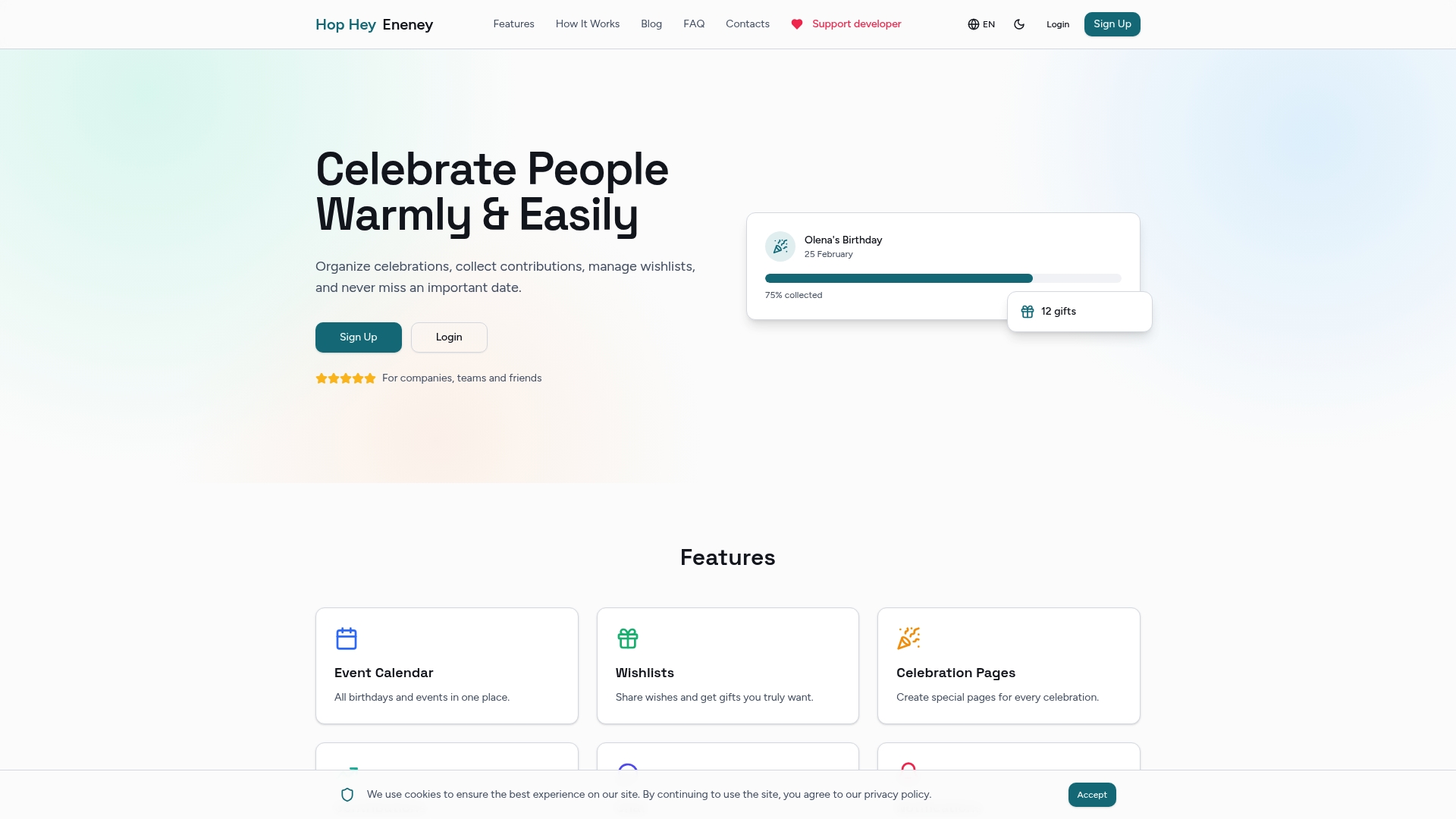
The team celebration platform helps you create private celebration pages, track upcoming events in a shared calendar, and collect funds transparently without awkward conversations. Your team can communicate in a dedicated chat space, coordinate contributions, and ensure no celebration falls through the cracks. For larger organizations, the company celebration platform supports multi-organization environments with flexible roles and automated reminders that keep celebrations consistent and meaningful. By removing administrative chaos from celebration planning, you free up time to focus on creating genuine connections that improve workplace culture.
Frequently asked questions
What are some budget-friendly ways to organize office events?
Focus on budget-friendly celebration ideas like potluck lunches where team members contribute dishes, game afternoons using supplies you already own, or recognition ceremonies that cost nothing but mean everything. Outdoor activities in public parks, volunteer events supporting local causes, and skill-sharing workshops led by employees all create meaningful connections without significant expenses. The key is investing thought and planning rather than money, ensuring activities align with team interests and company values.
How can I ensure high participation in office events?
Tailor events to genuine employee interests by surveying preferences before planning. Communicate details clearly and repeatedly through multiple channels, providing enough notice for people to plan accordingly. Involve team members in the planning process itself, which increases buy-in and ensures diverse perspectives shape the experience. Schedule events during work hours when possible to demonstrate that participation is valued, not an unpaid obligation.
What are common mistakes to avoid when organizing office events?
Poor planning and unclear objectives lead to generic events that waste time and resources without delivering cultural benefits. Ignoring employee feedback creates experiences that miss the mark, reducing future participation. Inadequate communication leaves people confused about logistics, while over-programming every minute prevents the organic interactions where real connections form. Avoid mandatory fun that feels forced, and never schedule events that exclude team members due to timing, location, or activity type.
How do I measure the impact of office events on team culture?
Use post-event surveys asking specific questions about how the experience affected relationships, company connection, and job satisfaction. Monitor ongoing team engagement metrics like collaboration frequency, voluntary knowledge sharing, and retention rates in the weeks following events. Observe qualitative improvements in how team members interact, whether they reference shared event experiences, and if cross-department relationships strengthen. The most meaningful measurement combines immediate feedback with longer-term behavioral changes that indicate lasting cultural impact.