TL;DR:
- Properly planned celebrations boost morale, retention, and foster inclusive workplace culture.
- Clarifying objectives, inclusive surveying, and careful timing are essential for effective event planning.
- Tailoring celebrations to team values and continuously gathering feedback improves engagement.
Poorly planned workplace celebrations don't just waste money. They create legal exposure, fuel resentment, and actively disengage the employees you're trying to recognize. HR managers and team leaders in mid to large organizations carry a unique burden: you're expected to boost morale, stay within budget, respect every cultural background, and keep things legally sound, all at once. The good news is that with a clear, step-by-step system, workplace celebrations become one of your most powerful tools for retention and culture building. This guide gives you exactly that system.
Table of Contents
- Clarifying objectives and prerequisites
- Selecting the event type and date
- Step-by-step planning and execution
- Troubleshooting and continuous improvement
- Our perspective: What most HR articles miss about workplace celebrations
- Next steps: Streamline celebration planning with Hop Hey
- Frequently asked questions
Key Takeaways
| Point | Details |
|---|---|
| Start with clear goals | Defining the purpose and objectives ensures every celebration aligns with company values and employee needs. |
| Prioritize inclusivity | Surveying preferences and avoiding cultural pitfalls keeps all team members involved and respected. |
| Follow structured steps | A step-by-step framework saves time, reduces risk, and delivers better engagement outcomes. |
| Iterate through feedback | Gathering feedback after each event drives continuous improvement and higher ROI. |
Clarifying objectives and prerequisites
Before you book a venue or order a cake, you need to answer one question: what is this celebration actually for? That sounds obvious, but most planning failures trace back to skipping this step. A birthday lunch has different goals than a quarterly milestone event. A recognition ceremony requires different logistics than a casual team lunch.
Start by defining your purpose clearly. Are you rewarding performance? Building cross-department relationships? Marking a company anniversary? Each goal shapes every decision that follows, from format to budget to guest list. Strong corporate celebration strategies always start with this clarity.
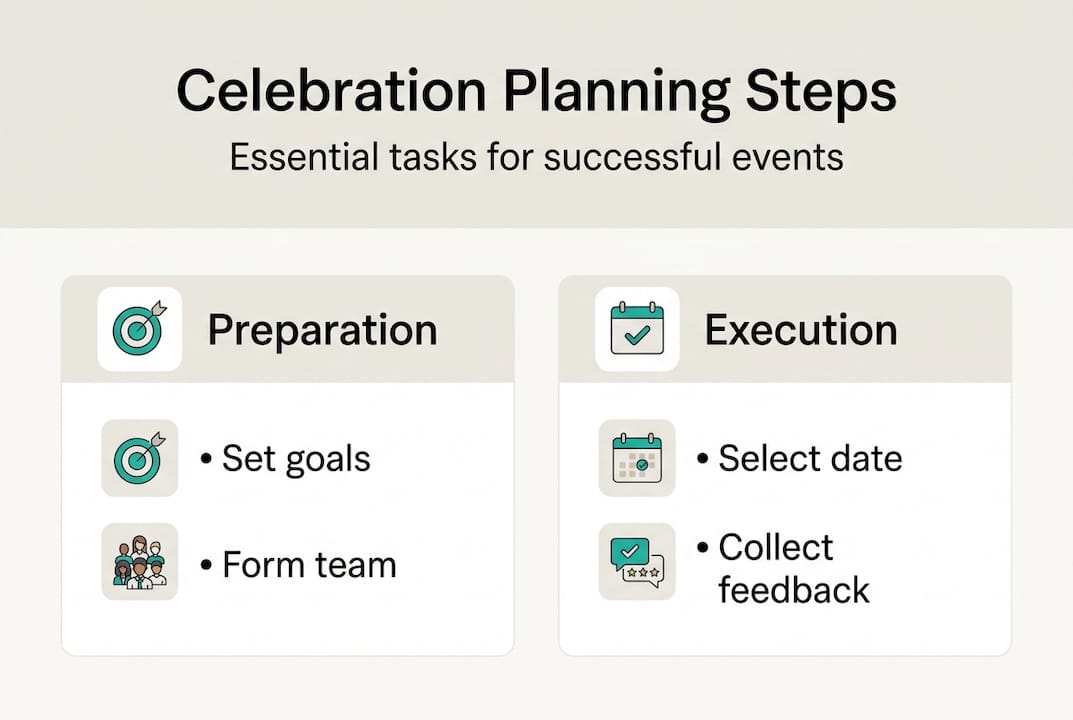
Once you have a purpose, survey your team. Ask about dietary restrictions, preferred event times, and what kinds of celebrations they actually enjoy. This step is non-negotiable for inclusivity. Inclusivity requires input from diverse employees and avoids key pitfalls like inadvertently centering one cultural or religious tradition. Assemble a planning committee that reflects the diversity of your workforce, not just the loudest voices in the room.
Now assess your constraints. Use this quick checklist before moving forward:
- Budget confirmed and approved by leadership
- Company policies reviewed, including alcohol, conduct, and expense rules
- Accessibility needs identified for any team members with disabilities
- Religious and cultural calendars checked to avoid conflicts
- Planning committee assembled with at least 3 to 5 diverse representatives
Here's a simple framework to match your purpose to your resources:
| Celebration goal | Recommended format | Budget range |
|---|---|---|
| Individual recognition | Personalized gift or lunch | Low |
| Team bonding | Offsite activity or workshop | Medium |
| Company milestone | Formal event or ceremony | High |
| Seasonal appreciation | Inclusive party or gathering | Medium |
For a deeper look at celebration planning explained, including how to scope events by team size, that resource breaks it down well.
Pro Tip: Research shows team-building events reduce turnover and improve productivity. Frequent, specific recognition outperforms annual grand gestures every time. Build smaller celebrations into your regular calendar rather than saving everything for one big year-end event.
Selecting the event type and date
Once goals and resources are set, choosing the right event type and timing is your next key decision. This is where many HR managers default to what they've always done. Resist that instinct.

Different teams respond to different formats. A data-heavy engineering team might love a trivia lunch. A creative department might prefer an offsite art experience. Explore the full range of event types for teams before defaulting to the standard pizza party.
Here's a comparison to help you evaluate formats:
| Event type | Best for | Key risk |
|---|---|---|
| Team lunch | Regular recognition, small groups | Dietary exclusions |
| Offsite activity | Bonding, new teams | Cost, accessibility |
| Milestone ceremony | Anniversaries, promotions | Feeling performative |
| Gift exchange | Seasonal appreciation | Cultural insensitivity |
| Birthday celebration | Individual recognition | Surprise logistics |
Timing matters just as much as format. Avoid scheduling events on dates that conflict with major religious observances or cultural holidays. Always make attendance voluntary. Mandatory fun is a contradiction, and it creates real legal and morale risks.
The data here is striking. Rituals boost engagement significantly, with well-designed workplace rituals pushing engagement from 31% to 70%. But the same research shows that poorly planned events produce the opposite effect. The difference between a ritual that connects and one that alienates often comes down to whether it feels genuine or forced.
For recurring events like birthdays, build a system rather than winging it each time. Good birthday planning tips include collecting preferences in advance, setting a standard budget per person, and assigning rotating coordinators so one person doesn't carry the load every month.
Key timing rules to follow:
- Schedule during work hours when possible to avoid penalizing employees with family obligations
- Give at least two weeks notice for any event requiring RSVPs or travel
- Avoid Friday afternoons if you want strong attendance
- Check the full cultural calendar, not just the major holidays most people know
Step-by-step planning and execution
With your event format and date settled, it's time to execute. Here's a practical sequence that works for teams of any size.
- Form your planning committee with clear roles: logistics lead, communications lead, budget tracker, and inclusivity reviewer.
- Set and lock the budget before any vendor conversations. Scope creep kills celebration budgets fast.
- Choose and confirm the venue or format, whether in-office, offsite, or virtual.
- Send invitations with clear details: date, time, location, dress code if relevant, and RSVP deadline.
- Arrange logistics: catering, decorations, any gifts or recognition materials, and accessibility accommodations.
- Brief all managers on what to expect and how to encourage participation without pressuring anyone.
- Run the event with a designated point person available to handle issues in real time.
- Send a follow-up message within 48 hours thanking attendees and sharing any highlights.
One step many HR teams skip is the policy reminder. Remind employees of conduct and policies to prevent harassment, especially at events where alcohol is present.
"Company policies apply even at celebrations. Remind all staff before the event, not after an incident."
For practical party planning tips that cover logistics in detail, that resource is worth bookmarking. And if you're managing multiple employee birthdays across a large team, birthday list management tools can save hours of manual tracking each month.
Pro Tip: Keep attendance voluntary and document that it is. If an event runs outside work hours and attendance feels expected, you may face wage claims. A simple written note in the invite confirming voluntary participation protects both employees and the organization.
Troubleshooting and continuous improvement
Even the best plans run into challenges. Let's address how to troubleshoot and continuously refine your approach.
The most common mistakes HR managers make with workplace celebrations include:
- Forced participation: Framing events as optional but creating social pressure to attend
- Neglecting inclusivity: Centering celebrations on alcohol, meat-heavy menus, or culturally specific traditions
- Poor communication: Sending invites too late, leaving out key details, or failing to follow up
- Inconsistent recognition: Celebrating some employees publicly and others not at all
- No feedback loop: Running the same event year after year without checking if it still works
Forced fun may backfire and negative experiences actively reduce engagement rather than building it. This is not a soft concern. It has measurable impact on your team's willingness to participate in future events.
After every celebration, collect structured feedback. A short three to five question survey sent within 24 hours gets the best response rates. Ask about enjoyment, inclusivity, logistics, and what they'd change. Then actually act on what you hear.
Track these metrics over time to measure whether your celebration program is working:
| Metric | How to measure | Target |
|---|---|---|
| Event attendance rate | RSVPs vs. actual attendees | 75% or higher |
| Post-event satisfaction score | Survey average | 4 out of 5 or higher |
| Employee retention rate | Annual HR data | Improvement year over year |
| Engagement survey scores | Quarterly pulse surveys | Upward trend |
| Recognition frequency | Events per quarter | At least one per month |
For a broader look at the benefits of team celebrations and how they connect to retention metrics, that resource offers strong supporting data. If gift giving is part of your program, structured managing birthday wishlists processes eliminate the awkward guessing game. And clear gift exchange guidelines prevent the cultural missteps that turn well-meaning gestures into HR incidents.
Our perspective: What most HR articles miss about workplace celebrations
Most guides give you a checklist. Follow these steps, avoid these dates, send this survey. That's useful, but it misses the deeper point.
The celebrations that actually move the needle on engagement are the ones that feel like they were designed for this team, not any team. Generic party templates produce generic results. When employees sense that leadership just went through the motions, the event does more damage than no event at all.
What we've seen work is a shift in mindset: stop thinking about celebrations as events and start thinking about them as expressions of your team's specific values and personality. A team that bonds over problem-solving will respond differently than one that bonds over humor or shared history.
"A one-size-fits-all party can miss the mark. Find out what makes your team tick before you plan anything."
Focus first on recognition, then on entertainment. People remember being seen far longer than they remember a good meal. Explore ways to boost engagement through recognition-first celebration design.
Pro Tip: Ask your team what their ideal celebration looks like before you plan anything. The answers will surprise you and save you money.
Next steps: Streamline celebration planning with Hop Hey
Ready to put these steps into practice? Here's how Hop Hey can help you transform workplace celebrations.
Planning celebrations across a mid to large team is genuinely complex. Tracking birthdays, coordinating gift contributions, managing wishlists, and keeping surprises secret requires more than a shared spreadsheet.
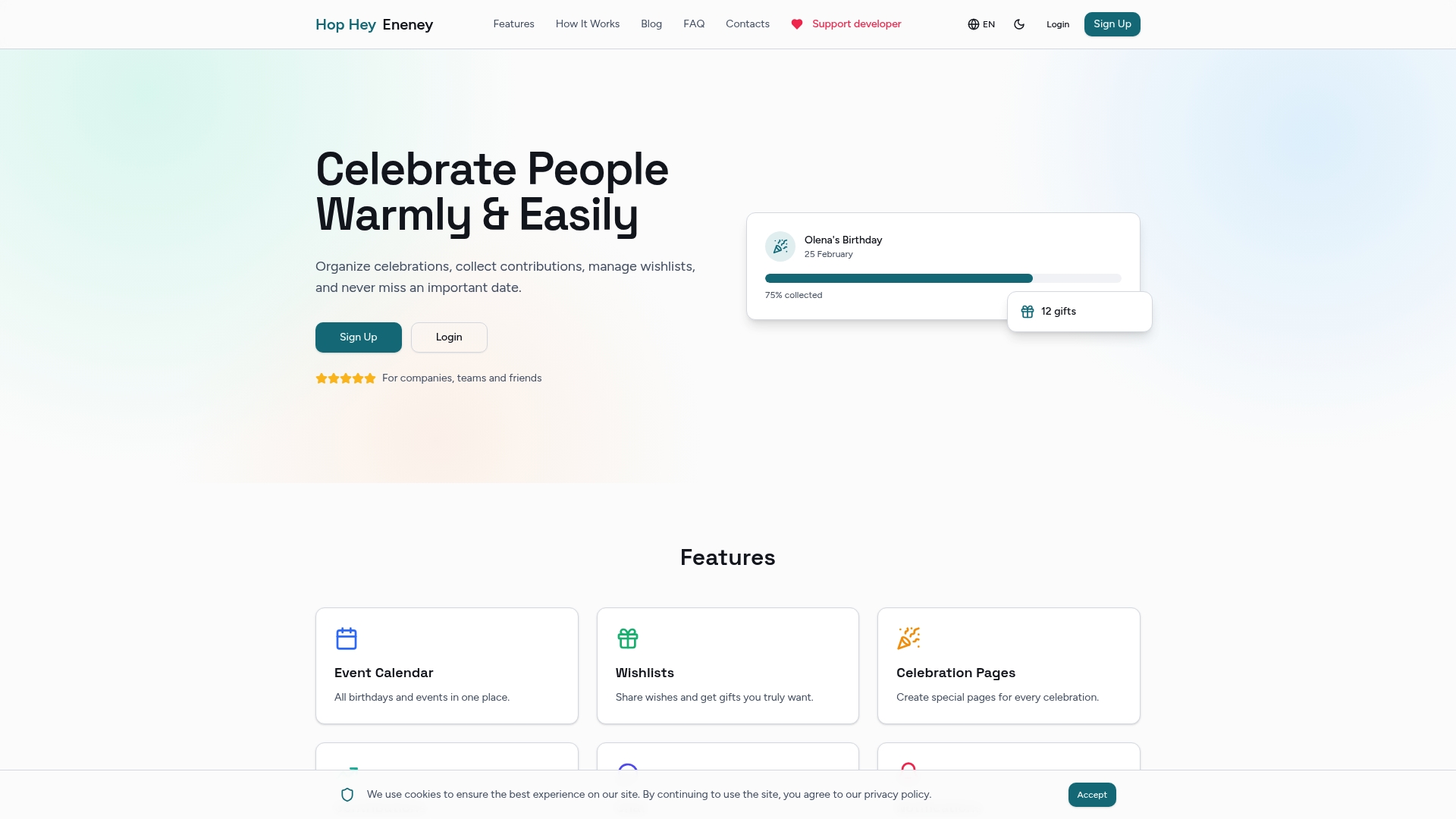
Hop Hey's celebration and gift platform brings everything into one place: a shared event calendar, transparent fund collection, private chat coordination, and personalized wishlists, all with automated reminders and Telegram notifications. HR teams use it to run recognition programs without the manual overhead. Your team gets meaningful, well-organized celebrations. You get your time back. That's the system this guide has been building toward.
Frequently asked questions
What are the key steps for planning a workplace celebration?
Define objectives, form a committee, select a format and date, prepare logistics, and collect feedback for improvement. Planning committees with diverse employees and clear steps consistently boost engagement outcomes.
How can HR prevent legal risks when organizing celebrations?
Keep attendance voluntary, avoid religious or cultural biases, and remind employees about conduct policies before the event. Policy reminders and voluntary attendance prevent wage claims and liability issues.
Why is feedback important in workplace celebration planning?
Feedback helps you identify what worked, address inclusivity gaps, and improve future events. Feedback and improvement raise both engagement scores and return on your celebration investment.
Which types of events work best for diverse teams?
Inclusive formats like team lunches, personalized recognition moments, and milestone celebrations tend to appeal across varied backgrounds. Surveyed preferences and avoiding religious date conflicts are the two most reliable ways to keep events welcoming for everyone.