
Workplace celebrations often get dismissed as frivolous expenses, but the data tells a different story. Companies investing in workplace celebrations see significant return on investment and higher employee satisfaction. Strategic celebration planning transforms recognition moments into powerful engagement tools that strengthen team culture, reduce turnover, and boost productivity. This guide walks HR managers and team leaders through proven frameworks for planning celebrations that deliver measurable business value while creating memorable experiences your teams will genuinely appreciate.
Table of Contents
Key Takeaways
| Point | Details |
|---|---|
| Proactive celebration planning | Proactive celebration planning embeds recognition into the organization’s rhythm to boost engagement, retention, and productivity. |
| Tiered recognition structure | Establish recognition tiers that scale with tenure and achievement to keep celebrations meaningful and within budget. |
| Automation of tracking | Automate celebration tracking with HR software to capture birthdays, anniversaries, and milestones without manual calendar management. |
| Employee involvement | Create channels for employee input through surveys and planning committees to tailor celebrations to team preferences. |
Understanding celebration planning and its impact
Celebration planning involves the systematic organization of recognition and event activities that acknowledge employee achievements, milestones, and contributions. At its core, this practice creates structured opportunities to honor your team members while strengthening workplace relationships and culture. Effective celebration planning organizes events and recognition moments to acknowledge achievements and foster engagement.
The scope extends far beyond traditional office parties. Modern celebration planning encompasses diverse recognition formats tailored to your organizational needs and employee preferences. These activities serve as cultural touchpoints that reinforce company values and demonstrate genuine appreciation for your team’s efforts.
Key components of comprehensive celebration planning include:
-
Formal recognition events like annual awards ceremonies, milestone celebrations, and achievement galas that honor significant accomplishments
-
Informal appreciation moments such as team lunches, coffee breaks, or spontaneous shout-outs during meetings
-
Personal milestone acknowledgments including birthdays, work anniversaries, promotions, and life events
-
Team success celebrations marking project completions, quarterly goals, or departmental achievements
-
Cultural observances and seasonal gatherings that bring your entire organization together
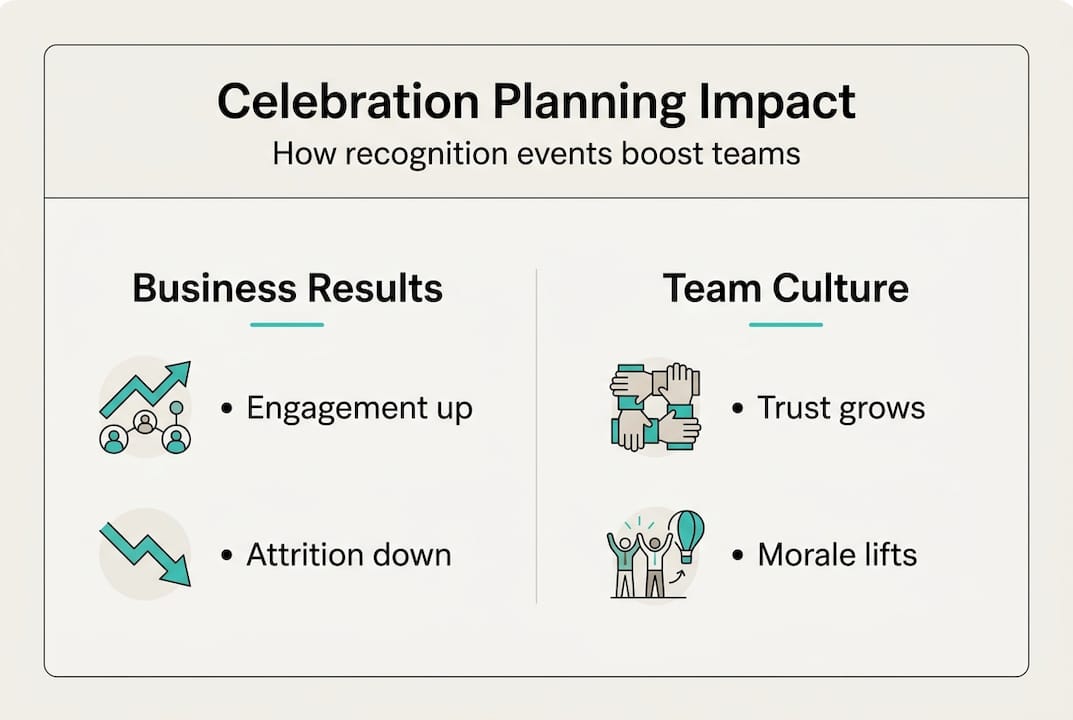
The impact on team culture proves substantial when executed thoughtfully. Recognition programs create psychological safety, where employees feel valued and motivated to contribute their best work. This translates directly into measurable business outcomes through improved retention, higher productivity, and stronger collaboration across departments.
For practical implementation, consider how birthday celebration planning at work demonstrates the broader principles of effective recognition. The same systematic approach to individual celebrations scales effectively to team-wide initiatives and company events.
The distinction between reactive and proactive celebration planning matters significantly. Reactive approaches scramble to acknowledge events after they occur, creating inconsistent experiences. Proactive planning builds celebration into your organizational rhythm, ensuring no achievement goes unrecognized and every team member feels valued throughout their employee journey.
Core methodologies and best practices for celebration planning
Successful celebration planning relies on proven frameworks that balance recognition impact with operational efficiency. Recognition tiers based on milestone significance provide structure, with modest rewards for 1 to 2 year anniversaries and premium recognition for 5+ year milestones. This tiered approach ensures celebrations remain meaningful without creating budget strain or recognition fatigue.
Implement these essential methodologies to maximize your celebration planning effectiveness:
-
Establish clear recognition tiers that scale with tenure and achievement level, ensuring fairness and predictability across your organization
-
Automate celebration tracking through HR software integration to capture birthdays, anniversaries, and milestones without manual calendar management
-
Create employee involvement channels via surveys and planning committees to ensure celebrations reflect actual team preferences rather than management assumptions
-
Balance work priorities by scheduling celebrations during natural workflow breaks and limiting event duration to maintain productivity
-
Measure program impact through engagement surveys, retention metrics, and participation rates to justify continued investment
-
Build contingency budgets of 10 to 15% above planned costs to accommodate unexpected attendance or last-minute adjustments
Planning 3 to 6 months ahead and surveying employees improves celebration relevance significantly. This timeline allows vendor negotiations, venue booking, and proper communication without the rushed execution that undermines event quality. Early planning also enables budget-friendly celebrations through strategic purchasing and resource allocation.

The comparison between different celebration formats reveals important considerations for your planning approach:
| Format type | Best for | Planning time | Budget impact | Engagement level |
|---|---|---|---|---|
| Formal events | Major milestones, annual recognition | 4 to 6 months | High | Very high |
| Team gatherings | Quarterly goals, project completions | 4 to 6 weeks | Medium | High |
| Informal moments | Weekly wins, individual achievements | 1 to 2 weeks | Low | Medium |
| Virtual celebrations | Remote teams, hybrid workforces | 2 to 4 weeks | Low to medium | Medium to high |
Automation transforms celebration planning from a reactive scramble into a proactive system. Modern team celebration platforms integrate with your existing HR systems to trigger notifications, coordinate gift collections, and manage RSVPs without constant manual intervention. This technological support frees your HR team to focus on personalization and meaningful engagement rather than administrative logistics.
Employee involvement proves critical for celebration success. Survey your team quarterly about preferred celebration styles, dietary needs, and scheduling preferences. Form rotating planning committees that give employees ownership over event design and execution. This participatory approach increases buy-in and ensures celebrations feel authentic rather than corporate mandated.
Pro Tip: Incorporate virtual participation options for every celebration, even in-office events. Set up video conferencing for remote team members, create digital recognition boards, and ensure gift distributions reach all employees regardless of location. Hybrid inclusivity prevents the two-tier culture that alienates remote workers.
Avoiding common pitfalls and ensuring inclusivity
Even well-intentioned celebration planning can backfire when inclusivity gaps create uncomfortable or exclusionary experiences. Religious or cultural themes excluding some employees represent the most frequent misstep, turning celebrations into sources of alienation rather than connection. Shift to neutral themes like end of year gatherings, gratitude celebrations, or seasonal events that welcome all employees regardless of background.
Dietary restrictions and alcohol-centric events create similar exclusion. Assuming everyone drinks alcohol or eats certain foods signals that some employees matter less than others. Always provide diverse food options covering vegetarian, vegan, gluten-free, and common religious dietary requirements. Offer appealing non-alcoholic beverages with the same quality and presentation as alcoholic options.
Critical inclusivity considerations include:
-
Clear dress code communication that respects different comfort levels and cultural norms without forcing conformity
-
Transparent gift policies that prevent financial pressure or awkward social dynamics around present exchanges
-
Accessibility accommodations for employees with disabilities, including venue selection and activity design
-
Timing sensitivity that avoids major religious holidays or creates conflicts for employees observing those traditions
-
Budget transparency that ensures no employee feels pressured to spend beyond their means on contributions or attendance
Celebration frequency requires careful calibration. Balancing how often you celebrate prevents both over-celebrating small wins that dilute recognition impact and neglecting major milestones that breed resentment. Over-celebration creates cynicism where employees view recognition as meaningless gestures. Under-celebration signals that achievements don’t matter, reducing motivation and engagement.
Establish clear criteria for different celebration levels. Daily wins might warrant simple acknowledgments in team meetings. Monthly achievements could trigger team lunches or small gift cards. Quarterly milestones justify larger gatherings. Annual recognition deserves formal events with meaningful awards. This structured approach maintains celebration significance while preventing recognition inflation.
Survey employee preferences regularly to catch shifting needs before they become problems. What worked for your team two years ago might not resonate today, especially as workforce demographics and work models evolve. Anonymous feedback channels allow honest input about celebration formats, timing, and content without fear of seeming ungrateful.
Pro Tip: Create opt-in celebration preferences in your HR system where employees can indicate dietary restrictions, celebration comfort levels, and participation preferences. Some team members love being the center of attention while others prefer low-key acknowledgment. Respecting these differences demonstrates genuine care for individual needs.
The shift to hybrid work models demands particular attention to remote employee inclusion. In-person celebrations that exclude remote workers create cultural division and resentment. Ensure virtual participation feels equally valued through dedicated facilitation, shipped celebration packages, and activities designed for both in-person and remote engagement. Company celebration solutions that coordinate across locations help maintain consistency and fairness.
Measuring success and optimizing celebration planning
Quantifying celebration planning effectiveness transforms it from a nice-to-have perk into a strategic business investment. Track pre and post-event engagement through targeted surveys that measure employee sentiment, connection to company culture, and perceived value of recognition programs. These metrics provide concrete evidence of celebration impact beyond anecdotal feedback.
Employee retention and turnover rates offer powerful indicators of celebration planning success. Investing about 1% of payroll in recognition yields exponential ROI and reduces turnover significantly. Compare retention rates between departments with robust celebration cultures versus those with minimal recognition to isolate the impact of your efforts.
Key performance indicators for celebration planning include:
-
Participation rates in voluntary celebration events, indicating genuine employee interest versus obligatory attendance
-
Employee Net Promoter Score changes following recognition program launches or major celebration initiatives
-
Time-to-fill for open positions in teams with strong celebration cultures versus those without
-
Productivity metrics during periods surrounding celebrations to ensure events energize rather than disrupt work
-
Budget efficiency ratios comparing cost per employee to engagement and retention outcomes
Benchmark data provides context for your celebration investment. The following table shows typical spending levels and their associated outcomes based on industry research:
| Investment level | Annual per employee | Typical outcomes | Recommended for |
|---|---|---|---|
| Minimal | Under $50 | Basic recognition, limited impact | Very small teams, startups |
| Standard | $50 to $150 | Moderate engagement, some retention benefit | Growing companies, tight budgets |
| Robust | $150 to $250 | Strong culture, measurable retention | Established mid-size companies |
| Premium | Over $250 | Exceptional engagement, competitive advantage | Large enterprises, high-value talent |
Effective celebration planning can lead to 21% higher profitability via improved employee engagement. This dramatic impact justifies treating celebration planning as a strategic priority rather than discretionary spending. Calculate your current investment level and compare it against engagement metrics to identify optimization opportunities.
Gather feedback continuously through multiple channels. Post-event surveys capture immediate reactions while quarterly pulse checks reveal longer-term sentiment shifts. Exit interviews with departing employees often surface recognition gaps that contributed to their decision to leave. Anonymous suggestion boxes allow honest input about celebration formats and preferences.
Iterate your celebration planning based on data patterns rather than individual complaints or compliments. Look for consistent themes across feedback sources. If multiple employees mention feeling excluded from certain events, redesign those celebrations for better inclusivity. If participation drops for specific celebration types, either improve them or redirect resources to more valued formats.
Data-driven personalization ensures better inclusivity and effectiveness. Track which celebration formats resonate with different employee segments. Younger workers might prefer casual team outings while senior employees value formal recognition. Technical teams might enjoy problem-solving activities while creative teams prefer collaborative experiences. Use this intelligence to tailor celebrations without stereotyping.
The celebration and gift platform approach centralizes celebration data, making measurement and optimization dramatically easier. Integrated systems track participation, spending, and outcomes in one place, revealing patterns that scattered spreadsheets and manual processes obscure. This visibility enables rapid iteration and continuous improvement of your celebration strategy.
Enhance your celebration planning with Hop Hey Eneney
Transforming celebration planning from chaotic scrambles into systematic recognition requires the right tools and infrastructure. Hop Hey Eneney provides a comprehensive platform designed specifically for teams and companies seeking to streamline celebration organization, gift coordination, and employee recognition at scale.
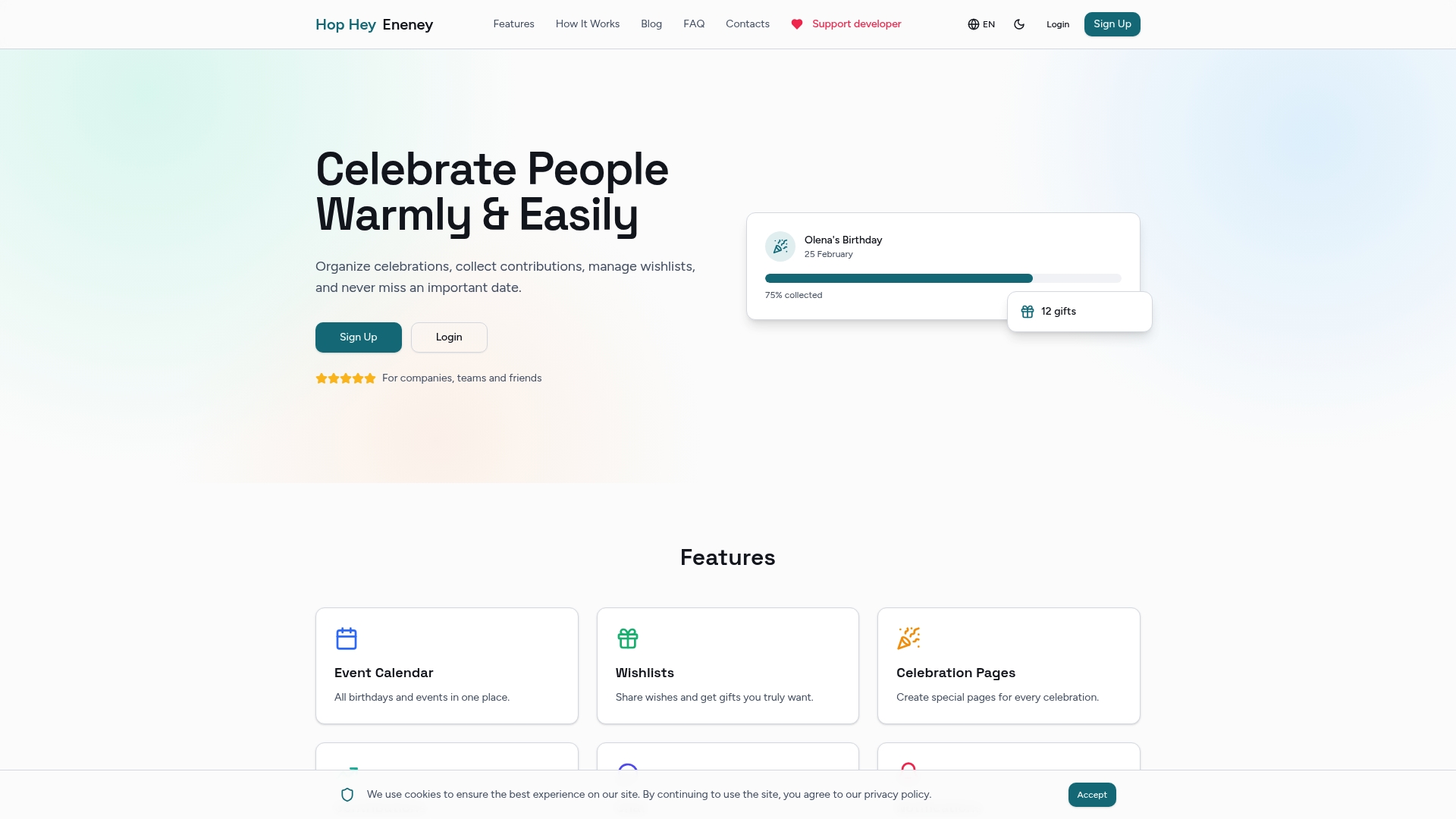
The platform eliminates the administrative burden that often undermines celebration planning effectiveness. Create private celebration pages for birthdays, work anniversaries, and milestones with automated reminders that ensure no recognition moment falls through the cracks. The shared calendar functionality keeps your entire team aligned on upcoming celebrations without constant manual coordination.
Transparent gift fund collection removes the awkwardness of passing envelopes or tracking who contributed what amount. Dedicated chat features let teams coordinate celebration details without spoiling surprises or cluttering the honoree’s inbox. Multi-organization support makes Hop Hey Eneney ideal for companies managing celebrations across departments, locations, or subsidiary organizations.
The team celebration platform scales effortlessly from small team gatherings to enterprise-wide recognition programs. Flexible role management ensures appropriate access and permissions while Telegram notifications keep everyone informed without email overload. For larger organizations, company celebration solutions provide the structure and automation that transforms celebration planning from a time drain into a strategic culture-building tool that delivers measurable engagement and retention benefits.
Frequently asked questions about celebration planning
How often should we celebrate team achievements?
Celebrate major milestones like work anniversaries and significant project completions while acknowledging smaller wins through brief team meeting shout-outs. Quarterly formal celebrations combined with monthly informal recognition creates balanced frequency that maintains impact without diluting meaning or creating celebration fatigue.
What budget should we allocate for workplace celebrations?
Aim for 1% of total payroll as a baseline investment in recognition and celebration programs, adjusting based on company size and culture priorities. This typically translates to $150 to $250 per employee annually, covering both formal events and ongoing recognition activities that drive engagement and retention.
How do we make virtual celebrations feel meaningful?
Ship celebration packages to remote employees before virtual events, use interactive platforms for games and activities, and ensure dedicated facilitation that actively includes online participants. Treat virtual attendance as equally important as in-person presence through intentional design rather than afterthought accommodations.
What if employees have conflicting celebration preferences?
Offer variety across your celebration calendar rather than trying to please everyone with every event. Survey employees about preferences, create opt-in opportunities for different celebration styles, and respect that some team members prefer low-key recognition while others enjoy elaborate gatherings.
How do we handle celebrations for employees on leave?
Schedule makeup celebrations when employees return from extended leave, or coordinate small gestures during their absence that they can enjoy privately. For organizing birthday celebrations at work, flexibility shows genuine care rather than rigid adherence to calendar dates that exclude people during challenging life circumstances.