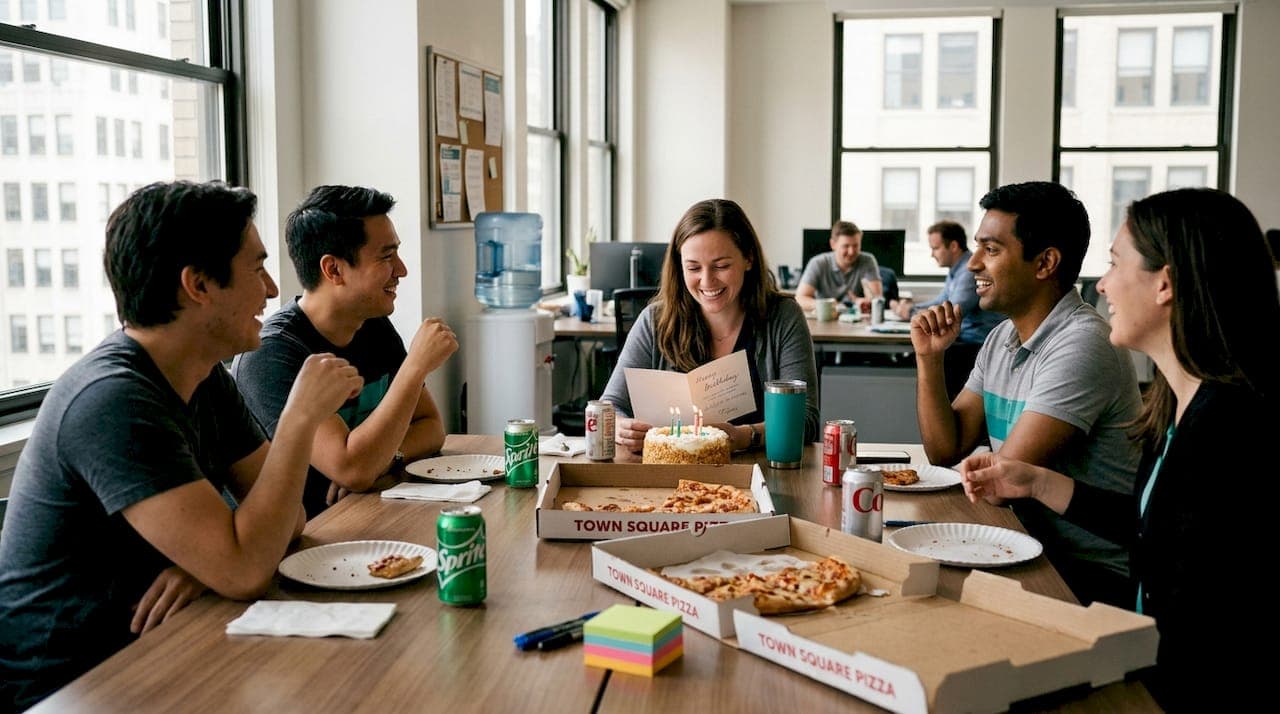
TL;DR:
- Team celebrations significantly boost engagement, accountability, and measurable performance.
- Effective celebrations are inclusive, voluntary, authentic, and strategically planned.
- Using structured, thoughtful recognition fosters long-term positive team culture.
Most managers treat team celebrations as a budget line item that's hard to justify. Something you do because it feels right, not because it drives results. But that framing is wrong, and it's costing companies real performance. Research confirms that team incentives and celebrations directly boost engagement and measurable output. This guide walks HR managers and team leaders through the evidence, practical formats, and execution strategies that turn celebrations from a nice gesture into a genuine culture driver.
Table of Contents
- The business case: Why celebrations matter for teams
- What counts as a team celebration?
- What makes a team celebration successful?
- How to organize effective, inclusive team celebrations
- Our take: The real key to impactful team celebrations
- Bring better celebrations to your team with Hop Hey
- Frequently asked questions
Key Takeaways
| Point | Details |
|---|---|
| Celebrations drive results | Organized team celebrations can boost performance, cohesion, and engagement in measurable ways. |
| Execution determines value | Planning with authenticity and inclusion avoids pitfalls like exclusion or inauthenticity. |
| Opt-in is essential | Voluntary, low-pressure participation makes celebrations effective and well-received. |
| Everyday rituals count | Even small, regular gestures like birthdays or shout-outs can positively shape team culture. |
The business case: Why celebrations matter for teams
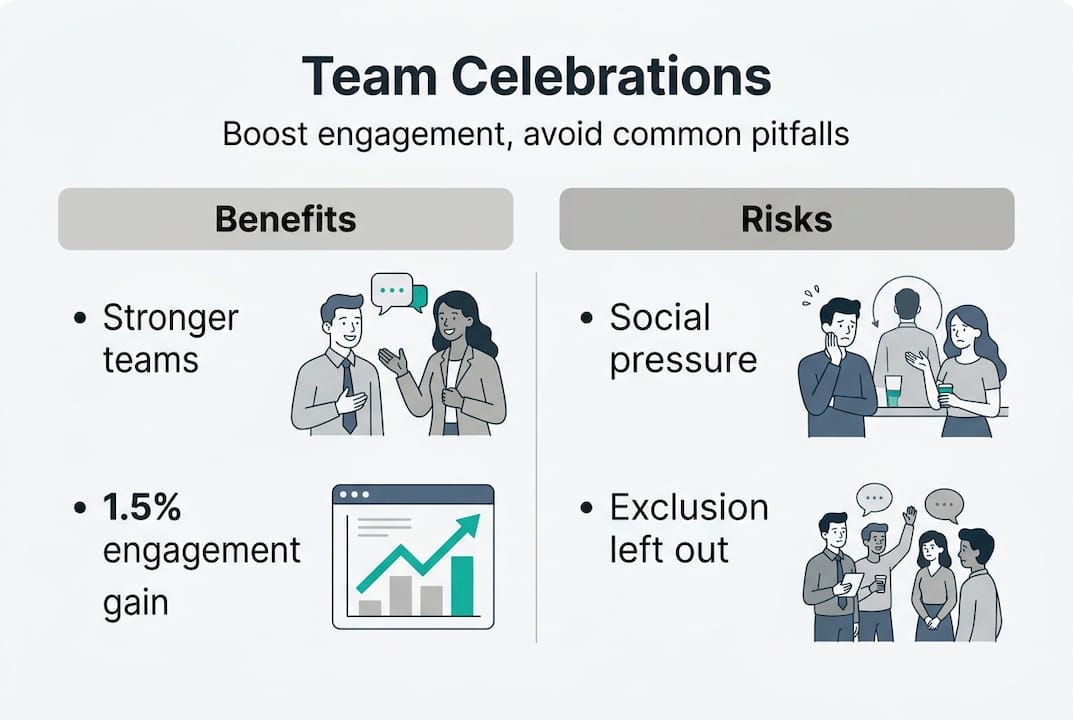
Let's get one thing straight: team celebrations aren't just about morale. They're a performance tool. A rigorous field experiment found that team incentives boost sales by 1.5%, with the strongest gains in already cohesive groups. That may sound modest, but scaled across a department or a full year, it adds up fast.
"The effect of team incentives is not just motivational, it's structural. When people celebrate shared wins, they internalize shared goals."
Here's why that happens. Celebrations signal to employees that their work is seen and valued. That signal reduces what behavioral economists call "free-riding," where individuals coast on group effort. When teams mark milestones together, each person feels more accountable to the group's success.
The benefits aren't limited to sales teams. Celebrations build cohesion across functions, reinforce shared values, and create emotional anchors around company culture. An appreciation lunch after a product launch, a shoutout in a team meeting, or a structured birthday recognition all serve the same core function: they remind people that they belong to something worth contributing to.
Key performance benefits of organized team celebrations:
- Increased individual accountability within the group
- Stronger sense of belonging and psychological safety
- Reinforced alignment with team and company goals
- Reduced turnover intention among recognized employees
- Higher discretionary effort on collaborative tasks
The mistake most HR managers make is treating celebrations as spontaneous or informal. When celebrations are left to chance, they become inconsistent, which creates a different problem: some employees feel recognized while others feel invisible. Structure doesn't kill the fun. It ensures the fun is fair.
If you want a deeper framework for building this into your HR calendar, this celebration planning guide covers the full process from goal-setting to execution. The point is simple: celebrations aren't soft. They're strategy.
With the business impact clear, let's define exactly what organizing team celebrations means and what forms they can take.
What counts as a team celebration?
The word "celebration" covers a lot of ground. For HR managers, that range is actually an asset, because it means you can match the format to your team's culture, size, and preferences.
At the informal end, you have office birthdays, spontaneous shoutouts, and appreciation lunches. These are low-cost, low-effort, and easy to repeat. At the formal end, you have milestone parties, annual recognition events, and structured award ceremonies. These require more planning but carry more symbolic weight.
| Celebration type | Frequency | Complexity | Inclusivity risk |
|---|---|---|---|
| Office birthday | Monthly | Low | Low |
| Team lunch | Monthly/Quarterly | Low | Medium |
| Milestone party | Project-based | Medium | Medium |
| Annual awards event | Yearly | High | High |
| Virtual celebration | Flexible | Low/Medium | Low |
| Appreciation shoutout | Weekly | Very low | Very low |
Virtual celebrations deserve special mention. Remote and hybrid teams often struggle with recognition gaps, and virtual formats close that distance when executed well. A short video message from leadership, a digital gift card, or a team video call with a dedicated celebration agenda can be just as meaningful as an in-person event.
However, research warns that complex team rituals can backfire when not designed with inclusion in mind. A formal awards dinner may exclude remote employees, part-time staff, or those with caregiving responsibilities. A themed office party may feel alienating to employees from different cultural backgrounds.
Formats that tend to work across diverse teams:
- Opt-in appreciation lunches with flexible timing
- Peer-nominated recognition programs
- Shared digital wishlists and group gift contributions
- Low-key milestone acknowledgments in team channels
To get ideas on how to organize office events that actually land, or to explore birthday list tools that simplify recurring recognition, both are worth a look. The format you choose matters less than how thoughtfully you execute it.
Once you know what counts as a celebration, consider what makes these events effective or ineffective. The next section dives into what actually works and common missteps to avoid.
What makes a team celebration successful?
Not all celebrations are created equal. Some energize teams and build lasting culture. Others create awkward silences, resentment, or quiet disengagement. The difference usually comes down to a handful of design choices.
The core ingredients of a successful celebration:
- Genuine recognition tied to real contribution or milestone
- Voluntary participation with no social penalty for opting out
- Inclusive format that works for everyone in the team
- Appropriate scale, not over-the-top for minor wins
- Consistency, so recognition doesn't feel random or political
Research shows that wrong rituals reduce engagement even in otherwise cohesive teams. The mechanism is straightforward: when celebrations feel forced or performative, employees read them as inauthentic. That inauthenticity erodes trust rather than building it.

| Well-executed celebration | Poorly executed celebration |
|---|---|
| Opt-in with flexible participation | Mandatory attendance expected |
| Recognition tied to real work | Generic praise with no specifics |
| Inclusive format for all staff | Format excludes remote or part-time |
| Feedback gathered afterward | No follow-up or iteration |
| Consistent and fair recognition | Feels political or random |
The most common pitfall is social pressure. When employees feel they must attend or contribute to a gift collection, the celebration stops being a gift and becomes a tax. That dynamic is particularly damaging in teams where hierarchy is visible, where a junior employee feels obligated to chip in for a senior leader's gift.
Pro Tip: Always build in a clear, no-questions-asked opt-out. When participation is genuinely voluntary, the people who do show up bring real energy. That energy is contagious, and it makes the celebration feel authentic rather than staged.
For practical party planning tips or a structured approach to gift exchanges at work, both resources offer HR-specific frameworks you can adapt immediately.
Knowing what works and what doesn't, now let's walk through how to actually plan and execute effective, low-pressure celebrations for your team.
How to organize effective, inclusive team celebrations
Good intentions aren't enough. Execution is everything. Here's a repeatable process that works for teams of 10 or 500.
Step-by-step celebration planning process:
- Survey your team first. Ask what types of recognition feel meaningful to them. A quick anonymous poll takes five minutes and prevents months of wasted effort on events nobody actually wants.
- Clarify the purpose. Is this a birthday recognition, a project milestone, an annual appreciation event? The purpose shapes the format, the budget, and the communication.
- Choose an inclusive format. Default to formats that work for both in-person and remote employees. If in-person only, make sure there's an equivalent digital experience.
- Communicate clearly and early. Give people enough notice to plan. Include what's happening, why, and how to participate or opt out without awkwardness.
- Run the event with energy. Assign a facilitator. Keep it focused and time-bounded. Avoid filler activities that drag the energy down.
- Gather feedback afterward. A two-question survey is enough. What worked? What would you change? Use that data to improve the next one.
Research confirms that optional, low-pressure approaches significantly reduce the negative side effects of team rituals while preserving the benefits. The key word is "optional."
Pro Tip: Rotate the person responsible for organizing celebrations across team members. It distributes the labor, builds ownership, and surfaces creative ideas you'd never get from a top-down approach.
Dos and don'ts for HR managers:
- Do tie recognition to specific, observable contributions
- Do offer multiple ways to participate, including low-key options
- Do use opt-in group celebrations that give employees agency
- Don't make gift contributions mandatory or publicly tracked
- Don't repeat the same format every time without checking if it still resonates
- Don't skip the feedback loop, even for small events
For a deeper look at building recognition into daily culture, this birthday wishlist guide offers a practical starting point for recurring, low-effort recognition.
Now that you have a toolkit for organizing the right activities, let's reflect on why getting this balance right truly matters for long-term success and culture.
Our take: The real key to impactful team celebrations
Here's what most celebration advice gets wrong: it focuses on doing more rather than doing it better. More events, more budget, more frequency. But the teams we see thriving aren't the ones celebrating most often. They're the ones celebrating most thoughtfully.
The uncomfortable truth is that a poorly designed celebration does more damage than no celebration at all. Research is clear that inauthenticity in rituals actively harms culture. So if your current celebrations feel like going through the motions, the answer isn't to cancel them. It's to fix them.
Start by asking your team what recognition actually means to them. You'll be surprised. Some people want public acknowledgment. Others find it mortifying. Some love group events. Others prefer a private note. The only way to know is to ask.
The best celebrations feel like they were designed for the team, not at the team. That distinction is everything. If you want to start building that kind of culture, learning how to organize birthdays at work is a surprisingly effective first step. Small, consistent, personal recognition builds more trust than one big annual event ever will.
Bring better celebrations to your team with Hop Hey
If you're ready to move from ad-hoc celebrations to a structured, inclusive recognition system, Hop Hey makes that transition simple.
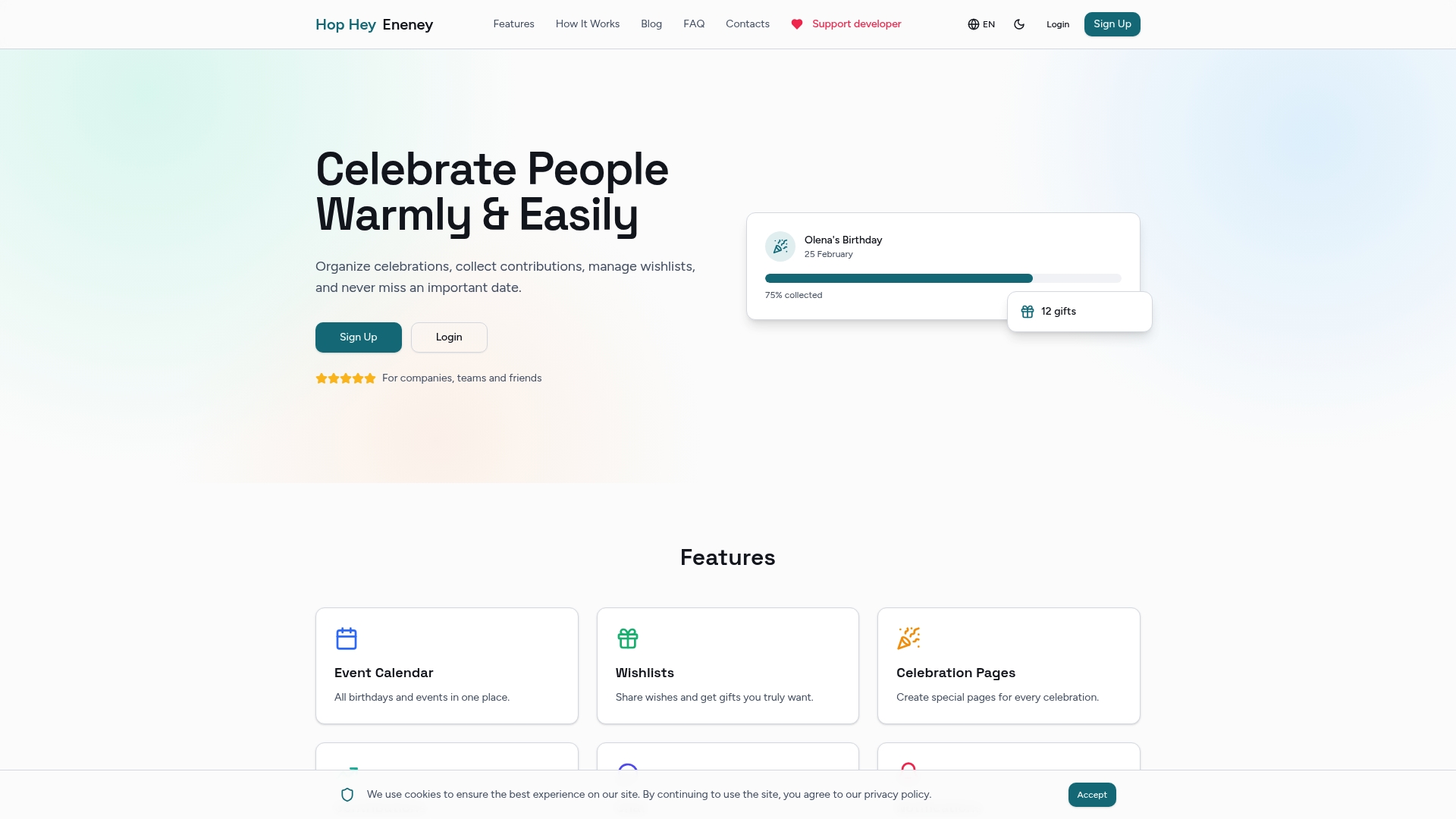
The Hop Hey celebration platform lets you create private celebration pages, coordinate group gift contributions transparently, and manage team event calendars with automated reminders. No more chasing people for contributions or forgetting a colleague's milestone. For HR departments managing recognition at scale, the solutions for companies offer role-based permissions, multi-currency support, and Telegram notifications that keep everyone in the loop without the chaos. Build a culture where every team member feels genuinely seen.
Frequently asked questions
How do team celebrations improve employee performance?
Celebrations act as team incentives that deepen cohesion and accountability, leading to measurable performance gains such as a 1.5% increase in sales output across participating teams.
What are the risks of organizing team celebrations?
When not planned thoughtfully, celebrations can create social pressure, exclusion, or feel inauthentic, and poorly designed rituals actively harm team culture and individual engagement.
How can HR managers ensure team celebrations are inclusive?
Use opt-in policies, gather employee input before planning, and offer low-pressure participation options so every team member can engage on their own terms without social penalty.
Are virtual team celebrations effective?
Virtual celebrations work well when designed for genuine recognition and inclusive formats that account for different time zones, roles, and participation preferences across the team.