
A team member walks into the office on their birthday and nobody says a word. No card, no gift, no mention in the team channel. It happens more often than HR managers realize, and the damage to morale is real. Manual spreadsheets, group email chains, and last-minute collection drives are not scalable solutions for growing teams. Employee recognition platforms automate birthday celebrations and reduce the manual HR work that causes these gaps. This guide walks you through every step of building a birthday wishlist program that actually works, from choosing the right tools to measuring long-term impact.
Table of Contents
- Why birthday wishlists matter for employee engagement
- Preparation: Choosing the right tools and platforms
- Launching your birthday wishlist program: Step-by-step guide
- Troubleshooting, inclusivity, and advanced tips
- Measuring results and optimizing your program
- Streamline birthday wishlists with digital solutions
- Frequently asked questions
Key Takeaways
| Point | Details |
|---|---|
| Automate for consistency | Automated platforms eliminate manual errors and guarantee no birthday is missed. |
| Prioritize inclusivity | Offer opt-outs, privacy controls, and culturally sensitive options for every employee. |
| Leverage AI recommendations | AI tools boost relevance, prevent duplicates, and simplify group contributions for birthdays. |
| Measure engagement impact | Recognition programs tied to birthdays drive higher retention and satisfaction among staff. |
| Use the right platform | Choosing scalable, integrated tools is essential for effortless birthday wishlist management. |
Why birthday wishlists matter for employee engagement
Birthday recognition is not just a nice gesture. It is a measurable driver of retention and engagement. When employees feel seen as individuals rather than headcount, they invest more in their work and their team. A wishlist takes that recognition a step further by replacing generic gift cards with something the person actually wants.
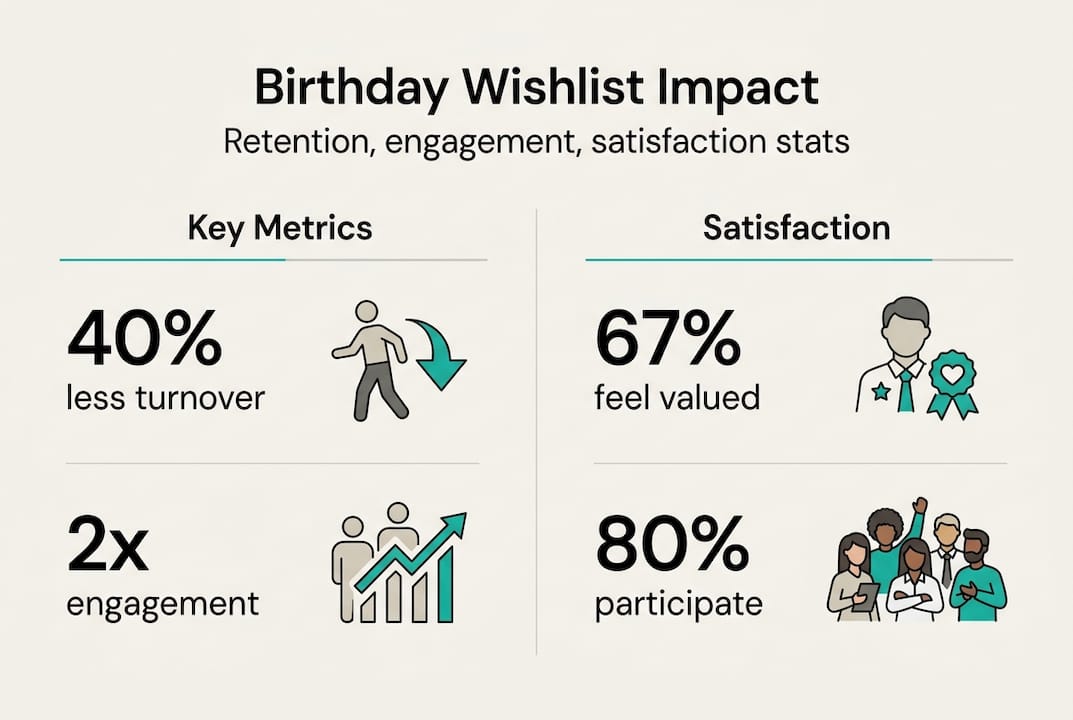
The numbers back this up. Recognizing birthdays with gifts can double engagement and reduce turnover by 40%. That is a significant return on what is often a modest budget. And 67% of employees report higher satisfaction when they have input into their birthday gift options.
Here is what a strong birthday wishlist program delivers:
- Personalization that makes employees feel genuinely valued, not processed
- Consistency across departments so no one is accidentally overlooked
- Inclusivity through opt-out options that respect cultural and personal preferences
- Transparency in group contributions so no one person carries the coordination burden
"The best recognition programs treat employees as whole people, not just workers. A birthday wishlist is one of the simplest ways to demonstrate that."
Understanding employee recognition importance helps HR leaders make the case internally for investing in structured programs. Pair that with team building celebrations and you have a culture strategy, not just a party plan. A solid recognition and rewards policy gives your program the structure it needs to scale.
Preparation: Choosing the right tools and platforms
Understanding the business case, it is essential to choose the right technology for scalable execution. The market has several strong options, each with different strengths depending on your team size, tech stack, and budget.
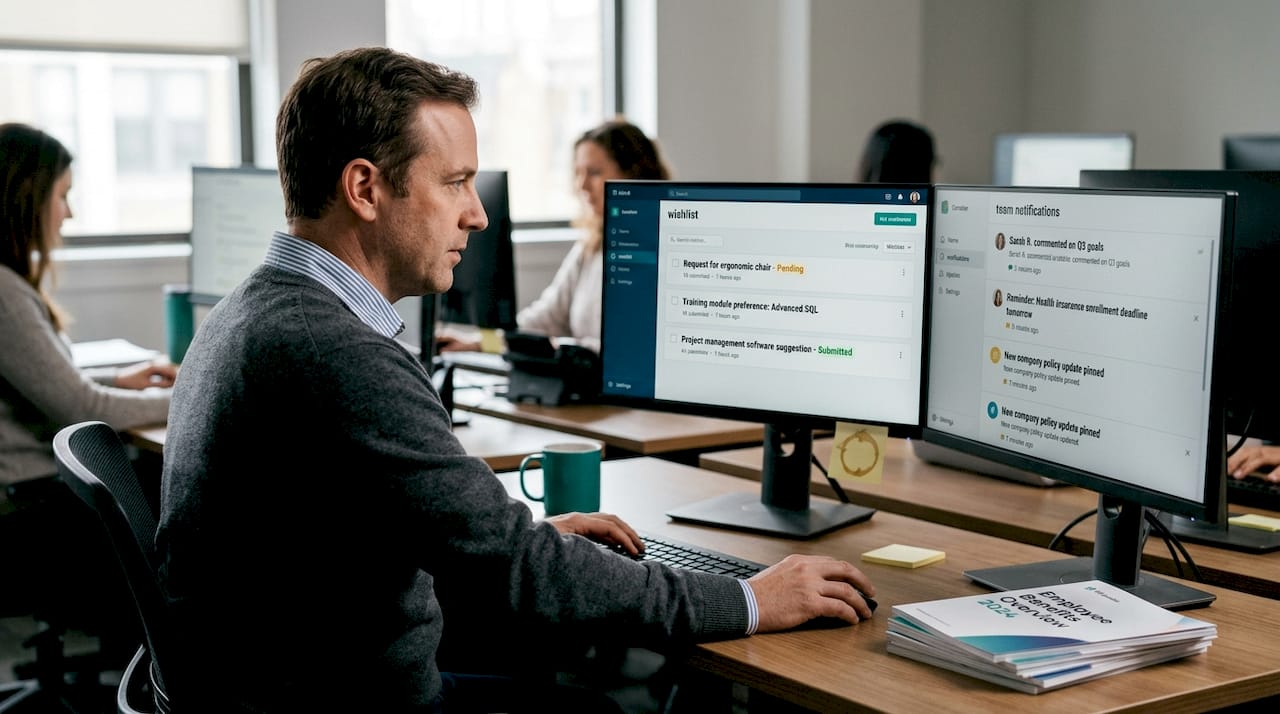
Platforms like Bucketlist, Wishlist, and Applauz automate birthday celebrations with rewards catalogs and team notifications built in. Wish-iT enables wishlist creation with AI recommendations and duplicate prevention, which is especially useful for larger teams where coordination gets complicated fast.
| Platform | Best for | Key feature |
|---|---|---|
| Bucketlist | Mid-size companies | Points-based rewards catalog |
| Wishlist | Enterprise teams | HRIS integration and analytics |
| Applauz | Small to mid teams | Peer recognition and badges |
| Wish-iT | Any size | AI wishlist suggestions, duplicate prevention |
| Billy Birthday Bot | Slack-first teams | Automated Slack channel postings |
When evaluating any platform, prioritize these features:
- HRIS integration so birthday dates sync automatically without manual entry
- Opt-out and privacy controls that employees can manage themselves
- Multi-language support for global or multilingual teams
- Group contribution tracking so everyone can chip in transparently
- Notification customization including email, Slack, and Telegram alerts
Explore wishlist apps for teams to compare options side by side, and review this celebration planning guide for HR managers before making a final decision.
Pro Tip: Start with a platform that auto-syncs with your HRIS. Manual data entry is where programs break down. If your tool requires someone to update a spreadsheet every time a new hire joins, it will eventually fall behind.
Launching your birthday wishlist program: Step-by-step guide
After choosing a platform, the next step is deploying your program smoothly. A rushed launch creates confusion and erodes trust in the program before it even gets started.
- Onboard your platform with IT and HR leads. Configure privacy settings, notification channels, and role permissions before inviting employees.
- Import employee data from your HRIS. Verify that birthdays are accurate and that the system handles missing data gracefully.
- Enable AI wishlist suggestions if your platform supports them. This reduces the friction of employees not knowing what to add.
- Set contribution rules including minimum and maximum amounts, group collection deadlines, and what happens when a birthday falls on a weekend.
- Communicate the program to all staff. Explain how to opt out, how wishlists work, and what employees can expect on their birthday.
- Run a test cycle with a small group before full rollout. Catch notification errors and permission gaps early.
Automated bots handle opt-outs, weekend scheduling, privacy controls, and channel postings without requiring HR to manually manage each event. That automation is what makes the program sustainable at scale.
| Launch phase | Timeline | Owner |
|---|---|---|
| Platform setup and configuration | Week 1 | IT and HR |
| Data import and verification | Week 2 | HR |
| Pilot group test | Week 3 | HR lead |
| Company-wide rollout | Week 4 | HR and comms |
For inspiration on what to actually give, browse employee birthday gift ideas to build out your rewards catalog. And review best practices for organizing workplace birthdays to avoid common mistakes. A well-run program also connects to broader goals around how you boost team culture with events.
Pro Tip: Before going live, preview every automated notification as if you were the recipient. Check the tone, timing, and accuracy. A notification that fires at 3 a.m. or uses the wrong name does more harm than no notification at all.
Troubleshooting, inclusivity, and advanced tips
Even the best plans face hiccups. Here is how to address the most common and complex challenges HR managers encounter after launch.
Privacy is the most sensitive issue. Some employees do not want their birthday announced to the whole company. Others may have cultural or religious reasons for not celebrating at all. Your platform must support individual opt-out, and you must communicate that option clearly at onboarding.
Edge cases like opt-out options, privacy controls, weekend birthdays, multi-language support, and HRIS integrations are all manageable when your platform is configured correctly from the start.
Here is a quick checklist for inclusive program management:
- Opt-out is mandatory, not optional. Every employee must be able to remove themselves without explanation.
- Weekend birthdays should be celebrated on the closest working day. Friday works better than Monday for energy and participation.
- Multi-language notifications matter for global teams. A message in the wrong language signals that the program was not built with everyone in mind.
- Cultural sensitivity means not assuming everyone wants a public shoutout. Some cultures treat birthdays as private events.
- HRIS auto-sync prevents the most common failure: someone's birthday being missed because they were added to the system after the last manual update.
"Inclusivity in recognition is not about doing less. It is about doing it right for each person."
For teams spread across countries, review cross-cultural celebration tips before finalizing your program rules. If your team is remote, remote birthday coordination offers specific tactics for keeping distributed employees engaged. You can also explore custom merch for recognition as a tangible complement to digital wishlists.
Measuring results and optimizing your program
Once your program is running, measuring impact is essential for ongoing improvement and internal buy-in. HR leaders who cannot show results will struggle to maintain budget and leadership support.
Track these key metrics from day one:
- Participation rate: What percentage of employees have active wishlists?
- Opt-out rate: Is it unusually high? That may signal a trust or communication problem.
- Contribution rate: Are teammates actually chipping in, or is it always the same few people?
- Retention data: Compare turnover rates before and after program launch.
- Engagement scores: Pull from your existing employee engagement surveys.
Recognition programs including birthdays benchmark at a 40% reduction in turnover, 2x higher engagement, and 67% satisfaction increase. Use these as your baseline targets.
| Metric | Baseline target | Review frequency |
|---|---|---|
| Participation rate | 80% or higher | Quarterly |
| Turnover reduction | 40% improvement | Annual |
| Engagement score lift | 2x vs. control group | Semi-annual |
| Employee satisfaction | 67% report increase | Annual survey |
Iterate based on what you find. What works for a 20-person startup will need adjustment for a 500-person organization. Survey employees annually and adjust gift budgets, notification timing, and platform features accordingly. Review budget-friendly celebration ideas to keep costs manageable as you scale. External benchmarks from team morale strategy research can also help you contextualize your results.
Streamline birthday wishlists with digital solutions
For those seeking a ready-made solution, digital platforms can make birthday wishlist management effortless. Building a program from scratch takes time, and maintaining it manually takes even more. The right platform removes that burden entirely.
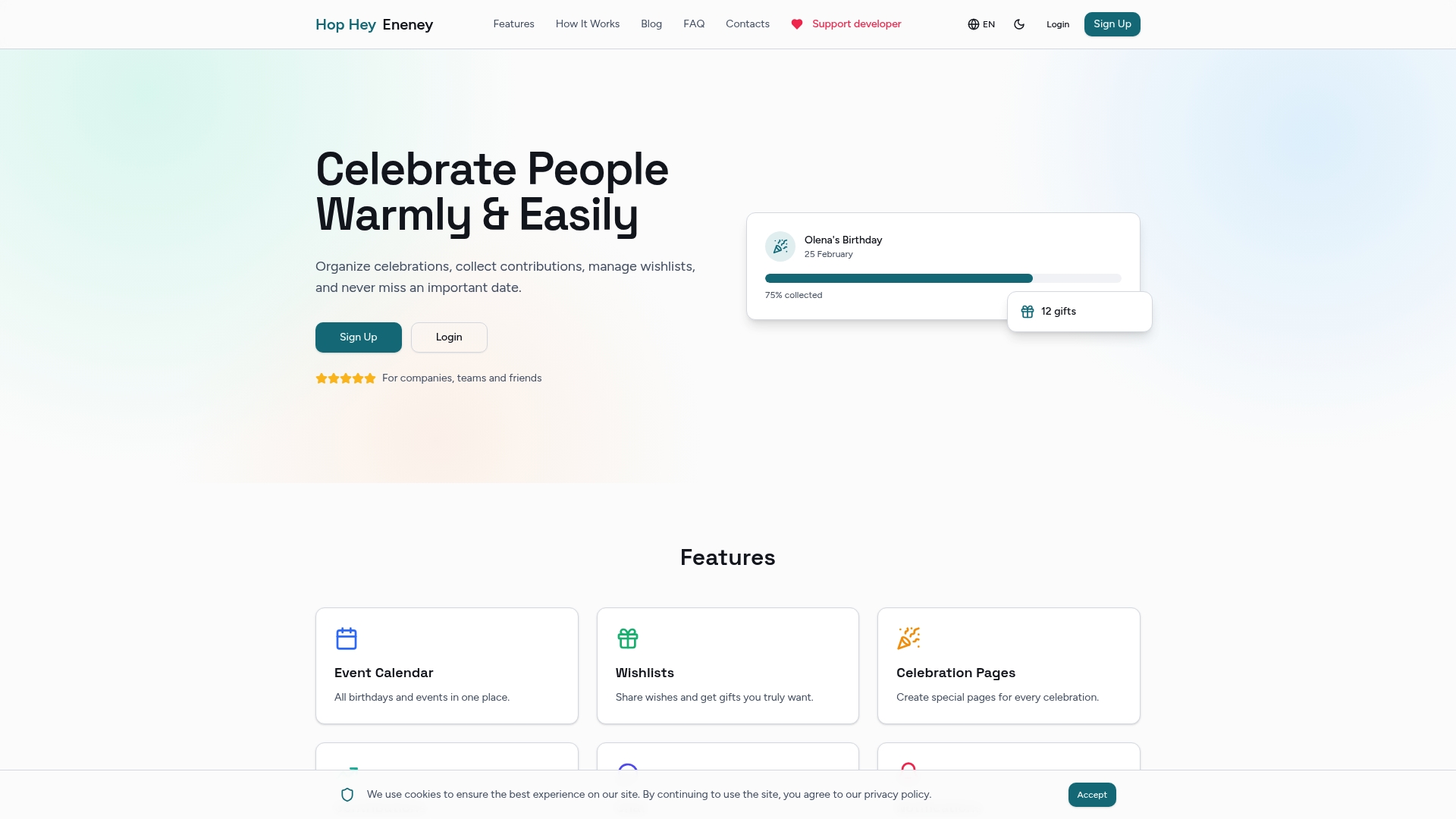
Hop Hey Eneney is built exactly for this use case. HR managers can set up team-wide wishlists, automate birthday reminders, and coordinate group contributions without a single group email or spreadsheet. The platform for teams supports role-based permissions, private celebration pages, and real-time contribution tracking so everyone knows what has been collected and what is still needed. Explore the full set of platform features including multi-currency support, Telegram notifications, and a shared event calendar that keeps every important date visible to the right people. It is the kind of tool that makes birthday recognition feel effortless rather than like another item on the HR to-do list.
Frequently asked questions
How do I ensure privacy and opt-out for birthday wishlists?
Most platforms let employees opt out or hide their wishlist independently. Communicate these opt-out and privacy controls clearly at program launch so employees feel in control from day one.
How should weekend birthdays be handled?
Celebrate on the closest working day. Weekend birthdays posted Friday or Monday get better team visibility and participation than a message that appears when no one is online.
Do automated tools integrate with HR systems?
Yes. HRIS integrations allow platforms to auto-sync birthday dates, eliminating manual entry and ensuring no one gets missed when new hires join mid-cycle.
What is the ROI for birthday recognition programs?
The data is clear: recognition programs cut turnover by 40% and double engagement scores, with 67% of employees reporting higher satisfaction when birthday gifts match their preferences.
How can we prevent duplicate gifts or requests?
AI-powered platforms like Wish-iT prevent duplicate purchases by tracking what has already been claimed or purchased, and they update group contribution totals in real time so everyone stays informed.