
TL;DR:
- The corporate events market is projected to reach 730.7 billion dollars by 2035, emphasizing their strategic importance. Celebrations enhance employee engagement, retention, and workplace culture, making thoughtful planning essential. Utilizing the right tools and inclusive practices ensures celebrations are effective, memorable, and accommodate global, remote, and diverse teams within budget constraints.
The global corporate events market is projected to reach $730.7 billion by 2035, and HR professionals are feeling every bit of that pressure. Organizing a birthday lunch for 10 people is one thing. Coordinating recognition events, gift collections, and team celebrations across dozens of departments, time zones, and cultural backgrounds is something else entirely. Most companies underestimate how much planning muscle it takes to make celebrations feel genuine rather than obligatory. This guide walks you through the strategic value of corporate celebrations, the tools that make them manageable, inclusivity best practices, and how to measure whether your efforts are actually working.
Table of Contents
- Why corporate celebrations matter for HR
- Essential tools for managing corporate celebrations
- Inclusivity, safety, and global considerations
- Smart budgeting and measuring success
- Beyond software: What most HR guides miss about celebrations
- Discover platforms that simplify celebration management
- Frequently asked questions
Key Takeaways
| Point | Details |
|---|---|
| Celebrations boost engagement | Well-managed corporate events improve employee engagement, retention, and workplace culture. |
| Tools simplify management | Event management platforms streamline planning, analytics, and inclusivity for HR teams. |
| Inclusivity is essential | Avoid exclusive themes; embrace diverse foods, mocktails, and global accessibility in event planning. |
| Measure success with analytics | Track registration, attendance, and feedback to optimize celebration outcomes and demonstrate value. |
| Budget smartly for impact | Focus resources on basics and proven engagement strategies amid flat or declining budgets. |
Why corporate celebrations matter for HR
Celebrations are not a nice-to-have. They are a core lever for the three things HR leaders care most about: engagement, retention, and culture. When employees feel seen and recognized, they stay longer, perform better, and speak positively about the organization. That connection between events and outcomes is not anecdotal.
"Corporate celebrations directly impact employee engagement and retention, with event-driven recognition emerging as a measurable driver of workforce satisfaction." — Forrester, Q1 2025 State of B2B Events Survey
The misconception that celebrations are frivolous or a distraction from real work is one of the most expensive beliefs an HR team can hold. Employees who feel their milestones go unnoticed are far more likely to disengage quietly. That quiet disengagement costs companies significantly more than a well-planned team lunch or a coordinated gift collection.
Here is what boosting team engagement through celebrations actually delivers:
- Morale boost: Recognized employees report higher day-to-day satisfaction and motivation
- Team connection: Shared experiences build trust and reduce interpersonal friction
- Positive workplace perception: Celebrations signal that leadership values people, not just output
- Reduced turnover intent: Employees who feel celebrated are less likely to explore outside opportunities
- Stronger onboarding: New hires who witness celebration culture integrate faster and feel welcomed sooner
The quality of celebrations matters as much as their frequency. A rushed, generic "happy birthday" email does more damage than nothing because it signals that the gesture is performative. Thoughtful, personalized events, whether virtual or in person, create emotional anchors that employees associate with belonging.
For HR teams building or refreshing their celebration strategy, reviewing planning tips for engagement can help establish a repeatable framework that scales without losing the personal touch. The goal is not to throw more parties. It is to create moments that employees actually remember.
Essential tools for managing corporate celebrations
Once you accept that celebrations are strategic, the next question is practical: how do you manage them without burning out your HR team? The answer is the right technology stack. The event management software market is expected to grow from $8.4 billion in 2024 to $17.33 billion by 2030, driven by demand for automation, analytics, and integration. Large enterprises account for 53% of that adoption, which tells you something about where the operational pressure is concentrated.
Here is a comparison of the core features HR teams should evaluate when choosing a platform:
| Feature | Why it matters | What to look for |
|---|---|---|
| RSVP and attendance tracking | Prevents over or under-catering | Real-time dashboards |
| Automated reminders | Reduces no-shows and last-minute chaos | Email and push notifications |
| Analytics and reporting | Proves ROI to leadership | Attendance, engagement, feedback metrics |
| Virtual and hybrid support | Includes remote employees | Video integration, live streaming |
| HR system integration | Reduces manual data entry | API or native connectors |
| Gift and contribution management | Coordinates group gifts transparently | Fund tracking, wishlist support |
Beyond the table, there are a few must-have functionalities that separate adequate tools from genuinely useful ones:
- Flexible role assignments so different team members can own different parts of an event
- Multi-currency support for global teams managing cross-border contributions
- Private event pages that keep surprise celebrations actually surprising
- Centralized event calendars that surface upcoming milestones automatically
Pro Tip: Use your platform's analytics dashboard to pull attendance and feedback data after each event. Present that data to leadership quarterly. Nothing justifies celebration budgets faster than a clear engagement lift tied to a specific event.
For HR teams specifically, birthday list tools and structured approaches to building birthday wishlists can eliminate the awkward scramble that happens every time someone's work anniversary or birthday approaches. Platforms that support flexible event planning roles also help distribute the organizational load across teams rather than concentrating it on one overworked coordinator.
Inclusivity, safety, and global considerations
The most common mistake in corporate celebration planning is designing events around the majority and hoping everyone else adapts. That approach fails quietly. Employees who feel excluded from celebrations do not complain loudly. They simply disengage.

Best practices for inclusive corporate events include avoiding religious-specific themes, offering diverse food options, providing mocktails alongside alcohol, and using virtual or hybrid formats to include remote staff. These are not complicated adjustments. They are signals that your organization actually sees its full workforce.
Here is a practical inclusivity checklist for your next event:
- Avoid themes tied to specific religious holidays; use seasonal or appreciation-based framing instead
- Offer diverse food options including vegetarian, vegan, halal, and kosher where possible
- Always provide non-alcoholic alternatives, not just as an afterthought but as a genuine option
- Schedule events at times that work across time zones, or record and share asynchronously
- Use hybrid formats so remote employees are not second-class participants
- Communicate gift exchange guidelines clearly and in advance to avoid awkward surprises
Alcohol deserves specific attention. 1 in 6 adults have alcohol use disorder, which means statistically, every team of meaningful size includes someone for whom an alcohol-centric event is genuinely uncomfortable or harmful.
Normalizing alcohol-free options at corporate events is not about restriction. It is about making sure every employee can participate fully without navigating a personal health challenge in a professional setting.
Pro Tip: Send a brief policy note before events that addresses alcohol availability, gift exchange parameters, and any dress code expectations. Transparency before the event eliminates most of the awkwardness during it.
For teams working across multiple countries, cultural nuance matters enormously. What reads as celebratory in one culture may feel intrusive or inappropriate in another. Reviewing budget-friendly celebration tips that account for cultural variation can help you build a global celebration framework that respects differences without becoming generic. Pairing that with clear gift exchange guidelines protects both employees and the organization.
Smart budgeting and measuring success
Two-thirds of companies report flat or declining celebration budgets, which means HR teams are being asked to do more with less. That constraint is not going away. The solution is not to cut celebrations. It is to spend smarter and measure outcomes more rigorously.
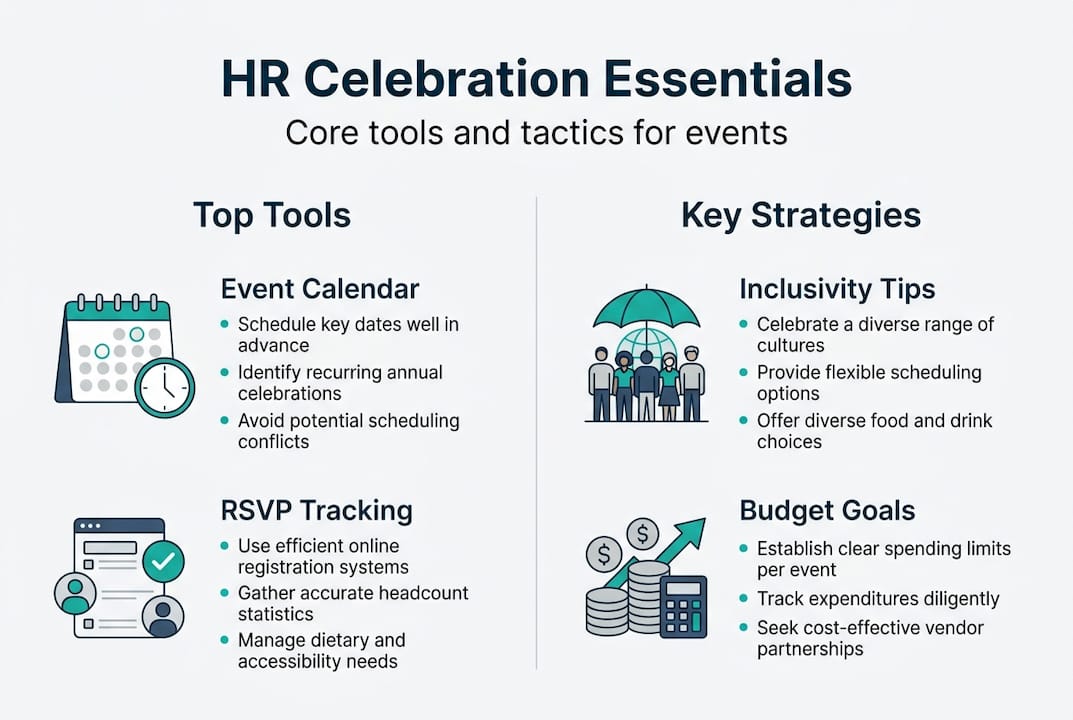
Here is a realistic breakdown of typical corporate celebration budget categories:
| Budget category | Typical cost range | Notes |
|---|---|---|
| Venue or virtual platform | $0 to $2,000 | Office space reduces this significantly |
| Food and beverages | $15 to $75 per person | Scales with headcount and format |
| Gifts and contributions | $20 to $150 per person | Group gifts reduce individual spend |
| Entertainment or activities | $200 to $2,000 | Optional; highest variance |
| Decorations and materials | $50 to $500 | Often reusable across events |
| Event management software | $0 to $500 per month | Amortized across all events |
To track and optimize your celebration spend, follow these steps:
- Set a per-employee annual celebration budget at the start of each fiscal year
- Categorize every event expense at the time of purchase, not retroactively
- Use your event platform's analytics tools to track registration, attendance, and post-event feedback
- Survey attendees within 48 hours while the experience is fresh
- Compare engagement metrics before and after major celebration initiatives
- Report outcomes to leadership with specific numbers, not just anecdotes
Pro Tip: If your budget is tight, shift investment toward frequency rather than scale. Four modest monthly recognitions drive more sustained engagement than one expensive annual party.
For more practical approaches, budget-friendly celebration tips and office celebration advice offer concrete frameworks for making limited resources go further without sacrificing impact.
Beyond software: What most HR guides miss about celebrations
Here is the uncomfortable truth that most celebration planning guides skip: technology solves logistics, but it does not create belonging. You can have the most sophisticated event management platform on the market and still run celebrations that employees dread attending.
Real engagement comes from leadership that actually shows up, from celebrations that reflect what employees genuinely value rather than what HR assumes they want, and from a culture where recognition is consistent rather than performative. The HR planning guide that focuses only on tools misses the human layer entirely.
The most effective HR teams we have seen treat technology as the scaffolding, not the structure. They use platforms to handle reminders, fund collection, and coordination. Then they invest their actual energy into personalization, listening, and making sure every celebration feels like it was designed for that specific person or team. That combination is what separates a forgettable catered lunch from a moment employees talk about for years.
Discover platforms that simplify celebration management
Managing corporate celebrations across a growing organization does not have to mean spreadsheets, forgotten birthdays, and last-minute gift scrambles. Hop Hey Eneney is built specifically to remove that chaos.
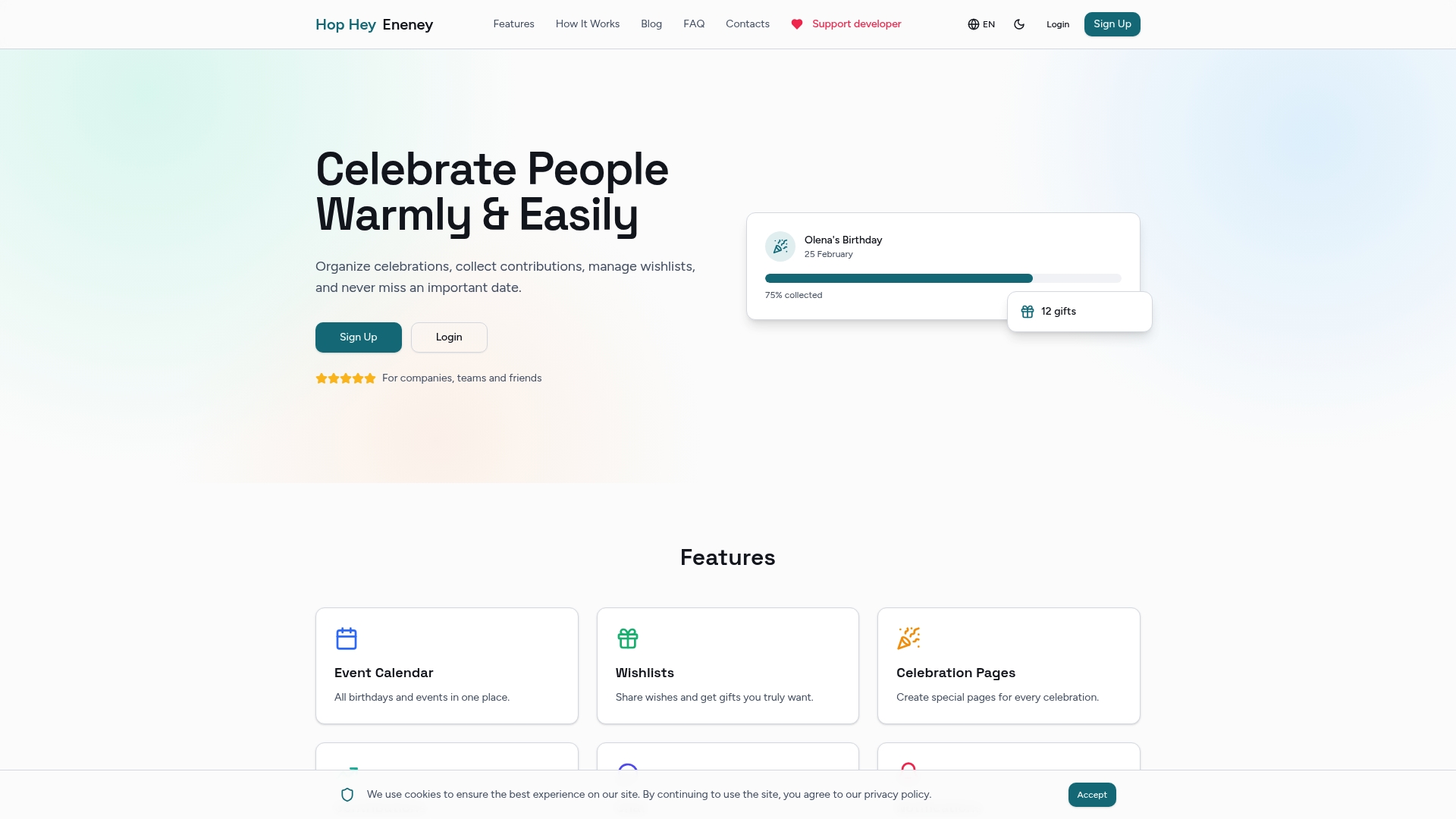
The celebration platform features include private event pages, a shared team calendar, transparent group gift fund collection, and a dedicated coordination chat that keeps surprises intact. Automated reminders via email and Telegram mean nothing slips through the cracks. Multi-currency support handles global teams without friction. Role-based permissions let you distribute planning responsibilities without losing oversight. If your HR team is ready to make celebrations consistent, inclusive, and genuinely memorable, Hop Hey Eneney is worth exploring.
Frequently asked questions
What are the best tools for managing corporate celebrations?
Top tools offer analytics and registration features, RSVP tracking, virtual event support, and integration with HR systems. Look for platforms that also handle gift coordination and automated reminders to reduce manual work.
How can HR teams ensure corporate events are inclusive?
Inclusive events avoid religious-specific themes, offer diverse food options, provide mocktails, and use hybrid formats so remote employees participate on equal footing rather than as an afterthought.
What metrics should HR use to measure celebration success?
Track attendance rates, post-event survey scores, and engagement lift in the weeks following an event. Analytics tools that tie registration and feedback data together make it easier to demonstrate ROI to leadership with real numbers.
How do companies handle shrinking event budgets?
With flat or declining budgets affecting most organizations, the smartest approach is prioritizing frequency over scale, leveraging free or low-cost tools, and focusing spend on the elements that drive the most measurable engagement.