
TL;DR:
- Flexible and hybrid event planning significantly increases attendance and engagement.
- Building adaptable roles and methodologies reduces burnout and enhances event resilience.
- Budgeting with flexibility and contingency plans ensures smooth execution despite last-minute changes.
Hybrid and flexible event planning structures can boost attendance 3.2x compared to traditional formats, yet most HR teams still default to rigid, fixed-role setups that create bottlenecks and burnout. The assumption that more structure equals less chaos is one of the most persistent myths in corporate event management. In reality, flexibility in staffing, budgets, and methodology produces better outcomes, higher participation, and stronger team culture. This guide gives you the frameworks, role definitions, pro tips, and implementation tactics you need to build a genuinely adaptive event planning operation for employee recognition and team celebrations.
Table of Contents
- Core flexible roles in modern event planning
- Methodologies for building flexibility into event planning
- Flexible budgets and recognition program integration
- Handling edge cases: last-minute changes, hybrid challenges, and creative pivots
- Why constraints make event teams stronger: a fresh perspective
- Empower your planning with Hop Hey
- Frequently asked questions
Key Takeaways
| Point | Details |
|---|---|
| Scalable staffing wins | Flexible event teams blend core leadership with scalable floaters to cover peak demands without fixed overhead. |
| Buffer for success | Time cushions, modular programming, and flexible contracts equip events to adapt to unexpected changes. |
| Recognition boosts impact | Integrated recognition programs backed by strategic budgets drive trust and engagement for all team members. |
| Preparation beats perfection | Handling last-minute cancellations or hybrid challenges requires agile team roles and a playbook for creative pivots. |
Core flexible roles in modern event planning
Most HR teams think of event planning as a job for one dedicated coordinator or an overloaded admin. That model breaks under pressure. Modern event teams are built around a small, strategic core with flexible roles layered in as needed, including remote Program Managers, Project Coordinators, and scalable floaters.
Program Managers typically operate in hybrid or fully remote environments and bring 8 or more years of experience focused on employee experience and engagement. Their job is not to manage logistics. Their job is to design the emotional arc of an event: what people feel, what they remember, and how the event connects to company values. They own the big picture.
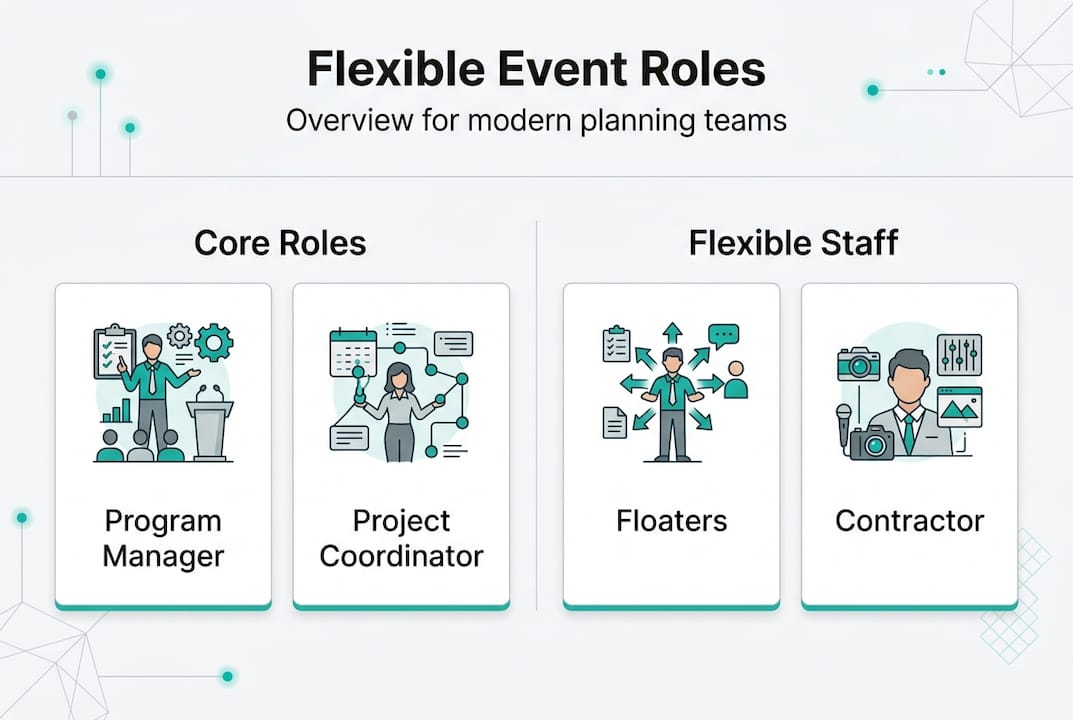
Project Coordinators sit one level below and handle the operational layer. With 3 to 5 years of experience and proficiency in tools like Cvent, they manage vendor timelines, attendee tracking, and day-of logistics. They are the ones who make sure the catering arrives on time and the AV setup is tested before guests walk in.
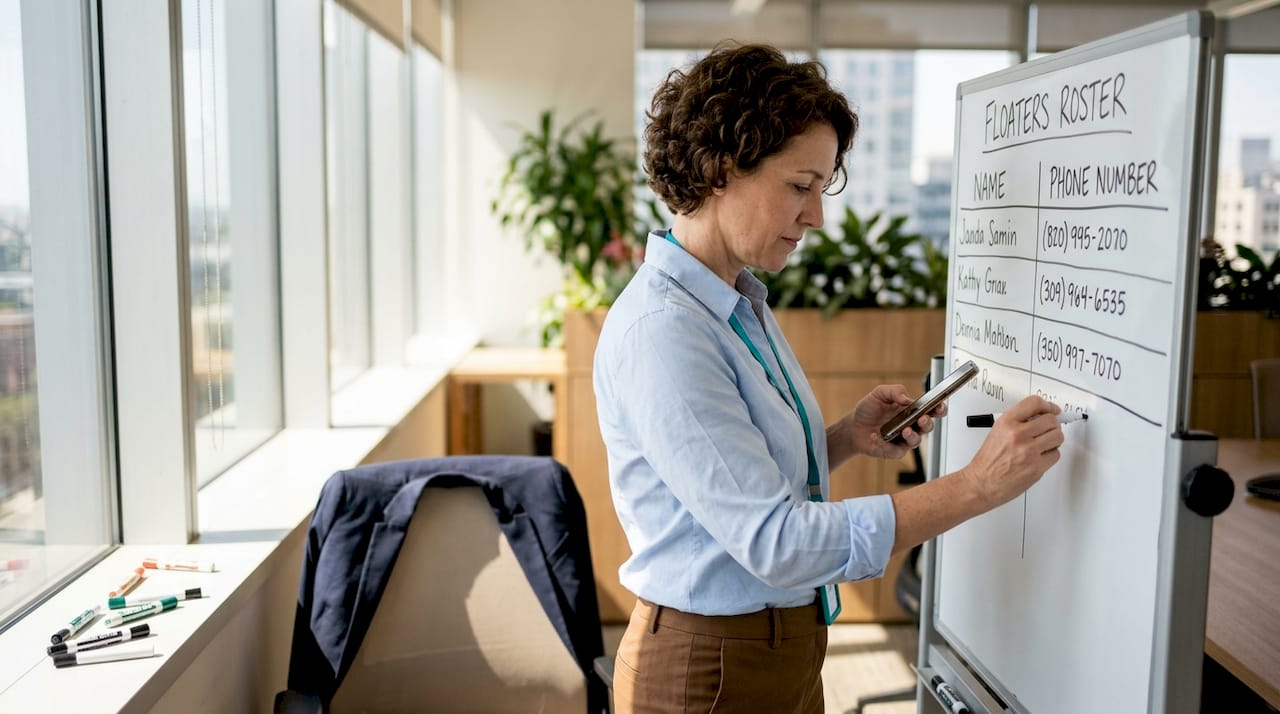
Floaters are the secret weapon most teams overlook. Rather than hiring fixed staff for every event, smart HR teams bring in floaters during peak periods like Q4 holiday events or company-wide recognition weeks. This keeps overhead low while maintaining execution quality.
Here is a quick comparison of how the two models stack up:
| Factor | Full-time fixed team | Flexible/contract model |
|---|---|---|
| Cost | High fixed overhead | Scales with event volume |
| Adaptability | Low | High |
| Specialist access | Limited | On-demand |
| Burnout risk | High | Reduced |
| Best for | Large orgs with constant events | Mid to large orgs with variable schedules |
Flexible staffing also supports your broader goal of building a workplace where recognition feels genuine. When you boost team culture through well-organized events, you need a team structure that can actually deliver them consistently.
Pro Tip: Build a vetted roster of 3 to 5 reliable floaters before you need them. Scrambling for help two weeks before a major recognition event is how quality drops and stress spikes.
For a deeper look at how celebration planning fits into HR strategy, the celebration planning guide for HR is worth bookmarking.
Methodologies for building flexibility into event planning
Knowing the roles is step one. Knowing how to structure your planning process so it bends without breaking is where most teams fall short. Four methodologies consistently separate resilient event programs from fragile ones.
Time buffers are the simplest and most ignored. Build 15-minute cushions between every major segment. If a speaker runs long or a tech issue eats five minutes, you absorb it without cascading delays.
Modular programming means designing your event as interchangeable blocks rather than a linear script. Each module, a keynote, a team activity, a recognition segment, can be shortened, swapped, or dropped without collapsing the whole event. Top planners consistently use modular structures, time cushions, flexible contracts, and zone-based floaters as their core toolkit.
Flexible vendor contracts are non-negotiable for HR teams managing variable headcounts. Negotiate at least 10% variance clauses into catering, AV, and venue agreements. This protects your budget when attendance shifts at the last minute.
Real-time dashboards give your team a live view of RSVPs, budget spend, and task completion. When everyone can see the same data, decisions happen faster and miscommunication drops.
Here is a step-by-step application for employee recognition events:
- Map your event into 4 to 6 modular segments with clear start and end times.
- Assign a primary and backup owner for each segment.
- Add a 15-minute buffer after any segment that involves technology or external vendors.
- Build a 30-minute contingency block at the 60% mark of your run-of-show.
- Share a live dashboard link with all team members 48 hours before the event.
- Debrief within 24 hours using the same dashboard data to capture what shifted and why.
For hybrid event planning, the modular approach is especially critical because remote and in-person segments have different failure modes. A module that works perfectly in a conference room can fall apart for remote participants if the audio setup is not tested independently.
Pro Tip: Use the 15-30-60 backup rule. Have a 15-minute fix ready for small disruptions, a 30-minute pivot plan for mid-size problems, and a 60-minute restructure option if the event needs a major overhaul. Document all three before the event starts.
More party planning tips for teams can help you apply these frameworks to informal celebrations as well.
Flexible budgets and recognition program integration
Flexibility in staffing and methodology only works if your budget can flex too. The industry standard for employee recognition event budgets is 1 to 2% of payroll, and integrated recognition programs drive a remarkable 43x increase in employee trust. That is not a typo. That multiplier reflects what happens when recognition is woven into the event experience rather than bolted on as an afterthought.
The payroll percentage rule gives you a defensible starting point when presenting budgets to leadership. It also scales naturally: a 200-person company and a 2,000-person company both have a proportional baseline to work from.
Recognition programs that integrate well with flexible events include:
- Peer-to-peer recognition segments where colleagues nominate and celebrate each other publicly during the event.
- Milestone acknowledgments tied to work anniversaries, project completions, or personal life events.
- Spot awards distributed in real time during the event for behaviors that reflect company values.
- Team achievement showcases that highlight collective wins rather than just individual performance.
- Wishlist-based gifting where honorees share preferences in advance, making gifts more personal and meaningful. The birthday wishlist guide for HR covers this in practical detail.
The financial case for integration is strong. When recognition is embedded into events rather than handled separately, you reduce duplicate costs, increase perceived value, and create moments employees actually remember. For structured gift exchanges at work, the same principle applies: coordination and celebration belong in the same workflow.
Build at least 10% variance into every line item. Catering costs shift. Headcounts change. A recognition award for an unexpected team win should not require a budget amendment meeting. Flexibility at the line-item level keeps your program agile without losing financial accountability.
Check recognition event benchmarks to calibrate your investment against what high-performing organizations are actually spending.
Handling edge cases: last-minute changes, hybrid challenges, and creative pivots
Even the best-planned events hit turbulence. Last-minute venue changes and guest drop-offs are among the most common disruptions, and flexible guarantees with modular swaps are the proven tools for managing them without losing momentum.
Here are the four most common edge cases and how to handle each one:
-
Venue cancellation within 48 hours. Activate your backup venue list immediately. Every event plan should include two pre-vetted alternatives at different price points. If no physical space is available, pivot to a hybrid format using your existing AV setup.
-
Guest drop-off above 20%. Restructure recognition segments to feel intimate rather than sparse. Smaller groups often produce more genuine moments. Shift from a stage-and-audience format to roundtable conversations.
-
Time zone conflicts for remote participants. Record all synchronous segments and create a 15-minute async highlight reel for participants who could not attend live. Follow up with a personal message from their manager.
-
Technology failure during a hybrid event. Always have a low-tech backup: printed agendas, a phone hotspot, and a designated tech floater who owns nothing else during the event. Hybrid challenges require dual-format preparation that most single-track planners skip entirely.
"Constraints are not the enemy of great events. They are the pressure that forces creative solutions you would never have found otherwise." This is something experienced event leads learn after their first major pivot, and it changes how they plan forever.
For a practical walkthrough of how to organize a work birthday under real constraints, the linked guide covers the full process from coordination to celebration.
Why constraints make event teams stronger: a fresh perspective
Most planning guides promise that more resources solve more problems. More budget, more staff, more time. In practice, the teams that handle events best are rarely the ones with the most. They are the ones that have planned under pressure enough times to develop genuine reflexes.
Constraints force clarity. When you cannot afford a floater for every role, you define responsibilities more precisely. When your venue falls through, you discover which parts of your event actually matter to attendees and which parts were just filler. When your budget is tight, you get creative with group gifting roles and peer-driven recognition that costs almost nothing but lands harder than a catered lunch.
The uncomfortable truth is that unlimited resources often produce bloated, forgettable events. Constraints produce focus. And focused events, the ones with a clear purpose and a tight run-of-show, are the ones employees talk about weeks later. Build your team to expect the unexpected, and you will find they become sharper, more collaborative, and more creative every time they are tested.
Empower your planning with Hop Hey
The frameworks in this guide work best when your team has a platform that keeps everything in one place: event coordination, gift collection, wishlists, and team communication. That is exactly what Hop Hey is built for.
Hop Hey gives HR teams and team leads a structured way to manage celebrations, collect contributions transparently, and coordinate recognition without the usual back-and-forth chaos. Whether you are planning a hybrid milestone event or a surprise birthday for a remote colleague, the solutions for teams page shows you how the platform fits into your existing workflow. Flexible roles need flexible tools. Hop Hey is that tool.
Frequently asked questions
What are the main benefits of flexible event planning roles for HR?
Flexible staffing scales through freelancers and contractors, which improves responsiveness and supports higher engagement for both hybrid and in-person celebrations without inflating fixed headcount.
How do you budget flexibly for employee recognition events?
Allocate 1 to 2% of payroll as your baseline and build in at least 10% flexibility across vendor contracts to absorb last-minute changes or scaling needs.
What skills should flexible event team members have?
Project Coordinators need strong logistics skills and proficiency with hybrid event technology, alongside adaptability and clear communication under pressure.
How are hybrid event challenges managed with flexible roles?
Zone-based staffing and dual chairs address hybrid volatility by ensuring both in-person and remote formats have dedicated support, with low-tech backups ready for technology failures.
What is the difference between core team and floaters in event planning?
Core teams handle strategy and high-level design, while floaters are brought in for specific execution tasks during peak event periods, keeping the overall team lean and scalable.