
Group gifting sounds simple until you're the one chasing down 12 people for contributions, realizing someone already bought the same gift, and discovering the fund is $40 short two days before the party. These frustrations are not rare. They happen in offices, friend groups, and remote teams every week. The gift giver role has evolved far beyond passing around a card. Today, it requires coordination, transparency, and the right tools. This guide walks you through exactly how to structure that role, pick the right platform, and run group gifting events that people actually enjoy participating in.
Table of Contents
- What is a gift giver's role in group celebrations?
- Essential skills and tools for effective gift givers
- Coordinating surprise events: Steps for smooth group gifting
- Solving common group gifting problems
- Streamline your group gifting with Hop Hey Eneney
- Frequently asked questions
Key Takeaways
| Point | Details |
|---|---|
| Gift giving needs structure | Assigning a clear gift giver prevents chaos and ensures inclusivity for group events. |
| Collaboration tools matter | Rated gifting platforms help you avoid duplicate purchases and lost contributions. |
| Step-by-step planning works | Following a structured process makes group gifting efficient and enjoyable for everyone. |
| Most problems are solvable | Common group gifting pitfalls have simple fixes when using the right tools and clear communication. |
What is a gift giver's role in group celebrations?
A gift giver, in the context of teams and groups, is the person who takes ownership of the entire gifting process. That means gathering ideas, collecting money, making the purchase, and delivering the gift on time. It sounds manageable until you factor in 20 coworkers with different opinions, varying budgets, and zero patience for follow-up messages.
This role shows up in many common situations. Birthday pools where the team chips in for one meaningful gift. Office celebrations for promotions, retirements, or work anniversaries. Friend group events like baby showers or weddings where coordination is critical. In each case, someone has to step up and own the process.
The core responsibilities of a gift giver include:
- Coordinating ideas so the group lands on something the recipient will actually want
- Setting a budget and communicating it clearly to every contributor
- Collecting funds in a way that is trackable and transparent
- Managing timing so the gift arrives before the event, not after
- Keeping the surprise by communicating only with contributors, not the person being celebrated
Without structure, group gifting turns chaotic fast. Funds get lost in personal Venmo accounts. Two people buy the same item. Someone feels pressured to contribute more than they can afford. The gift giver burns out and swears never to do it again.
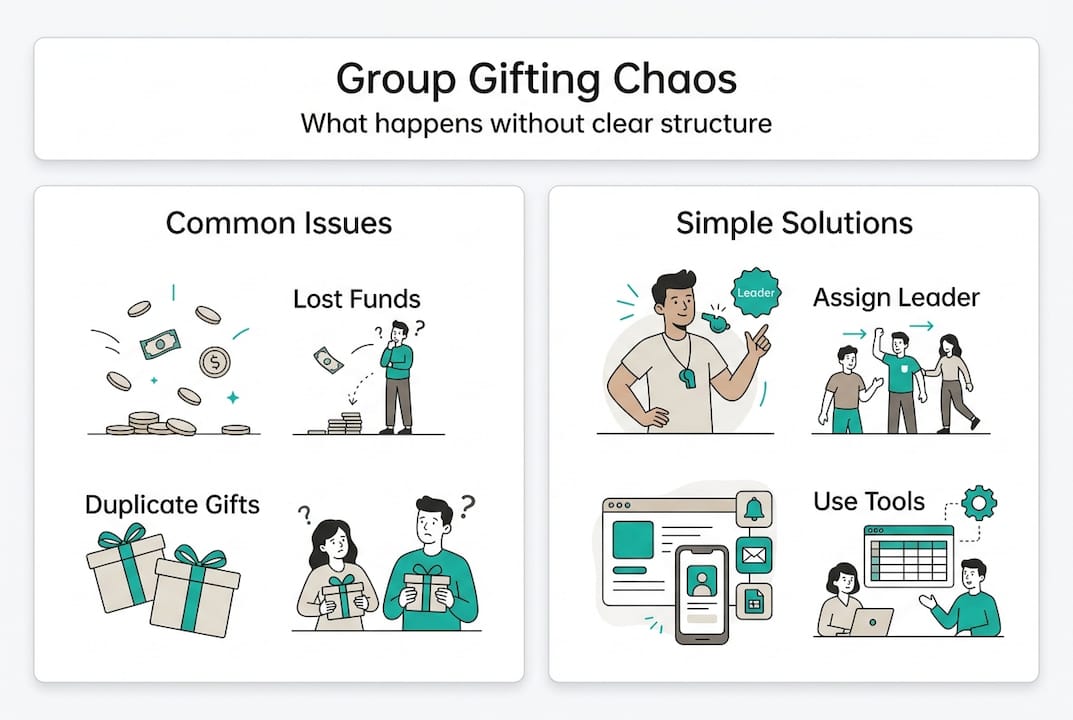
One of the best ways to manage birthday wishlists at work is to treat the gift giver role like a real project coordinator position, not just a favor someone does.
Pro Tip: Appoint one person as the official gift giver at the start of every event cycle. Rotate the role across team members so no one carries the burden every time. Standardize your communication channel so contributors know exactly where to go for updates.
Essential skills and tools for effective gift givers
Knowing what the role involves is step one. Being effective at it requires the right mix of organizational skills and digital tools. The best gift givers today do not rely on group chats and spreadsheets. They use purpose-built apps that handle the heavy lifting.
Here is what to look for in a gifting or collaboration tool:
- Duplicate prevention so two people cannot accidentally buy the same item
- Contribution tracking with real-time visibility for all participants
- Wishlist integration so the recipient's preferences guide the group
- Automated reminders to reduce the need for manual follow-up
- Private coordination so the celebration stays a surprise
Not all tools are equal. Giftster earns 4.7 to 4.8 star ratings for group collaboration and duplicate prevention, though users note limited customization options. Corporate platforms like Snappy are built for larger organizations and score high for fulfillment and integrations, making them a strong fit for Fortune 100 environments. Here is a quick comparison to help you choose:
| Feature | Giftster | Snappy | Email/Spreadsheets |
|---|---|---|---|
| Duplicate prevention | Yes | Yes | No |
| Contribution tracking | Basic | Advanced | Manual |
| Wishlist management | Yes | Limited | No |
| Automated reminders | Yes | Yes | No |
| Customization | Limited | Moderate | Full |
| Best for | Small teams, families | Large companies | Any (with effort) |
For teams exploring best wishlist apps or looking to improve their celebration planning steps, the right tool depends on group size, budget, and how often you run events. A small friend group might do fine with Giftster. A company running monthly employee recognition events needs something more robust.
The biggest mistake gift givers make is choosing convenience over structure. A group chat feels easy at first. But when 15 people are messaging at once, contributions go untracked, and the surprise gets spoiled because someone tagged the wrong person.

Coordinating surprise events: Steps for smooth group gifting
Corporate gifting tools have become central to large company celebrations precisely because they bring order to what is otherwise a chaotic process. Here is a step-by-step sequence that works for teams of any size.
- Appoint a coordinator. One person owns the process. Everyone else is a contributor. This single decision eliminates most confusion.
- Set a clear goal. Define the occasion, the recipient, and the target budget before inviting anyone to participate.
- Invite contributors early. Give people at least two weeks notice. Last-minute asks lead to low participation and rushed decisions.
- Collect gift ideas. Use a wishlist or poll to narrow down options. Avoid open-ended brainstorming in large groups since it stalls decisions.
- Open contributions. Use a platform that tracks who has paid and how much. Never collect money through personal accounts.
- Set a hard deadline. Close contributions three to four days before the event. This gives you time to purchase and arrange delivery.
- Purchase and confirm delivery. Get a tracking number and share it with the group so everyone knows the gift is on its way.
- Deliver and celebrate. Coordinate the reveal moment so it lands with impact, not awkwardness.
Pro Tip: Transparency in funds is the single biggest factor in contributor satisfaction. When people can see exactly how much has been collected and what it will be spent on, they contribute faster and more willingly. Platforms that show real-time totals remove the need for the coordinator to answer the same question 10 times.
For more practical guidance, explore how to organize birthdays at work, review team party planning tips, and check out office event tips that apply directly to group gifting scenarios.
Solving common group gifting problems
Even well-organized gift givers run into friction. The good news is that most problems are predictable, which means they are also preventable. Here are the five most common blockers and how to fix them.
- Indecision. The group cannot agree on a gift. Fix: Use a wishlist from the recipient or a simple poll with three options and a 48-hour voting window.
- Lack of commitment. People say they will contribute but never follow through. Fix: Set a contribution deadline and send two automated reminders. Platforms with built-in nudges handle this without making the coordinator look pushy.
- Budget creep. The original budget grows because someone suggests a more expensive option. Fix: Lock the budget at the start and communicate it in writing. No exceptions without a group vote.
- Surprise spoilers. Someone accidentally mentions the gift to the recipient. Fix: Keep all coordination in a private channel that excludes the person being celebrated. Never use the main team chat.
- Uneven participation. Some people always contribute while others never do. Fix: Make participation visible (not shaming, just transparent) and rotate the coordinator role so everyone feels ownership.
"Platforms with high collaboration scores help prevent duplicate purchases and streamline communication, reducing the most common sources of group gifting frustration."
Using dedicated tools like those found on a celebration page or platforms built specifically for gifting for teams addresses these blockers at the system level, not just the symptom level. When the process is built into the tool, the coordinator spends less time managing people and more time making the celebration memorable.
The shift from reactive problem-solving to proactive process design is what separates a stressful gift giver experience from a smooth one. Build the guardrails before the event starts, not after something goes wrong.
Streamline your group gifting with Hop Hey Eneney
Everything covered in this guide, from appointing a coordinator to tracking contributions transparently, works best when it lives inside one platform. That is exactly what Hop Hey Eneney was built for.
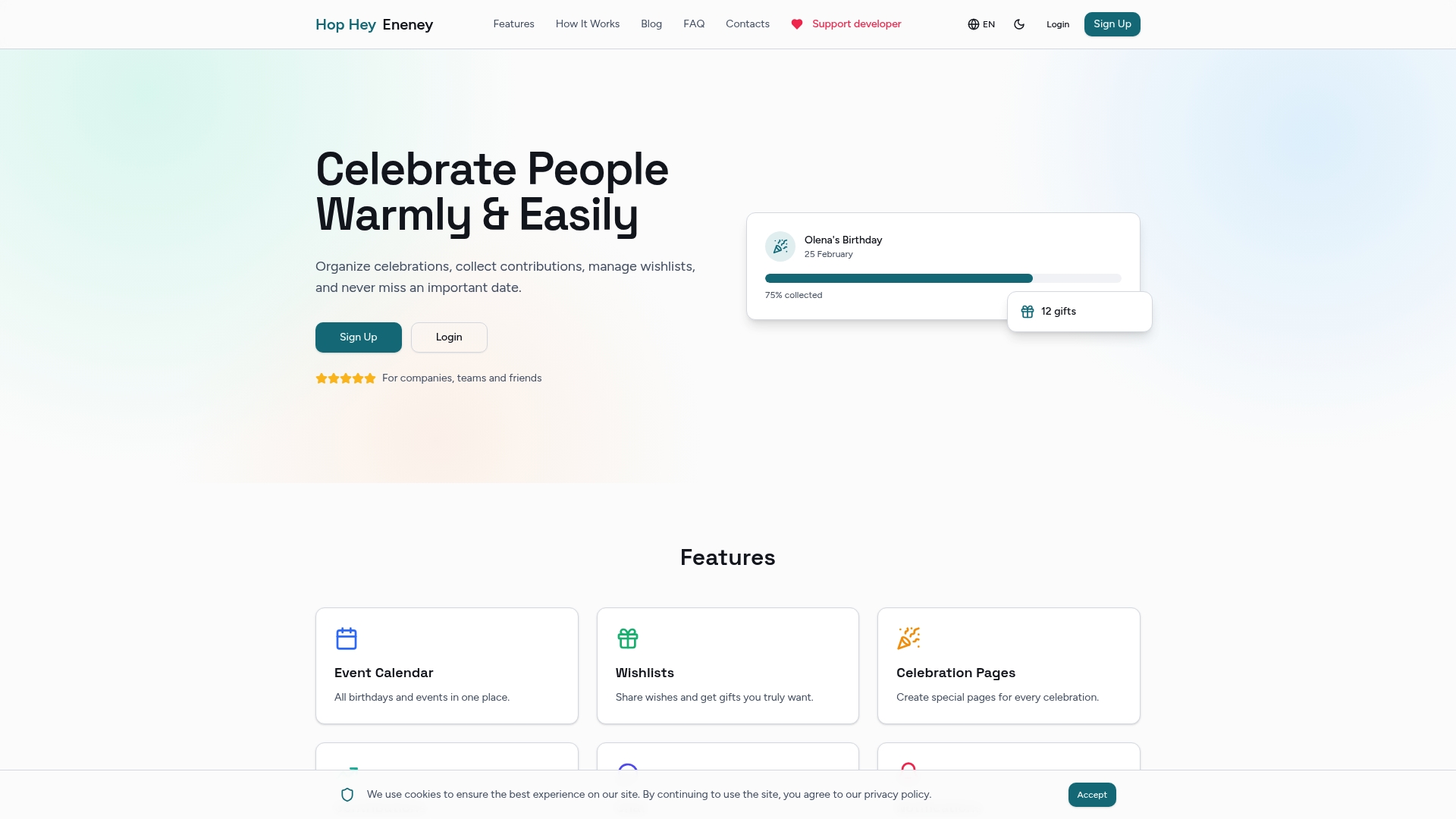
Hop Hey Eneney gives teams and companies a private space to coordinate celebrations, collect gift funds with full transparency, manage wishlists, and communicate without the person being celebrated ever seeing a thing. Onboarding takes minutes. The platform supports multi-currency contributions, automated reminders via email and Telegram, and role-based permissions so every contributor knows exactly what they need to do. Whether you are an HR manager running monthly employee recognition or a team lead organizing a surprise farewell, Hop Hey Eneney for companies gives you the structure to make every celebration land perfectly.
Frequently asked questions
What is the best way to prevent duplicate gifts in a group?
Using a platform with built-in collaboration features is the most reliable method. Giftster's 4.7 to 4.8 star ratings reflect its strength in preventing duplicate purchases through shared wishlists and real-time claim tracking.
How can I track group contributions securely?
Modern platforms like Snappy provide tracking and fulfillment integrations that make every contribution visible to the coordinator and the group. This removes the risk of lost funds or disputed amounts.
Are there easy-to-use apps for organizing surprise group celebrations?
Yes. Both Giftster and Snappy are user-friendly collaboration tools designed for teams ranging from small groups to Fortune 100 companies. The key is choosing one that matches your group's size and event frequency.
What if our team is remote or hybrid?
Digital gifting platforms are built for exactly this scenario. Corporate platforms integrate with remote workflows and support virtual delivery, centralized coordination, and asynchronous contribution so geography is never a barrier to a great celebration.