
TL;DR:
- Regular team celebrations significantly boost trust and engagement among employees.
- A drop in celebration frequency can predict employee turnover up to 87 days early.
- Effective programs are inclusive, consistent, tie to values, and utilize both digital and in-person channels.
Treating celebrations as optional perks is costing companies more than they realize. Teams that celebrate regularly build 9x more trust among givers, and a drop in celebration frequency can signal employee attrition risk up to 87 days before someone actually leaves. For HR managers and team leads, that's not a fun fact. That's an early warning system. This article breaks down what team celebration actually means in a corporate context, why it drives measurable engagement and retention, and how to build programs that work beyond the annual holiday party.
Table of Contents
- Defining team celebration in modern workplaces
- Why team celebrations matter: Impact on engagement and retention
- Elements of effective team celebration programs
- Practical guide: Organizing celebrations for teams
- Why conventional celebration programs often miss the mark
- Explore advanced tools for team celebrations
- Frequently asked questions
Key Takeaways
| Point | Details |
|---|---|
| Strategic celebrations | Treating celebration as a process, not a one-off event, builds lasting trust and engagement. |
| Retention signal | A drop in celebration frequency reliably predicts employee disengagement and turnover risk. |
| Multi-channel approach | Using both digital and in-person channels for celebrations ensures broader reach and inclusivity. |
| Equity audits | Regular audits of celebration programs protect fairness and maximize cultural impact. |
| Practical frameworks | Organizing celebrations with clear purpose, metrics, and feedback delivers measurable improvements. |
Defining team celebration in modern workplaces
Most people picture balloons and cake when they hear "team celebration." But in a corporate context, the definition is much more specific and much more powerful.
Team celebration is a structured, recurring process of recognizing achievements, milestones, and meaningful moments within a group. It's tied to performance, values, and culture. It's not a one-off event. It's an ongoing organizational practice.
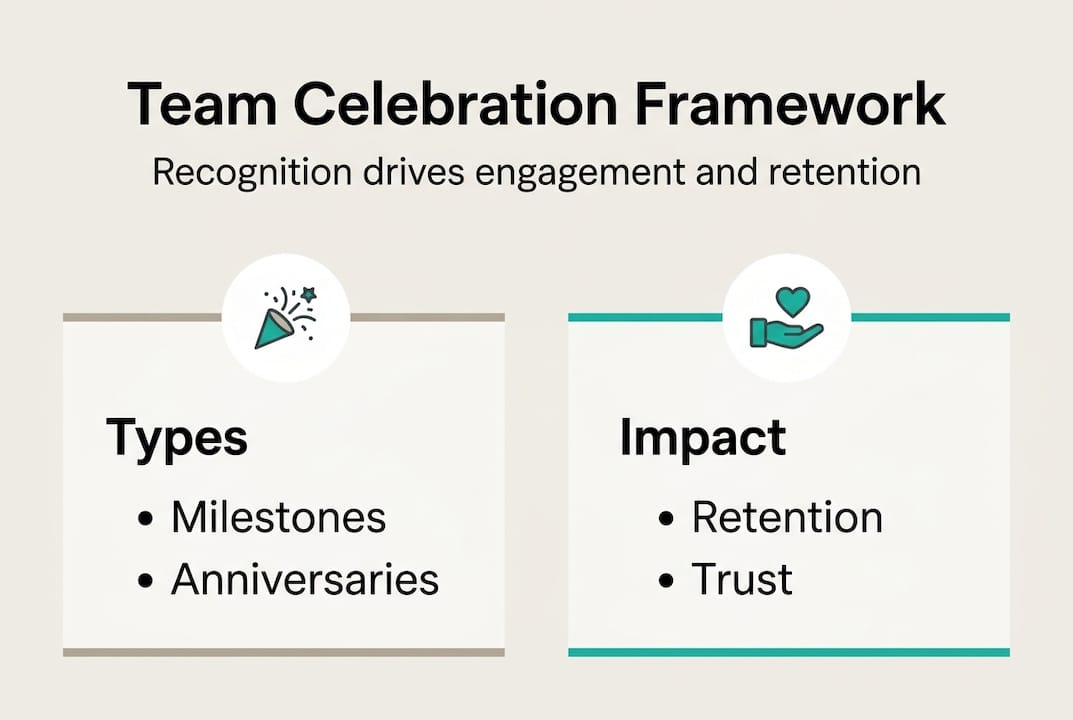
This distinction matters because generic company parties and true team celebrations serve entirely different purposes. A holiday party is a social event. A structured celebration program is a cultural lever. One is reactive; the other is intentional.
As the State of Workplace Trust 2026 research shows, celebration is a social process, not merely an endpoint. It builds trust and strengthens culture over time, not in a single moment.
Here are the core types of team celebrations HR teams typically manage:
- Milestone achievements (project completions, promotions, work anniversaries)
- Personal milestones (birthdays, weddings, new family members)
- Cultural and seasonal events (holidays, team retreats, cultural observances)
- Performance rewards (hitting quarterly goals, exceeding targets, innovation wins)
- Peer recognition moments (shoutouts, thank-you rituals, team kudos)
Each of these serves a different function, but together they form a complete celebration planning guide that keeps teams feeling seen and valued throughout the year.
The mistake many companies make is treating celebrations as isolated events rather than a continuous thread in the employee experience. When you frame celebrations as part of your organizational values, they stop being a "nice to have" and start being a measurable driver of culture.
Pro Tip: When onboarding new team members, introduce your celebration program during orientation. It signals immediately that recognition is a core value, not an afterthought.
For teams interested in boosting engagement through structured recognition, the starting point is always definition. Know what you're celebrating and why, before you decide how.
Why team celebrations matter: Impact on engagement and retention
Here's where the data gets interesting. Celebrations aren't just feel-good moments. They're measurable predictors of team health.
According to the State of Workplace Trust 2026, a drop in celebration frequency predicts retention risk 87 days in advance. That means if your team stops celebrating, you have roughly three months before someone walks out the door. That's an actionable window if you're paying attention.
| Metric | Teams with regular celebrations | Teams without structured celebrations |
|---|---|---|
| Employee trust scores | High (up to 9x for givers) | Low to moderate |
| Engagement levels | Consistently elevated | Variable, often declining |
| Retention risk signals | Detectable early | Often missed until exit |
| Cultural cohesion | Strong | Fragile |
The mechanism behind this isn't complicated. It follows a clear sequence:
- Recognition makes employees feel seen and valued for their contributions.
- Trust building follows naturally when recognition is consistent and genuine.
- Retention effects emerge as trust deepens and employees feel emotionally invested in the team.
This isn't soft science. Multi-channel celebration programs that tie recognition to values and performance measurably improve engagement outcomes. The key word is "multi-channel." Celebrations that happen only in person exclude remote workers. Celebrations that only happen digitally can feel impersonal. The strongest programs use both.
Pro Tip: Run a quarterly feedback audit on your celebration program. Ask employees: "Did you feel recognized this quarter?" The gap between what HR thinks is happening and what employees actually feel is often larger than expected.
For practical ideas on how to boost engagement with celebrations, look at what your highest-retention teams are already doing. They're usually celebrating more often and more intentionally than average. You can also explore types of celebration events to diversify your program and keep it fresh across the year.
The bottom line: celebration frequency is a leading indicator, not a lagging one. Treat it like a metric.
Elements of effective team celebration programs
Knowing why celebrations matter is one thing. Building a program that actually delivers is another. Here's what separates effective programs from forgettable ones.
Core elements every program needs:
- Frequency: Regular touchpoints, not just annual events
- Inclusivity: Celebrations that work for remote, hybrid, and in-office employees
- Values alignment: Every celebration should connect to something the company actually stands for
- Equity audits: Review who gets recognized and who doesn't, because unconscious bias creeps in
- Digital and in-person channels: Use both to maximize reach and personal impact
The SHRM framework for managing employee recognition programs emphasizes auditing for equity and tying recognition to performance and values. These aren't optional extras. They're the difference between a program that builds culture and one that quietly creates resentment.

| Celebration type | Tied to values | Frequency | Measurement criteria |
|---|---|---|---|
| Work anniversary | Loyalty, commitment | Annual | Tenure milestones |
| Project completion | Excellence, teamwork | Per project | Delivery quality |
| Peer recognition | Collaboration | Monthly | Nomination volume |
| Personal milestones | Care, belonging | As they occur | Participation rate |
For corporate celebration strategies that scale across large teams, the table above gives you a starting framework. Adapt it to your company's specific values and performance metrics.
One often-overlooked element is role flexibility. When the same person organizes every celebration, it creates bottlenecks and burnout. Rotating planning responsibilities across team members generates broader buy-in and surfaces creative ideas. Flexible event planning roles also give employees a sense of ownership over team culture.
Pro Tip: Assign a rotating "celebration lead" each quarter. This person coordinates logistics, gathers input, and owns the feedback collection. It distributes the workload and builds leadership skills at the same time.
Avoid these common pitfalls: relying on the same generic format every time, skipping feedback collection, and assuming everyone celebrates the same way. Cultural sensitivity and personal preferences matter more than most HR teams account for.
Practical guide: Organizing celebrations for teams
Let's get tactical. Here's a step-by-step process for organizing team celebrations that actually land.
-
Set the purpose. Before anything else, define what you're celebrating and why it matters to the team. A celebration without a clear purpose feels hollow. Connect it to a shared achievement, a personal milestone, or a cultural moment.
-
Choose the format. In-person, virtual, hybrid, or asynchronous? Match the format to your team's structure. A fully remote team needs a different approach than a co-located one.
-
Build team roles. Assign a lead, a communications person, and a logistics coordinator. Even for small celebrations, distributed ownership improves outcomes.
-
Execute and document. Run the celebration, capture photos or notes, and share them in a team channel. Documentation makes the moment last longer and reinforces the culture.
-
Track feedback and results. Send a short survey afterward. Did people feel recognized? Was the format inclusive? Use this data to improve the next one.
As party planning tips for teams consistently show, celebration frequency and diversity are the two biggest drivers of engagement impact. One big annual event is not a substitute for regular, varied recognition moments.
Pro Tip: Use a digital platform to manage event scheduling, gift coordination, and reminders in one place. This removes the chaos of group chats and spreadsheets, especially for larger teams.
For HR teams managing office event organization at scale, digital tools are no longer optional. They're essential for consistency. Tools like birthday list managers help ensure no one's milestone gets missed, which matters more than most managers think. You can also find specific guidance on how to organize a workplace birthday that feels personal rather than procedural.
Watch for celebration fatigue. If every week has a mandatory celebration, the meaning dilutes. Quality and intentionality beat volume every time.
Why conventional celebration programs often miss the mark
Here's an uncomfortable truth: most corporate celebration programs are built for optics, not outcomes. They check a box on the engagement survey without actually moving the needle on trust or retention.
The problem isn't effort. It's that generic programs treat all employees the same, use the same formats repeatedly, and measure success by participation headcount rather than emotional impact. A pizza party for hitting a sales target might feel like recognition to the manager who organized it. To the team, it can feel like their work was worth exactly one lunch.
What's more troubling is the signal hiding in plain sight. When celebration frequency drops, it's one of the earliest indicators of disengagement. Most HR teams don't track this. They notice turnover after the fact, not the quiet withdrawal that preceded it by three months.
The shift required is treating celebrations as continuous signals, not end-of-quarter checklists. Every time a team celebration is skipped, delayed, or phoned in, you're missing data about how your team is actually doing. Structured, evidence-based programs that manage celebration programs with intention are the ones that build lasting cultural change.
Explore advanced tools for team celebrations
You've got the strategy. Now you need the infrastructure to execute it consistently without burning out your HR team or your celebration leads.
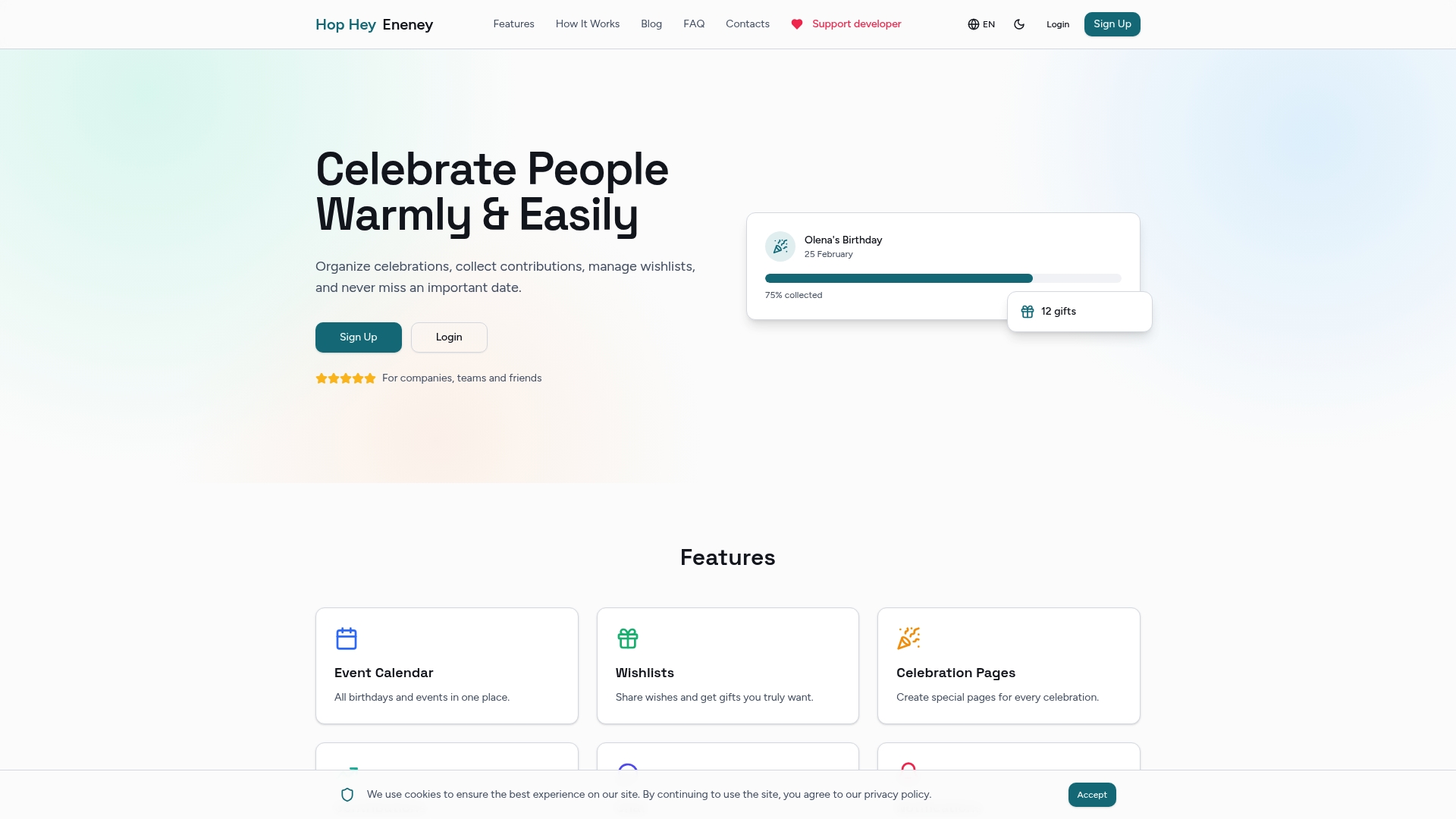
Hop Hey Eneney is a celebration management platform built specifically for teams, companies, and HR departments that want to run recognition programs without the chaos. It combines event calendar management, transparent gift fund collection, private coordination chats, and personalized wishlists in one place. Automated reminders, Telegram notifications, and role-based permissions mean nothing falls through the cracks. Whether you're managing a 10-person team or a 500-person organization, it scales with you. If your current process involves group chats, spreadsheets, and someone always forgetting the card, this is the upgrade your team deserves.
Frequently asked questions
What counts as a team celebration in a corporate setting?
A team celebration is any structured recognition process tied to achievements, milestones, or cultural events that connects to team performance and values, not just casual social gatherings.
How often should teams organize celebrations for maximum impact?
Monthly or quarterly touchpoints work well for most teams. A drop in frequency often signals early disengagement and can predict retention risk up to 87 days in advance.
How can HR ensure celebrations are inclusive and equitable?
Audit your program regularly for demographic equity, rotate planning roles across the team, and use multi-channel approaches that reach both remote and in-office employees.
Do team celebrations improve engagement?
Yes. Regular, strategic celebrations build trust and retention by making employees feel consistently recognized, which reduces disengagement and lowers turnover risk over time.
What's the best platform for managing team celebrations?
Digital platforms that integrate gifting, event scheduling, wishlists, and employee notifications offer the most complete support for modern HR teams running recognition programs at scale.