
TL;DR:
- Recognition gaps contribute significantly to disengagement, affecting productivity and retention.
- Well-managed recognition events create shared experiences, reinforce values, and improve organizational culture.
- Measuring event success through feedback and engagement data is essential for building effective recognition programs.
Recognition gaps are expensive. When employees feel overlooked, they quietly disengage, and that disengagement costs organizations real money, real turnover, and real damage to team culture. Recognition gaps cause disengagement, but well-run celebration events directly increase employees' sense of belonging. This guide gives HR managers and engagement specialists a practical, end-to-end framework for planning, executing, and measuring employee recognition events. From choosing the right tools to tracking ROI, every section is built to help you turn celebrations into a measurable competitive advantage.
Table of Contents
- Why event management matters for employee recognition
- Essential tools and technology for managing workplace events
- Step-by-step process: Planning and executing engaging events
- Measuring success: Evaluating and improving event ROI
- Perspective: Why effective event management is more than logistics
- How to make your employee celebrations seamless
- Frequently asked questions
Key Takeaways
| Point | Details |
|---|---|
| Events boost engagement | Recognition events are proven to increase belonging and reduce disengagement costs. |
| Tech enhances scale | Modern event tools help HR teams coordinate, measure, and repeat success across large organizations. |
| Strategic planning is key | A structured, measured approach ensures every recognition event delivers meaningful ROI. |
| Feedback fuels improvement | Post-event analysis enables continuous learning and greater future impact. |
Why event management matters for employee recognition
Disengagement is not a soft problem. It shows up in absenteeism, missed deadlines, and exit interviews. According to recent workforce research, recognition gaps drive disengagement at scale, and companies that fail to bridge those gaps see measurable drops in productivity and retention. The cost of replacing a single employee can reach 50 to 200 percent of their annual salary. That number alone makes a strong case for investing in structured recognition programs.
Recognition events do more than boost morale for a day. They create shared memories, reinforce company values, and give employees a tangible reason to stay. Understanding the team celebration impact on retention and culture is the first step toward treating events as a strategic HR tool rather than a nice-to-have perk.
"Events that align with company values and are followed by structured feedback loops are the ones that actually move engagement scores." This is the difference between a party and a program.
Here is what strong event management delivers in practice:
- Higher retention rates among employees who feel consistently recognized
- Stronger team cohesion, especially in hybrid or remote environments
- Increased psychological safety, because celebration normalizes positive reinforcement
- Better onboarding outcomes, when new hires see recognition culture in action early
- Improved manager-employee relationships, built through shared positive experiences
Measurement is what separates a one-off event from a repeatable program. Without feedback loops and engagement tracking, you cannot know whether an event moved the needle. The goal of organizing team celebrations effectively is not just to make people smile. It is to create documented, repeatable moments that tie back to business outcomes like retention, satisfaction scores, and productivity.
When HR teams treat events as measurable initiatives rather than administrative tasks, the entire organization benefits. Budget conversations become easier. Leadership buy-in increases. And employees notice when recognition is consistent, intentional, and well-executed.
Essential tools and technology for managing workplace events
Scaling a recognition program across a mid-sized or large company without the right technology is like trying to run payroll on a spreadsheet. It works until it doesn't. The right tools automate the repetitive work, surface the data you need, and make the whole process repeatable.
Platforms like Bucketlist and Achievers are built specifically for employee recognition at scale. Scale via tech platforms like these to manage campaigns, automate reminders, and collect post-event feedback in one place. Both tools offer integrations with HRIS systems, which means recognition data flows directly into your existing HR infrastructure.
Here is a quick comparison of features to evaluate when choosing a platform:
| Feature | Bucketlist | Achievers | Hop Hey |
|---|---|---|---|
| Automated reminders | Yes | Yes | Yes |
| Fund collection | No | No | Yes |
| Wishlist management | No | No | Yes |
| Feedback collection | Yes | Yes | No |
| Multi-currency support | No | No | Yes |
| Telegram notifications | No | No | Yes |
| HRIS integration | Yes | Yes | In progress |
Beyond the big platforms, you also need tools for the coordination layer, the part where someone has to organize a gift, collect contributions, and keep the surprise intact. That is where tools for managing celebrations at the team level fill a gap that enterprise platforms often miss.
When evaluating any recognition tool, look for these core capabilities:
- Automation for invitations, reminders, and follow-up surveys
- Analytics dashboards showing participation rates and engagement trends
- Role-based permissions so organizers can work without spoiling surprises
- Integration with Slack, Teams, or your existing HRIS
- Feedback collection built into the post-event workflow
Pro Tip: Do not bolt recognition tools onto your HR stack as an afterthought. Map your current event workflow first, identify the three biggest friction points, and then choose a tool that solves those specifically. The best platform is the one your team will actually use consistently. Explore celebration coordination strategies to see how other HR teams have structured their tech stacks.
Step-by-step process: Planning and executing engaging events
A great recognition event does not happen by accident. It follows a clear sequence of decisions, actions, and checkpoints. Here is the process that works for HR teams managing events at scale.
- Define the objective. Every event needs a stated purpose. Is it celebrating a work anniversary? Recognizing a team milestone? Onboarding a new cohort? The objective shapes every decision that follows.
- Set the budget and scope. Determine headcount, format (in-person, virtual, hybrid), and total spend. Assign a budget owner early.
- Assign roles. Designate an event lead, a communications owner, and a logistics coordinator. Use flexible event roles strategies to distribute responsibility without creating bottlenecks.
- Build the timeline. Work backward from the event date. Set milestones for venue booking, invitations, gift coordination, and feedback setup.
- Execute with checklists. On the day of the event, use a printed or digital checklist. Nothing derails a celebration faster than a missed detail.
- Follow up within 48 hours. Send a thank-you message, share photos or highlights, and distribute your feedback survey while the experience is still fresh.
Here is a recommended timeline for a mid-sized company event:
| Phase | Task | Timeline |
|---|---|---|
| Planning | Define objectives and budget | 6 to 8 weeks before |
| Preparation | Send invitations, confirm logistics | 3 to 4 weeks before |
| Execution | Run the event with assigned roles | Event day |
| Follow-up | Send survey and thank-you notes | Within 48 hours |
| Review | Analyze feedback, document learnings | Within 1 week after |
"Continuous improvement cycles using post-event feedback are essential for ROI. Without them, you are just running the same event on repeat and hoping for better results."
Pro Tip: The most common pitfall is skipping the follow-up phase. Organizers are tired after the event and move on. But the 48-hour window is when feedback is most honest and most actionable. Schedule the survey send before the event even starts. See the full celebration planning steps and office event organization guides for deeper checklists.
Measuring success: Evaluating and improving event ROI
Running a great event and knowing it was great are two different things. Without measurement, you are relying on gut feeling to justify budget and repeat the program. HR leaders who want a seat at the leadership table need data, not anecdotes.
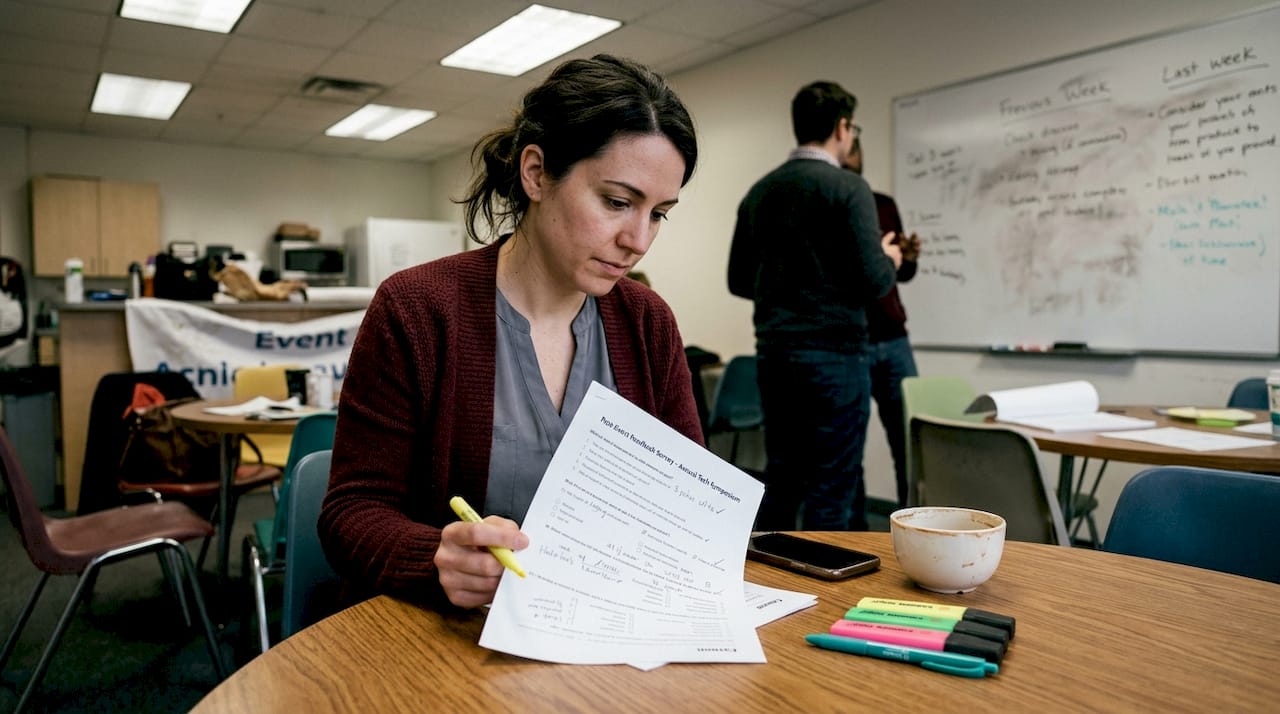
Start by identifying what you are measuring before the event happens. Measure ROI via engagement uplift and continuous feedback to connect event activity to real business outcomes. Pre-event and post-event engagement scores give you a before-and-after comparison that leadership can understand.
Here are the key metrics to track for every recognition event:
- Attendance rate: What percentage of invited employees actually showed up?
- Participation rate: Did people engage during the event, or just attend passively?
- Net Promoter Score (NPS): Would employees recommend this type of event to a colleague?
- Feedback quality: Are written responses specific and constructive, or vague?
- Cost per outcome: Total spend divided by measurable engagement improvement
- Repeat participation: Are the same people attending every time, or is the program reaching new employees?
The feedback loop is where most programs break down. Collecting survey responses is not enough. You need a structured review process where someone reads every response, tags themes, and translates findings into specific changes for the next event. This is what turns a one-time celebration into a variety of celebration events that compound over time.
Iteration is the real engine of ROI. The first event you run will have gaps. The fifth event, if you have been learning and adjusting, will be significantly better. Use party planning insights from teams who have already gone through this cycle to shortcut your learning curve.
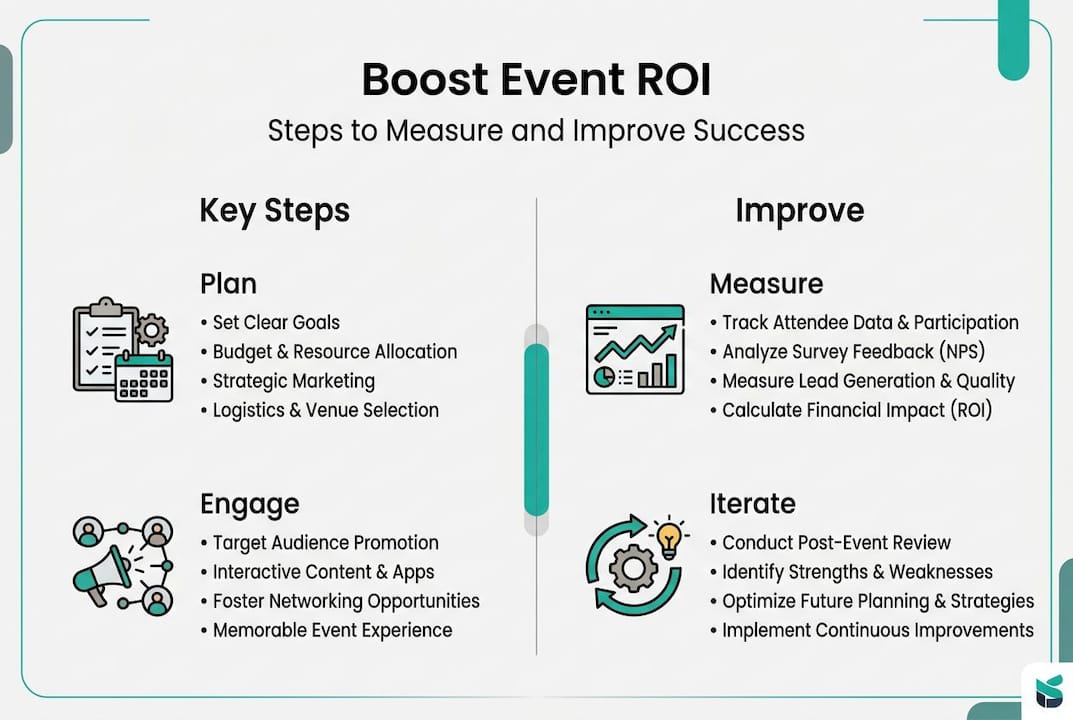
One practical framework: after each event, answer three questions. What worked and should be repeated? What did not work and should be dropped? What was missing and should be added? Document the answers and attach them to your event template for next time.
Perspective: Why effective event management is more than logistics
Here is the uncomfortable truth most event planning guides skip: most corporate recognition events fail not because of bad logistics, but because they are not connected to anything real.
A catered lunch with a generic thank-you speech does not make an employee feel seen. It makes them feel processed. The difference between a forgettable event and one that actually shifts culture is intentionality. Every decision, from the format to the gift to the follow-up message, should signal that the company understands who this person is and what they contribute.
We have seen HR teams spend significant budgets on events that employees forget within a week. And we have seen low-budget, highly personal celebrations that people talk about for years. The variable is not money. It is meaning.
The competitive advantage in recognition is not having the biggest budget. It is having the most consistent, most thoughtful program. That requires tying every event to a deeper purpose in celebrations and a clear HR objective. When you do that, events stop being a cost center and start being a retention strategy.
How to make your employee celebrations seamless
If you are managing recognition events across a growing team, the coordination overhead adds up fast. Tracking birthdays, collecting gift contributions, keeping surprises intact, and sending timely reminders is a full-time job on top of your actual job.
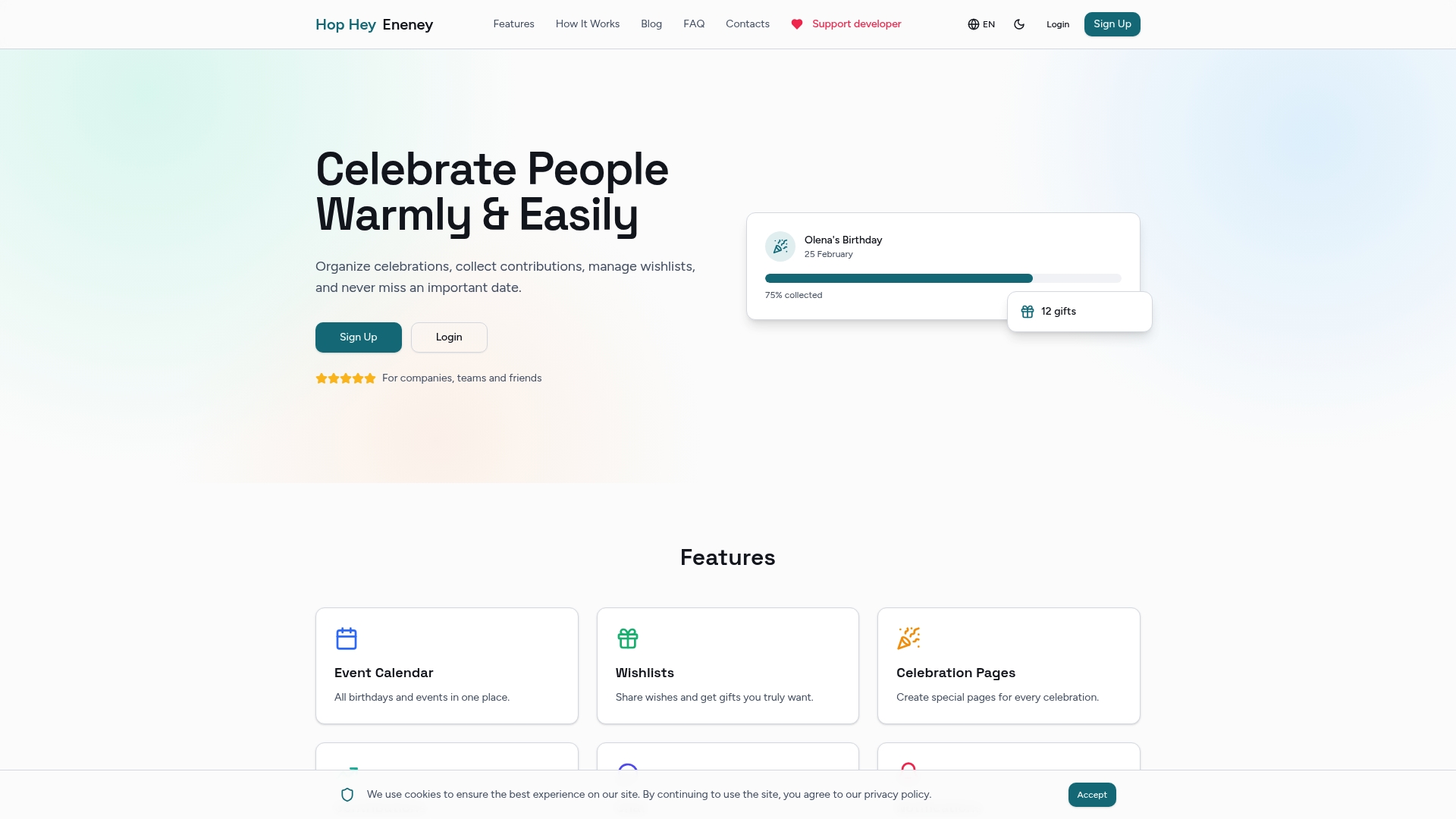
Hop Hey is built specifically to remove that friction. The platform lets HR teams create private celebration pages, coordinate group gifts with transparent fund tracking, and send automated reminders via email and Telegram, all without the honoree ever seeing the planning. Hop Hey for teams supports multi-organization environments, role-based permissions, and multi-currency contributions, so your program scales as your company grows. It is the coordination layer your recognition program has been missing.
Frequently asked questions
What are the first steps when planning an employee recognition event?
Start by defining clear objectives and aligning them with your HR strategy. Recognition events require strategic alignment and measurable goals before any logistics are decided.
How can I measure the ROI of company celebration events?
Use pre- and post-event engagement surveys, track attendance and participation rates, and compare feedback over time. ROI is best measured by the uplift in engagement scores following each event.
What tools are most useful for managing employee events at scale?
Look for platforms that automate invitations, feedback collection, and reporting while integrating with your existing HR system. Recognition tools streamline processes and make feedback loops consistent and repeatable.
Why is post-event feedback important for future events?
Feedback identifies what worked and what did not, giving you the data to improve each subsequent event. Post-event feedback loops are the foundation of any continuous improvement strategy in employee recognition.