
TL;DR:
- Effective celebration coordination enhances company culture and fosters employee belonging.
- Automating processes with suitable tools reduces errors and saves time while maintaining personalization.
- Measuring participation and feedback helps optimize future recognition and sustain engagement.
Missed birthdays, last-minute gift scrambles, and the one remote employee who always gets left out. Sound familiar? Group celebration coordination is one of those tasks that looks simple on paper but quietly drains HR managers and team leads every single week. When celebrations fall flat, you lose more than a party. You lose a real opportunity to build culture, reinforce belonging, and show employees they matter. This guide walks you through everything you need to assess your setup, run a tighter coordination process, troubleshoot common problems, and measure whether your celebrations are actually working.
Table of Contents
- Assessing your team's needs and prerequisites
- Step-by-step guide for efficient group celebration coordination
- Troubleshooting common challenges in group celebration management
- Verifying impact and optimizing for future celebrations
- A fresh perspective: Beyond automation and toward authentic recognition
- Explore streamlined coordination with Hop Hey
- Frequently asked questions
Key Takeaways
| Point | Details |
|---|---|
| Automate milestone celebrations | Leverage recognition platforms to ensure no birthday or work anniversary goes unnoticed. |
| Include remote and global teams | Choose solutions that offer virtual celebration formats and support international rewards seamlessly. |
| Standardize but personalize | Create consistent processes for fairness but personalize recognition for true impact. |
| Measure and optimize | Regularly review celebration feedback and engagement metrics to improve future coordination. |
Assessing your team's needs and prerequisites
To build a strong foundation, it's crucial to first clarify what your team truly needs. Before you pick a platform or write a single event invite, you need an honest picture of your team's size, structure, and current tools.
Start by mapping who you're celebrating. A 30-person in-office team has completely different needs than a 300-person hybrid organization spread across five time zones. Consider the types of celebration events that matter most to your workforce. Birthdays, work anniversaries, promotions, project completions, and personal milestones all call for different approaches.
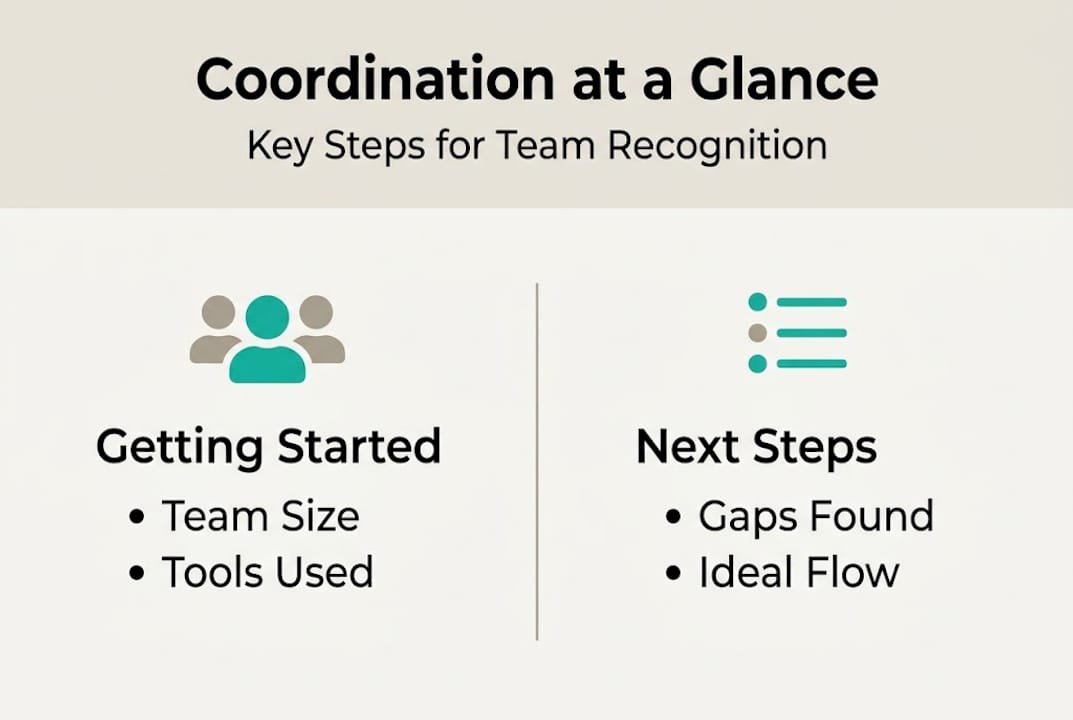
Next, audit your existing tools. Many companies are running celebrations out of a mix of Slack messages, spreadsheet trackers, and someone's personal calendar. That works until it doesn't. Employee recognition software has matured significantly, and recognition platforms automate milestone celebrations while integrating directly with messaging tools your team already uses.
Here's a quick comparison of key prerequisites and their impact:
| Prerequisite | Why it matters | Impact if missing |
|---|---|---|
| HRIS integration | Pulls accurate milestone data automatically | Manual errors, missed dates |
| Tool compatibility | Works with Slack, Teams, or your intranet | Low adoption, fragmented workflows |
| Global reward options | Serves international team members fairly | Exclusion, recognition inequity |
| Role-based permissions | Controls who manages events and budgets | Confusion, overspending |
| Automated reminders | Ensures no milestone is overlooked | Forgotten celebrations, disengagement |
Before finalizing any platform, check these key prerequisites:
- HRIS integration to sync employee data and milestone dates automatically
- Tool compatibility with your existing communication stack
- Flexible reward options that work across currencies and regions
- Role-based access so team leads can manage their own groups
- Mobile-friendly design for remote and field employees
Use the celebration planning guide to document your current gaps before shopping for solutions.
Pro Tip: If your team includes employees in multiple countries, prioritize platforms that support multi-currency rewards and localized gift options. A gift card that works in Chicago may be useless to a colleague in Kyiv or Berlin.
Step-by-step guide for efficient group celebration coordination
Now that your prerequisites are clear, let's break down the coordination process step-by-step.
Efficient coordination isn't just about saving time. It's about creating consistent, meaningful experiences that don't depend on one person remembering everything. Here's how to build that system:
- Centralize your event calendar. Pull all employee milestones into one shared system. Birthdays, work anniversaries, and team events should live in a single place that updates automatically from your HRIS.
- Assign clear roles. Designate who owns each celebration type. HR might handle company-wide events while team leads manage smaller, personal milestones.
- Set up automated triggers. Configure reminders 2 to 4 weeks before each event so organizers have time to collect contributions and coordinate logistics.
- Use a dedicated communication channel. Keep celebration planning out of general Slack channels. Private threads or dedicated tools prevent spoilers and reduce noise.
- Collect contributions transparently. Whether it's a group gift or a shared experience, use a platform that shows real-time contribution tracking so no one feels pressured or left out.
- Gather feedback post-event. A quick two-question survey after each celebration tells you what landed and what to improve.
Here's why automation changes everything:
| Coordination type | Time per event | Error rate | Scalability |
|---|---|---|---|
| Manual | 3 to 5 hours | High | Poor |
| Automated | 20 to 40 minutes | Low | Excellent |
Platforms like Workhuman, Motivosity, and Awardco automate milestones and enable peer-to-peer shoutouts, which dramatically reduces the coordination burden on HR. Integrations with Slack or Microsoft Teams mean recognition happens inside the tools employees already use every day.
For party planning tips that go beyond logistics, think about how each celebration reinforces your company values, not just the date on the calendar. And for larger organizations, reviewing corporate celebration strategies helps you scale without losing the personal touch.

Pro Tip: Activate social feed features in your recognition platform. When peers can publicly shout out a colleague's win, the emotional impact multiplies far beyond what a manager-only message can achieve.
Troubleshooting common challenges in group celebration management
Even with the right tools and a solid plan, certain obstacles can derail your efforts.
The four challenges HR managers encounter most often are:
- Remote exclusion: Virtual employees feel like afterthoughts when celebrations are designed around physical office spaces
- Recognition inequity: Some departments or demographics consistently receive more recognition than others
- Global logistics: International teams face currency barriers, time zone conflicts, and culturally mismatched gifts
- Celebration fatigue: When everything gets celebrated equally, nothing feels special
Remote inclusion deserves special attention. Virtual coordination formats reached 87% satisfaction when organizers standardize agendas for multi-location events. That means setting a clear structure, using video formats that allow everyone to participate, and choosing gifts that work regardless of geography.
Recognition equity is subtler but just as damaging. If data shows that certain teams or demographic groups receive fewer shoutouts or smaller gift budgets, that gap erodes trust fast. Use your platform's reporting features to audit recognition patterns quarterly. The recognition software overview from CX Everywhere highlights how analytics can surface these blind spots before they become cultural problems.
For practical ideas on boosting engagement in 2026, look at how leading companies are combining digital recognition with in-person moments. And if you're still building the case internally, the research on why organizing team celebrations matters for retention is compelling.
Pro Tip: Resist the urge to celebrate every small win with the same energy. Reserve your biggest recognition moments for genuinely significant milestones. When everything is a big deal, nothing is.
Verifying impact and optimizing for future celebrations
With challenges handled, it's time to ensure your celebrations truly deliver value and learn for next time.
Measuring celebration impact sounds abstract, but it's very practical. Here's a simple process to follow after each event cycle:
- Send a post-event survey within 48 hours while the experience is fresh. Keep it to three questions maximum.
- Review participation rates to see who engaged and who didn't. Low participation from specific teams signals a problem worth investigating.
- Analyze contribution data for group gifts. Consistent low contributions may indicate budget fatigue or unclear expectations.
- Compare engagement scores before and after recognition initiatives. Most HRIS platforms now include engagement pulse tools.
- Document what worked and build a repeatable playbook so next year's coordination starts from a stronger baseline.
Key metrics worth tracking consistently:
- Participation rate per event type and team
- Feedback scores from post-event surveys
- Inclusion index measuring remote vs. in-office recognition parity
- Contribution completion rate for group gifts
- Repeat engagement showing whether employees participate in multiple events over time
Recognition platforms provide measurable engagement lift and enable ongoing process optimization, which means the data you collect today directly improves next quarter's celebrations. This isn't just feel-good reporting. It's evidence you can bring to leadership when justifying the budget.
For inspiration on event formats that consistently score well, explore office events that boost team culture. And if individual milestone events like birthdays need a better structure, the guide on how to organize a birthday at work offers a practical framework.
A fresh perspective: Beyond automation and toward authentic recognition
Having optimized your process, let's consider a deeper philosophy for lasting impact.
Here's something the software vendors won't tell you: automation can actually make recognition feel less meaningful if you're not careful. When every birthday gets the same templated Slack message and the same $25 gift card, employees notice. The gesture becomes background noise.
The most effective HR leaders we've seen use technology as infrastructure, not as the recognition itself. The platform handles the logistics. The human being adds the meaning. A manager who writes two genuine sentences about why a team member's contribution mattered will always outperform a perfectly timed automated message.
Think of birthday wishlist management as a good example. The tool collects preferences and coordinates contributions. But the moment that lands emotionally is when the gift reflects that someone actually paid attention to what this person cares about.
Automation earns you consistency. Personalization earns you loyalty. You need both, but never confuse one for the other.
Explore streamlined coordination with Hop Hey
Ready to take your coordination to the next level? Managing group celebrations across a growing team shouldn't mean juggling spreadsheets, chasing contributions, or worrying about who got left out.
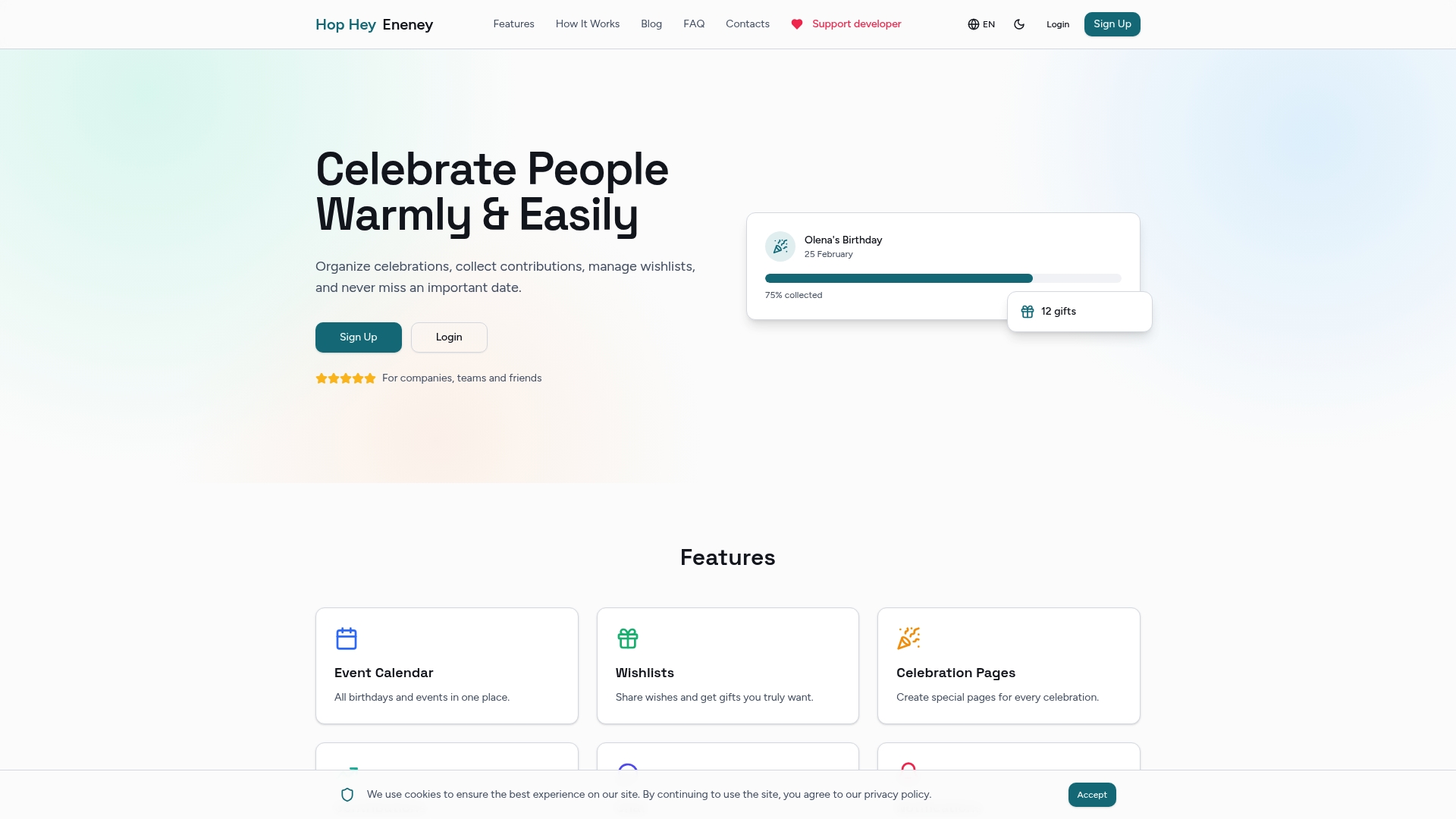
Hop Hey for teams brings your entire celebration workflow into one place. Private event pages, shared calendars, transparent gift fund collection, and dedicated chat coordination all work together so nothing falls through the cracks. Whether you're managing birthdays, work anniversaries, or company milestones, the platform keeps everyone organized and the honoree surprised. Multi-currency support, automated reminders, and Telegram notifications mean your team stays in sync regardless of location. Want to see how it fits your organization? Contact Hop Hey to learn more.
Frequently asked questions
What tools help automate team celebrations?
Employee recognition platforms automate milestone tracking, peer shoutouts, and reward distribution, integrating directly with messaging tools your team already uses.
How can you include remote or global teams in celebrations?
Use platforms that offer virtual celebration formats, global reward compatibility, and centralized event management so every team member participates equally regardless of location.
How do you avoid over-celebrating and recognition fatigue?
Establish clear criteria for meaningful milestones and balance recognition frequency so that significant achievements stand out and employees don't tune out routine acknowledgments.
What metrics track the effectiveness of group celebrations?
Track participation rates, feedback scores, inclusion parity, and contribution completion rates. Recognition platforms enable ongoing optimization by surfacing engagement trends over time.