TL;DR:
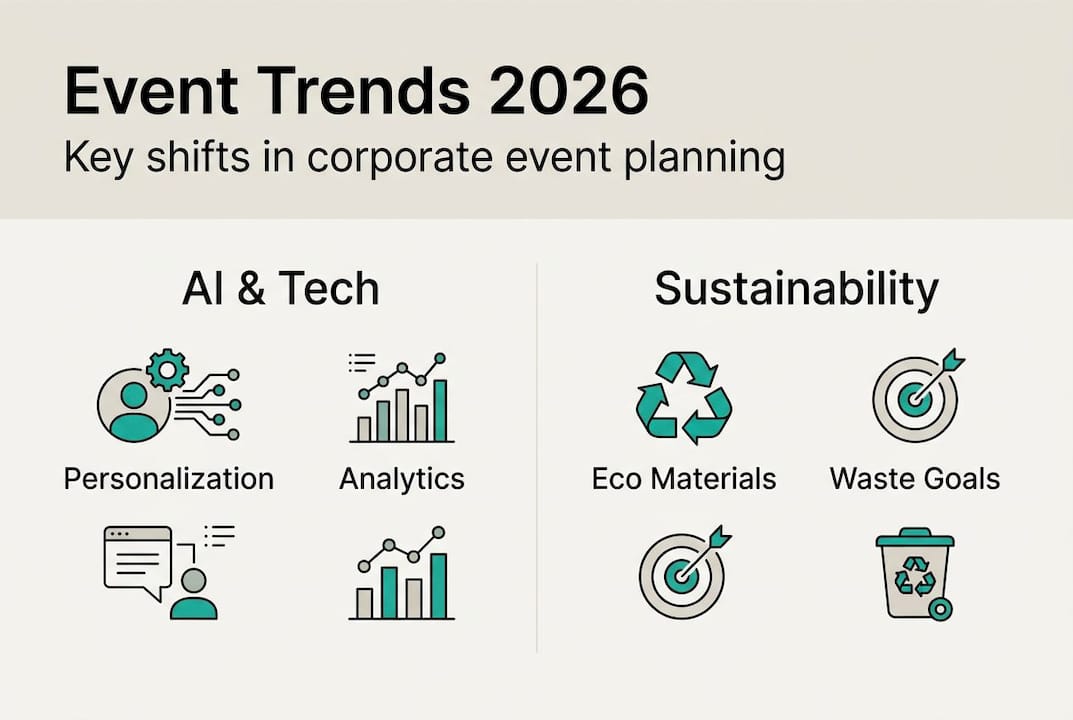
- AI is central to personalized, efficient, and real-time corporate event experiences, becoming the new standard.
- Sustainability has shifted to measurable, responsible practices influencing venue, vendor, and material choices.
- Hybrid events are now the norm, emphasizing engagement, technology, and inclusive experiences for remote and in-person attendees.
Most HR professionals assume corporate event planning moves at a glacial pace, changing only when budgets force it. That assumption is now dangerously outdated. In 2026, artificial intelligence, measurable sustainability, and hybrid formats are reshaping how teams connect, celebrate, and stay engaged. The gap between companies that adapt and those that don't is widening fast. This guide breaks down the most critical trends redefining corporate events, explains why they matter for employee retention, and gives you a clear path to applying them before your next team celebration.
Table of Contents
- AI-powered personalization: Event experiences reimagined
- Sustainability: From buzzword to business standard
- The hybrid event norm: Blending physical and digital
- Measuring ROI and overcoming event planning challenges
- Our take: Why 2026's event planning trends demand bold changes
- Next steps: Simplify event planning and boost engagement
- Frequently asked questions
Key Takeaways
| Point | Details |
|---|---|
| AI shapes events | Artificial intelligence now powers personalized agendas and analytics for team events. |
| Sustainability required | Eco-friendly materials and transparent reporting are essential for modern event credibility. |
| Hybrid is the norm | Blending digital and physical experiences increases participation and quality engagement. |
| ROI means engagement | Tracking attendee participation and outcomes ensures event investments deliver value. |
AI-powered personalization: Event experiences reimagined
Artificial intelligence has moved from a novelty to a necessity in corporate event planning. AI integration in event planning is shifting from experimental to core infrastructure, used for personalization, registration, session planning, and analytics. That shift changes everything about how you design and deliver team experiences.
The numbers tell a clear story. Currently, 50% of event professionals use AI in their workflows, 58% say their usage has grown in the past year, and 95% expect adoption to increase further. This is not a fringe movement. It is the new baseline for competitive event planning.
What does AI actually do for your events? Here are the most impactful applications:
- Personalized agendas: AI analyzes attendee preferences and past behavior to suggest sessions, activities, and networking opportunities tailored to each person.
- Smart registration: Automated systems reduce friction, flag duplicate entries, and send customized confirmation messages.
- Real-time analytics: During the event, AI tracks engagement signals and flags drop-off points so you can adjust on the fly.
- Post-event follow-up: Automated, personalized summaries and next-step recommendations keep momentum alive after the event ends.
| AI application | Benefit | Adoption stage |
|---|---|---|
| Personalized agendas | Higher session attendance | Mainstream |
| Smart registration | Faster check-in, fewer errors | Mainstream |
| Engagement analytics | Real-time adjustments | Growing |
| Automated follow-up | Improved retention of key messages | Early majority |
The challenge is not the technology itself. It is the training gap. Many HR teams and tools for managing events are not yet configured to extract full value from AI features. Ethical data use is also a real concern. Attendees need to understand what data is collected and why.

Pro Tip: Start with AI-powered registration tools and post-event feedback analytics before tackling more complex personalization features. These two touchpoints deliver immediate, measurable value without requiring deep technical expertise.
For teams exploring different celebration event types, AI can help match the right format to the right audience, making every event feel intentional rather than generic. Coordinating team recognition becomes far less chaotic when AI handles the logistics and you focus on the human moments.
Sustainability: From buzzword to business standard
Sustainability used to mean putting a recycling bin in the corner and calling it green. Those days are over. Today, sustainability operationalized means verifiable reporting, deliberate material choices, and measurable waste reduction. It directly influences which venues and suppliers you choose.
The data reflects a genuine shift in organizational behavior. Currently, 38% of organizations have a formal sustainability policy for events, and 83% actively consider sustainability when planning. That second number is striking. It means most planners are already factoring it in, even without a formal policy.
"Sustainability is no longer a nice-to-have. It is a procurement criterion, a reporting requirement, and increasingly, a reflection of company values that employees and clients notice."
Here is what sustainable event planning looks like in practice:
- Material selection: Prioritize reusable signage, digital programs, and locally sourced catering to cut waste and carbon footprint.
- Venue criteria: Choose venues with verified green certifications, energy-efficient infrastructure, and accessible public transit links.
- Waste reduction: Set measurable targets before the event, track results, and publish outcomes in your post-event report.
- Supplier transparency: Ask vendors for their own sustainability data. If they cannot provide it, that is a red flag.
| Traditional practice | Sustainable alternative |
|---|---|
| Printed programs and signage | Digital apps and reusable displays |
| Single-use catering materials | Compostable or reusable options |
| Venue chosen by prestige | Venue chosen by green certification |
| No waste reporting | Measured and published waste data |
| Distant suppliers | Local and regional vendors |
For sustainable team celebration tips, the most effective approach is to set specific goals before planning begins, not after. When organizing sustainable events, build sustainability criteria directly into your vendor selection checklist. If you are planning celebrations sustainably, start with waste reduction targets and work backward to the decisions that support them.
The hybrid event norm: Blending physical and digital
Hybrid events are no longer an experiment or a pandemic workaround. They are the standard. Hybrid events are now standard for 80% of organizations, with micro-events and regional formats gaining traction for their cost efficiency and sense of intimacy.
80% of organizations now host hybrid events as their default format. That statistic alone should shift how you approach your next team celebration or company-wide gathering.
The rise of micro-events, typically 20 to 100 attendees, is one of the most interesting developments inside this trend. Smaller gatherings allow for deeper conversations, more meaningful recognition moments, and tighter budget control. They also reduce the logistical complexity that often kills event quality.
Here is a step-by-step approach to launching a successful hybrid event:
- Define your audience split. Identify who will attend in person and who will join remotely. Design the experience for both, not just one.
- Choose technology that serves both groups. A platform that works beautifully in the room but frustrates remote attendees is a failure, not a success.
- Assign a dedicated digital host. This person monitors the virtual attendee experience, manages chat, and ensures remote participants feel included.
- Build in participation moments. Polls, breakout rooms, and live Q&A sessions keep virtual attendees active rather than passive.
- Test everything 48 hours before. Technical failures during hybrid events are disproportionately damaging because they affect two audiences simultaneously.
- Measure engagement across both channels. Compare in-person and virtual participation rates to improve future events.
For hybrid event fund collection, coordinating contributions across distributed teams requires clear systems and transparent tracking. Defining flexible planning roles is equally important, as hybrid events demand more specialized responsibilities than traditional formats.
Pro Tip: Prioritize experience quality over large attendance numbers. A 40-person hybrid event where everyone feels seen and engaged will deliver more ROI than a 400-person event where half the room is disengaged.
Measuring ROI and overcoming event planning challenges
Budgets are stabilizing, but growth is slower than before. 40% of event budgets are up or flat compared to 53% in prior cycles, and 40% of planners still report difficulty demonstrating ROI. That gap between effort and measurable outcome is the central challenge for HR teams in 2026.
The good news is that hybrid formats are helping control costs without sacrificing reach. The harder truth is that quantity of attendees has never been a reliable success metric. Engagement quality is what moves the needle on retention and satisfaction.
| Success metric | What to measure | Tool or method |
|---|---|---|
| Attendance rate | % of invited who participated | Registration data |
| Engagement score | Polls, Q&A, session time | Event platform analytics |
| Post-event sentiment | Survey scores and comments | Feedback forms |
| Retention correlation | 90-day turnover after events | HR system data |
| Budget efficiency | Cost per engaged attendee | Finance and event reports |
Here is how to build a practical ROI measurement process:
- Set specific engagement goals before the event, not after.
- Use your event platform to track real-time participation data.
- Send a short post-event survey within 24 hours while impressions are fresh.
- Connect event participation data to your HR metrics, especially retention and performance scores.
- Report findings to leadership with a clear narrative, not just numbers.
Common challenges and practical solutions:
- Low participation rates: Use personalized invitations and pre-event teasers to build anticipation.
- Budget pressure: Shift to micro-events and hybrid formats to reduce per-head costs.
- Proving value to leadership: Link event outcomes directly to engagement survey results and retention data.
- Remote attendee disengagement: Build dedicated virtual interaction moments into the agenda, not just passive viewing.
For a deeper look at building an event ROI guide, connecting event data to broader HR strategy is where the real competitive advantage lives.
Our take: Why 2026's event planning trends demand bold changes
Here is the uncomfortable truth about trend adoption: most organizations follow trends superficially. They add an AI tool here, swap a paper program for a digital one there, and call it transformation. It is not.
The companies that will actually win in 2026 are those that embed these trends into how they think about people, not just how they plan events. That means training your HR team to interpret AI analytics, not just run them. It means making sustainability a procurement standard, not a checkbox. It means designing hybrid events where remote employees feel like first-class participants, not an afterthought.
True transformation is cultural. It requires empowering people with boosting event engagement strategies that connect to your broader retention goals. The organizations that do this proactively will see higher satisfaction scores, lower turnover, and events that employees actually look forward to. The ones that treat trends as decoration will keep struggling with the same ROI questions year after year.
Event success in 2026 is not about the flashiest technology. It is about thoughtful, integrated application of tools that serve your people.
Next steps: Simplify event planning and boost engagement
You now have a clear picture of where corporate event planning is heading and what separates high-impact events from forgettable ones. The next step is putting these insights into practice without adding complexity to your already full plate.
Hop Hey Eneney is built for exactly this moment. The platform combines event calendar management, transparent gift fund collection, private team chat, and personalized wishlists into one place, so your HR team spends less time coordinating and more time creating meaningful experiences. With automated reminders, role-based permissions, and real-time contribution tracking, every celebration stays organized and on budget. Plan your next event with Hop Hey and give your team the recognition experience they deserve.
Frequently asked questions
What are the main event planning trends for 2026?
AI integration, sustainability, and hybrid events are the leading trends for 2026, alongside disciplined budgeting and a stronger focus on measurable ROI from every event investment.
How can HR teams measure ROI from events in 2026?
Track attendee engagement scores, collect post-event feedback within 24 hours, and link event metrics directly to employee retention and morale data in your HR system.
What role does sustainability play in event planning now?
Sustainability is now integrated through material selection, waste reduction targets, transparent reporting, and supplier vetting, with 83% of planners actively factoring it into every major event decision.
Why are hybrid events so popular in 2026?
Hybrid events enable wider participation, better cost control, and greater scheduling flexibility, with 80% of organizations now using them as their default format for both internal and external events.