
TL;DR:
- Digital fund collection makes workplace celebrations faster, more transparent, and maintains guest surprises.
- Use private online platforms and secret communication channels to protect event secrecy.
- Contributions are voluntary, respectful of privacy, and structured for inclusivity and compliance.
Collecting money for an office celebration used to mean passing around a paper envelope, hoping people wouldn't feel put on the spot, and praying the birthday person didn't accidentally find it in the break room. That awkward dance is over. Digital event fund collection has transformed how HR professionals and team leads handle contributions, making the process faster, more transparent, and completely secret from the guest of honor. This guide walks you through everything you need to know, from defining the basics to running a fully private, inclusive, and engaging collection that your whole team will actually enjoy participating in.
Table of Contents
- What is event fund collection and why does it matter?
- How modern event fund collection works: Tools, flow, and privacy
- Keeping the surprise: Secure communication and event secrecy
- Inclusivity, compliance, and avoiding pitfalls
- Why digital fund collection unlocks more meaningful celebrations
- Ready for effortless event fund collection?
- Frequently asked questions
Key Takeaways
| Point | Details |
|---|---|
| Keep participation voluntary | Always ensure contributions are optional and respect individual privacy when collecting funds. |
| Use digital collection tools | Digital platforms streamline the collection process, increase transparency, and boost engagement. |
| Prioritize inclusion and compliance | Adhere to budget benchmarks, cultural norms, and relevant regulations in every event fund initiative. |
| Maintain the element of surprise | Use secure, private communication methods to preserve secrecy for memorable celebrations. |
What is event fund collection and why does it matter?
Before diving into tactics, let's get the definition right. Event fund collection is the process of gathering voluntary monetary contributions from team members to fund a shared event, celebration, or group gift, commonly used in workplaces for birthdays, retirements, farewells, or surprise parties. It sounds simple, but the execution makes or breaks team morale.
For HR professionals, organized fund collection isn't just a nice-to-have. It's a core part of building a culture where people feel genuinely valued. When someone's work anniversary or retirement is celebrated with a thoughtful, well-funded gift rather than a last-minute grocery store card, it sends a clear message: this team pays attention.
Team leads rely on structured collection for a wide range of types of celebration events, including:
- Birthdays and work anniversaries — the most frequent and often the most personal
- Farewells and retirements — high-stakes events where a meaningful gift matters most
- Team wins and project completions — a growing trend in performance-driven cultures
- Baby showers, weddings, and life milestones — events that cross the professional and personal line
The benefits go beyond logistics. Structured collection drives inclusion because everyone has the option to contribute at a level that works for them. It removes the social pressure of face-to-face asks. And it creates a paper trail that keeps things fair and transparent.
"When fund collection is organized and voluntary, it becomes a culture-building tool rather than an obligation. People give because they want to, not because they felt cornered in the hallway."
For mid to large companies, where HR can't personally manage every celebration, a repeatable and scalable collection process is essential. Without it, you get inconsistency: some teams celebrate lavishly, others barely acknowledge milestones. That inconsistency breeds resentment. A clear, company-wide approach levels the playing field and makes every employee feel equally valued.
How modern event fund collection works: Tools, flow, and privacy
Now that you understand its importance, let's break down how modern event fund collection works step by step.
The mechanics of digital collection involve creating a digital pool or collection page on platforms like Pooled, GroupTogether, or PayIt2, sharing a link, setting suggested contributions, deadlines, and tracking progress while keeping individual amounts private. That last part matters a lot in professional settings.
Here's a typical workflow:
- Designate an organizer — usually an HR coordinator or a trusted team member
- Create a collection page — set the event, goal amount, and deadline
- Set a suggested contribution range — gives people a comfortable anchor without pressure
- Share the link privately — via email, Slack, or a dedicated event chat
- Track contributions in real time — organizers see totals; individual amounts stay private
- Close the collection and purchase — funds are transferred or used directly for the gift
Contribution benchmarks vary by event type and company size. Here's a quick reference:
| Event type | Suggested contribution per person |
|---|---|
| Birthday | $10 to $25 |
| Work anniversary | $15 to $30 |
| Farewell | $20 to $50 |
| Retirement | $30 to $75 |
| Team win celebration | $10 to $20 |
Privacy is non-negotiable. Platforms like GroupTogether and PayIt2 allow organizers to see total progress without exposing who gave what. This removes the social comparison that makes traditional envelope methods uncomfortable.
If you want to organize seamless group gifting, assigning clear roles from the start is key. One person manages the fund, another coordinates the gift purchase, and someone else handles logistics like delivery or presentation. Learn more about flexible roles in event planning to structure this efficiently across your team.

Pro Tip: Set your collection deadline at least 48 hours before the event. Last-minute contributions create stress and sometimes delay gift purchasing. Build in buffer time so the organizer isn't scrambling the morning of the celebration.
Keeping the surprise: Secure communication and event secrecy
Of course, what makes many events memorable is the element of surprise. Here's how to keep your preparations under wraps.
Traditional envelope methods are a disaster for surprises. Someone leaves it on a shared desk. A well-meaning coworker mentions it in front of the guest of honor. The paper trail is visible. For surprise events, use secret group chats, lures like fake dinners, and digital tools to prevent leaks from physical envelopes.
Here's how to lock down your surprise:
- Create a private group chat with a neutral name like "Q2 planning" instead of "Sarah's birthday"
- Never use public channels like a company-wide Slack for any surprise-related messages
- Send the collection link via direct message or email only — never post it publicly
- Assign one person as the information gatekeeper — all questions go through them
- Use a decoy meeting invite to get the guest of honor in the right place at the right time
Let's compare digital tools vs. traditional methods for surprise events:
| Feature | Digital platforms | Traditional envelope |
|---|---|---|
| Contribution privacy | High | Low |
| Risk of accidental discovery | Very low | High |
| Real-time tracking | Yes | No |
| Accessible to remote teams | Yes | No |
| Organizer time investment | Low | High |
The surprise party best practices community has documented the most common ways surprises get ruined: someone texts the wrong person, a calendar invite goes out company-wide, or a contribution request lands in a shared inbox. Digital platforms with role-based access eliminate most of these risks.
For HR teams managing office events that boost team culture, the communication layer is just as important as the fund collection itself. Explore party planning tips to build a repeatable surprise-proof process your whole team can follow.
Pro Tip: Name your secret group chat something completely unrelated to the event or the person being celebrated. "Lunch planning" or "Office supplies order" are forgettable enough to avoid raising suspicion.
Inclusivity, compliance, and avoiding pitfalls
Collecting funds efficiently is only half the story. Here's how to ensure your process is inclusive, respectful, and compliant.
The golden rule: participation must always be voluntary. Federal rules cap contributions at $10 per person for certain group gifts in regulated environments, and pressure to participate can cross legal and ethical lines. Opt-outs must be handled with zero judgment.
Here's a checklist for inclusive fund collection:
- Never announce who contributed and who didn't — this creates social pressure
- Offer a range, not a fixed amount — "$10 to $30" respects different financial situations
- Respect cultural differences — some employees may not celebrate certain events for personal or religious reasons
- Avoid collecting during company-wide financial stress — layoffs or pay freezes make contributions feel tone-deaf
- Always allow anonymous contributions — some team members prefer privacy even within the group
"The best fund collections feel like a community coming together, not a tax. The moment someone feels obligated rather than invited, the culture benefit disappears."
On the budget side, recognition budgets typically fall between 1% and 2% of payroll, which translates to roughly $200 to $350 per employee per year. That benchmark helps HR teams set realistic expectations and avoid overspending on a few events while neglecting others. Digital platforms have been shown to boost participation by reducing the awkwardness of face-to-face asks, which means more people contribute and the fund reaches its goal faster.
For a complete framework on navigating these dynamics, the gift exchanges at work guide covers HR-specific rules and cultural considerations. And if you're managing celebrations across multiple teams, corporate celebration tools can help you build a scalable, compliant process.
Why digital fund collection unlocks more meaningful celebrations
Here's a perspective most HR articles skip: digital fund collection isn't just a convenience upgrade. It's a trust signal.
When you give employees a private, low-pressure way to contribute, you're telling them: we respect your autonomy. That matters more than the gift itself. Teams that feel respected participate more, and participation is what makes a celebration feel genuine rather than staged.
Recognized employees are 5x more engaged than those who aren't, and the ROI shows up in retention, productivity, and team cohesion. But here's what the data doesn't capture: the quality of the recognition matters as much as the frequency. A well-organized, surprise-proof, fully funded celebration lands differently than a rushed card passed around at 4:59 PM.
The teams that get this right treat fund collection as the foundation of a culture of team celebrations, not just an administrative task. They build repeatable systems, assign clear roles, and use tools that make the process invisible to the person being celebrated. The result isn't just a better party. It's a team that trusts each other more.
The uncomfortable truth is that most companies underinvest in the process of celebrating and overinvest in the spend. A $500 gift organized chaotically feels less meaningful than a $150 gift that came with clear intention, full team participation, and a genuine surprise.
Ready for effortless event fund collection?
If you're ready to level up your office celebrations, the right event fund collection partner makes all the difference.
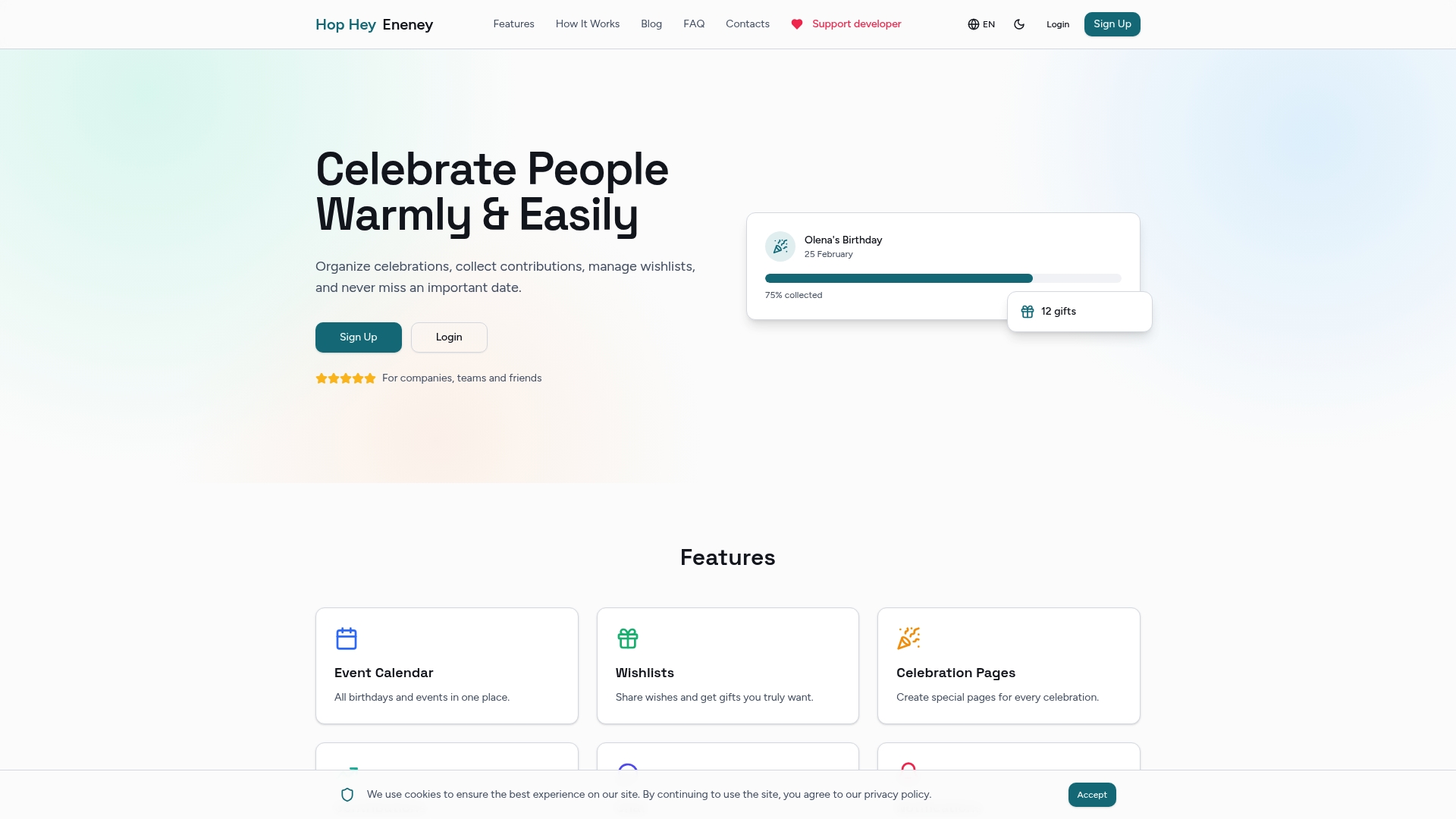
The Hop Hey event platform brings together everything covered in this guide: private celebration pages, transparent contribution tracking, dedicated event chats, and automated reminders so nothing falls through the cracks. HR teams and team leads can manage multiple events across departments without any overlap or accidental leaks. Whether you're planning a retirement send-off or a team win party, Hop Hey keeps the process clean and the surprise intact. Have questions about setting up your first collection? Contact our team and we'll walk you through it.
Frequently asked questions
What is the best digital platform for event fund collection?
Digital platforms like Pooled, GroupTogether, and PayIt2 are all professional options that collect funds securely and transparently. The best choice depends on your team size, preferred currency, and whether you need privacy features for surprise events.
How much should team members contribute for office events?
Typical contributions range from $10 to $75 per person, with $10 to $25 being standard for birthdays and up to $75 for retirements or large group gifts. Always offer a range rather than a fixed amount to respect different financial situations.
How do you keep an office event fund collection a surprise?
Use private group chats, avoid public channels, and share collection links only via direct message or email. Digital platforms with role-based access make it far easier to keep contributions and planning completely hidden from the guest of honor.
Are event fund contributions mandatory?
Participation must be voluntary and opt-outs should be handled privately and without judgment. Pressuring employees to contribute can cross ethical and legal lines, especially in regulated work environments.