
TL;DR:
- Planning a golden birthday requires careful coordination of size, secrecy, and budget early on.
- Personalized gifts and experiences, informed by team polls, create memorable and meaningful celebrations.
- Clear roles, tight communication, and choosing the right format ensure a smooth, impactful surprise event.
A golden birthday is one of those once-in-a-lifetime moments that deserves more than a store-bought card and a rushed cake. For HR managers, team leads, and community organizers, planning a group golden birthday celebration adds an extra layer of pressure: you need to coordinate schedules, collect money fairly, keep the whole thing secret, and still make the person feel genuinely seen. That balancing act is harder than it looks, especially when email threads multiply, group chats go off the rails, and someone inevitably mentions the surprise in front of the guest of honor. This guide walks you through every step, from setting criteria to comparing party formats, so your next golden birthday lands perfectly.
Table of Contents
- Key criteria for planning a golden birthday party
- Creative group gifting ideas for golden birthdays
- Surprise party logistics and roles for teams
- Comparing golden birthday party formats for every team
- Our take: What actually makes golden birthday parties unforgettable
- Take your next golden birthday celebration further
- Frequently asked questions
Key Takeaways
| Point | Details |
|---|---|
| Limit planners for secrecy | Keep the planning committee small and communication discrete to preserve the surprise. |
| Start early for large teams | Begin planning 6-8 weeks ahead when organizing for bigger groups. |
| Assign clear roles | Designate a decoy, lookout, and corraller to smoothly execute the party. |
| Pick flexible formats | Be ready to adjust plans if secrecy is compromised while keeping the spirit lively. |
Key criteria for planning a golden birthday party
Now that we've set the stage, it's important to know what makes a golden birthday party both manageable and memorable. Start by focusing on the essentials.
Every solid celebration begins with a clear set of decisions made before anyone buys a balloon or books a venue. Getting these right early saves you from last-minute scrambling and awkward budget conversations.
Group size shapes everything. A tight team of eight people has fundamentally different needs than a company-wide celebration of sixty. Smaller groups can pull together in three to six weeks, while larger gatherings need at least six to eight weeks to coordinate invitations, collect contributions, and confirm availability. Underestimating this timeline is the single most common reason golden birthday surprises fall flat.
Secrecy demands discipline. The more people who know the plan, the higher the risk of a leak. Limiting your planning committee to two or three trusted people, using private chats with neutral names, sending invites four weeks early with strict RSVPs, and enforcing a no-social-media rule significantly increases your odds of success. Think of secrecy as a structural choice, not just a reminder you send once.
Budget clarity prevents conflict. Decide on a realistic per-person contribution range before you ask anyone for money. Vague asks like "chip in what you can" breed resentment and uneven results. Set a number, communicate it clearly, and use a transparent collection method so contributors can see where funds stand without chasing the organizer.
Here are the core criteria to lock down before you start planning:
- Headcount: Confirmed guest list, including remote participants if applicable
- Timeline: Six to eight weeks for large groups, three to six for smaller ones
- Budget: Fixed contribution per person, plus a clear gift-plus-event breakdown
- Secrecy level: Full surprise, semi-surprise, or planned celebration
- Communication channel: Private group with a neutral name, no open company channels
- Role assignments: Who handles which responsibilities throughout the process
"Designating specific roles, limiting who's in the know, and setting firm RSVP rules early are the three factors most likely to determine whether your surprise actually stays a surprise." — Adapted from event planning best practices at The Gourmet Host
Learning about event planning roles in advance helps you assign responsibilities clearly so nothing slips through the cracks. If you want a deeper starting point, the full breakdown on organizing a work birthday covers team-specific considerations that apply directly to golden birthday logistics.
Pro Tip: Create a shared checklist in your private planning channel and assign each item an owner and a deadline. Even if your team is small, written ownership prevents the "I thought you were doing that" problem.
Creative group gifting ideas for golden birthdays
With solid criteria in place, it's time to get creative about the gift aspect, which is often the most anticipated part of a golden birthday.
The best group gifts feel personal, not generic. A gift card in an envelope says "we remembered," but a curated experience or a meaningful item tied to the person's actual interests says "we paid attention." That distinction matters enormously, especially in a workplace context where people spend significant time together.

Start with a team poll. Before anyone commits to a direction, send a quick anonymous survey asking colleagues about the person's hobbies, bucket list items, and preferences. Three to five options work better than an open-ended question, which tends to produce unhelpful answers. Popular gift categories for golden birthdays include personalized keepsakes, curated experience packages (cooking classes, weekend getaways, spa days), high-quality items from a public wishlist, or a meaningful donation to a cause they care about.
Here's a step-by-step approach to group gifting that keeps things organized:
- Poll the team using anonymous responses to surface real ideas without group-think pressure.
- Choose a central collection method such as a digital contribution platform, a designated treasurer, or a virtual wallet that shows real-time totals.
- Set a contribution deadline at least two weeks before the event to allow time for ordering, customizing, or booking.
- Review existing wishlists for inspiration. People who maintain wishlists have already done half the work for you.
- Coordinate delivery or gifting logistics to maintain the surprise element, including delivery address, timing, and who presents the gift.
- Have a backup plan ready in case the surprise is at risk of being leaked.
When it comes to selecting gifts, managing wishlists through a shared platform removes the guesswork entirely. The right birthday list tools let team members browse and contribute without duplicating purchases or creating confusion about what's already been covered.
Budget considerations also shape gift strategy. Research on surprise party planning shows that 45% of surprises target milestone birthdays like 40th or 50th celebrations, but golden birthdays are uniquely personal and adaptable to any age. This makes them ideal for creative, individualized gifts rather than generic milestone gifts.
- Consider personalized golden birthday items tied to the specific age (e.g., 27 small gifts for someone turning 27 on the 27th)
- Experiences tend to outlast physical gifts in terms of lasting memory
- Contribution platforms with real-time tracking reduce follow-up awkwardness dramatically
Pro Tip: If you suspect the surprise might be leaked, have a "semi-surprise" version ready where the person knows a party is happening but not the full scale or specific details. This approach still feels special and removes the anxiety of managing an increasingly fragile secret.
Surprise party logistics and roles for teams
Having picked gifts, the next step is executing the celebration itself, especially keeping it under wraps and running smoothly.
Execution is where most well-intentioned celebrations unravel. Someone sends an invitation through the wrong channel, a coworker mentions the party casually in a meeting, or the venue details get forwarded to the wrong email address. Preventing these problems requires assigning clear roles and establishing airtight communication from day one.
The surprise party planning framework that consistently works best involves limiting your planning committee to two or three trusted people, using private chats with neutral names that don't hint at the event, and designating three core roles: decoy, lookout, and corraller.
Here's what each role does:
| Role | Responsibility | Key Skill Needed |
|---|---|---|
| Decoy | Distracts the guest of honor on the day of the event | Trustworthy, good actor |
| Lookout | Watches for the person's arrival and signals the group | Calm under pressure |
| Corraller | Guides guests to their positions before the reveal | Assertive, organized |
| Coordinator | Manages vendors, venue, and overall timeline | Detail-oriented |
| Treasurer | Handles contributions and gift purchases | Transparent, reliable |
Beyond role assignments, a few logistics make a real difference:
- Send invitations exactly four weeks in advance for large groups and three weeks for small ones
- Request firm RSVPs with a specific deadline, not an open-ended "let us know"
- Use staggered arrival times so no one is waiting around awkwardly when the guest of honor arrives
- Confirm the venue has a private area or back room where guests can gather quietly
Checking out celebration coordination tips gives you a practical framework for managing moving parts without constant back-and-forth. The detailed breakdown in these party planning tips is particularly useful for hybrid teams where some guests attend in person and others join remotely.
The biggest mistake organizers make is over-communicating in the wrong channels. Every message in a shared company chat is a liability. Keep planning conversations in a dedicated private space with only the people who absolutely need to know.
Comparing golden birthday party formats for every team
With logistics outlined, it helps to weigh which party format or approach best fits your organization's structure and needs.
Not every team is in the same building, and not every golden birthday warrants the same approach. Matching the format to the team's reality is just as important as getting the details right. Here's a clear comparison to help you decide.
| Format | Best For | Main Advantage | Main Challenge |
|---|---|---|---|
| In-person surprise | Co-located teams | Maximum emotional impact | Hardest to keep secret |
| Virtual surprise | Remote or distributed teams | Easy to coordinate globally | Technical hiccups, less intimacy |
| In-person planned | Teams who value inclusion over surprise | Low stress, high participation | Less memorable reveal moment |
| Hybrid surprise | Hybrid work environments | Includes everyone | Complex logistics |
| Semi-surprise | When secrecy is at risk | Keeps excitement alive | Requires honest communication |
A few important nuances when comparing these formats:
-
In-person surprise parties create the strongest emotional response but require the most coordination. They work best when the team is small, the organizers are experienced, and the guest of honor genuinely enjoys surprises.
-
Virtual golden birthday parties have become far more polished since 2020. Tools like shared screens, virtual backgrounds, and coordinated gift deliveries can create genuinely moving experiences. The key is making sure the person feels celebrated, not just video-called.
-
Semi-surprise celebrations deserve more credit than they typically get. When a secret is at risk of leaking, pivoting to a semi-surprise, where the person knows something is planned but not the full details, preserves the feeling of being celebrated without the anxiety of managing a crumbling secret.
For hybrid teams, staggered arrivals both in the room and in the video call help synchronize the moment. You can explore the full spectrum of types of celebration events to understand which format tends to produce the strongest team engagement outcomes. And if you're managing multiple milestones across a department, the event management guide offers a scalable approach that works across different celebration types.
Key format selection checklist:
- Is the team co-located, remote, or hybrid?
- How confident are you in maintaining secrecy?
- What's the guest of honor's personality: do they love surprises or feel anxious about them?
- What's your timeline, and does it support the complexity of a full surprise?
- Do you have enough trusted organizers to fill all three key roles?
Our take: What actually makes golden birthday parties unforgettable
Here's something most planning guides won't tell you: the technical execution of a golden birthday party matters far less than the emotional authenticity behind it. You can have perfect role assignments, an airtight budget, and a flawlessly coordinated gift delivery, and the event can still feel hollow if the person doesn't sense genuine appreciation from the people around them.
What we've seen, time and again, is that the most memorable golden birthdays are not the ones with the most elaborate decorations or the biggest budgets. They're the ones where the person realizes that their colleagues or friends put real thought and real time into making them feel special. That comes through in small details: a handwritten message from each team member, a video compilation of shared memories, or a gift that reflects something the person mentioned in passing months ago.
The frameworks and comparisons in this article give you structure. But structure is just scaffolding. The real celebration lives in the personal touches that no checklist can generate for you. Delegate roles confidently, trust your team, and then step back from micromanaging so the moment can breathe.
Understanding the impact of team celebration on long-term engagement and morale reinforces why getting this right is worth the effort. People remember how they were made to feel on meaningful days. Golden birthdays are rare, personal, and significant. Treat them that way.
Take your next golden birthday celebration further
Ready to put these strategies into action for your next milestone birthday?
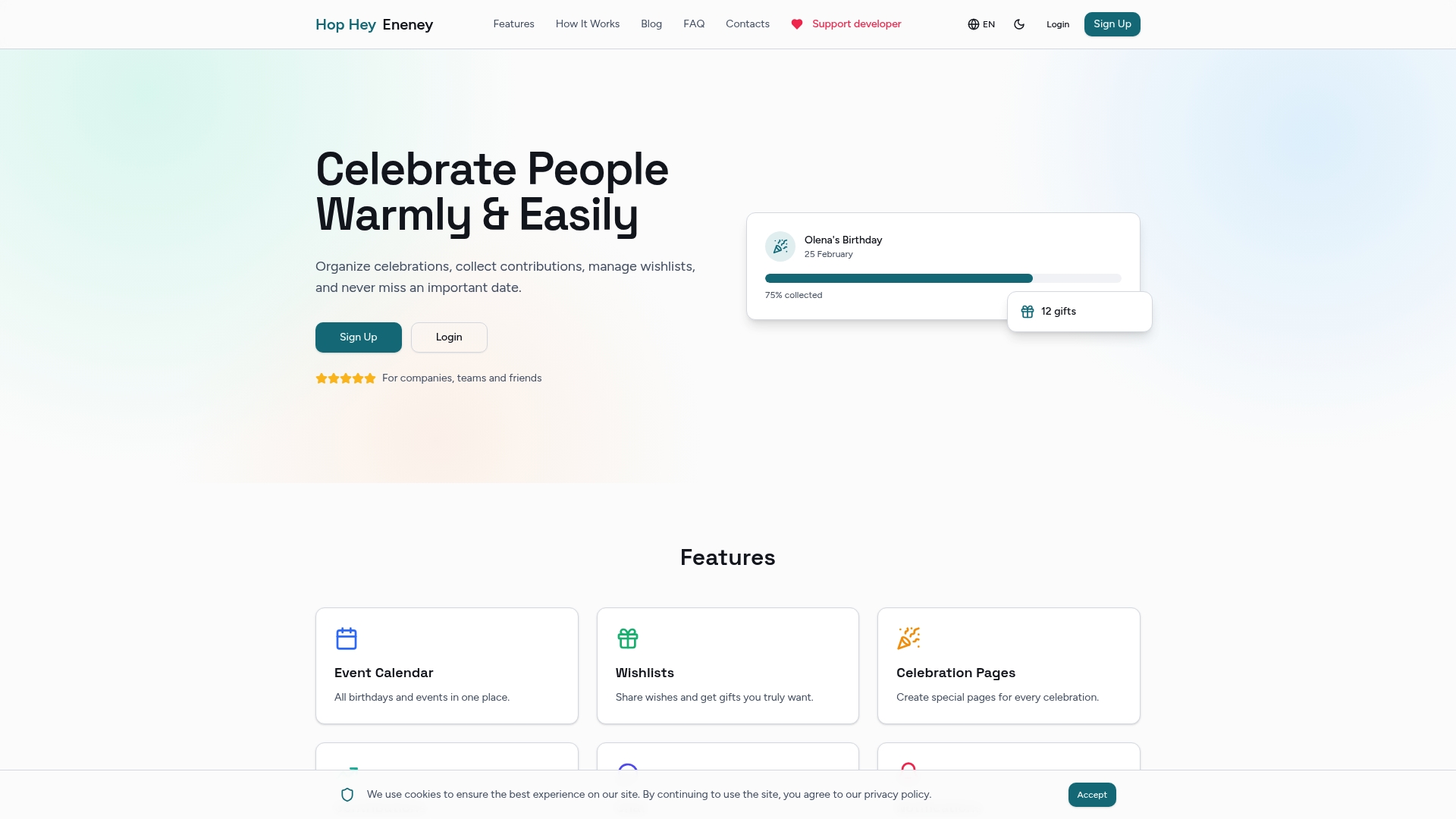
Managing group contributions, maintaining surprise, and keeping everyone aligned across multiple schedules is genuinely easier when you have the right tools. Hop Hey Eneney brings everything into one place: private celebration pages, transparent contribution tracking, shared wishlists, dedicated chat channels, and automated reminders that make sure nothing slips through. Whether you're planning for a team of five or a department of fifty, the platform removes the chaos and keeps the focus where it belongs, on the person you're celebrating. Explore Hop Hey Eneney and see how effortless group gifting and surprise coordination can actually be.
Frequently asked questions
What is a golden birthday party?
A golden birthday party celebrates the year someone turns the same age as their birth date, like turning 25 on the 25th. It's considered a once-in-a-lifetime milestone, making it especially meaningful for group celebrations.
How early should you plan a surprise golden birthday party for a large group?
For large groups, start planning 6 to 8 weeks in advance to coordinate invitations, roles, and gifts effectively. Smaller groups can manage with three to six weeks of lead time.
What are some roles needed for keeping a golden birthday party a surprise?
Key roles include a decoy to distract the guest of honor, a lookout to signal the group, and a corraller to guide guests into position before the reveal. Limiting your core planning team to two or three people further protects secrecy.
What should you do if the surprise is accidentally leaked?
If the surprise is leaked, pivot to a semi-surprise format where the person knows a celebration is planned but not all the details. The gathering can still feel special and memorable without requiring a perfect reveal moment.