
TL;DR:
- Organized gift drives with clear roles and tracking maximize community impact and employee engagement.
- Popular programs like Angel Tree and Toys for Tots suit different group preferences and levels of involvement.
- Using structured systems and platforms enhances coordination, ensures timely delivery, and deepens empathy among givers.
Finding free Christmas presents that genuinely matter is harder than it sounds. Dropping a toy in a box is easy. Building a coordinated group effort that reaches dozens of families and creates real community connection requires structure, intention, and the right programs. Whether you're an HR manager rallying a team, a community organizer running a local drive, or a group of friends who want to do something meaningful this holiday season, this guide walks you through every step. You'll learn what makes a gift contribution effective, which nationwide programs deliver the most impact, and how to organize your group so nothing falls through the cracks.
Table of Contents
- Criteria for organizing free Christmas gift contributions
- Top free Christmas present programs for groups
- Comparison: Which free gift option fits your team or group?
- How to organize your group's free Christmas gifting
- Fresh perspective: Why organized free gift drives matter more than ever
- Organize meaningful gifting with Hop Hey Eneney
- Frequently asked questions
Key Takeaways
| Point | Details |
|---|---|
| Impact-driven giving | Organizing group gifting with established programs ensures your Christmas presents meet real needs. |
| Choose the right program | Compare options like Angel Tree and Toys for Tots based on your team size, goals, and desired impact. |
| Structured organization matters | Assigned roles, digital wishlists, and consistent tracking maximize group effort and successful outcomes. |
| Community and corporate benefit | Gift drives boost employee engagement, community visibility, and make celebrations more inclusive. |
Criteria for organizing free Christmas gift contributions
Not every gifting effort is created equal. Some drives collect mountains of donations that never reach the right people. Others feel impersonal and rushed. Before you pick a program or set up a sign-up sheet, it's worth understanding what separates a forgettable effort from one people talk about for years.
Here are the core criteria that make free gift contributions truly effective:
- Impact: Gifts should address real needs, such as warm clothing, educational toys, hygiene essentials, or food. Decorative items rarely make the list for families in genuine need.
- Accessibility: Both the giving and receiving process should be simple. Complicated sign-up flows or hard-to-find drop-off points reduce participation dramatically.
- Community connection: The closer you stay to your local area, the more visible and personal the impact. Regional drives build neighborhood trust in a way that distant donations rarely do.
- Transparency: Participants want to know how their contributions reach recipients. Clear communication from program coordinators builds confidence and repeat involvement.
- Recognition: Publicly acknowledging team or group participation strengthens morale and inspires others to join future drives.
The primary free path most groups take is contributing to established programs like Angel Tree or Toys for Tots, which already have the infrastructure, vetting systems, and distribution networks in place. You're not reinventing the wheel. You're plugging your group's energy into a machine that already works.
For HR managers specifically, the morale benefit is real. Organizing group gifting across departments creates shared purpose and turns a seasonal obligation into something employees genuinely look forward to. Teams that give together tend to communicate better long after the holidays end.
Pro Tip: Before announcing your drive, assign one dedicated coordinator per team or department. A single point of contact prevents duplicate signups, missed deadlines, and confusion about where donations should go.
Streamlining team recognition through structured gifting also signals to employees that leadership values collective action, not just individual performance. That message lands especially hard during the holidays when people are thinking about community.
Top free Christmas present programs for groups
Once you know your criteria, you can match them to the right program. The two dominant nationwide options in the U.S. are Angel Tree and Toys for Tots, each with distinct strengths for group participation.
Angel Tree is run by the Salvation Army and operates by letting donors "adopt" a child or family. You receive a tag with the recipient's first name, age, and wish list. You purchase the requested items and return them to a local Salvation Army location. The program serves over 1,000,000 children every year with gifts, essentials, and ongoing support. For corporate teams, the Angel Tree model is particularly powerful because it gives each participant a named child to shop for, which creates personal investment and a sense of individual accountability within the group effort.
Toys for Tots, run by the U.S. Marine Corps Reserve, takes a different approach. Instead of adopting a specific child, donors contribute new, unwrapped toys to local collection points. The program distributed over 30 million toys to 13 million children in 2024 alone. For groups that prefer simplicity, this model is ideal. There's no matching process, no specific recipient to research, and collection bins are available at most major retailers during the holiday season.
| Program | How it works | Best for |
|---|---|---|
| Angel Tree | Adopt a child, buy from wish list | Teams wanting personal connection |
| Toys for Tots | Donate new unwrapped toys | Groups preferring simple, high-volume giving |
| Faith/community groups | Partner with established programs | Those wanting local, neighborhood-level impact |
Local faith organizations often serve as satellite partners for both Angel Tree and Toys for Tots, extending the reach of these programs into neighborhoods that larger organizations might miss. Many churches, mosques, and community centers run their own intake processes and pass gifts along through verified channels.
- Coordinate with your local chapter early, ideally by early November
- Confirm accepted item types before buying (some programs decline certain toys)
- Set a team deadline at least one week before the program's cutoff date
Pro Tip: For teams using Angel Tree, ask your local Salvation Army for a batch of tags rather than just one. A team of 20 people can easily cover 20 families when organized properly. That scale makes a visible difference in your community.
For HR strategies for celebrations that go beyond generic holiday parties, integrating a structured gift drive is one of the highest-impact additions you can make to your company's end-of-year calendar.
Comparison: Which free gift option fits your team or group?
Choosing the right program comes down to your group's size, bandwidth, and goals. Here's a direct comparison to help you decide.
| Feature | Angel Tree | Toys for Tots | Faith/community group |
|---|---|---|---|
| Personal connection | High (named child) | Low (general donation) | Medium (local families) |
| Group coordination difficulty | Medium | Low | Varies |
| Corporate branding opportunity | Limited | Yes | Rare |
| Tax benefit | Sometimes | Yes for sponsors | Varies |
| Local impact | High | High | Very high |
| Minimum donation | None | New toy required | Varies |
Angel Tree works best for teams that want emotional investment. Knowing you bought the exact gift a seven-year-old asked for creates a connection that general toy donations simply don't replicate. The tradeoff is slightly more coordination: you need to collect tags, distribute them to team members, and manage returns before the deadline.

Toys for Tots shines for large organizations and corporations. Corporate and community sponsors who run collection drives receive branding exposure and may qualify for tax benefits, though local coordination is still required. If your company has a physical location with foot traffic, hosting a collection bin is one of the lowest-effort, highest-visibility community actions you can take.
Faith and community groups are the right call when you want hyper-local impact. These organizations often know the specific families in your zip code and can direct gifts to exactly where they're needed. The limitation is that capacity and organization vary widely depending on the group.
For teams already managing workplace gift exchanges, layering in a community drive doesn't have to mean doubling your workload. It can run alongside internal celebrations and actually make them feel more grounded and purposeful.
How to organize your group's free Christmas gifting
Choosing a program is step one. Making the effort actually work is where most groups stumble. Here's a proven process that keeps things moving without burning out your coordinator.
- Set clear roles. Designate a lead organizer, a communication point person, and a drop-off coordinator. No role should be left to "everyone" because everyone means no one.
- Register with your chosen program. Contact your local Salvation Army, Toys for Tots chapter, or faith group well in advance of the holiday rush.
- Promote internally. Send calendar invites, Slack messages, or email reminders. Repeat them. Most people need three touches before they act.
- Assign recipients or targets. Whether it's a named child from Angel Tree or a toy price point for Toys for Tots, give each participant a specific task.
- Track progress publicly. A visible tracker, whether digital or a simple whiteboard, motivates stragglers and celebrates contributors.
- Collect and deliver on time. Build in a buffer of at least five business days before the program deadline.
Using wishlists for gifting is particularly effective when teams are adopting Angel Tree children. A shared list ensures no item is doubled up and every request is covered. You can also use managing gift wishlists practices from internal team celebrations to build recipient-focused lists that match actual needs.
"Detailed group coordination is essential for maximizing the number of children reached." The Salvation Army's guidance reinforces what experienced organizers already know: structure multiplies impact.
Pro Tip: Create a shared digital folder with all program deadlines, drop-off locations, and accepted item lists. Add every participant to it on day one. This single step eliminates 80% of repeat questions.
Fresh perspective: Why organized free gift drives matter more than ever
Here's something most gifting guides won't tell you: the people who benefit most from a well-run gift drive are often the givers, not the recipients.
When teams go through the process of reading a child's wish list, choosing something specific, wrapping it, and delivering it, something shifts. Empathy gets activated in a way that no team-building workshop can replicate. People stop seeing "the less fortunate" as an abstract group and start thinking about real kids with real preferences.
We've also learned that calling something "free" doesn't mean it lacks intention. The most impactful drives we've seen aren't the ones with the biggest budgets. They're the ones with the most structure. Clear roles, real deadlines, visible progress tracking, and public recognition turn a casual donation into a team ritual people look forward to repeating.
For HR managers and community organizers, that ritual is worth protecting. Boosting employee engagement through meaningful collective action is one of the most underused tools in the culture-building toolkit. And the holiday season gives you a natural window to use it.
The uncomfortable truth is that most gift drives fail not because of lack of generosity, but because of lack of organization. The solution isn't more enthusiasm. It's better systems.
Organize meaningful gifting with Hop Hey Eneney
Running a gift drive across a team or organization doesn't have to mean drowning in spreadsheets, missed messages, and last-minute scrambles. There's a better way to keep everyone aligned and every contribution accounted for.
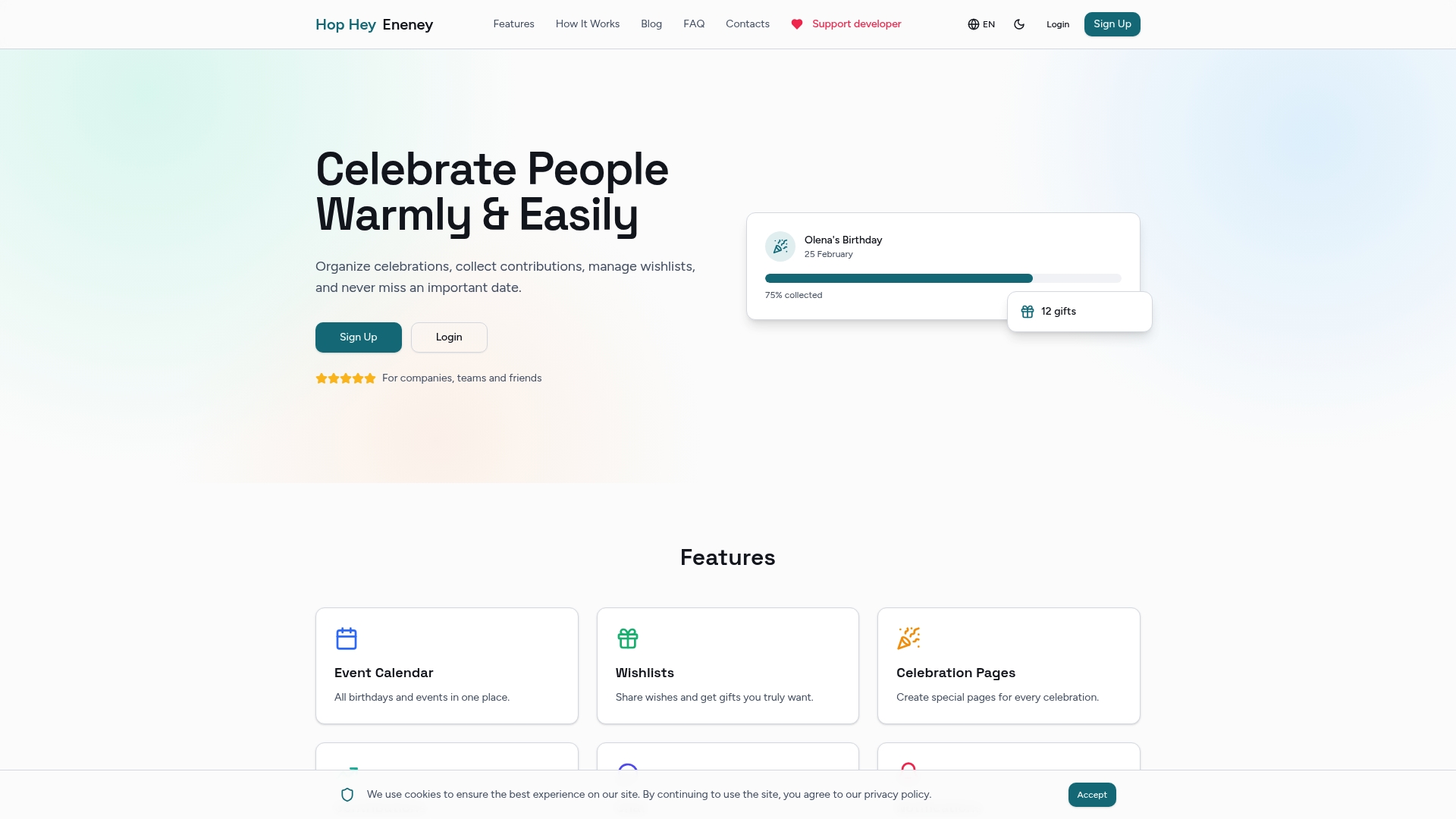
Hop Hey gift platform gives HR managers, community organizers, and group leads a single place to manage wishlists, track contributions, and coordinate gifting efforts from start to finish. Set up a shared event page, assign roles, collect funds transparently, and keep everyone updated through built-in chat and automated reminders. Whether you're organizing a company-wide Angel Tree adoption or a smaller friend group contribution, Hop Hey Eneney removes the chaos so you can focus on making the experience meaningful for everyone involved.
Frequently asked questions
How can my team join an Angel Tree or Toys for Tots drive?
Teams can sign up through their local Salvation Army Angel Tree chapter or Toys for Tots location, typically via their websites or by contacting a community coordinator directly.
What age groups do these programs serve?
Angel Tree typically supports children up to age 12, while Toys for Tots serves children from infancy up to age 18 depending on your local chapter's guidelines.
Can our company use gift drives for employee engagement?
Absolutely. Many companies integrate gift drives into their end-of-year culture programs because corporate toy drive sponsors gain branding visibility, potential tax benefits, and a strong signal of community commitment.
Is there a way to track group gifting and recipient needs digitally?
Yes. Platforms like Hop Hey Eneney let teams build shared wishlists, track individual contributions, and manage the full gift drive in one place, eliminating confusion and ensuring nothing gets missed.