
TL;DR:
- A well-structured wish list process prevents awkwardness and ensures fair gift exchanges.
- Digital platforms are recommended for managing large or remote teams efficiently and privately.
- Building trust and a positive culture is essential for Secret Santa success beyond just the process.
Running a workplace Secret Santa sounds simple until you're the one fielding complaints about inappropriate gifts, employees who feel financially pressured, or someone left out because their preferences weren't considered. HR managers carry a lot of invisible weight during the holiday season. The good news: a well-crafted wish list process can eliminate most of that friction before it starts. Secret Santa mechanics involve randomly assigning participants to buy one gift for another within a set budget, keeping assignments secret until the reveal, and using online tools for draws, wish lists, and reminders to ensure fairness and privacy. Get the structure right, and the celebration takes care of itself.
Table of Contents
- The essentials: Building fair and effective Secret Santa wish lists
- Step-by-step wish list setup: A framework for HR leaders
- What makes a wish list work? High-impact ideas and common pitfalls
- Comparing top wish list formats: Digital vs. old-school
- The uncomfortable truth: Why most Secret Santa wish lists miss the mark
- Ready to simplify Secret Santa? Let technology do the work
- Frequently asked questions
Key Takeaways
| Point | Details |
|---|---|
| Fairness is key | Set a clear budget and rules to ensure everyone can participate comfortably. |
| Go digital for scale | Digital wish lists and matching tools minimize errors and keep exchanges private and efficient. |
| Respect diversity | Write guidelines that account for different cultures, dietary restrictions, and comfort levels. |
| Engagement matters | Encourage thoughtful gifting and gratitude to turn Secret Santa into a culture-building event. |
The essentials: Building fair and effective Secret Santa wish lists
Before anyone writes down a single gift idea, the framework around the wish list needs to be solid. Think of it as the rules of the road. Without them, even the best intentions can create awkward moments.
The non-negotiables every HR team should establish:
- Budget cap: A $20 limit is the most common standard in U.S. offices, with a range of $15 to $25 keeping participation comfortable for all salary levels. Spell this out clearly in your announcement.
- Gift boundaries: No alcohol, gag gifts, fragrances, or anything that could be considered personal. These edge cases and inclusivity guidelines also cover dropouts (confirm commitment upfront), algorithm-based draws that prevent self-draws or couple pairings, and handling complaints about inappropriate gifts.
- Explicit opt-ins: Never assume participation. Use opt-in language and make opting out genuinely easy and stigma-free.
- Neutral, inclusive language: Wish list prompts should respect dietary restrictions, religious practices, and cultural backgrounds. Avoid prompts like "favorite holiday treat" that assume shared traditions.
- Confidential wish lists: Only the assigned giver should see the recipient's preferences. Shared lists create awkward dynamics and spoil surprises.
These boundaries aren't bureaucratic overkill. They reflect the kind of HR culture and rules that make people feel safe enough to actually enjoy the event.
Stat to know: Nearly 1 in 5 employees say office gift exchanges cause drama or awkwardness. Setting clear guidelines upfront is the single most effective way to prevent it.
For teams that want to go further, consider offering a structured template when building workplace wishlists. A good template prompts employees to list three to five items at different price points, include a "not interested in" section, and note any relevant preferences (vegan, no candles, loves coffee).
Pro Tip: Send the wish list form at least two weeks before the draw date. Last-minute submissions lead to rushed, generic gifts that miss the mark entirely.
Step-by-step wish list setup: A framework for HR leaders
With the essentials in place, here's a practical framework to implement effective Secret Santa wish lists in your organization. This process works for teams of 10 or 200.
- Announce the exchange and share the rules. Send a company-wide message with the budget, timeline, gift guidelines, and opt-in form. Be explicit that participation is voluntary.
- Collect wish list inputs. Use an online tool or a structured spreadsheet to gather preferences. Ask for three to five items per person, with a mix of specific products and general categories (e.g., "anything from a local coffee shop").
- Run the draw using a digital tool. Manual draws create errors. Secret Santa rules and mechanics recommend digital assignment tools that automatically prevent self-draws, couple pairings, and repeat matches from prior years.
- Distribute wish lists confidentially. Each giver receives only their assigned recipient's preferences. No one else sees the list.
- Set reminders and hard deadlines. Send at least two reminders: one when assignments go out, one a week before the gift deadline. For employee engagement through events, consistent communication is what separates a smooth event from a chaotic one.
- Plan the reveal. Whether it's an in-person party or a virtual call, the reveal is the payoff. Make it a moment, not an afterthought.
This process removes the three biggest HR headaches: missed assignments, inappropriate gifts, and last-minute scrambles. Each step has a clear owner and a clear output.
Pro Tip: For remote or hybrid teams, favor wishlists in the workplace that include shippable gift options and digital gift cards. Physical office-only gifts create an uneven experience for distributed employees.

What makes a wish list work? High-impact ideas and common pitfalls
Once the process is set, it's vital to know what kinds of gifts set the stage for a positive and drama-free experience.
Items that work well on workplace wish lists:
- Practical desk accessories (notebooks, cable organizers, quality pens)
- Snacks or specialty food items (with dietary notes included)
- Gift cards to widely available retailers or coffee chains
- Books, puzzles, or hobby-related items the person has mentioned
- Small self-care items like hand cream or a nice mug
Items to steer clear of:
- Gag gifts or novelty items (humor rarely translates across a whole team)
- Apparel or anything size-dependent
- Alcohol or anything tied to specific lifestyle choices
- Fragrances or personal care products beyond the most neutral options
- Inside jokes that exclude or embarrass
Make wish lists optional but encouraged. Some employees genuinely feel uncomfortable sharing preferences. For those who opt out of submitting a list, have a default: a gift card to a major retailer. This removes the guesswork without forcing anyone to share personal details.
The pressure is real: 56% of employees feel compelled to participate in workplace gift exchanges, and nearly half report financial strain. A hard budget cap and a genuine opt-out option are not nice-to-haves. They're essential.
The office gift drama stats reinforce this point: 20% of workers say Secret Santa causes awkwardness or conflict. Most of that drama is preventable with the right structure.
When you boost team culture with events, the goal isn't a perfect gift. It's a moment of genuine recognition that makes someone feel seen. A thoughtful $18 notebook beats a confused $20 impulse buy every time.
Comparing top wish list formats: Digital vs. old-school
But how you collect and manage wish lists matters too. Here's a direct comparison of formats to guide your decision.
| Feature | Digital platform | Paper or spoken || |---|---|---| | Privacy | High, controlled access | Low, easily overheard or lost | | Scalability | Excellent for 10 to 500+ | Works for 6 to 8 people max | | Error prevention | Automated, no self-draws | Manual, prone to mistakes | | Reminders | Automated | Relies on HR manually following up | | Remote-friendly | Yes | No | | Setup time | 30 to 60 minutes | Minimal for tiny groups | | Audit trail | Yes | No |
The case for digital is strong at almost any scale. Expert research on workplace Secret Santa dynamics highlights that for remote or hybrid teams, virtual reveals and shippable gifts are essential, and paper-based systems fail for groups larger than 15 or for distributed teams.
Paper or spoken wish lists have exactly one advantage: they require zero setup for a very small, co-located group. If your team is six people who sit next to each other every day, a handwritten slip works fine. For everyone else, digital wins.
Pro Tip: Go digital for any group larger than eight or any team with even one remote worker. The time you save on follow-up emails alone is worth it. Look for tools for workplace celebrations that combine wish list management with assignment draws and automated reminders in one place.
The uncomfortable truth: Why most Secret Santa wish lists miss the mark
Here's something most HR guides won't tell you: the wish list format is not the problem. The problem is treating the wish list as a solution to a culture challenge.
When a team has genuine trust and psychological safety, Secret Santa is fun. When it doesn't, no amount of structured wish lists will fix the underlying tension. A checklist approach can actually make things worse by adding pressure on top of an already strained dynamic.
Gifts only work as team-builders when they reflect real appreciation, not compliance with a company tradition. If people are filling out wish lists because they feel they have to, the exchange becomes a transaction. That's the opposite of what you want.
The fix isn't more structure. It's making recognition central to the event. Encourage givers to include a short note with their gift. Frame the exchange around gratitude, not obligation. Make it easy to opt out without social penalty.
The platforms and processes matter, but intent comes first. Party planning that boosts engagement works when the culture already supports it. Build the culture, then let the tools amplify it.
Ready to simplify Secret Santa? Let technology do the work
Managing Secret Santa manually is a real time sink for HR teams. Collecting wish lists, running draws, sending reminders, tracking who bought what, and handling last-minute dropouts can eat up hours that belong elsewhere.
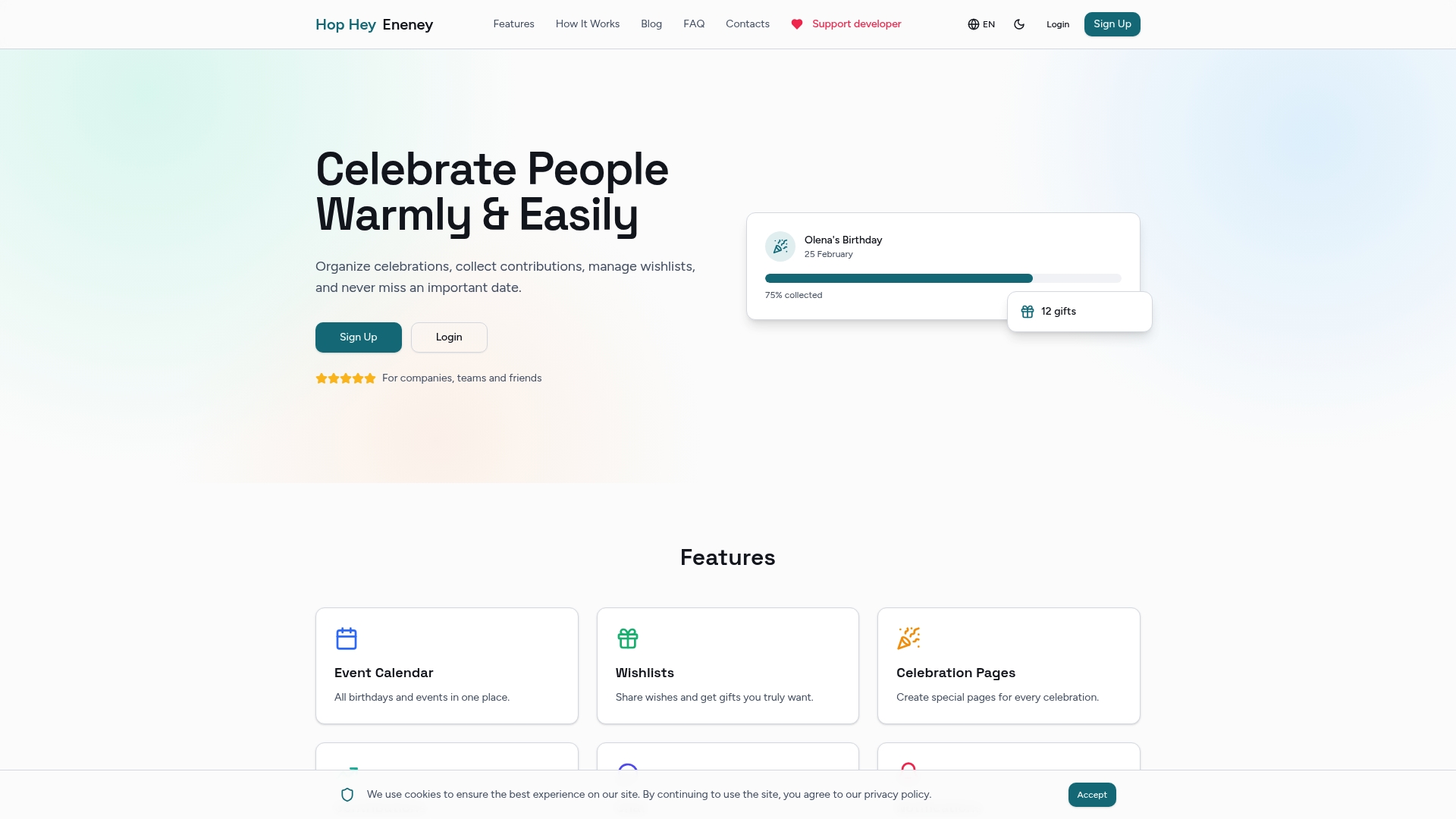
Hop Hey's platform automates every step: wish list collection, anonymous assignments, deadline reminders, and real-time gift tracking, all in one place. It's built for dispersed teams and stays aligned with privacy and inclusivity standards your HR team already cares about. Whether you're organizing a 12-person team exchange or a company-wide event with 300 participants, Hop Hey handles the logistics so you can focus on making the moment meaningful. Try it for your next workplace celebration and see how much lighter the whole process feels.
Frequently asked questions
What is the ideal budget for a workplace Secret Santa?
Most offices set a budget of $15 to $25, with $20 being a common cap to ensure participation is comfortable for everyone across salary levels.
How can HR prevent Secret Santa mishaps like inappropriate gifts or missed assignments?
Use digital tools that prevent self-matching, set clear gift guidelines upfront covering no alcohol or personal items, and provide a genuine, stigma-free opt-out option.
Is it better to keep wish lists public or private in the workplace?
Private wish lists are always better. Online tools for privacy ensure only the assigned giver sees the recipient's preferences, preventing awkwardness and protecting confidentiality.
How do we include remote or hybrid employees in Secret Santa wish lists?
Opt for digital platforms that support virtual wish lists and shippable gifts. Virtual reveals and shippable gifts are the standard recommendation for distributed teams, making the experience equal for everyone regardless of location.