
TL;DR:
- Modern event planning emphasizes hybrid formats, data-driven decisions, and inclusivity.
- Effective planning involves clear objectives, contingency budgets, structured activities, and last-minute preparations.
- Post-event evaluations with metrics and debriefs drive continuous improvement and memorable experiences.
Over half of corporate events blow past their original budget or hit unexpected snags before the day is done. That's not a planning failure — it's a signal that most teams are still using outdated approaches in a world that demands flexibility, smart tools, and real-time coordination. Modern event planning isn't just about booking a venue and sending calendar invites. It requires structured thinking, contingency buffers, and the right digital infrastructure. This guide breaks down what modern event planning actually looks like, walks you through the essential steps, tackles the most common challenges, and shows you how to measure what really worked.
Table of Contents
- What makes event planning 'modern' today?
- Essential steps for streamlined event planning
- Overcoming common challenges: Problems and solutions
- Measuring success and improving future events
- Why 'perfect' event plans miss what really matters
- Take your events to the next level with streamlined solutions
- Frequently asked questions
Key Takeaways
| Point | Details |
|---|---|
| Always budget for surprises | Set aside at least 10–15% of your event budget to handle unexpected costs smoothly. |
| Leverage modern tools | Hybrid events, digital platforms, and real-time feedback systems drive successful engagement. |
| Plan for inclusivity | Make every event accessible and welcoming by accommodating different needs and backgrounds. |
| Prioritize structured networking | Facilitate purposeful mingling to boost participation and team connections. |
| Focus on continuous improvement | Gather feedback and analyze results to make each event better than the last. |
What makes event planning 'modern' today?
Traditional event planning was largely linear: pick a date, book a space, send invites, hope for the best. Modern event planning looks nothing like that. Today's approach is iterative, data-informed, and built around the experience of every single attendee, whether they're in the room or joining remotely.
The biggest shift is the move toward hybrid formats and tech integration, which now includes inclusivity as a core design principle rather than an afterthought. That means captioning for virtual attendees, accessible venue layouts, and structured networking so no one ends up standing alone near the snack table.
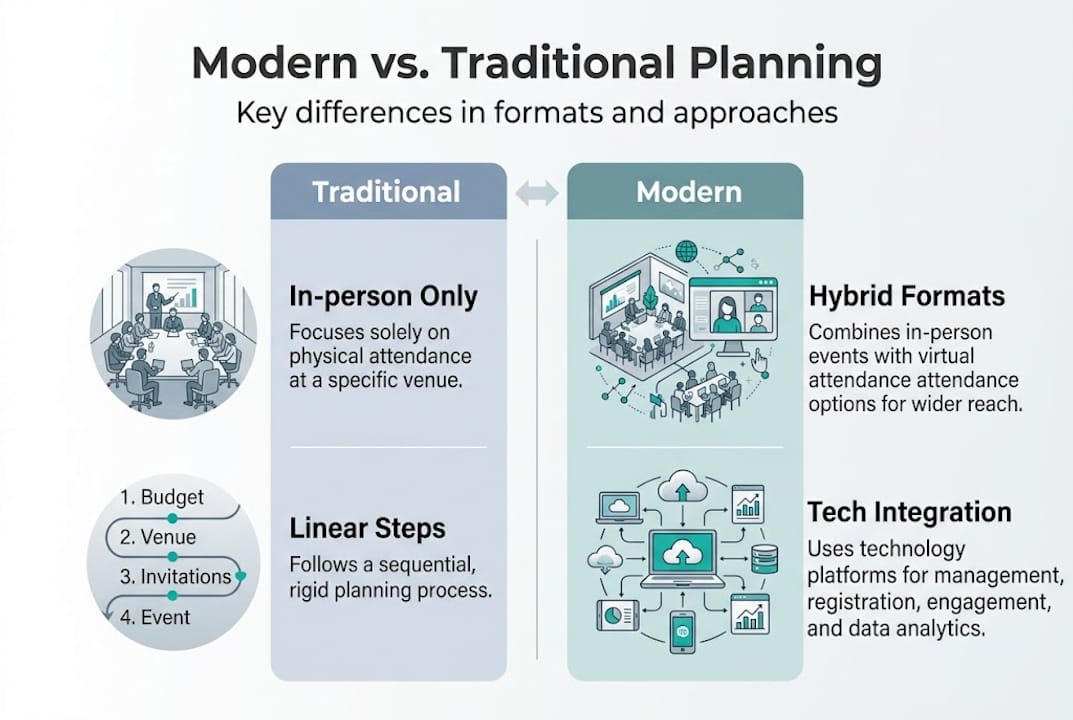
Here's a quick comparison of how planning has changed:
| Factor | Traditional planning | Modern planning |
|---|---|---|
| Format | In-person only | Hybrid or fully virtual |
| Tools | Spreadsheets, email | Platforms, apps, dashboards |
| Budget approach | Fixed estimate | Includes 10-15% contingency |
| Engagement focus | Passive attendance | Structured participation |
| Feedback | Post-event survey (maybe) | Real-time and post-event data |
Digital tools now handle registration, fund collection, reminders, and even post-event analytics. This removes the manual coordination burden from HR teams and reduces the chance of things slipping through the cracks.
Key features that define a modern event approach:
- Hybrid-ready infrastructure with tested audio, video, and chat tools
- Data-driven decisions on timing, format, and activities based on past attendance
- Inclusive design that considers remote participants, dietary needs, and accessibility
- Transparent fund management for group gifts or shared event costs
- Automated reminders to reduce no-shows and last-minute confusion
For HR teams managing everything from birthday celebrations to company-wide summits, understanding the types of team celebration events available is a strong starting point. Different events call for different tools and levels of planning complexity.
Modern planning also means accepting that no event will be perfectly smooth. Building flexibility into your process from day one is what separates teams that recover gracefully from those that scramble.
Essential steps for streamlined event planning
Good event planning doesn't start with a venue search. It starts with a clear answer to one question: what do we want people to walk away feeling? Once you have that, every other decision becomes easier.
Here are the core steps for a streamlined process:
- Define your objectives. Nail down the purpose, the audience, and the outcome you're measuring. A team morale event has different success metrics than a product launch.
- Set your budget with a contingency reserve. Budget 10-15% for surprises — tech failures, vendor cancellations, and last-minute catering changes are more common than most teams expect.
- Choose your format and venue. For hybrid events, test your tech setup at least a week in advance. For in-person events, run an accessibility check on the venue.
- Build your team with clear roles. Assign owners for logistics, communications, tech support, and attendee experience. Avoid single points of failure.
- Promote and manage registration. Use reminders and simple sign-up flows to reduce no-shows. Confirmation emails with calendar links cut drop-off significantly.
- Plan structured activities. Don't leave networking to chance. Icebreakers, group challenges, and facilitated conversations drive more genuine connection than open-ended mingling.
- Prepare for last-minute changes. Have a written backup plan for your top three risk scenarios before the event day arrives.
Pro Tip: Build a shared event brief that every team member can access in real time. When everyone has the same information, decisions happen faster and miscommunications drop sharply.
"The best events aren't the ones where nothing went wrong. They're the ones where the team knew exactly what to do when something did."
For a more detailed walkthrough tailored to HR departments, the complete planning steps for HR covers everything from stakeholder alignment to post-event wrap-up in a practical, role-specific format.
Overcoming common challenges: Problems and solutions
Even well-planned events hit walls. The difference between a stressful scramble and a smooth recovery is preparation. Here are the most common problems and what actually works.
| Challenge | Root cause | Practical solution |
|---|---|---|
| Budget overruns | No contingency buffer | Reserve 10-15% from the start |
| Tech failures at hybrid events | Untested equipment | Full tech rehearsal 48 hours before |
| Low engagement | Passive programming | Build in structured participation |
| Inclusivity gaps | Assumptions about attendees | Collect accessibility needs at registration |
| Last-minute absences | No role redundancy | Assign backup owners for every key task |
Unexpected costs and disruptions affect the majority of corporate events, and the culprits are usually predictable: inflation on vendor contracts, hybrid tech licensing fees, or a speaker cancellation the week before. None of these are truly surprising once you've planned a few events. What's surprising is how rarely teams build a response plan for them.

For hybrid events specifically, the tech stack needs a full rehearsal, not just a quick test. Assign one person whose only job during the event is tech support. That person should not be running anything else.
Other solutions worth building into your standard process:
- Use a transparent fund-collection tool to avoid the awkward chase for reimbursements or unclear contribution splits
- Send automated reminders at 7 days, 3 days, and the morning of the event to cut no-show rates
- Collect dietary and accessibility needs at registration, not the week before
- Document vendor agreements with cancellation terms clearly noted
Pro Tip: Assign flexible roles instead of fixed ones. When one person covers two adjacent responsibilities, your team can absorb last-minute absences without visible disruption.
For teams working with limited budgets, budget-friendly event tactics offer practical ways to stretch resources without cutting the experience. And if you're managing group contributions, surprise-proof event funds walks through transparent collection methods that eliminate confusion. Building flexible event roles into your team structure from the start pays off every single time.
Measuring success and improving future events
Planning the next event well depends entirely on how honestly you evaluate the last one. Most HR teams collect a quick post-event survey and call it done. That's leaving a lot of useful data on the table.
Here are the metrics worth tracking after every event:
- Attendance rate versus registered participants
- Engagement rate during activities, breakout sessions, or live polls
- Net Promoter Score (NPS) from post-event surveys
- Budget variance between planned and actual spend
- Feedback themes from open-ended survey questions
- Follow-through rate on any commitments made during the event
Structured networking and post-event feedback are two of the strongest drivers of long-term event impact. When people leave with new connections and a clear sense that their input was heard, they show up more engaged the next time.
The debrief meeting is where most of the real learning happens. Schedule it within 48 hours while details are still fresh. Ask your team three questions: what worked, what didn't, and what would we do differently with one more week to prepare?
"Data tells you what happened. Conversations tell you why. You need both to actually improve."
Use that debrief to update your event playbook, adjust your budget template, and flag any inclusivity gaps that surfaced. Over time, this creates a compounding advantage: each event gets a little smoother, a little more engaging, and a little less stressful to run.
For deeper guidance on building engagement-focused events, the employee engagement event guide and resources on how to boost team culture through office events offer practical frameworks you can apply immediately.
Why 'perfect' event plans miss what really matters
Here's something most event planning guides won't tell you: the obsession with flawless execution often kills the very thing you're trying to create. When HR teams spend all their energy on perfecting the run-of-show, they leave no room for the spontaneous moments that people actually remember.
The best team events we've seen don't go off without a hitch. They go off with a few hitches that the team handles gracefully, and those moments of real human coordination become part of the story people tell afterward.
The shift worth making is from control to enablement. Instead of scripting every minute, build a structure that gives your team permission to adapt. Assign flexible event team roles so people can respond to what's actually happening, not just what was planned. Use tools that handle the logistics automatically so your team's attention stays on the people in the room.
Memorable moments rarely fit a script. Your job as an HR leader isn't to eliminate uncertainty. It's to create the conditions where genuine connection can happen, even when things don't go exactly as planned.
Take your events to the next level with streamlined solutions
Planning great events consistently is a systems problem, not a creativity problem. When your tools handle reminders, fund collection, and coordination automatically, your team can focus on what actually matters: the people.
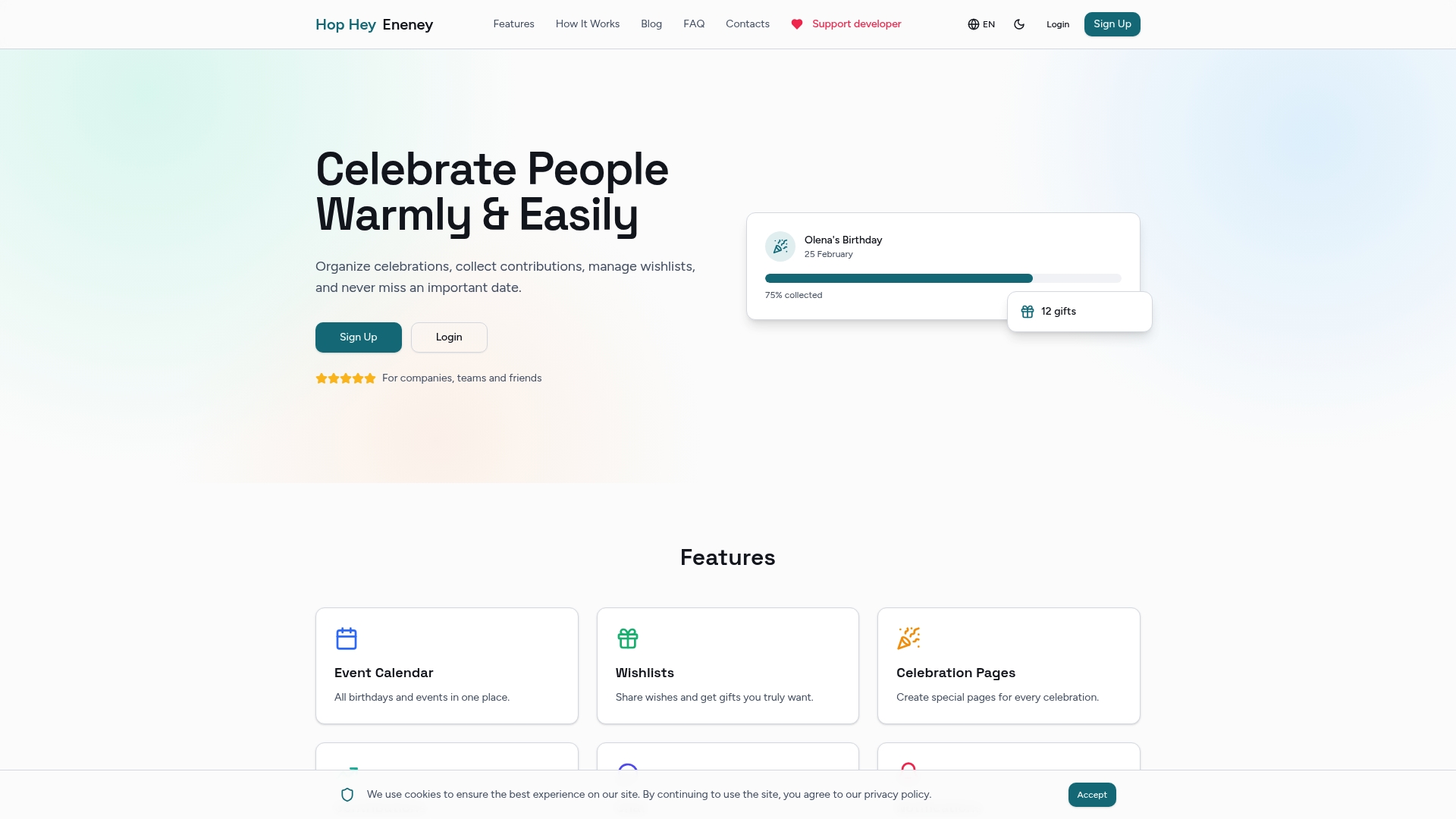
The Hop Hey platform gives HR managers and team leads everything they need to organize celebrations, manage group contributions, and coordinate events without the back-and-forth chaos. From private celebration pages and shared event calendars to transparent fund tracking and Telegram notifications, Hop Hey removes the friction from every step of the process. Whether you're planning a team birthday, a company milestone, or a surprise farewell, the platform keeps everyone aligned and the honoree completely in the dark until the right moment.
Frequently asked questions
What percentage of event budgets should go to contingency planning?
Set aside at least 10-15% of your budget for unexpected costs or last-minute needs. This buffer covers vendor changes, tech failures, and inflation-driven price increases.
How can HR teams make hybrid events more reliable?
Test all technologies beforehand and assign one team member as dedicated tech support during the event. Always have a backup plan for your primary streaming or conferencing tool.
What are top strategies to maximize team engagement at events?
Prioritize structured networking activities and assign flexible roles so team members stay active and invested throughout the event rather than passively attending.
How do I measure success for our company event?
Collect feedback through a post-event survey, track attendance versus registration, and review participation rates in key activities. Schedule a team debrief within 48 hours to capture honest reflections while they're still fresh.
What if a key team member is absent at the last minute?
Build flexible role assignments into your planning process so responsibilities can shift quickly without disrupting the event. Redundancy in critical roles is the simplest form of event insurance.