TL;DR:
- Effective remote celebrations align with team values, culture, and inclusivity to genuinely connect members.
- Blending synchronous and asynchronous formats balances engagement, reduces fatigue, and accommodates global schedules.
- Focus on meaningful, well-evaluated events that prioritize energy, follow-up, and tailored approaches over frequency.
Running a distributed team means you've probably felt the tension between wanting to celebrate people and not knowing if your efforts actually land. A birthday shoutout in Slack. A virtual happy hour that half the team skips. An end-of-quarter party where three time zones make attendance a logistical puzzle. The stakes are real: managers drive 70% of employee engagement variance, which means the way you structure team celebrations directly shapes whether people feel valued or invisible. This article gives you a practical framework, curated ideas, a format comparison, and situational guidance to help you build celebrations that genuinely connect your team.
Table of Contents
- How to evaluate team celebration ideas for remote and hybrid teams
- Top team celebration ideas for distributed teams
- Comparison: Synchronous vs asynchronous celebration formats
- Situational recommendations: Matching celebration ideas with team culture and context
- The overlooked key to successful team celebrations
- Bring meaningful celebration ideas to your team today
- Frequently asked questions
Key Takeaways
| Point | Details |
|---|---|
| Prioritize inclusivity | Choose celebrations that respect diverse cultures, time zones, and work arrangements. |
| Mix live and async formats | Blend short live sessions with ongoing async rituals for maximum participation and engagement. |
| Focus on well-being | Balance fun with wellness activities to prevent fatigue and support team satisfaction. |
| Match ideas to team context | Adjust celebrations to your team’s size, business cycle, and cultural background for the best results. |
How to evaluate team celebration ideas for remote and hybrid teams
Before you plan anything, you need a way to judge whether an idea is actually worth your team's time. Not every celebration format works for every team. A trivia night that energizes a 10-person startup might feel exhausting for a 60-person global engineering team spread across five time zones. The right evaluation framework saves you from wasted effort and, more importantly, from making people feel like participation is an obligation.
Start by asking how well a celebration idea aligns with your company values and your team's actual culture. A company that prioritizes learning should celebrate knowledge milestones. A team that values humor might love a meme-of-the-month thread. Alignment makes celebrations feel authentic rather than performative.
Here are the core criteria to evaluate any celebration idea before committing:
- Format compatibility: Can this work synchronously, asynchronously, or both? Does it require everyone to be online at the same time?
- Accessibility and inclusion: Does it account for different cultures, languages, time zones, dietary needs (for in-person elements), and physical abilities?
- Duration and fatigue risk: Is it short enough to feel like a treat, not a chore? For live events, 20 to 45 minutes is the sweet spot.
- Budget realism: Does it scale with your team size without creating equity gaps between co-located and remote employees?
- Cultural sensitivity: Does the theme inadvertently exclude or alienate team members from certain backgrounds?
- Engagement potential: Will people actually participate, or will it generate awkward silence and forced smiles?
One often-missed dimension is wellness. Remote workers are highly engaged but also face higher rates of distress and loneliness than their office-based peers. That means your celebration strategy needs to do double duty: build connection and reduce isolation. A celebration that piles more screen time onto an already screen-heavy day isn't a reward; it's another obligation.
To boost engagement and recognition effectively, you also need to mix live and asynchronous rituals. Not everyone can join a noon video call, and not everyone wants to. Building in both formats signals that participation is genuinely welcome, not quietly compulsory.
Pro Tip: Before you finalize any celebration format, run a quick two-question poll asking what your team enjoys and what time slot works best. That 60-second investment will dramatically increase participation and goodwill.
Top team celebration ideas for distributed teams
With your evaluation criteria in mind, let's explore the most effective celebration formats for keeping teams engaged, no matter where they work.
The best ideas for distributed teams share three traits: they're flexible, they don't require everyone to be in the same place at the same time, and they leave room for individual personality. Here's a curated list with practical notes on implementation:
- Short themed virtual parties: Keep live events to 30 minutes max. Use structured activities like a team trivia round, a creative challenge (best home office decoration), or a live Q&A with leadership. The types of celebration events that consistently outperform others are the ones with a clear agenda and a defined end time.
- Cultural and holiday diversity events: Instead of defaulting to a single holiday tradition, invite team members to share their own. Host a "What we celebrate at home" async thread or a live show-and-tell. This is especially powerful for party planning tips for teams that span multiple countries.
- Micro-milestone celebrations: Don't wait for big anniversaries. Celebrate a project launch, a first client win, a completed certification, or even a 90-day onboarding milestone. These small, specific moments signal that leadership is paying attention.
- Async rituals: Digital applause walls (a shared doc or Slack channel where anyone can post kudos), meme-of-the-week threads, or peer-nominated awards are low-lift and high-impact. They work across time zones without scheduling pain.
- Wellness-focused events: Group meditation sessions, step-count challenges, or a virtual gratitude circle paired with a celebration can address the well-being gap that remote work creates.
- Giving-back initiatives: Organize a team volunteer day or a charity gift drive. Hybrid celebrations that include a giving component consistently score higher on meaning and satisfaction than purely recreational events.
"Build camaraderie with fun, accessible games and awards like 'Best Zoom Background' for hybrid teams. The goal isn't production value; it's laughter and low barriers to entry."
Remote teams thrive with flexible celebration options like async Secret Santa, spot bonuses, and well-being check-ins that don't demand synchronous participation.
Pro Tip: Keep live celebration events between 20 and 45 minutes. Anything longer risks screen fatigue, and people mentally check out around the 40-minute mark regardless of how good the content is.
Comparison: Synchronous vs asynchronous celebration formats
Having seen specific celebration options, it's essential to weigh how you'll deliver them, synchronously, asynchronously, or both.
Synchronous means everyone participates at the same time, live. Think a video call birthday party or a real-time team trivia game. Asynchronous means people participate on their own schedule. Think a shared kudos thread, a video message compilation, or a digital gift card drop.
Neither format is universally better. The right choice depends on your team's size, geographic spread, and the nature of the milestone you're celebrating.
| Factor | Synchronous | Asynchronous |
|---|---|---|
| Time zone friendliness | Low (requires overlap) | High (no overlap needed) |
| Real-time energy and connection | High | Low to medium |
| Participation pressure | Higher | Lower |
| Setup complexity | Medium to high | Low to medium |
| Best for | Small teams, major milestones | Large or global teams, ongoing rituals |
| Fatigue risk | Higher | Lower |
Remote teams benefit most from a deliberate mix of both formats, using synchronous events for high-impact moments and async for ongoing recognition culture. Short facilitated live sessions consistently outperform long webinars in both engagement and post-event satisfaction scores.
Here's how to blend the two effectively:
- Use a live event for the celebration kick-off (15 to 20 minutes), then extend it with an async thread where people can contribute over 48 hours.
- Record live moments and share clips in a dedicated channel so those who couldn't attend still feel included.
- Pair a real-time award announcement with an async voting process that ran the week before.
- Use group celebration coordination tools to keep both formats organized without flooding inboxes or Slack channels.
The blended model works because it respects everyone's schedule without sacrificing the energy that comes from shared, live moments.
Situational recommendations: Matching celebration ideas with team culture and context
Let's bring it all together with recommendations that help you match the right celebration to your unique team, so your investment pays off in connection and retention.
Context matters enormously. A celebration that works perfectly for a 12-person product team in Q1 might completely misfire for a 150-person support team in the middle of a major product launch. Here's a quick decision guide:

| Team context | Recommended celebration approach |
|---|---|
| Small team (under 15) | Live themed sessions, peer kudos, milestone dinners (virtual or in-person) |
| Large or global team | Async rituals, digital applause walls, async awards with live announcement |
| High-stress business period | Micro-milestone shoutouts, wellness check-ins, brief gratitude moments |
| Multi-cultural team | Cultural sharing threads, inclusive async traditions, multi-faith calendar awareness |
| New team or onboarding phase | Welcome rituals, 30/60/90-day celebrations, buddy system recognition |
Here's a step-by-step process for selecting the right celebration approach:
- Assess your team's current energy. Are people burned out or energized? Celebrations must balance engagement and well-being to avoid fatigue and turnover.
- Check the business calendar. Avoid stacking celebrations during sprint ends, major releases, or peak support periods.
- Solicit direct input. A one-question Slack poll takes 30 seconds and removes guesswork.
- Choose and pilot a format. Run one celebration, then collect feedback within 24 hours.
- Iterate based on response. Over-celebration or poor execution risks lowering morale. Focus on meaningful, varied micro-milestones rather than repeating the same format.
For multi-cultural teams, the most effective move is to replace assumed shared traditions with open invitations. Ask people what they celebrate rather than guessing. For organizing office events that span cultures, building in optional participation and multiple contribution formats (video, text, image) makes inclusion feel real rather than performative.
Pro Tip: Build periodic wellness and gratitude elements into your celebration calendar, not as a separate HR initiative, but woven into the celebration itself. A 5-minute gratitude round at the end of a team win call takes almost no time and measurably shifts the energy in the room.
The overlooked key to successful team celebrations
Here's the uncomfortable truth most celebration guides skip: the problem isn't a lack of ideas. Most managers have plenty of ideas. The problem is that they optimize for doing a celebration rather than landing one.
You can run a perfectly executed virtual trivia night and still have a team that feels no closer after it ends. Why? Because the celebration wasn't designed around what that team actually values. It was designed around what's easy to plan.
The real signal of a successful celebration isn't turnout or logistics. It's the energy you notice in the 48 hours that follow. Are people referencing it in conversation? Did a quiet team member actually engage? Did someone who usually ghosts these events show up and stay?
Listening is your primary tool. Solicit feedback after every event, adapt formats, and retire anything that consistently produces flat responses. Great event management best practices aren't about running more celebrations; they're about running better ones. One well-crafted, genuinely memorable celebration every quarter beats twelve forgettable ones every month.
Prioritize meaning over frequency. Your team will thank you with their presence, not just their attendance.
Bring meaningful celebration ideas to your team today
You now have the framework, the ideas, and the decision tools to build a celebration strategy that actually works for your distributed team. The next step is execution, and that's where things usually get complicated. Coordinating contributors, tracking gift collections, keeping surprises actually surprising, and managing multiple events across a shared calendar is a lot to juggle.
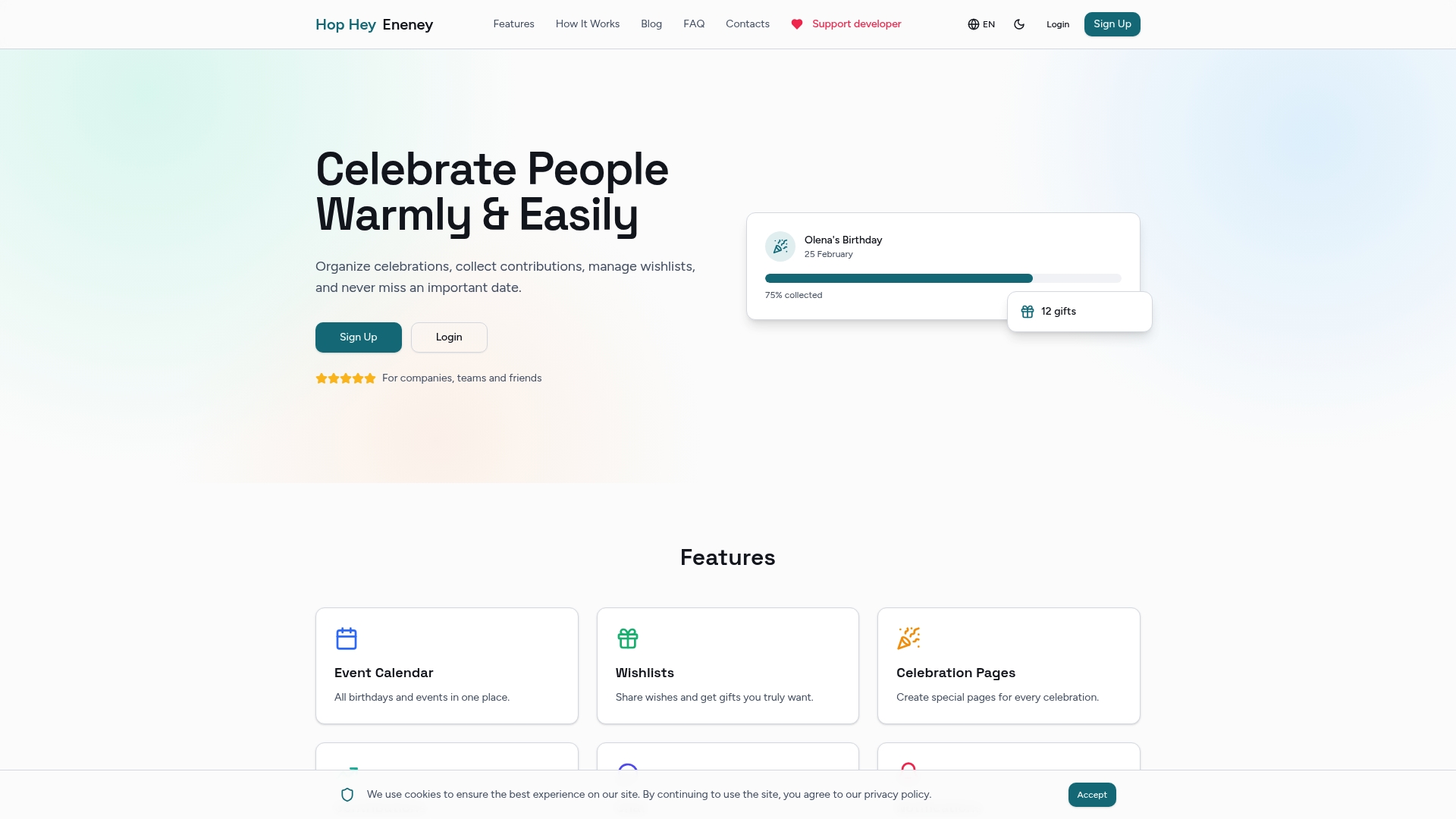
That's exactly what explore HopHey is built for. HopHey gives managers and team leaders a single platform to create private celebration pages, coordinate gift contributions transparently, manage a shared event calendar, and communicate in a dedicated chat without spoiling surprises. Whether you're recognizing a work anniversary, organizing a team birthday, or running a group gift for a colleague's milestone, HopHey removes the chaos and keeps every celebration on track.
Frequently asked questions
What are the best virtual celebration ideas for small remote teams?
Top ideas include short themed game sessions, digital gratitude walls, async awards, and wellness check-ins. Hybrid celebrations emphasize inclusivity and accessible games that work across locations and schedules.
How do you avoid team celebration fatigue?
Keep celebrations brief, varied, and grounded in genuine team input, mixing live and async formats. Short, facilitated sessions prevent fatigue far better than extended webinars or mandatory all-hands events.
How can celebrations support both engagement and well-being in remote teams?
Pairing recognition moments with wellness activities, like a gratitude round or a mindfulness break, addresses both dimensions simultaneously. Remote engagement is high but well-being drops without intentional wellness integration into team rituals.
What's a good way to include international team members in celebrations?
Offer asynchronous participation options and invite team members to share their own cultural traditions rather than defaulting to a single holiday framework. Remote teams benefit most from async options combined with cross-cultural openness and flexible contribution formats.