
TL;DR:
- A group organizer manages tasks, communication, and logistics to ensure the group's success and cohesion. Using a structured Job System with clear roles reduces burnout and speeds up conflict resolution, leading to more effective event planning. Visible task ownership, facilitation skills, and shared responsibility create resilient groups that operate smoothly and with less stress.
A group organizer is defined as the person who plans, coordinates, and manages the tasks, communication, and logistics that allow a group to function and succeed. The role of group organizers goes far beyond scheduling a meeting room or sending a calendar invite. Effective organizers apply structured frameworks, distribute responsibilities, and actively manage group dynamics to prevent the chaos that derails even well-intentioned teams. Whether you are coordinating a corporate event, a community project, or a surprise birthday party, understanding what group organizers actually do separates a memorable experience from a stressful one.
What are the essential functions of group organizers?
Group organizers operate across four distinct phases: design and goal definition, detailed planning and task distribution, on-site production and supervision, and post-event analysis for continuous improvement. Each phase demands a different skill set. The design phase requires vision and stakeholder alignment. The execution phase demands real-time problem solving.

The functions of group organizers extend well beyond booking venues and sending reminders. Professional coordinators manage risk assessments, vendor negotiations, and emergency protocols as standard practice. That complexity is why experienced organizers treat logistics as a system, not a checklist.
Here are the core responsibilities that define the role:
- Planning and goal setting: Define what success looks like before any task is assigned.
- Task delegation: Match responsibilities to individual strengths and availability.
- Communication facilitation: Keep every participant informed without creating noise.
- Financial coordination: Track budgets, collect contributions, and report spending transparently.
- Risk management: Anticipate what can go wrong and prepare contingency plans.
- Documentation: Record decisions, commitments, and outcomes so nothing falls through the cracks.
Without this structure, groups experience what coordination professionals call "logistical fog." Decisions get repeated, responsibilities overlap, and the organizer absorbs every unresolved question. That accumulation is the direct cause of organizer burnout.
Pro Tip: Build a shared task list at the start of every project. Assign each item an owner and a deadline before the first group meeting ends. Ambiguity is the enemy of execution.
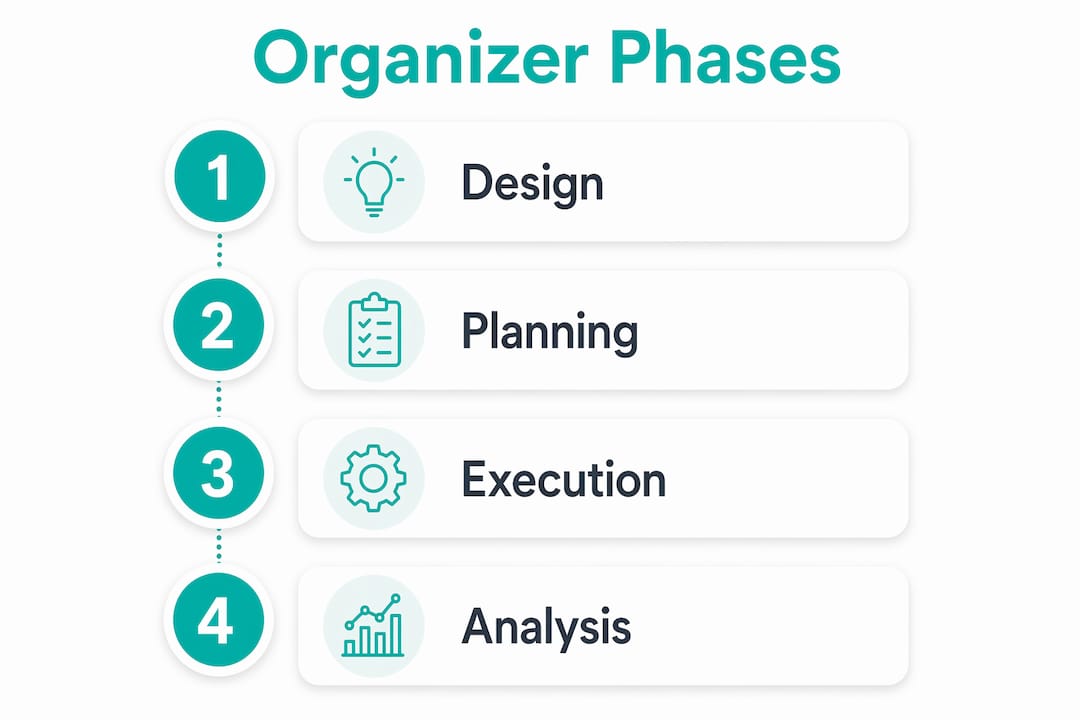
The post-event analysis phase is the one most organizers skip. Reviewing what worked and what failed after each event builds institutional knowledge. Teams that skip this step repeat the same mistakes across every cycle.
How can the Job System reduce organizer burnout?
The Job System is a structured approach to group organizing that assigns three specialized lead roles to separate people. Each role owns a distinct domain. No single person carries the full cognitive load.
The three roles are:
- Budget Lead: Owns all financial decisions, tracks contributions, and manages vendor payments.
- Logistics Lead: Handles scheduling, venue coordination, transportation, and supplier communication.
- Anchor Curator: Designs the core group experiences, balancing scheduled anchor activities with free time for spontaneity.
This division matters because decision fatigue and unresolved money questions are the two most common sources of group conflict. When one person owns the budget and another owns logistics, those friction points have a clear owner. Disputes resolve faster because accountability is explicit.
| Organizing approach | Decision ownership | Burnout risk | Conflict resolution speed |
|---|---|---|---|
| Single organizer model | One person decides everything | High | Slow |
| Job System model | Distributed by domain | Low | Fast |
| Informal rotation | Unclear, shifts by mood | Very high | Very slow |
The Anchor Activities rhythm is the Job System's most underrated feature. Scheduling two or three non-negotiable group moments, then leaving the rest of the time open, satisfies both planners and spontaneous personalities. Groups report higher satisfaction when they know what is fixed and what is flexible.
Hidden labor such as tracking who has paid, following up on commitments, and managing last-minute changes often falls entirely on the organizer. Making that labor visible to the whole group is the first step toward sharing it. When the group sees the full task list, contributions increase naturally.
Pro Tip: At your first planning meeting, share the complete task list publicly. Ask for volunteers before assigning roles. People commit more reliably to tasks they chose.
What leadership styles support effective group organizing?
Group leadership is not just about running meetings. It involves managing group dynamics, psychological safety, and the conditions that allow members to contribute fully. The most effective group leaders act as facilitators, not controllers.
Distributed leadership is the model that produces the best outcomes. Mature groups share responsibilities so that no single member bears full accountability. This increases resilience because the group does not collapse when one person steps back. It also increases participation because members feel genuine ownership.
The behaviors that define effective group leadership include:
- Active listening: Organizers who listen before deciding build trust faster than those who direct.
- Transparent communication: Sharing the reasoning behind decisions reduces resistance and speculation.
- Conflict acknowledgment: Naming tension early prevents it from becoming a group norm.
- Role modeling: Organizers who meet their own deadlines set the standard for everyone else.
- Encouraging contribution: Asking for input before finalizing plans signals that participation matters.
Trust and respect are not soft outcomes. They are the operational conditions that allow a group to move fast when it needs to. Groups without trust spend time on politics. Groups with trust spend time on work.
The shift from "leader as owner" to "leader as facilitator" is the most important mindset change for any organizer. Ownership thinking leads to micromanagement and burnout. Facilitation thinking leads to a group that can operate without constant direction. The goal is to make yourself less necessary over time, not more central.
For teams managing flexible roles in event planning, rotating leadership responsibilities across events builds capability across the whole group. No single person becomes the bottleneck.
What practical strategies help group organizers succeed?
The most effective organizing strategies share one trait: they make invisible work visible. When the group can see every task, deadline, and financial commitment, the organizer stops being the sole source of truth. That shift alone reduces stress significantly.
Practical strategies that work:
- Use a shared task board. Tools like shared spreadsheets or project boards give every member visibility into what is open, in progress, and complete.
- Set opt-in expectations early. Tell participants what is required versus optional before they commit. Surprises kill engagement.
- Establish a single communication channel. Fragmented conversations across email, text, and chat apps create confusion. Pick one channel and enforce it.
- Schedule decision deadlines. Open-ended decisions drag on indefinitely. Set a date by which each decision must be made and stick to it.
- Document every financial transaction. Transparent fund tracking prevents the resentment that builds when people feel money is being mismanaged.
Communication strategies that elevate team culture go beyond logistics updates. Regular acknowledgment of contributions, clear escalation paths for problems, and honest post-event feedback all build the kind of group culture where organizing gets easier over time.
Improving team communication is a skill that compounds. Groups that invest in communication practices early spend far less time resolving misunderstandings later. The upfront cost is low. The long-term payoff is significant.
For groups managing celebrations and events, platforms that centralize fund collection, task tracking, and communication in one place remove the coordination overhead that typically falls on the organizer. Hophey is built specifically for this use case, combining event calendars, transparent contribution tracking, and private chat coordination into one structured environment.
Reducing event stress starts with reducing the number of systems the organizer has to manage simultaneously. Every additional tool is another place where information can get lost.
Pro Tip: After each event, send a short three-question debrief to all participants: What worked? What did not? What should we do differently? Responses take five minutes and prevent the same problems from repeating.
Key Takeaways
Effective group organizing requires distributed roles, visible task ownership, and a facilitation mindset rather than a control mindset.
| Point | Details |
|---|---|
| Four-phase event framework | Design, planning, execution, and post-event analysis structure the full organizer lifecycle. |
| Job System role clarity | Budget Lead, Logistics Lead, and Anchor Curator each own a domain, reducing conflict and decision fatigue. |
| Distributed leadership | Sharing responsibilities across group members prevents burnout and increases participation. |
| Visible task ownership | Publishing the full task list invites contribution and removes the organizer as the sole information source. |
| Facilitation over control | Organizers who enable others to lead build groups that function without constant direction. |
The hidden cost of doing it all yourself
The organizer who handles everything is not a hero. That person is a single point of failure. I have watched capable, enthusiastic organizers burn out completely after one or two large events because they never built a system that let others carry weight. The group loses its best coordinator, and the next event suffers.
The research on group leadership development confirms what I have seen in practice: effective facilitation requires balancing teaching, modeling, and coordination simultaneously. That is a heavy cognitive load for one person. The only sustainable answer is distribution.
What I find most organizers resist is the idea that asking for help signals weakness. The opposite is true. Structuring a group so that three people own three domains, and every financial transaction is visible to all, is a sign of organizational maturity. It is also the only model that survives personnel changes.
The mindset shift I advocate is simple. Stop asking, "How do I manage this group?" Start asking, "How do I build a group that manages itself?" That question leads to better systems, clearer roles, and events that people actually want to participate in planning. The team event coordination process gets easier every time you run it, but only if you document what worked and share the load from the start.
— Konstantin
How Hophey supports group organizers
Group organizers carry a lot. Hophey removes the coordination overhead that typically buries the person running the show.
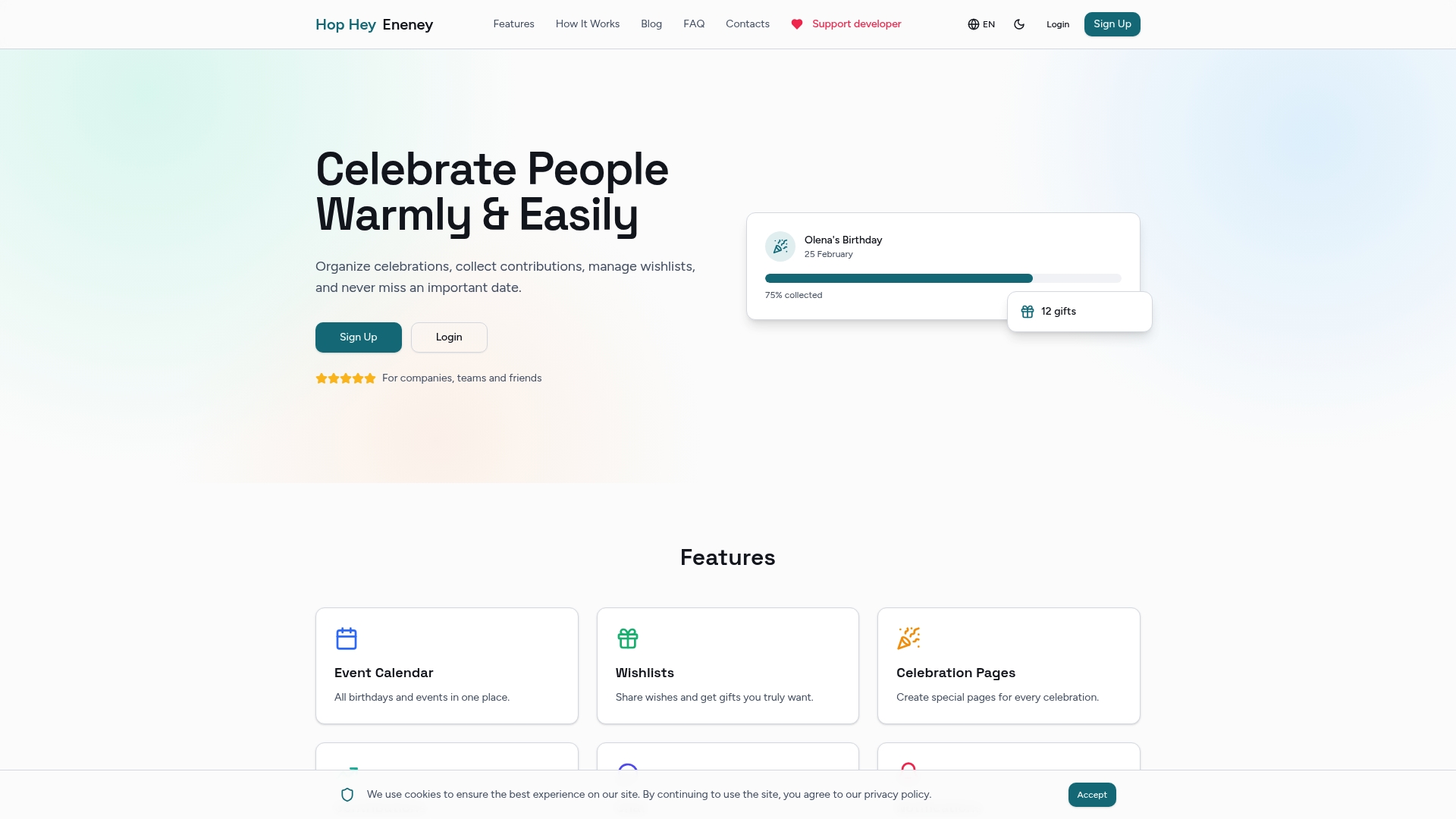
Hophey gives teams, HR departments, and friend groups a single place to manage event calendars, collect gift contributions transparently, coordinate through private chat, and track wishlists without involving the person being celebrated. Automated reminders, multi-currency support across UAH, USD, and EUR, and role-based permissions mean the organizer is not the only one keeping things moving. If you are ready to run events without the chaos, start with Hophey and see how structured coordination changes the experience for everyone involved.
FAQ
What is the primary role of group organizers?
A group organizer plans, coordinates, and manages tasks, communication, and logistics to ensure a group achieves its goals. The role includes financial coordination, risk management, and facilitation of group decisions.
What do group organizers do to prevent burnout?
Distributing responsibilities across specialized roles and making hidden labor visible to the full group are the two most effective burnout prevention strategies. The Job System model assigns Budget Lead, Logistics Lead, and Anchor Curator roles to separate people.
How does distributed leadership improve group outcomes?
Mature groups that share leadership responsibilities are more resilient and generate higher participation than groups relying on a single leader. Distributed leadership removes the single point of failure that causes groups to stall when one person steps back.
What is the Job System in group organizing?
The Job System assigns three specialized lead roles to separate group members: Budget Lead, Logistics Lead, and Anchor Curator. Each role owns a distinct domain, which reduces decision fatigue and resolves the two most common sources of group conflict.
How can group organizers improve team communication?
Organizers should establish a single communication channel, set decision deadlines, and share the full task list publicly from the start. Effective communication strategies build trust and reduce the time groups spend resolving misunderstandings.