
TL;DR:
- Effective event communication is a structured process that manages pre, during, and post-event messaging to build trust and engagement. Ensuring internal alignment and personalized messaging for different stakeholder groups prevents confusion and enhances the event experience. Utilizing segmented channels, clear timelines, and shared documentation strengthens relationships and improves overall event success.
Event communication is the coordinated exchange of information with attendees, sponsors, staff, and partners throughout the entire event lifecycle, ensuring clarity, engagement, and collaboration at every stage. Most organizers treat it as a series of announcements. The ones who succeed treat it as a relationship-building system. Platforms like Cvent and EventBookings have built entire product suites around this distinction. Effective communication plans cover pre-event promotion, during-event updates, and post-event follow-up. Get all three right, and your event runs with far less friction and far more trust.
What is event communication and why does it matter?
Event communication is defined as the structured, continuous process of conveying timely, relevant information to all event stakeholders before, during, and after an event. The industry term you will encounter in professional contexts is stakeholder communication management, though "event communication" is the working phrase most organizers use daily.
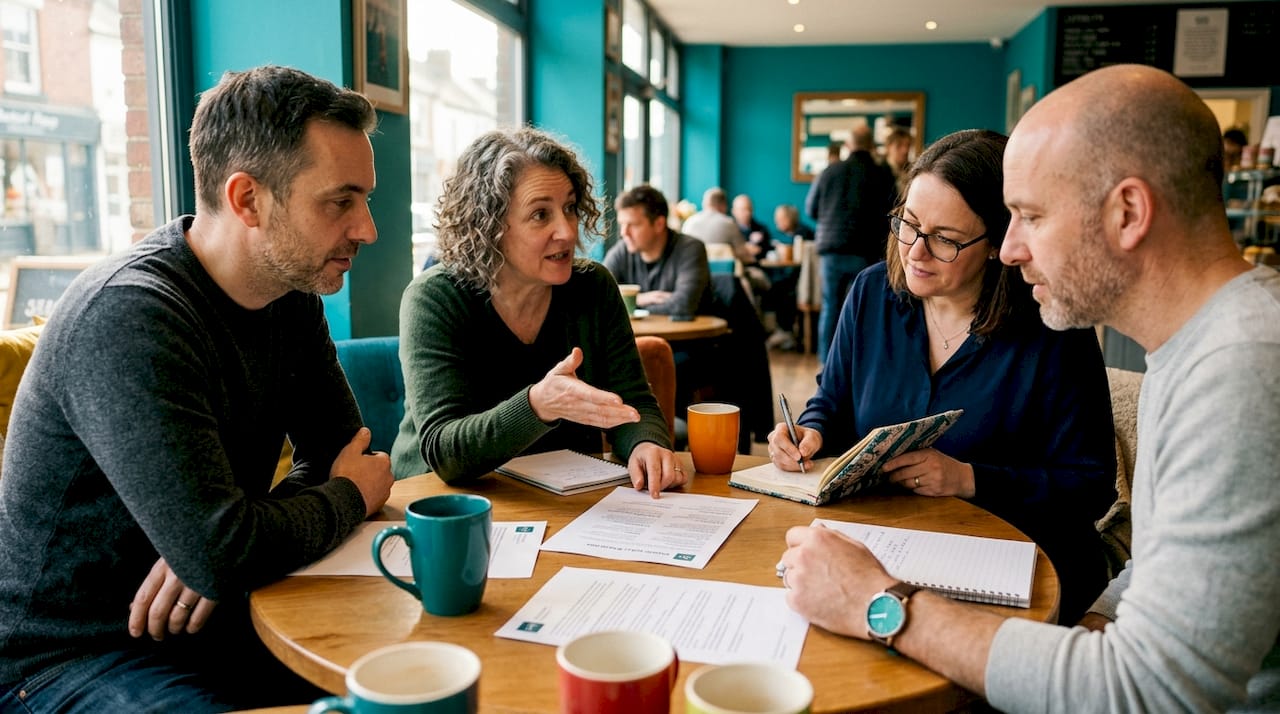
The importance of event communication goes beyond logistics. Poor communication creates confusion, erodes trust, and causes costly last-minute scrambles. A speaker who receives venue directions 12 hours before their session, or a sponsor who never gets load-in instructions, is a relationship at risk. Strong communication prevents those failures before they start.
Three stakeholder groups require distinct communication tracks: attendees, internal teams (marketing, logistics, A/V), and external partners (sponsors, exhibitors, vendors). Each group has different information needs, different preferred channels, and different timelines. Treating all three the same way is the most common mistake organizers make.
What are the stages of event communication?
Event communication must shift focus as the event progresses, with promotion before, agility during, and follow-up after. Each phase has a distinct goal and requires a different tone.
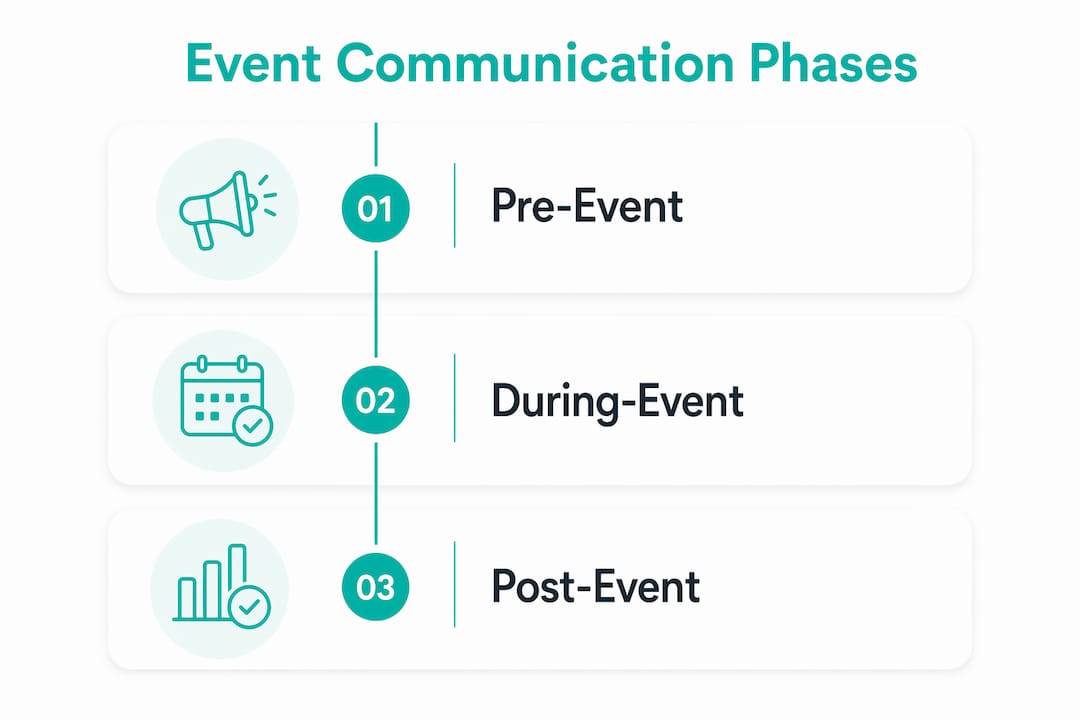
Pre-event: build awareness and set expectations
Pre-event communication covers everything from the first save-the-date email to the final logistics reminder sent 48 hours before doors open. The goal is promotion, registration, and expectation-setting. Channels in this phase include email campaigns, social media posts, event landing pages, and SMS reminders. A corporate conference might send a speaker announcement email six weeks out, followed by a session-selection prompt four weeks out, then a venue and parking guide one week before the event.
During-event: prioritize agility and real-time clarity
During-event communication demands speed and precision. Attendees need wayfinding, schedule updates, and session reminders. Staff need real-time problem-solving channels. Agility during the event prioritizes crisis management: a room change, a delayed keynote, a technical failure. Push notifications through event apps like Whova or Eventbase are the fastest way to reach attendees in the moment. Internal team communication typically runs through Slack channels or dedicated radio systems.
Post-event: nurture relationships and gather feedback
Post-event communication is where most organizers drop the ball. A generic "thanks for attending" email wastes the goodwill you just built. Tailored thank-you messages referencing specific sessions attended effectively build post-event relationships. Send a survey within 24 hours while the experience is fresh. Follow up sponsors with attendance data and media coverage summaries. This phase converts one-time attendees into repeat participants.
Pro Tip: Adapt your tone across phases. Pre-event copy should feel exciting and anticipatory. During-event messages should be direct and brief. Post-event communication should feel warm and personal.
How do you build an effective event communication plan?
Applying the S.M.A.R.T. model ensures event communication objectives are specific, measurable, achievable, relevant, and timely. Vague goals like "keep attendees informed" produce vague results. A S.M.A.R.T. objective sounds like: "Achieve a 40% email open rate on pre-event registration reminders by sending three segmented messages over six weeks."
A solid event communication plan has five components:
- Audience segmentation: Divide stakeholders into personas. A tech conference has at minimum four: first-time attendees, returning attendees, speakers, and sponsors. Each needs different messaging.
- Channel selection: Match channels to personas. Speakers respond to direct email. Younger attendees engage on Instagram Stories and event apps. Exhibitors need a dedicated portal or Exhibitor Service Center.
- Message calendar: Map every message to a date, channel, and persona. This is your single source of truth.
- KPIs: Define success metrics per message type. Open rates for email, click-throughs for registration links, app download rates for push notifications.
- Review checkpoints: Build in weekly reviews during the pre-event phase to catch gaps before they become problems.
Pro Tip: Start your newsletter or email sequence at least five months before a large event. Launching newsletters early promotes steady engagement rather than a last-minute overload that trains your audience to ignore you.
The data-driven layer of your plan matters just as much as the calendar. Segmenting by attendee behavior increases message relevance and engagement. If a registrant clicked on the workshop track but not the keynote track, your next email should lead with workshop content. Tools like Mailchimp, HubSpot, and ActiveCampaign all support this kind of behavioral segmentation at the event scale.
What communication tools and methods drive the best results?
The right event communication tools depend on your event type, audience size, and budget. The table below compares the most common methods by phase and effectiveness.
| Method | Best Phase | Primary Audience | Key Strength |
|---|---|---|---|
| Email campaigns | Pre-event | All stakeholders | Detailed information delivery |
| SMS/push notifications | During-event | Attendees | Speed and immediacy |
| Event apps (Whova, Eventbase) | All phases | Attendees | Centralized real-time updates |
| Social media | Pre and post-event | Attendees, public | Awareness and community building |
| Exhibitor Service Centers | Pre-event | Sponsors, exhibitors | Centralized logistics access |
| Post-event surveys | Post-event | Attendees | Feedback and relationship data |
Centralized tools like Exhibitor Service Centers help reduce logistical friction and costly errors at scale. When every exhibitor accesses the same portal for shipping deadlines, floor plan updates, and badge allocations, you eliminate the version-control nightmare of managing 50 individual email threads.
For hybrid and virtual events, the channel mix shifts significantly. Live chat, Q&A tools, and virtual networking platforms become primary communication surfaces. The core principle stays the same: guide your audience, do not blast them.
Pro Tip: Build a communication cadence that respects your audience's attention. Three well-timed, relevant messages outperform ten generic ones every time. Organizers must guide audiences through tailored communications that account for competing distractions in their daily lives.
What are the most common event communication challenges?
Even experienced organizers run into the same recurring problems. Knowing them in advance is the fastest way to avoid them.
- Communication silos: Marketing sends one message, logistics sends another, and they contradict each other. Communication silos within event teams cause inconsistent messaging and risk event failure. The fix is a unified communication timeline that acts as a single source of truth for all internal and external messaging.
- Information overload: Sending too many messages too close together trains your audience to tune you out. The IAEE recommends replacing last-minute blast emails with a predictable schedule that starts months in advance.
- Real-time changes: A speaker cancels at noon on event day. Your communication plan needs a pre-approved crisis protocol: who approves the message, who sends it, and through which channels.
- Internal misalignment: The A/V team does not know the updated run-of-show. The registration desk does not know about the VIP check-in change. Weekly cross-team syncs and a shared project management tool like Asana or Notion prevent these gaps.
- Generic post-event follow-up: Sending the same email to every attendee after the event signals that you were not paying attention. Segment your post-event list by session attendance, ticket type, and engagement level.
The most underrated fix for all of these problems is a single shared document that every team member can access and update in real time. It sounds simple. Most teams still do not do it.
Key takeaways
Effective event communication requires a structured, phased approach that guides every stakeholder from first announcement through post-event follow-up with relevant, segmented messaging.
| Point | Details |
|---|---|
| Define all three phases | Cover pre-event, during-event, and post-event communication with distinct goals for each. |
| Use S.M.A.R.T. objectives | Set specific, measurable communication goals tied to open rates, registrations, or app downloads. |
| Segment your audience | Divide stakeholders into personas and tailor messages to each group's needs and preferred channels. |
| Build a unified timeline | A shared communication calendar prevents silos and keeps internal teams aligned on every message. |
| Personalize post-event outreach | Reference specific sessions or activities attended to build loyalty and encourage repeat participation. |
The part most organizers skip until it's too late
I have reviewed communication plans for dozens of events, from 200-person corporate offsites to multi-day trade shows with thousands of attendees. The single most consistent gap is not the pre-event email sequence or the on-site signage. It is the internal communication structure.
Organizers spend weeks crafting the perfect attendee journey and then send their own staff into the event with a PDF printed two days before. The A/V crew has one version of the run-of-show. The registration team has another. The result is a confident-looking event on the outside that is quietly falling apart on the inside.
The fix is not a better tool. It is a mindset shift. Event communication is a relationship-building system requiring segmentation and valuable content, and that applies to your internal team just as much as your attendees. When your staff feels informed and prepared, that confidence shows up in every interaction they have with guests.
The other shift worth making: stop measuring communication success by volume. The question is not "how many emails did we send?" It is "did the right people get the right information at the right time?" That reframe changes everything about how you build your plan.
— Konstantin
Put your event communication plan into practice
Structured event communication is the difference between an event people remember and one they forget by Monday morning. If you are organizing a team celebration, a corporate milestone, or a group event and need a way to coordinate messages, manage contributions, and keep everyone aligned without chaos, Hophey was built for exactly that.
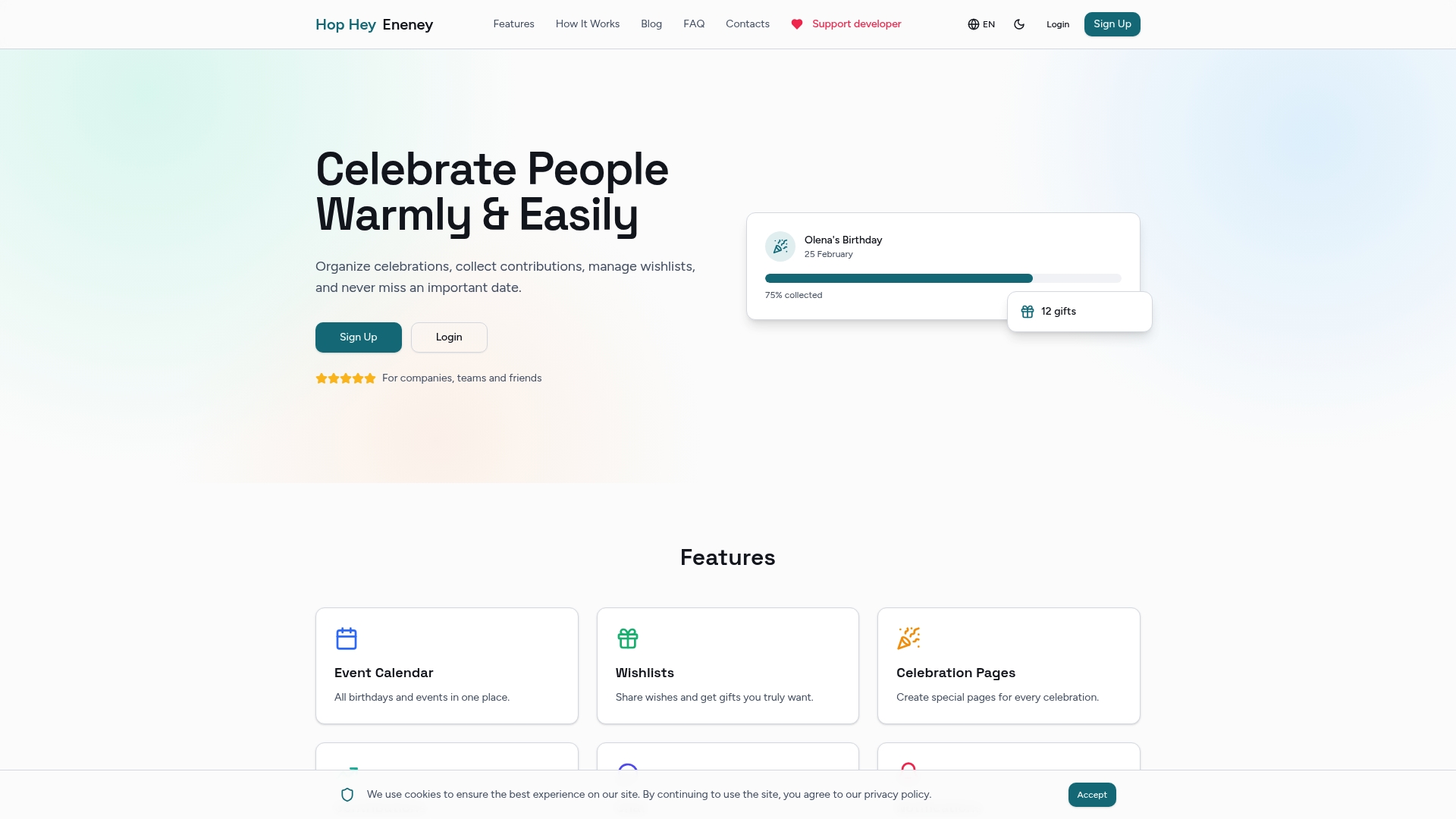
Hophey combines event calendar management with private chat coordination, automated reminders, and real-time contribution tracking. HR teams use it to automate employee recognition. Remote teams use it to celebrate milestones without the back-and-forth. If you want to see how a structured platform handles the communication and coordination work for you, explore what Hophey offers at hophey.gifts.
FAQ
What is event communication in simple terms?
Event communication is the process of sharing timely, relevant information with all event stakeholders before, during, and after an event. It covers everything from registration emails to on-site updates to post-event surveys.
What are the three phases of event communication?
The three phases are pre-event (promotion and registration), during-event (real-time updates and problem-solving), and post-event (feedback and relationship nurturing). Each phase requires a different tone, channel mix, and set of goals.
What tools are used for event communication?
Common tools include email platforms like Mailchimp and HubSpot, event apps like Whova and Eventbase, SMS services, social media channels, and centralized portals such as Exhibitor Service Centers for sponsor and vendor coordination.
How do you avoid information overload in event communication?
Replace last-minute blast emails with a predictable communication schedule that starts months in advance. Segment your audience and send only messages relevant to each group, rather than broadcasting every update to everyone.
Why is post-event communication often the most valuable phase?
Post-event communication converts one-time attendees into loyal participants. Personalized follow-ups that reference specific sessions attended build stronger relationships than generic thank-you emails, and surveys sent within 24 hours capture the most accurate feedback.