
TL;DR:
- Effective team event coordination requires clear goals, well-defined roles, and a detailed run-of-show. Proper vendor confirmation, communication, and stakeholder alignment prevent last-minute crises and budget overruns. Post-event debriefs and reusable templates build ongoing efficiency and improve future planning.
The team event coordination process is a systematic approach to planning, organizing, and executing team events that drive real engagement and collaboration. Most events fail not because of bad ideas but because of broken workflows: unclear goals, missed vendor deadlines, and last-minute communication gaps. This guide covers every phase of the process, from setting objectives to day-of execution, with specific timelines, governance structures, and tools that actually work. Whether you are coordinating a company offsite, a team birthday, or a training day, the same core framework applies.
How do you define goals and objectives for a team event?
Defining the "why" behind your event shapes every decision that follows, from budgeting to vendor selection and measuring return on investment. Skipping this foundational question directly harms event effectiveness and engagement outcomes. A team building event has different venue, catering, and scheduling needs than a product training day. Getting the goal wrong at the start costs money and credibility.
Common event goals fall into a few clear categories:
- Team building: Strengthen relationships and trust across departments or remote teams
- Employee recognition: Celebrate milestones, anniversaries, or performance achievements
- Training and development: Deliver skills, certifications, or knowledge updates
- Company culture: Reinforce values, announce strategy, or align around a shared mission
Once you name the goal, document it in a one-page brief and share it with every stakeholder before any budget conversation starts. This single document prevents scope creep later. Get written sign-off from the decision-maker before moving to logistics.
Pro Tip: Write your event goal as a single sentence: "This event will [outcome] for [audience] by [date]." If you cannot complete that sentence clearly, the goal is not ready yet.
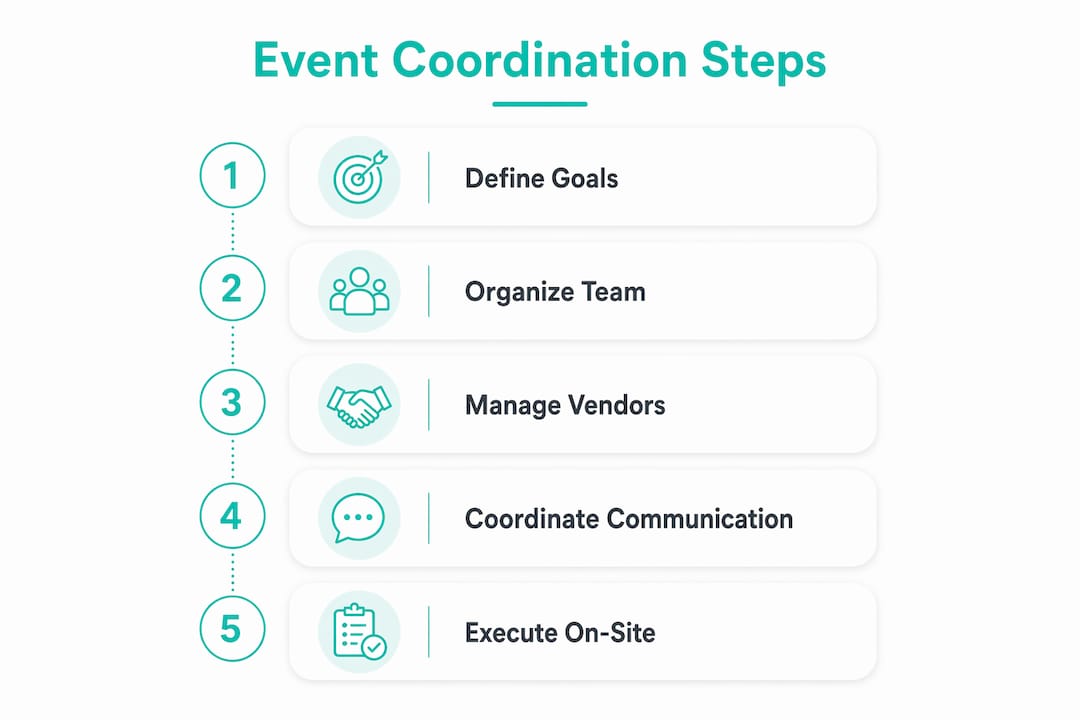
What are the key steps to organize your event team and manage stakeholders?
Assembling the right team and managing stakeholder expectations are the two hardest parts of any event. Stakeholder management complexity often outweighs logistical challenges, making early consensus critical to success. One VP who changes the venue preference two weeks out can collapse a timeline that took months to build.
Start with a clear role assignment before any planning begins:
- Event lead: Owns the master timeline, budget, and final decisions
- Logistics coordinator: Manages venue, catering, AV, and transportation
- Communications lead: Handles all attendee, stakeholder, and vendor messaging
- Finance contact: Approves invoices, tracks spend, and manages vendor payments
- On-site captain: Runs the day-of schedule and manages real-time issues
After roles are set, map your stakeholders. List every person who can approve, block, or change the event. Identify their priorities and potential conflicts early. Build 1–2 weeks into your project schedule for each major approval milestone, such as venue sign-off or procurement review. Missing this buffer is the most common reason events run over budget or get delayed.
Document every stakeholder requirement in writing and get sign-offs before moving forward. Weekly status meetings and a shared dashboard keep everyone aligned without requiring constant email threads. A step-by-step coordination guide can help you build this governance structure from scratch.

Pro Tip: Send a one-paragraph stakeholder update every Monday during the planning phase. Short, consistent updates prevent the "I had no idea this was happening" conversation the week before the event.
How do you manage vendors, contracts, and logistics for event readiness?
Vendor management is where most event timelines break down. Final vendor contracts and delivery schedules must be confirmed at least 2 weeks before the event date. That deadline is not a suggestion. Vendors who have not confirmed two weeks out are a risk that needs immediate escalation.
Build a vendor register and update it weekly. The register should include:
| Vendor | Contact | Deliverable | Contract Status | Confirmed Date |
|---|---|---|---|---|
| Catering | Name + phone | Lunch for 80 | Signed | 2 weeks prior |
| AV company | Name + phone | Projector, mics | Signed | 2 weeks prior |
| Venue | Name + phone | Room setup, parking | Signed | 3 weeks prior |
| Transportation | Name + phone | Shuttle x2 | Pending | Due this week |
A governance structure with weekly meetings and a designated vendor contact for each supplier keeps the process proactive rather than reactive. Assign one person to own each vendor relationship. When a problem surfaces, that person is the single point of contact, not a committee.
Conduct a full venue walkthrough with key stakeholders 1 week before the event. Walk every room, test the AV, confirm parking access, and verify catering setup areas. Issues found during a walkthrough are fixable. Issues found on event day are crises.
- Confirm all vendor arrival times in writing, not just verbally
- Share the event schedule with every vendor so they understand their role in the full picture
- Keep a backup contact for every critical vendor in case the primary is unreachable on event day
What communication strategies ensure smooth coordination and attendee engagement?
Communication is the connective tissue of the entire event planning workflow. The most common failure is not sending too little information but sending it at the wrong time. Send a comprehensive logistics email 48 hours before the event, covering parking, agenda, dress code, and any last-minute changes. Follow that with a brief day-of message confirming the schedule and any real-time updates.
Structure your communication plan around three audiences:
- Attendees: Need logistics, agenda, and expectations well in advance
- Stakeholders: Need status updates, budget summaries, and approval confirmations
- Vendors: Need confirmed timelines, contact names, and delivery instructions
For event communication strategies that actually build team culture, the tone matters as much as the content. Attendees who feel informed and valued show up engaged. Attendees who receive a calendar invite with no context show up confused.
Use a dedicated messaging channel, such as a Slack channel or a Microsoft Teams thread, for the internal coordination team. Keep vendor communication in email for documentation purposes. Never rely on verbal agreements for anything that affects the event schedule.
Pro Tip: Create a communication calendar at the start of planning. List every message, the audience, the send date, and the owner. Treat it like a project task, not an afterthought.
What does effective on-site execution look like?
On-site execution is where preparation either pays off or falls apart. The single most important document on event day is the run-of-show. A run-of-show must be a granular, minute-by-minute script shared with all staff and vendors at least 7 days before the event. It coordinates timing between staff, vendors, and venue contacts and removes the need for ad hoc decisions under pressure.
A strong run-of-show includes:
- Every session start and end time, down to the minute
- Vendor arrival and setup windows
- AV cues, speaker transitions, and break durations
- Escalation contacts for every category: venue, catering, AV, and transport
- Contingency notes for the three most likely problems
Scope creep is the silent killer of event budgets and timelines. A formal change control process requiring documented requests and approvals is the only reliable defense. Without it, small additions accumulate and disrupt both budget and schedule.
"Treat the event as a time-bound project with defined deliverables and success criteria, not just a logistics exercise." — Event Planning Project Management
Assign clear on-site roles before the day starts. Every team member should know their zone, their responsibilities, and who to escalate to if something goes wrong. A team that has rehearsed the plan handles surprises. A team that is reading the plan for the first time on event day does not.
Key Takeaways
A structured team event coordination process, built on clear goals, defined roles, confirmed vendor timelines, and a detailed run-of-show, is the difference between an event that builds team culture and one that wastes everyone's time.
| Point | Details |
|---|---|
| Start with the "why" | Define one clear event goal before touching budget, venue, or vendors. |
| Build approval buffers | Allow 1–2 weeks per major approval milestone to avoid last-minute crises. |
| Confirm vendors at 2 weeks out | Any unconfirmed vendor two weeks before the event is an active risk. |
| Use a run-of-show | Distribute a minute-by-minute script to all staff and vendors 7 days prior. |
| Communicate in layers | Send logistics to attendees 48 hours out and a day-of message on event morning. |
What I have learned after coordinating dozens of team events
The part nobody talks about in event planning guides is stakeholder politics. The logistics are learnable. The politics are not. I have watched perfectly planned events get derailed because two senior leaders had conflicting visions that nobody surfaced until week three of a six-week timeline. The fix is not more meetings. The fix is getting written alignment on the event goal before any other conversation happens.
The second lesson is about templates. Every event you run should produce a reusable artifact: a vendor register template, a run-of-show template, a communication calendar. Teams that build these assets compound their efficiency over time. Teams that start from scratch every time keep making the same mistakes.
The third lesson is the one most professionals resist: the post-event debrief is not optional. A 30-minute team conversation within 48 hours of the event, covering what worked and what did not, is worth more than any planning checklist. The feedback loop between events is where real coordination skill gets built. Without it, you are just repeating the same process and hoping for better results.
— Konstantin
How Hophey makes team event coordination easier
Team events do not end when the venue clears out. Recognition, gift coordination, and follow-up celebrations are where team culture actually gets reinforced. Hophey is built for exactly this phase.
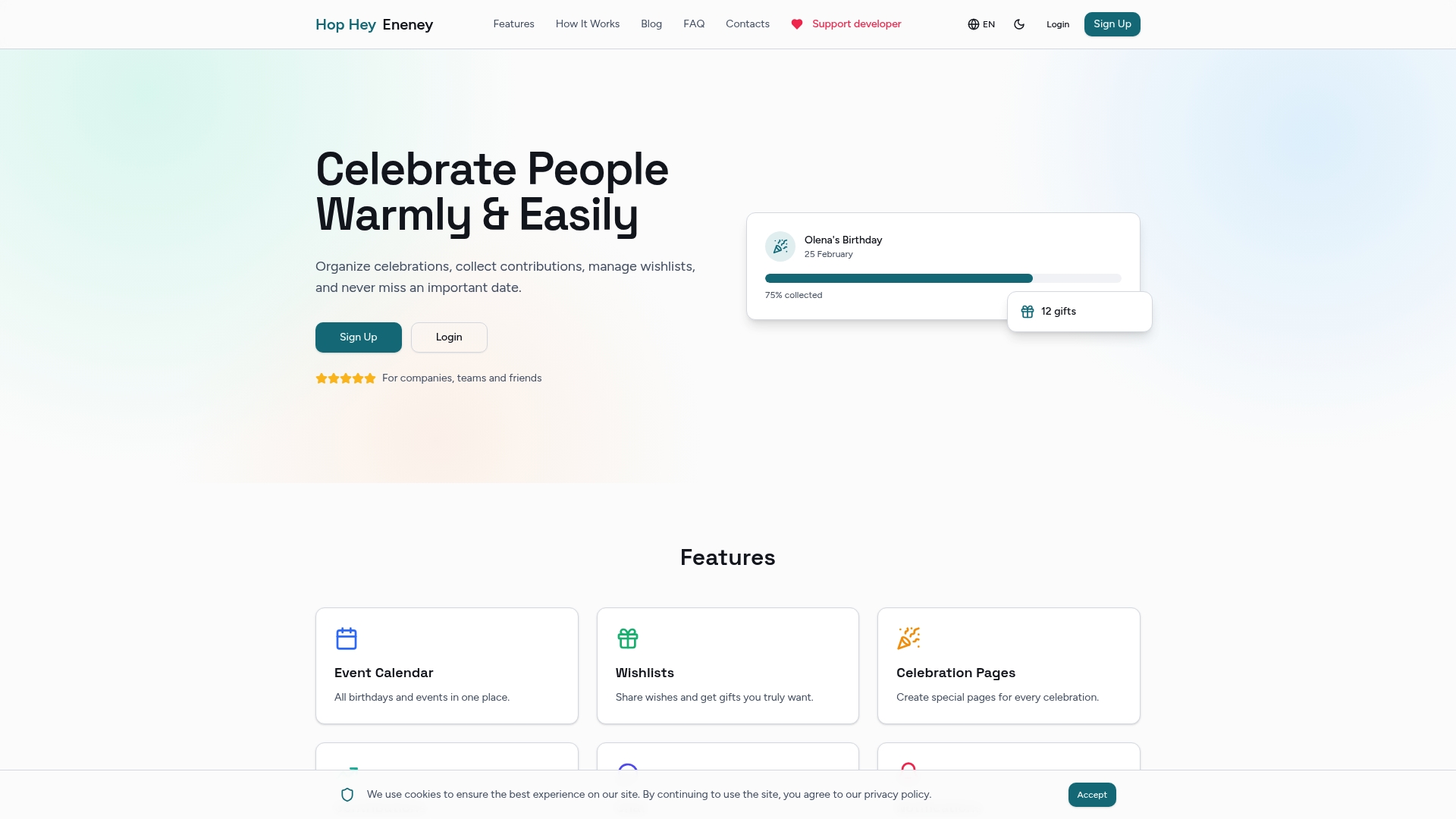
Hophey gives HR teams and team leaders a private platform to organize celebrations, collect gift contributions transparently, and coordinate surprise events without the chaos of group chats and spreadsheets. The platform supports automated reminders, multi-currency contributions in UAH, USD, and EUR, and Telegram notifications so nothing falls through the cracks. For teams that want to boost team engagement through recognition and celebration, Hophey handles the coordination so you can focus on the people. Get started with Hophey and bring structure to every team celebration.
FAQ
What is the team event coordination process?
The team event coordination process is a structured workflow covering goal setting, team assembly, vendor management, communication planning, and on-site execution. It treats the event as a project with defined deliverables and success criteria.
How far in advance should you confirm vendors?
Final vendor contracts and delivery schedules must be confirmed at least 2 weeks before the event date. Conduct a full venue walkthrough 1 week prior to catch any remaining issues.
How do you prevent scope creep in event planning?
A formal change control process requiring written requests and documented approvals is the most reliable method. Without it, small additions accumulate and break both budget and timeline.
What should a run-of-show include?
A run-of-show should include every session time, vendor arrival windows, AV cues, speaker transitions, and escalation contacts. Share it with all staff and vendors at least 7 days before the event.
What communication should attendees receive before an event?
Send a comprehensive logistics email covering parking, agenda, and dress code 48 hours before the event. Follow it with a brief day-of message confirming the schedule and any last-minute updates.