TL;DR:
- Team celebrations in 2026 focus on purpose, personalization, and measurable outcomes to boost engagement. Hybrid formats, micro-events, gamification, wellness, and structured reflection are the primary trends driving success.
Team celebrations in 2026 are defined by purpose, personalization, and measurable outcomes. The era of generic pizza parties and one-size-fits-all company events is over. The trends in team celebrations 2026 show a clear shift: HR leaders and team managers now treat celebrations as strategic tools for retention, engagement, and culture building. Hybrid formats, gamification, wellness integration, and smaller department-led gatherings have become the new standard. This guide breaks down what is actually working, why it works, and how you can apply it immediately.
What are the biggest trends in team celebrations 2026?
The defining shift in 2026 is that celebrations must be purpose-driven. The AIR framework (Action, Impact, Reward) has emerged as a structured approach to recognition, ensuring that every celebration connects a specific team action to a visible outcome before delivering the reward. This replaces the vague "great job, everyone" moment that employees forget by Monday morning.
Four forces are reshaping how organizations celebrate. Hybrid and virtual participation is now a permanent baseline, not a pandemic workaround. Gamification has moved from novelty to standard practice. Smaller, intentional gatherings are outperforming large company-wide events on nearly every engagement metric. Wellness and social responsibility have moved from optional add-ons to core program elements.
These shifts reflect a broader truth: employees want to feel genuinely seen, not just entertained. When celebrations are designed with intention, they build the psychological safety and team cohesion that drive long-term performance.
How are hybrid and virtual formats transforming team celebrations?
Demand for hybrid-ready team building surged by 68% in 2026. That number reflects a workforce that is permanently distributed, not temporarily remote. Virtual team building interest sits 736% higher than pre-pandemic levels, and use of digital facilitation tools has grown by 39%. These are not marginal changes. They represent a structural shift in how teams connect.
The most effective hybrid celebration formats share one design principle: equitable participation. Remote attendees must have the same quality of experience as those in the room. Formats that achieve this include:
- Virtual trivia tournaments with live leaderboards visible to all participants
- App-based scavenger hunts that work across physical and digital environments simultaneously
- Online escape rooms with breakout groups mixing remote and in-person team members
- Collaborative digital whiteboards for milestone mapping and team storytelling
- Live-streamed award ceremonies with interactive chat and real-time voting
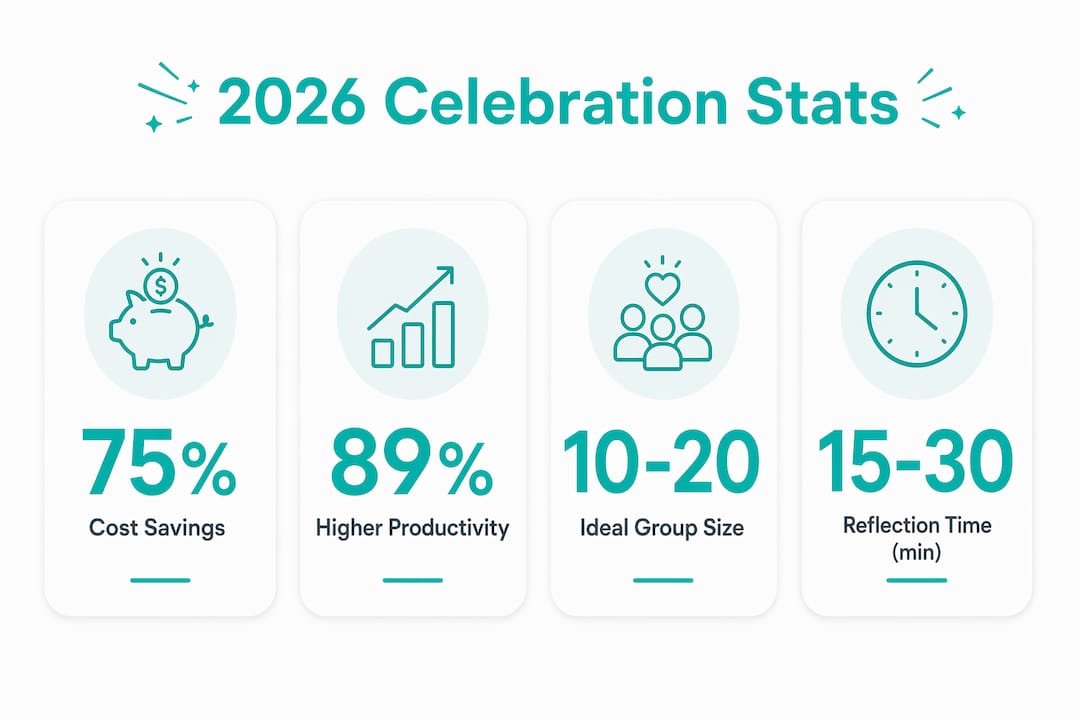
The financial case for virtual and hybrid formats is compelling. Virtual team events cost 75% less than in-person equivalents while delivering up to 12% higher ROI. That gap exists because virtual formats remove venue, catering, and travel costs while expanding participation to team members who would otherwise be excluded.
Pro Tip: Design your hybrid celebration so that the remote experience is the primary experience. Build the in-person component around the digital format, not the other way around. This prevents the common failure mode where remote participants feel like spectators.
For HR teams managing hybrid-ready celebrations, the key is choosing platforms that support real-time coordination across time zones and devices.
Why are smaller, department-led gatherings replacing large events?
Smaller gatherings of 10–20 people consistently outperform large company-wide events on engagement and measurable ROI. The reason is straightforward: meaningful interaction requires proximity. In a group of 200, most employees are spectators. In a group of 15, everyone participates.
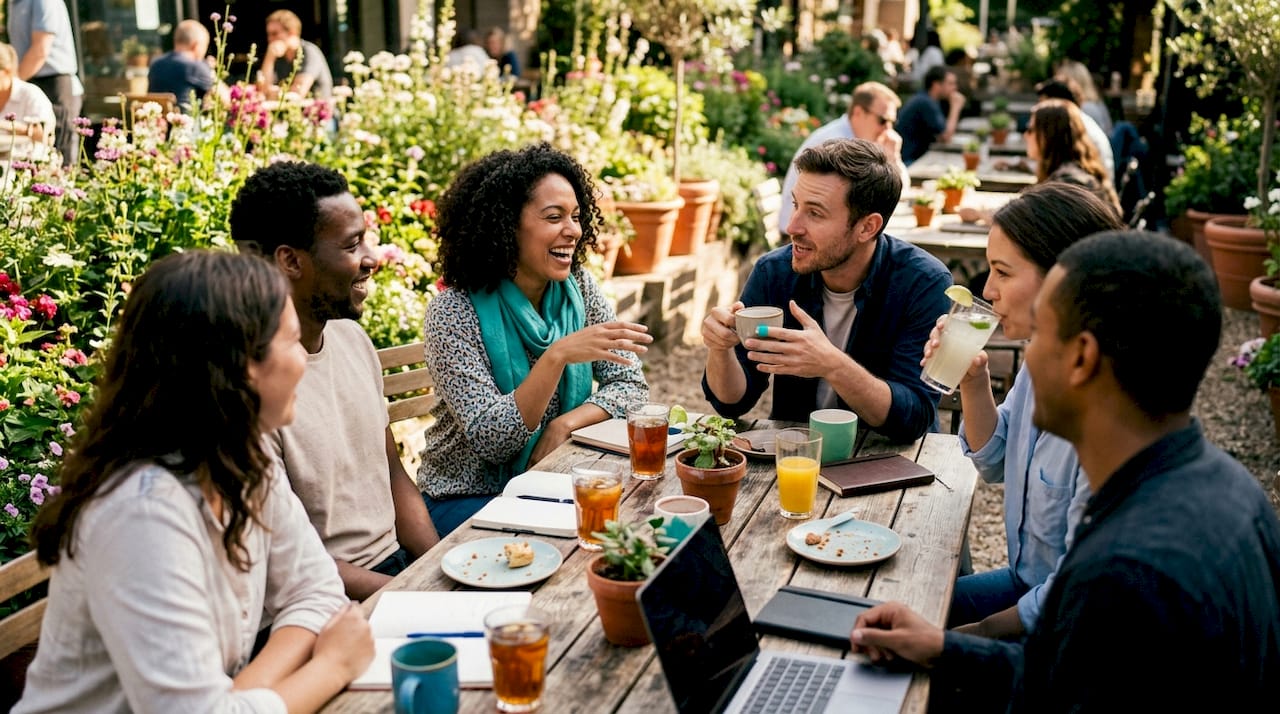
Department-led micro-events also allow for deeper personalization. A marketing team celebrating a product launch has different needs than an engineering team finishing a difficult sprint. When teams own their own celebrations, the activities feel relevant rather than generic.
The most effective small-group formats in 2026 follow a clear progression:
- Focused skill workshops tied to a recent team win, such as a copywriting session after a successful campaign
- Curated lunch experiences at a restaurant chosen by the team, with a structured conversation prompt to reflect on the quarter
- Offsite half-days at a local venue with a mix of structured activity and unstructured social time
- Peer recognition circles where each team member names one specific contribution from a colleague
- Micro-challenges like a team cooking class or a local volunteer project that creates shared memory
The autonomy element matters as much as the format. When a department manager gives the team a budget and genuine input into the event design, ownership increases. Employees who helped plan the celebration are more likely to attend, engage, and remember it.
For teams looking to build a sustainable event management approach, micro-events are also easier to repeat quarterly rather than annually, which compounds the cultural benefit over time.
How does gamification boost team celebration impact?
89% of employees report higher productivity when their team activities include gamified elements. That figure has made gamification a standard feature of celebration design in 2026, not an optional upgrade. The shift is from passive observation to active participation, and the difference in engagement is significant.
The most popular gamified formats this year include office bingo with custom achievement squares, VR quests that place teams inside shared challenges, AI-generated trivia tailored to company history and team milestones, and app-based point systems that reward collaboration behaviors throughout the event.
| Format | Best for | Participation style |
|---|---|---|
| Office bingo | In-person and hybrid teams | Individual with group scoring |
| VR quests | Tech-forward teams with equipment access | Fully immersive, small groups |
| AI-generated trivia | Any team size, any format | Competitive, real-time |
| App-based scavenger hunts | Hybrid and remote teams | Collaborative, mobile-first |
| Failure slams | Psychologically safe cultures | Storytelling, open sharing |
"Failure slams" deserve special mention. This format, where team members share a professional failure and what they learned, outperforms generic trust falls by creating genuine psychological safety rather than simulated vulnerability. It works because it treats employees as adults with real experiences worth sharing.
The cost barrier for gamification has also dropped sharply. AI-powered gamification tools are replacing expensive subscription platforms, with free and brandable options now capable of generating custom quizzes, challenges, and leaderboards in minutes. Events that previously cost $249–$2,500 per session can now be replicated at near-zero cost.
Pro Tip: Tie gamification scoring to real team behaviors, not just trivia knowledge. Award points for recognizing a colleague, sharing a lesson learned, or completing a collaborative task. This connects the game mechanics to the culture you actually want to build.
For more on gamified recognition techniques and how they translate into measurable culture outcomes, the connection between game design and employee recognition is well documented.
Why are wellness and social responsibility now central to celebrations?
Corporate celebrations in 2026 increasingly blend wellness activities like meditation, yoga, and sound baths to address burnout and improve retention. This is not a wellness trend borrowed from consumer culture. It reflects a direct organizational need: teams that are burned out cannot celebrate authentically, and celebrations that ignore stress levels feel tone-deaf.
The most effective wellness integrations in team events include:
- Opening breathwork or guided meditation (5–10 minutes) to transition the team out of work mode before the celebration begins
- Sound bath sessions as a closing ritual, particularly effective after high-pressure project completions
- Movement breaks built into longer events, such as a 20-minute walk between a workshop and a dinner
- Mindful reflection prompts distributed at the start of the event to help participants arrive present
Social responsibility has become a central pillar of event design, not a peripheral add-on. Companies now embed charitable work directly into celebration programs. A team might spend the first half of a celebration event assembling care packages for a local shelter, then transition into recognition and social time. This structure creates shared purpose that outlasts the event itself.
The final element that separates good celebrations from great ones is structured reflection. A 15–30 minute facilitated reflection session at the close of an event prevents the "fun but forgotten" outcome that plagues most corporate parties. Structured reflection cements learning, reinforces team bonds, and increases psychological safety. It is now considered best practice in 2026 event design.
The best companies also treat celebrations as multi-purpose investments. A well-documented team event generates content for recruitment, internal branding, and culture storytelling. Photographed moments, recorded reflections, and shared highlights extend the value of a single event across months of organizational communication.
Key Takeaways
The most effective team celebrations in 2026 combine hybrid equity, gamified participation, micro-event formats, wellness integration, and structured reflection to produce measurable gains in engagement and retention.
| Point | Details |
|---|---|
| Hybrid equity is non-negotiable | Design the remote experience first; in-person participants adapt to the digital format, not vice versa. |
| Smaller groups drive deeper engagement | Groups of 10–20 people consistently outperform large events on participation and ROI. |
| Gamification is now standard | 89% of employees report productivity gains from gamified activities; free AI tools have removed the cost barrier. |
| Wellness belongs in every event | Opening meditation or closing sound baths reduce burnout and help teams arrive present and engaged. |
| Reflection prevents "fun but forgotten" | A 15–30 minute structured debrief after celebrations cements bonds and strengthens culture impact. |
Why most team celebrations still miss the point
The uncomfortable truth I have seen repeatedly is that most organizations plan celebrations backward. They start with a venue or a budget line, then work backward to justify it as "team building." The result is an event that feels like an obligation rather than a recognition.
The 2026 trends I find most significant are not the VR headsets or the AI trivia generators. They are the structural changes: purpose-first design using frameworks like AIR, reflection sessions that treat the debrief as seriously as the activity, and the willingness to give departments real autonomy over their own events. Those changes cost almost nothing and deliver the most lasting impact.
Hybrid equity is the area where I see the most avoidable failure. Teams invest in a beautiful in-person experience and then bolt on a Zoom link for remote participants. The remote team watches a party they are not attending. The fix is simple in principle and harder in practice: build the entire event around the digital format first. When you do that, the in-person group actually gets a better experience too, because the structure is tighter and the participation is more intentional.
My strongest advice for HR leaders right now: treat every celebration as a content and culture investment, not a line item to minimize. Document it, reflect on it, and measure it. The teams that do this consistently are the ones building cultures that retain people through difficult quarters.
— Konstantin
How Hophey supports your 2026 celebration strategy
Planning celebrations across hybrid teams, multiple departments, and varying budgets is genuinely complex. Coordination failures, missed contributions, and last-minute chaos undermine even the best event concepts.
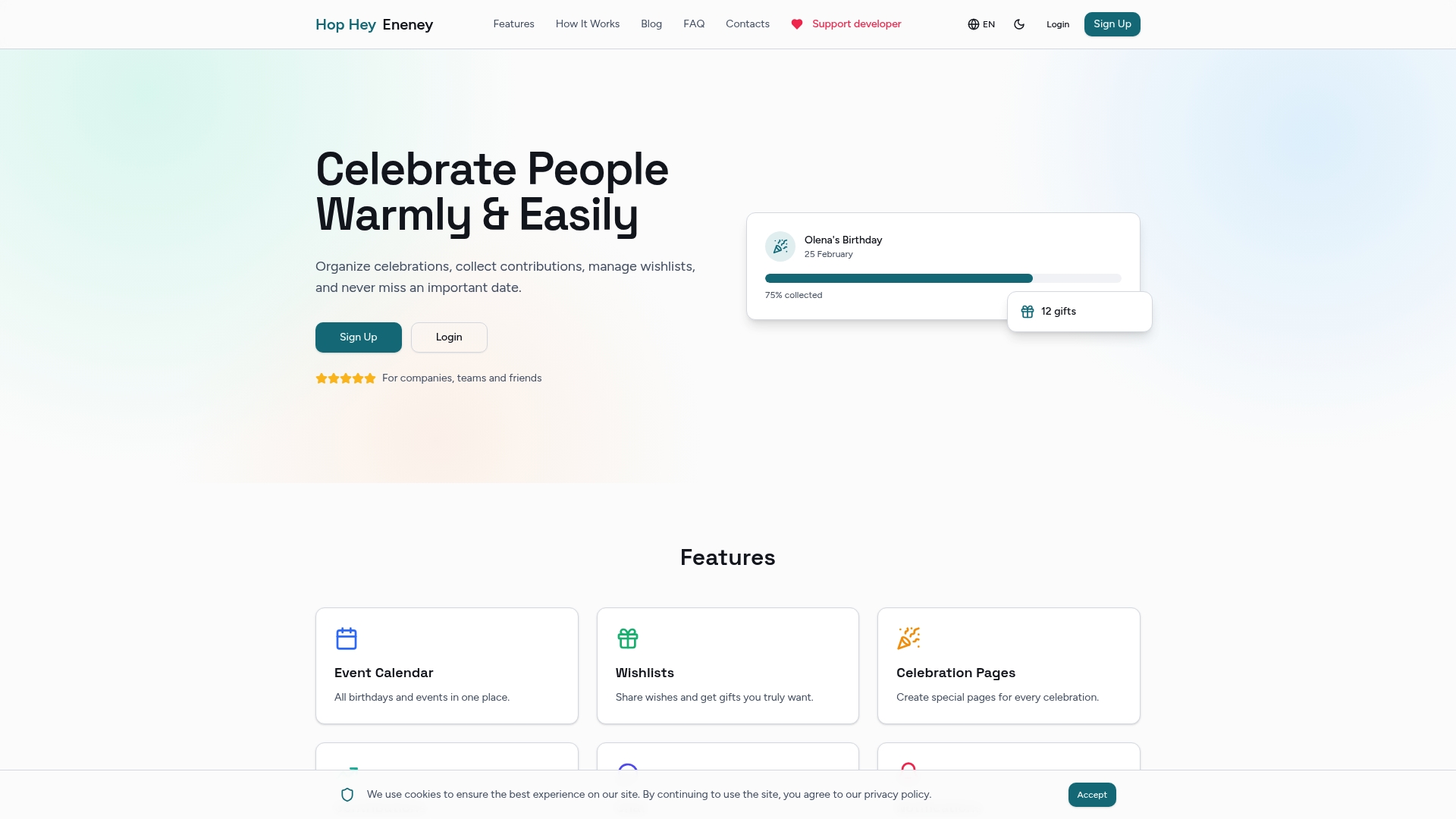
Hophey is built specifically for this challenge. The platform gives HR teams and team leaders a single place to create private celebration pages, coordinate gift contributions transparently, manage event calendars, and communicate without spoiling surprises. Automated reminders, Telegram notifications, and multi-currency support (USD, EUR, UAH) remove the friction that kills momentum. Whether you are organizing a team milestone or coordinating a department offsite gift, Hophey keeps every detail structured and every participant informed. The result is celebrations that actually happen, on time, without the chaos.
FAQ
What are the top team celebration trends for 2026?
The leading trends are hybrid-ready formats, gamification, micro-events for groups of 10–20, wellness integration, and social responsibility programming. Structured post-event reflection is now considered best practice.
How do you celebrate team success effectively in 2026?
Use the AIR framework (Action, Impact, Reward) to connect recognition to specific outcomes. Combine a gamified activity with a facilitated reflection session to make the celebration memorable and meaningful.
Why are smaller team gatherings more effective than large company events?
Groups of 10–20 people allow every participant to contribute actively rather than observe passively. Smaller events also enable deeper personalization, which increases relevance and engagement for the specific team being celebrated.
How much does virtual team building cost compared to in-person events?
Virtual team events cost approximately 75% less than in-person equivalents while delivering up to 12% higher ROI, according to 2026 team building research. The cost gap has widened further as free AI-powered gamification tools replace expensive platforms.
What role does wellness play in team celebrations?
Wellness elements like guided meditation, sound baths, and movement breaks help teams transition out of work mode and engage more fully. Companies that add wellness components to celebrations report lower burnout and stronger team cohesion over time.