
TL;DR:
- Employee recognition through celebrations fosters belonging, reinforces values, and boosts motivation when integrated into daily work. Research shows recognized employees are significantly more engaged and personally invested, especially when celebrations are timely, specific, and leader-driven. Effective recognition practices require consistent manager ownership, inclusive formats, and strategic use of digital tools to sustain engagement beyond initial enthusiasm.
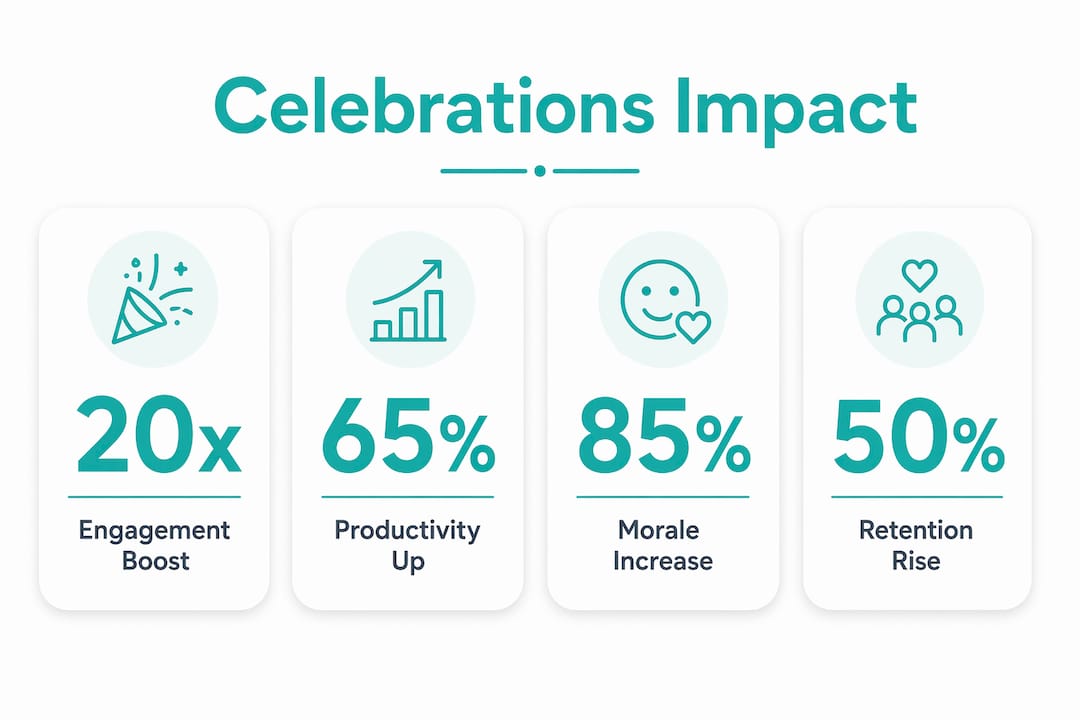
Employee engagement through celebrations is defined as a deliberate culture practice where recognition moments create belonging, reinforce company values, and sustain employee motivation across daily work. This is not the same as throwing an annual party. The industry term is recognition-driven engagement, and it describes a system where celebrations are woven into how teams operate, not bolted on as occasional perks. Research from the 2023 Gallup report cited by ATD shows employees receiving great recognition are 20 times more likely to be engaged. For HR professionals and team leaders, that number reframes celebrations from a "nice to have" into a measurable performance lever. Platforms like Hophey, Workhuman, and Great Place To Work each document how structured celebration practices change culture outcomes at scale.
What is employee engagement through celebrations, and why does it matter?
Recognition-driven engagement works because it satisfies three psychological needs at once: visibility, belonging, and purpose. When a manager calls out a specific contribution in front of the team, the employee feels seen. When the whole team participates in a milestone celebration, they feel connected. When the recognition is tied to a company goal, the employee understands why their work matters. All three happen in a single well-designed celebration moment.
The importance of workplace celebrations goes beyond morale. A January 2026 Workhuman Global Research Study found that employees recognized for goal contributions are 5x more personally invested in company initiatives. That level of investment translates directly into discretionary effort, the kind that drives projects forward without a manager asking twice.
Leadership modeling is the critical variable most organizations underestimate. When senior leaders publicly celebrate team wins, they signal that recognition is a cultural norm, not an HR formality. Great Place To Work and ATD both identify leadership integration as the factor that separates organizations where celebrations build momentum from those where they fade after the first quarter.

How do celebrations measurably boost employee engagement and productivity?
The data connecting celebrations to engagement outcomes is specific and consistent across multiple research sources. The 20x engagement likelihood from Gallup is the headline number, but the Workhuman finding on 5x personal investment is arguably more operationally useful. It means recognition tied to strategy does not just make employees feel good. It changes how much they care about the outcome.
Timely, specific, and authentic recognition produces greater engagement impact than delayed or generic appreciation. A "great job this quarter" comment in a performance review lands differently than a specific shout-out the day a project ships. The psychological safety created by consistent, specific recognition also reduces turnover. Employees who feel regularly seen are less likely to scan job boards.
| Metric | Finding | Source |
|---|---|---|
| Engagement likelihood | 20x higher with great recognition | Gallup / ATD, 2023 |
| Personal investment | 5x higher when recognition ties to goals | Workhuman, January 2026 |
| Culture reinforcement | Celebrations strengthen inclusion and camaraderie | Great Place To Work, 2025 |
| Recognition sincerity | Immediacy outperforms frequency alone | Great Place To Work, August 2025 |
The table above shows a consistent pattern: the quality and timing of recognition matters more than the volume. Flooding employees with generic praise produces diminishing returns. Specific, well-timed recognition tied to real contributions produces compounding engagement gains.
Pro Tip: When designing recognition programs, ask managers to name the specific behavior or result they are celebrating, not just the person. "You closed the Q2 deal by rebuilding the proposal from scratch overnight" lands harder than "Great work this quarter."
What best practices ensure celebrations effectively foster engagement and connection?
Effective celebration practices share four characteristics: they are timely, specific, authentic, and distributed across the organization rather than centralized in HR. Here is what that looks like in practice.
- Timeliness. Recognition delivered within 24 to 48 hours of the achievement reinforces the behavior while the memory is fresh. Waiting for a monthly all-hands meeting cuts the psychological impact significantly.
- Specificity. Generic praise is noise. Naming the exact contribution, the challenge it overcame, and the result it produced turns a celebration into a learning moment for the whole team.
- Peer-to-peer recognition. Manager-driven recognition alone misses most of what happens in a team. Slack channels like #kudos-korner or #brag create ongoing recognition flows that managers can amplify rather than originate.
- Inclusive celebrations. Great Place To Work recommends ERG-led programming as a way to honor diverse cultural milestones and strengthen bonds across hybrid workplaces. Celebrating Lunar New Year, Diwali, or Pride Month through ERG events signals that belonging is not conditional.
- Embedded rhythms. Weekly rituals like "Fist Bump Friday" or a standing two-minute recognition segment at the start of team meetings normalize celebration without requiring a special occasion.
Both formal and informal recognition methods contribute to stronger engagement and culture. Formal awards like "Employee of the Quarter" carry weight because of their visibility. Informal shout-outs carry weight because of their frequency. The most effective organizations run both in parallel.
Pro Tip: Rotate the person who kicks off peer recognition at team meetings. When recognition is not always manager-initiated, it becomes a team behavior rather than a top-down ritual, which makes it far more durable.
How do celebrations compare to other employee engagement strategies?
Celebrations are one of the most cost-effective engagement tools available, but they are not a substitute for foundational engagement drivers. An expert column published in May 2026 makes the point directly: you cannot "event" your way to engagement. Engagement is built in daily manager-team interactions, not in quarterly parties.
The comparison below clarifies where celebrations fit relative to other common strategies.
| Strategy | Strengths | Limitations |
|---|---|---|
| Celebrations and recognition | Emotional connection, culture reinforcement, low cost | Ineffective without manager ownership and daily integration |
| Financial incentives and bonuses | Immediate motivation, clear reward signal | Short-term effect; does not build belonging or culture |
| Perks (gym, snacks, remote work) | Improves satisfaction and retention | Addresses hygiene factors, not engagement drivers |
| Manager communication and 1:1s | Builds trust, surfaces problems early | Time-intensive; requires manager skill development |
| Learning and development programs | Long-term capability and career investment | Slow to show engagement impact; needs celebration integration |
Celebrations win on emotional and cultural engagement. Financial incentives win on short-term motivation. The mistake most organizations make is treating these as either-or choices. The highest-engagement workplaces layer celebrations on top of strong manager communication and clear accountability structures. Celebrations amplify what is already working. They cannot fix what is broken underneath.
What are effective ways to celebrate employees to maximize engagement?
The most effective ways to celebrate employee achievements combine visibility, personalization, and connection to work that actually matters. Here are formats that work across in-person, remote, and hybrid settings.
- Milestone acknowledgments. Work anniversaries, promotions, and project completions deserve public recognition. A dedicated Slack message, a team card, or a brief all-hands callout costs nothing and signals that the organization notices tenure and effort.
- Goal-based recognition events. When a team hits a quarterly target, a structured celebration tied to that specific goal reinforces the behaviors that produced the result. Workhuman's 2026 research shows this is the format most directly linked to personal investment.
- Team-building events with a recognition component. Activities like corporate team building programs work best when they include a structured moment to acknowledge individual contributions within the group context. The social experience amplifies the recognition.
- Digital celebration rituals for dispersed teams. Virtual shout-out boards, async video messages from leadership, and digital gift coordination through platforms like Hophey keep remote employees visible and included. In hybrid workplaces, active design of connection mechanics is required to maintain shared meaning across locations.
- Appreciation rituals embedded in weekly cadence. "Fist Bump Friday," end-of-sprint recognition, or a standing "wins of the week" segment in team standups create predictable moments that employees look forward to and contribute to.
The key design principle across all of these is distributed manager ownership. Celebrations build momentum when they are not centralized in HR but owned by the people closest to the work.
Key takeaways
Recognition-driven engagement requires timely, specific celebrations tied to real contributions and distributed across managerial levels to produce lasting engagement and cultural alignment.
| Point | Details |
|---|---|
| Recognition multiplies engagement | Employees with great recognition are 20x more likely to be engaged, per 2023 Gallup data. |
| Goal-linked celebrations drive investment | Recognizing goal contributions makes employees 5x more personally invested in company outcomes. |
| Timeliness beats frequency | Specific, immediate recognition outperforms delayed or generic praise in engagement impact. |
| Celebrations need manager ownership | Leaving celebrations to HR alone is a documented failure mode; managers must lead daily recognition. |
| Inclusive formats strengthen culture | ERG-led events and peer recognition rituals build belonging across hybrid and diverse teams. |
Why most celebration programs stall after 90 days
I have watched this pattern repeat across organizations of every size. A company launches a recognition program in January with real energy. Managers are briefed, a Slack channel goes live, and the first month produces genuine enthusiasm. By April, the channel is quiet and the program is effectively dead. The problem is almost never budget or intent. It is that the celebration practice was designed as a program rather than a behavior.
The organizations that get this right treat recognition the same way they treat one-on-ones: as a non-negotiable manager skill, not an optional culture initiative. That means training managers on how to recognize specifically and publicly, not just telling them to do it more. It means measuring recognition frequency the same way you measure performance metrics. And it means senior leaders modeling the behavior visibly, consistently, and without waiting for HR to prompt them.
The other thing I would push back on is the assumption that bigger celebrations produce bigger engagement. The team celebration research consistently shows that frequency and specificity outperform scale. A well-timed, specific shout-out in a team meeting does more for engagement than an annual gala. Save the gala for reinforcing culture milestones. Use daily and weekly recognition to build the foundation that makes the gala meaningful when it arrives.
The hardest part of this work is convincing leaders that celebration is a leadership competency, not a party-planning task. Once that shift happens, the 90-day stall stops being inevitable.
— Konstantin
How Hophey makes employee celebrations effortless for HR teams
Running consistent, meaningful celebrations across a growing team is logistically harder than it sounds. Birthdays get missed, gift collections turn into awkward group chats, and remote employees fall through the cracks. Hophey solves exactly this problem.
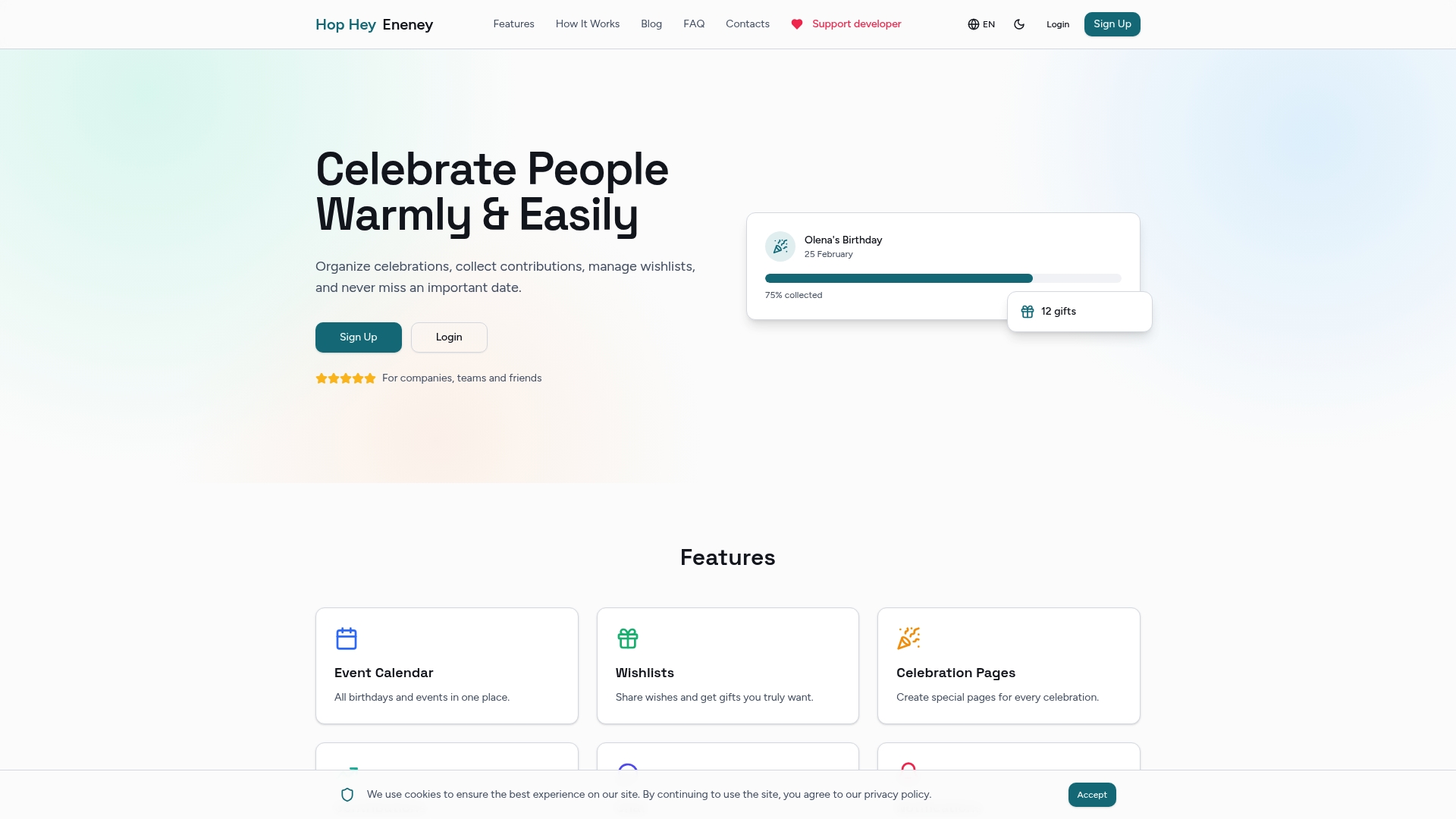
Hophey is a celebration management platform built for HR departments and team leaders who want recognition to be reliable, not reactive. The platform handles event calendars, transparent gift fund collection, private coordination chats, and personalized wishlists in one place. Automated reminders and Telegram notifications mean no milestone goes unnoticed, whether your team is in one office or spread across three time zones. If you are building a corporate birthday program or scaling recognition across departments, Hophey removes the operational friction so your team can focus on the celebration itself.
FAQ
What is employee engagement through celebrations?
Employee engagement through celebrations, also called recognition-driven engagement, is a culture practice where structured recognition moments create belonging, reinforce values, and sustain motivation. It differs from one-off events by being integrated into daily and weekly work rhythms.
How much does recognition actually impact engagement?
Employees who receive great recognition are 20 times more likely to be engaged, according to a 2023 Gallup report cited by ATD. When recognition is tied to specific goal contributions, employees become 5x more personally invested in company initiatives, per Workhuman's January 2026 research.
What makes a workplace celebration effective?
Effective celebrations are timely, specific, and authentic. Great Place To Work's August 2025 research confirms that recognition delivered close to the achievement and tied to a named behavior produces significantly greater engagement impact than delayed or generic appreciation.
Can celebrations replace other engagement strategies?
No. Celebrations cannot substitute for foundational engagement drivers like manager communication, accountability, and regular measurement. An expert column from May 2026 states directly that you cannot "event" your way to engagement. Celebrations work best layered on top of strong daily manager-team interactions.
How do you celebrate remote or hybrid employees effectively?
Remote and hybrid teams require active design of digital connection mechanics. Practical approaches include async video recognition from leadership, virtual shout-out boards, Slack recognition channels, and platforms like Hophey that coordinate gift contributions and event milestones across distributed teams.