
TL;DR:
- Virtual events significantly boost reach, reduce costs, and generate valuable behavioral data for organizations. They require deliberate design focused on engagement, personalization, and structured networking to succeed online. Hybrid formats are emerging as the optimal approach, combining the strengths of both in-person and virtual experiences.
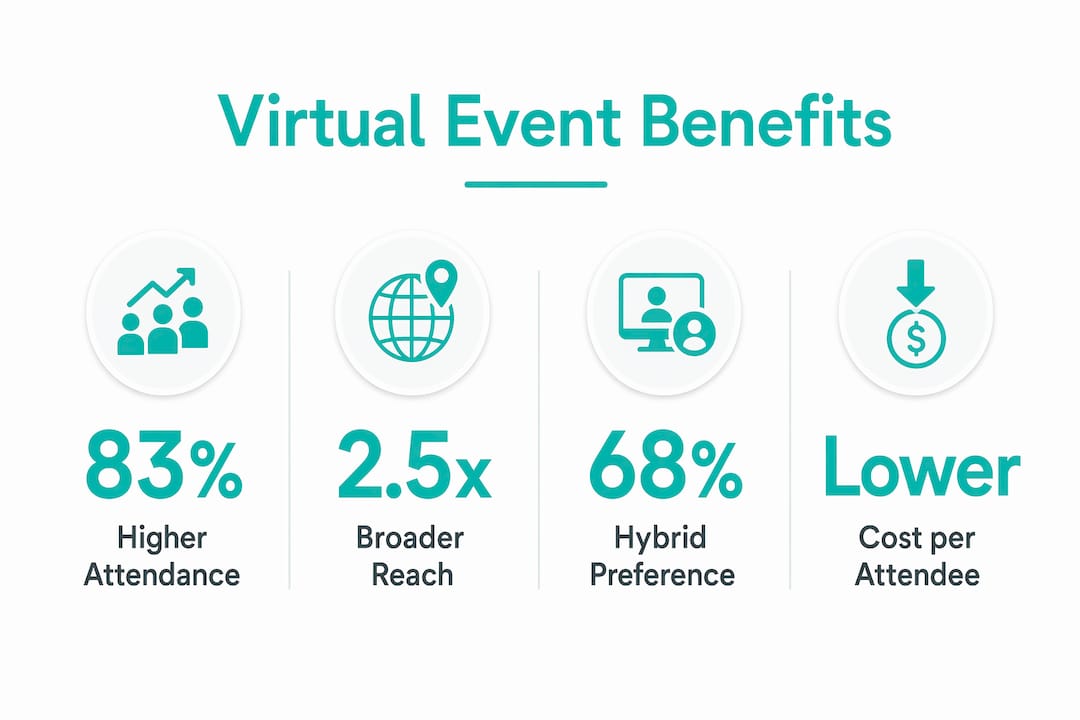
Virtual events are structured online gatherings that use digital platforms to deliver engagement, learning, and collaboration at a scale no physical venue can match. For event planners and organizational leaders, the case for hosting them is no longer theoretical. 83% of organizers report higher attendance with virtual or hybrid formats, yielding an average 2.5x increase in total reach. That single figure reframes the question from "should we go virtual?" to "how do we do it well?" This article gives you the data, the strategy, and the practical framework to answer that question.
Why organize virtual events: the core case for going digital
Virtual events, also called online or digital events, are purpose-built experiences hosted on platforms like Zoom, Hopin, or Airmeet. They replace or complement physical gatherings with interactive, accessible, and measurable alternatives. The virtual event importance for modern organizations comes down to four compounding advantages: reach, cost, data, and inclusivity.
Reach beyond geography. Senior decision-makers who would never fly across the country for a half-day conference will join a well-produced 90-minute virtual session. Virtual events cost approximately 75% less per attendee than in-person equivalents, which means your budget stretches to invite more speakers, invest in better content, and market to a wider audience simultaneously.
Data that physical events cannot generate. When an attendee walks out of a conference room, you lose them. When they leave a virtual session, you keep their behavioral trail: which sessions they attended, how long they stayed, which polls they answered, and which links they clicked. Virtual attendee data enables detailed analysis of session engagement and behavioral signals, unlike physical events that rely on basic headcounts. That data feeds directly into follow-up campaigns, content strategy, and ROI reporting.
Inclusivity by design. Virtual formats remove barriers that physical events cannot. Attendees with mobility limitations, caregiving responsibilities, or tight travel budgets can participate fully. Global teams spread across time zones can access recorded sessions on demand. This is not a secondary benefit. It is a structural advantage that reshapes who gets to participate in your organization's most important conversations.
- Broader audience reach with no venue capacity ceiling
- Lower per-attendee cost freeing budget for content quality
- Richer behavioral data for post-event analysis and follow-up
- Accessibility for attendees with disabilities or geographic constraints
- Scalability from 50 to 50,000 attendees without a venue change
How do virtual events drive engagement compared to in-person events?
The honest answer is: differently, not automatically better. Virtual engagement requires deliberate design that accounts for the realities of online attention. Average online attention drops after 12 minutes, and interactive elements like polls and breakout rooms increase engagement by up to 45%. That 12-minute threshold is the single most important number in virtual event design. Every session structure, every speaker brief, and every agenda block should be built around it.
Personalization is the highest-leverage tool available to virtual event planners. Personalized virtual experiences increase clicks on offers by 118% and produce 4x more meeting bookings per session. Personalization here means more than using someone's first name in an email. It means curating session tracks by role or interest, sending targeted pre-event content, and tailoring the post-event follow-up to what each attendee actually engaged with during the event.
Gamification and structured networking also outperform passive content delivery. Leaderboards tied to session participation, live Q&A with upvoting, and topic-specific breakout rooms all give attendees a reason to stay present rather than multitask. Structured virtual networking like speed rounds or topic rooms consistently outperforms open chat spaces in fostering real attendee connections. Open chat feels social but produces shallow interactions. Structured formats create the conditions for conversations that actually matter.
Pro Tip: Keep individual sessions to 20 minutes or less, then follow with a 10-minute interactive segment. This rhythm respects the 12-minute attention curve while giving attendees a reason to stay through the full program.
68% of attendees prefer hybrid options that offer choice in participation format, making hybrid the emerging best practice for organizations that want to serve both in-person and remote audiences. Hybrid is not a compromise. It is a deliberate design choice that extends the impact of virtual event importance across every segment of your audience.
What cost and logistical advantages make virtual events worth the investment?
The financial case for virtual events is straightforward, but the full picture goes beyond the obvious savings on venue rental and catering. Hybrid events save roughly 40% on venue and travel expenses compared to fully in-person formats. For a mid-size organization running four to six events per year, that represents a meaningful reallocation of budget toward content, speakers, and technology.
Here is how the cost structure shifts when you move online:
- Venue and logistics costs drop to near zero. No room blocks, no AV rentals, no catering minimums, and no on-site staffing for registration and room management.
- Planning timelines compress. Fewer vendor dependencies mean faster execution. A virtual event that would take four months to plan in-person can often be produced in six to eight weeks.
- Content becomes a reusable asset. Virtual event content repurposing creates extended marketing value through clips, transcripts, and social media assets long after the event ends. A single 60-minute keynote becomes a YouTube video, a blog post, a LinkedIn clip series, and a training module.
- Budget shifts toward quality. When you are not spending on catering and travel, you can invest in professional production, better speakers, and interactive technology that makes the experience genuinely memorable.
| Cost category | In-person event | Virtual event |
|---|---|---|
| Venue rental | High | None |
| Travel and accommodations | High | None |
| Catering | Moderate to high | None |
| Technology and platform | Low | Moderate |
| Content production | Moderate | Moderate to high |
| Per-attendee cost | High | ~75% lower |
The shift in investment from physical logistics to content quality is not just a cost story. It is a quality story. Organizations that redirect venue budgets into speaker fees, production values, and interactive design consistently report higher attendee satisfaction and stronger post-event engagement metrics.
How can virtual events build team collaboration and corporate culture?
Internal virtual events are one of the most underused tools in the organizational leader's toolkit. For remote and distributed teams, a well-designed virtual gathering does what a shared office used to do: it creates a sense of belonging, shared purpose, and mutual recognition. The impact of virtual events on engagement within teams is measurable and significant when the format is designed for connection rather than information delivery.

The key is structure. Unstructured virtual time, like a generic "virtual happy hour," tends to produce awkward silences and low repeat attendance. Structured formats, by contrast, give people a reason to engage. Speed networking rounds, collaborative problem-solving sessions, and role-specific breakout discussions all create the conditions for genuine connection across time zones and departments.
Inclusive design matters more in virtual formats than in physical ones. Attendees join from home offices, shared apartments, mobile devices, and noisy coworking spaces. Audience environments vary significantly, so content length and interaction design must accommodate likely distractions. Sessions longer than 45 minutes without an interactive break will lose a significant portion of your audience to their inbox.
Pro Tip: Use Hophey's shared event calendar and private coordination tools to plan internal virtual celebrations and team milestones without the logistical chaos. Automated reminders and role-based permissions mean the right people are always informed at the right time.
Practical tools that support virtual team building include:
- Breakout room facilitation via Zoom or Microsoft Teams for small-group discussions
- Collaborative whiteboards like Miro or MURAL for visual problem-solving sessions
- Recognition programs tied to virtual event participation to reinforce culture
- Flexible event planning roles that distribute ownership across team members rather than centralizing it with one coordinator
- Post-event surveys via Typeform or Google Forms to measure connection and satisfaction
The organizations that use virtual events most effectively treat them as a core part of their culture strategy, not a substitute for in-person gatherings. Virtual events complement rather than replace physical events, forming an integrated strategy that captures the best of both formats.
Key takeaways
Virtual events deliver measurable advantages in reach, cost, engagement, and data that make them a non-negotiable part of any modern event strategy.
| Point | Details |
|---|---|
| Attendance and reach | 83% of organizers see higher attendance, with an average 2.5x increase in total reach. |
| Cost efficiency | Virtual events cost ~75% less per attendee, freeing budget for content and technology. |
| Engagement design | Sessions must be structured around the 12-minute attention threshold with interactive elements every segment. |
| Data advantage | Virtual formats generate behavioral data that physical events cannot, enabling precise ROI measurement. |
| Team culture impact | Structured virtual networking and internal events build connection and belonging for distributed teams. |
What most planners get wrong about virtual events
I have reviewed hundreds of virtual event programs over the years, and the single most common mistake is treating a virtual event like a filmed version of an in-person one. You take the same agenda, the same session lengths, the same panel format, and you put it on a screen. Then you wonder why attendance drops off after the first hour.
A common mistake is treating virtual events as direct copies of in-person events rather than designing them as digital experiences. The formats are fundamentally different. In-person events use physical presence, ambient energy, and social pressure to keep people in the room. Virtual events have none of those. They have to earn attention every 10 to 15 minutes through content quality, interactivity, and pacing.
The planners who get this right start with a different question. Instead of asking "how do we move our conference online?", they ask "what can we do virtually that we could never do in person?" The answer is usually: invite speakers from three continents, run simultaneous tracks for different audience segments, and give every attendee a personalized post-event content package based on what they actually watched. Planning success relies on starting with business outcomes, then designing content, technology, and promotion to serve those outcomes. That sequence matters more than any single tool or platform choice.
My honest view on hybrid events: they are the future, but they are also the hardest format to execute well. Most organizations underinvest in the virtual experience when running hybrid, treating remote attendees as second-class participants. The organizations that get hybrid right design two distinct but connected experiences and staff them separately. That is a higher bar, but it is the only way to honor the 68% of attendees who prefer having a choice in how they participate.
— Konstantin
Plan your next virtual event with Hophey
Organizing a successful virtual event requires more than a platform and a guest list. It requires coordinated communication, clear roles, and tools that keep every contributor aligned without creating chaos. Hophey is built for exactly that. Whether you are planning a virtual team celebration, a company milestone event, or a surprise recognition moment for a remote colleague, Hophey's shared calendars, private coordination chats, and automated reminders keep everything on track. HR teams, event planners, and team leads across organizations use Hophey's event tools to remove the friction from virtual event coordination and focus on what actually matters: creating experiences people remember. Start planning your next event at hophey.gifts.
FAQ
Why organize virtual events instead of in-person ones?
Virtual events reach larger, more diverse audiences at a fraction of the cost. They generate richer attendee data and remove geographic barriers that exclude key participants from in-person formats.
What are the biggest benefits of virtual events for organizations?
The primary benefits are lower per-attendee costs, broader reach, detailed behavioral data, and accessibility for remote or distributed teams. Organizations also gain reusable content assets from every session recorded.
How do you keep virtual event attendees engaged?
Structure sessions to stay under 20 minutes before introducing an interactive element. Polls, breakout rooms, and live Q&A increase engagement by up to 45% compared to passive presentation formats.
How do virtual events support team building for remote teams?
Structured virtual networking formats, like speed rounds and topic-specific breakout rooms, create meaningful connections across locations. Internal virtual events tied to recognition and milestones reinforce team culture for distributed workforces.
What is the biggest mistake to avoid when planning a virtual event?
Copying an in-person agenda directly into a virtual format. Virtual events require shorter sessions, more frequent interaction, and content designed specifically for online attention spans and varied audience environments.