
TL;DR:
- Group gifting combines contributions from many people to create higher-value presents and strengthen community bonds. Proper coordination through dedicated platforms reduces complexity and makes the process more enjoyable for everyone involved.
Group gifting is defined as the practice of pooling contributions from multiple people to purchase a single, more meaningful present for a shared recipient. The case for why organize group gifts comes down to three things: bigger impact, lower individual cost, and stronger community bonds. Instead of five friends each spending $25 on forgettable presents, they combine their budgets for a $125 experience or item the recipient will actually remember. Platforms like GroupTogether, Venmo, and Pooled have made this coordination far less painful than it used to be, removing the awkward "who's holding the money" problem that used to derail even the best intentions.
What are the top benefits of organizing group gifts?
Group gifts consistently outperform individual ones on the metrics that matter most: gift value, recipient satisfaction, and the sense of shared celebration. Group gifts allow pooling smaller individual budgets into a higher-value present, with real examples showing groups contributing $30 each to reach a $150 total. That difference buys a spa day instead of a candle, or a weekend getaway instead of a gift card.
The benefits extend well beyond the price tag:
- Higher gift value: Pooled contributions unlock presents that no single person could justify buying alone.
- Reduced financial stress: Each contributor spends less while the recipient receives more. No one feels pressured to overspend.
- Shared ownership: Every contributor feels personally connected to the gift, which deepens the emotional weight of the moment.
- Stronger group bonds: Group gifts create shared moments for both givers and recipient, amplifying community and celebration beyond what individual presents achieve.
- Workplace culture: In office settings, a coordinated group gift for a colleague's promotion or retirement signals collective appreciation in a way that a solo card never does.
- Family milestones: For weddings, baby showers, or milestone birthdays, a group gift from extended family carries symbolic weight that a dozen small gifts simply cannot match.
Pro Tip: When organizing a group gift for a coworker, frame the ask around the occasion rather than the person's popularity. "We're celebrating Maria's 10-year anniversary with the company" gets more participation than "Maria's birthday is Friday."
The social dimension is the underrated benefit here. When a team at a company like Salesforce or a friend group organizes a gift together, the act of coordinating becomes its own bonding experience. People discuss what the recipient loves, share memories, and invest emotionally before the gift is even purchased.
How do you effectively coordinate group gifts?
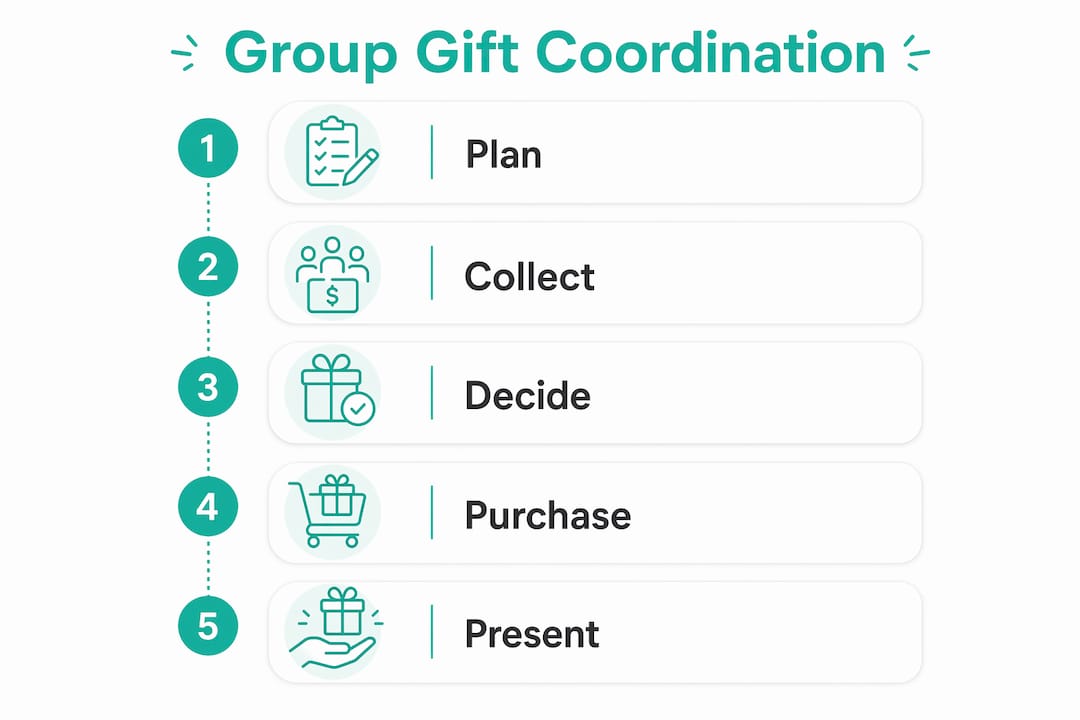
Effective group gift coordination follows a clear structure. A single organizer manages signup, payment tracking, and the final purchase. Multiple co-organizers multiply complexity fast, creating conflicting messages and delayed decisions. One person leads. Everyone else contributes.
The coordination process breaks down into four stages:
- Set the parameters first. Decide who the gift is for, what the budget range is, what payment methods you will accept, and when the deadline falls. Clear upfront information on all four points prevents confusion and increases participation rates.
- Send one clear initial message. Include the recipient's name, the occasion, the suggested contribution amount, the payment link, and the deadline. Keep it under 100 words.
- Follow up strategically. Send one group reminder three days before the deadline. For anyone who still has not contributed, send a private one-on-one message. Avoid public shaming of non-paying contributors at all costs. It kills group harmony and rarely works.
- Build in a buffer. A 3–5 day buffer between the payment deadline and the actual purchase date accounts for late contributions and technical delays.
Pro Tip: Use a tool like Pooled or a dedicated platform like Hophey to handle payment collection. This removes you from the uncomfortable role of informal accountant and gives contributors a transparent view of the fund.
Here is how traditional coordination compares to platform-based coordination:
| Factor | Traditional (Venmo/cash) | Platform-based (Pooled, Hophey) |
|---|---|---|
| Payment tracking | Manual, error-prone | Automated, real-time |
| Organizer burden | High | Low |
| Contributor transparency | None | Full visibility |
| Reminder system | Manual messages | Automated notifications |
| Late payment handling | Awkward follow-ups | Built-in deadline tools |

Platforms like Pooled enable direct payment to a central fund, removing the organizer from the money-holding role entirely. That one change eliminates the most common source of friction in group gifting. For workplace gifts specifically, check out HR-focused gift exchange guidance to understand how to coordinate workplace gifts within professional boundaries.
What common challenges arise in group gifting?
Every group gift coordination effort runs into at least one of three problems: decision paralysis, inconsistent contributions, and communication breakdown. Knowing these pitfalls in advance makes them manageable.
Decision paralysis happens when too many people vote equally on the gift choice. The result is endless debate, resentment, and sometimes no gift at all. The fix is straightforward. The organizer consults contributors but retains final purchase authority. Gather input through a quick poll or a simple message asking for suggestions. Then decide. One person's executive call keeps the process moving and keeps everyone happy.
Inconsistent contributions are normal and should be expected. Varied contribution amounts are acceptable and often preferred, since they accommodate different financial situations without spotlighting who gave what. Set a suggested amount, not a required one. Someone contributing $10 is better than someone opting out entirely because they felt pressured by a $30 minimum.
Communication breakdown is the silent killer of group gifts. It usually starts with an unclear first message and compounds from there. The solutions are:
- Write the initial message as if the reader knows nothing about the situation.
- State the deadline in a specific date format ("by Friday, March 14") rather than relative terms ("by end of week").
- Use a single communication channel. Mixing texts, emails, and Slack messages fragments the conversation.
- Confirm the gift purchase publicly once it is done. Contributors want to know their money was used and the gift was received well.
For a deeper look at assigning roles in group gifting, structured role assignment prevents the "someone else will handle it" trap that leaves organizers doing everything alone.
How do group gifts compare to individual gifts?
Group gifts and individual gifts serve different purposes. The right choice depends on the occasion, the relationship, and the group size.
| Factor | Group gift | Individual gift |
|---|---|---|
| Gift value | High (pooled budget) | Limited by one person's budget |
| Personalization | Moderate (consensus-driven) | High (one person's knowledge) |
| Emotional impact on recipient | Strong sense of community | Intimate, personal connection |
| Organizer effort | Moderate to high | Low |
| Best for | Milestones, workplace events, large groups | Close relationships, small occasions |
| Cost per contributor | Low | Full cost borne by one person |
Group gifts win on impact for milestone events: retirements, weddings, major birthdays, and work anniversaries. Individual gifts win on intimacy for close relationships where the giver has specific knowledge of the recipient's preferences. A best friend who knows you have wanted a particular book for two years will always outperform a group gift committee. But for a team of 20 celebrating a colleague's last day, a group gift is the only approach that makes financial and social sense.
The emotional dynamic also differs. A group gift tells the recipient "everyone here values you." An individual gift says "I specifically thought of you." Both messages matter. The occasion determines which one lands harder.
What are best practices for successful group gift organization?
The difference between a smooth group gift and a chaotic one comes down to preparation and respect for participants' time and money. Follow this checklist for any group gift you organize:
- Confirm the recipient's preferences first. Ask a close friend or check a wish list before committing to a gift category. Hophey supports shared wish lists precisely for this reason.
- Set a realistic budget range. Suggest a contribution amount based on the group size and occasion. For a workplace gift among 15 colleagues, $10–$20 per person is standard. For a close friend group of 5, $30–$50 each is reasonable.
- Make participation genuinely optional. State clearly that opting out is fine. Pressure reduces participation and creates resentment. Optional participation actually increases it.
- Use one platform for everything. Mixing Venmo, cash, and bank transfers creates a tracking nightmare. Pick one method and stick to it. Tools like fund collection platforms centralize this process.
- Acknowledge contributors after the gift is given. A quick group message saying "The gift was a hit, thank you all" closes the loop and makes people more likely to participate next time.
- Document what worked. If you organize gifts for the same group regularly, a simple note on what contribution level worked, which platform you used, and how much lead time you needed saves hours on the next round.
Pro Tip: For recurring group gifts, like monthly birthday collections at work, set up a standing contribution system rather than re-soliciting every time. Hophey's automated reminders and event calendar make this repeatable without the organizer lifting a finger each month.
For creative group gifting ideas that go beyond the standard gift card, experience-based gifts consistently outperform physical items in recipient satisfaction. Think cooking classes, concert tickets, or group dinners where the contributors join the recipient.
Key takeaways
Organizing group gifts works because pooled contributions deliver higher gift value, lower individual cost, and stronger community bonds than any single person can achieve alone.
| Point | Details |
|---|---|
| Assign one organizer | A single lead prevents confusion and keeps decisions moving efficiently. |
| Communicate clearly upfront | State the recipient, budget, payment method, and deadline in the first message. |
| Use a dedicated platform | Tools like Pooled or Hophey remove the organizer from the money-handling role. |
| Build in a buffer | Allow 3–5 days between payment deadline and purchase to handle late contributions. |
| Make participation optional | Removing pressure increases actual participation and preserves group harmony. |
Why group gifting changed how I think about celebrations
I used to believe that the most thoughtful gift was always the most personal one. One person, one idea, one carefully chosen present. Then I watched a team of 12 people pool together for a colleague's retirement trip, and the reaction in that room changed my thinking entirely.
The recipient did not just feel appreciated. She felt seen by everyone at once. That is something no individual gift can replicate, no matter how well chosen. The group gift carried the weight of collective acknowledgment, and that weight matters at major life moments.
What I have also learned is that the organizer's experience matters just as much as the recipient's. When coordination is chaotic, the organizer burns out and stops volunteering for it. When it is structured, with clear roles, one communication channel, and a platform that handles the money, organizing a group gift becomes something people actually want to do again. The difference is almost entirely in the setup, not the people.
My honest advice: stop trying to coordinate group gifts through group chats and Venmo requests. The technology to do this properly exists. Use it. The joy of a well-executed group gift is worth the 20 minutes of setup it actually takes when you have the right tools.
— Konstantin
How Hophey makes group gift coordination simple
Planning a group gift should not feel like project management. Hophey is built specifically for this: private celebration pages, transparent fund collection, shared wish lists, and automated reminders that keep contributors on track without the organizer chasing anyone down.
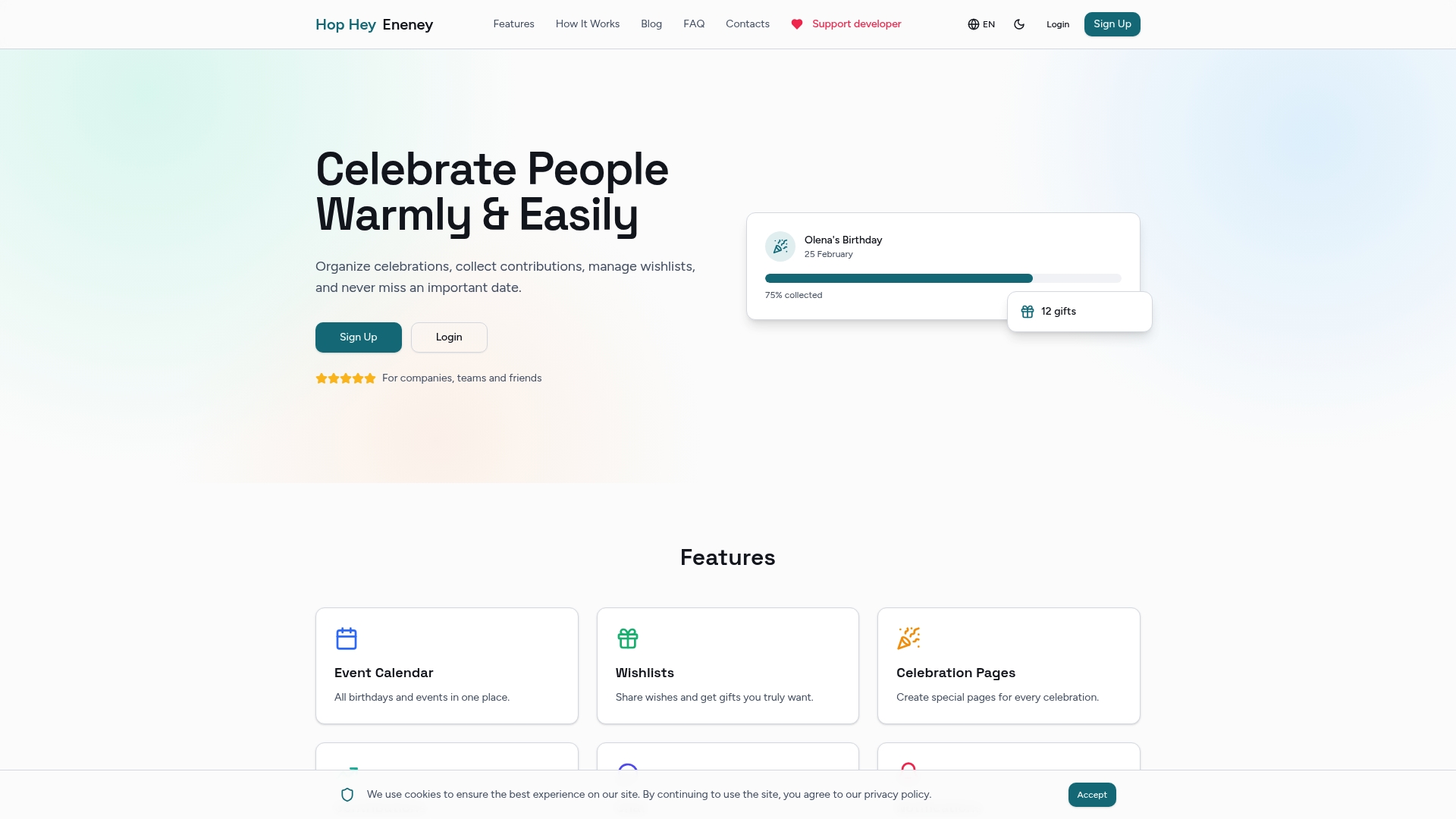
Whether you are coordinating a birthday surprise for a close friend, managing a workplace retirement gift, or organizing a group contribution for a wedding, Hophey handles the logistics so you can focus on the celebration. The platform supports multi-currency contributions in USD, EUR, and UAH, sends Telegram and email reminders automatically, and keeps the entire process hidden from the recipient. Visit Hophey to set up your next group gift in minutes.
FAQ
Why is it better to organize group gifts than give individually?
Group gifts pool smaller budgets into a higher-value present while creating a shared sense of celebration that individual gifts cannot match. The recipient feels appreciated by the entire group, not just one person.
How do you coordinate group gifts without the awkwardness?
Assign one organizer, use a centralized payment platform like Pooled or Hophey, and send private follow-ups to non-contributors rather than public reminders. This approach keeps the process respectful and efficient.
What is the biggest mistake in group gift coordination?
The most common mistake is using multiple payment methods and communication channels simultaneously. Centralizing both on a single platform eliminates tracking confusion and reduces organizer burden significantly.
How much should each person contribute to a group gift?
Contribution amounts should be suggested, not required. For workplace groups, $10–$20 per person is standard. For close friend groups, $25–$50 is typical. Varied contribution amounts accommodate different financial situations without creating social pressure.
When does a group gift make more sense than an individual one?
Group gifts are the right choice for milestone events like retirements, weddings, and major work anniversaries, especially in larger groups. Individual gifts work better for close relationships where personal knowledge of the recipient's preferences adds real value.