
TL;DR:
- Managing group Christmas gifts involves balancing budgets, inclusivity, and logistics to ensure fair and appreciated exchanges. Proper planning, clear communication, and using digital tools help coordinate contributions and preferences across diverse groups. Success relies on organization, choice, and follow-up, rather than only choosing the perfect gift.
Coordinating group christmas gifts sounds simple until you realize you're managing six different budgets, two vegetarians, one person who "doesn't need anything," and a deadline that's three weeks away. The challenge isn't finding a gift. It's finding the right one that feels fair, inclusive, and genuinely appreciated by everyone involved. Whether you're organizing office Christmas gifts for a 40-person team, planning Christmas gifts for friends, or running a secret Santa exchange, the decisions compound fast. This guide walks you through exactly how to plan, compare, and execute group gifting that actually lands.
Table of Contents
- Key Takeaways
- Key factors to consider when organizing group Christmas gifts
- Top group Christmas gift ideas that actually work
- Comparing group gift options: what actually matters
- Situational recommendations for different group types
- My take on what actually makes group gifting work
- How Hophey takes the chaos out of group gifting
- FAQ
Key Takeaways
| Point | Details |
|---|---|
| Set a fair per-person budget early | Locking in a consistent spend per recipient prevents favoritism and keeps everyone comfortable. |
| Choose gifts that respect differences | Food, culture, and lifestyle vary widely, so opt for choice-based or universally neutral gifts. |
| Start planning in November | Gifts sent in November get more appreciation and avoid the December delivery crunch. |
| Match the gift format to the group | Offices, friend groups, and families each have different needs, sizes, and sensitivities. |
| Use a platform to coordinate contributions | Digital tools remove the chaos of chasing payments and tracking who bought what. |
Key factors to consider when organizing group Christmas gifts
Before you browse a single product page, you need a framework. Group gifting fails most often not because of a bad gift idea but because of poor planning.
Budget and fairness come first. The average employer spent $62 per employee on holiday gifts in 2025, and the key principle is that every recipient should receive a gift of comparable value. Uneven spending creates visible favoritism, which poisons the goodwill the gift was meant to build.
Cultural and dietary inclusivity matters more than you think. What seems like a universally safe food basket can exclude someone based on dietary restrictions, allergies, or religious practice. Always check before defaulting to wine, meat, or nut-based products.
Here are the core planning considerations to work through before committing to any gift type:
- Budget per person: Set a fixed amount and communicate it to everyone contributing
- Group size: Larger groups need more scalable options and more lead time
- Delivery logistics: Physical gifts require addresses and shipping time; digital options skip this entirely
- Inclusivity: Consider dietary needs, cultural backgrounds, and remote locations
- Gift format: Physical, experiential, or choice-based each have distinct trade-offs
- Wishlists: Using wishlists in workplace gifting dramatically improves satisfaction by letting recipients signal what they actually want
Pro Tip: Send your group gift or exchange invitations in mid-November. Early-November gifting consistently receives higher appreciation and sidesteps the delivery delays that pile up in December.
Top group Christmas gift ideas that actually work
Not all gift categories are created equal for group settings. Here is a breakdown of the most popular options, with honest assessments of what makes each one work or fall flat.
-
Curated food and snack baskets: These are crowd-pleasers when done right. Holiday gift sets from specialty food brands feel premium without requiring anyone to know personal preferences. The risk is inclusivity. A basket full of cheese and charcuterie excludes vegans and anyone with dietary restrictions. Opt for customizable sets or confirm preferences first. Food and branded keepsakes rank among the safest HR-approved options for diverse groups.
-
Personalized ornaments or keepsakes: Low cost, high sentiment. A custom ornament with a team name or inside joke works beautifully for close-knit friend groups or long-standing office teams. These work best for groups of 15 or fewer where personalization is practical.
-
Experience vouchers or group activity tickets: Spa days, cooking classes, escape rooms, and local event tickets make memorable team holiday presents. The catch is scheduling. Getting 12 people to agree on a date is its own project. These work best for smaller groups with flexible schedules.
-
Choice-based gift catalogs or multi-brand gift cards: Choice-based gifts consistently outperform single-option gifts because they respect individual preferences and eliminate the risk of unwanted items. A multi-brand gift card or curated catalog lets recipients pick what suits them. The downside is that it can feel less personal if not framed thoughtfully.
-
Secret Santa-style gift exchanges: One of the most popular formats for co-worker Christmas gifts and friend groups alike. Each person draws a name and buys one gift, keeping the total spend manageable. Secret Santa budgets typically run $15 to $50, with planning starting about three weeks before the exchange date. The format works well when everyone follows the same budget and the pool of participants is 8 to 30 people.
-
DIY or themed group gifts: A coordinated set of handmade or curated items around a theme (home spa, coffee lover, movie night) shows effort and creativity. These are budget-friendly group gifts that work especially well for Christmas gifts for friends. The time investment is the real cost.
Pro Tip: For large groups, building a Secret Santa wish list before the exchange starts cuts down on duplicates and gifts that miss the mark entirely.
Comparing group gift options: what actually matters
Use this table to quickly assess which gift type fits your specific situation.
| Gift type | Budget flexibility | Inclusivity | Coordination effort | Best for |
|---|---|---|---|---|
| Food and snack baskets | Medium ($30-$80) | Medium (check dietary needs) | Low | Offices, families |
| Personalized keepsakes | Low ($10-$30) | High | Medium | Friend groups, small teams |
| Experience vouchers | High ($50-$150+) | Medium | High | Small teams, friend groups |
| Multi-brand gift cards | High (any amount) | Very high | Very low | Large offices, remote teams |
| Secret Santa exchange | Very low ($15-$50) | High | Medium | Any group under 30 |
| DIY themed gifts | Very low (under $20) | High | High | Close friend groups |
One nuance worth flagging: gift cards, despite being convenient, are considered taxable income regardless of amount under IRS rules. Physical gifts of low fair market value can qualify as de minimis fringe benefits and may be non-taxable. If you're coordinating company christmas party gifts or any form of employer-funded gifting, check with your HR team before defaulting to gift cards.
Pro Tip: Consistency across gift values matters more than the gift itself in workplace settings. One person receiving a nicer gift than a colleague of equal standing creates friction that outlasts the holiday season.
Situational recommendations for different group types
The best group Christmas gift approach depends entirely on who you're buying for. Here is how to think through it by setting.
-
Corporate or office teams: Stick to budget-consistent, inclusive options. Multi-brand gift cards or curated holiday gift sets are the safest choices for diverse offices. Avoid anything that requires personal information like clothing sizes or food preferences without asking first. Check your company's gift policy, especially if gifts exceed the IRS de minimis threshold. For structured guidance, the HR guide to gift exchanges at work covers policies and culture norms in detail.
-
Remote or distributed teams: Physical gifts need delivery addresses, which some employees may not want to share. Digital options like choice-based catalogs, e-gift cards framed as team holiday presents, or online name-drawing tools that maintain anonymity and track shipping work well here. Plan at least four weeks out to account for international shipping.
-
Friend groups and social circles: Here you have more creative freedom. A Secret Santa exchange keeps things fair and fun. A group-funded experience, like a dinner out or a day trip, works well when the friend group shares similar interests. For budget-friendly group gifts, a DIY themed set with a $15 per person contribution cap can feel more personal than anything purchased off a shelf.
-
Families coordinating across generations: Gift registries and wishlists are your best tool here. They remove the guesswork for givers and guarantee recipients get something they actually want. Assign a coordinator to collect contributions and purchase on behalf of the group. Platforms built for organizing seamless group gifting handle this transparently so no one is left chasing Venmo payments.
-
Large groups (30+ people): Scale demands simplicity. Secret Santa works up to about 30. Beyond that, a company-wide gift or a tiered gifting structure by team or department is more manageable. Choice-based options are easiest to administer at scale.
-
Small, close-knit groups (under 10 people): You can afford more personalization. Consider pooling contributions toward one meaningful experience or a higher-quality item the recipient actually wants. Early planning and clear deadlines are what separate a smooth exchange from a last-minute scramble.
-
Mixed virtual and in-person groups: The hybrid format is tricky. Lead with digital delivery options so no one is excluded by geography. Frame the gift consistently across both groups so remote participants don't feel like an afterthought.
My take on what actually makes group gifting work
I've watched a lot of group gift efforts fall apart, and almost none of them failed because of a bad gift idea. They failed because nobody owned the process.
The organizer assumed everyone would chip in on time. The budget was vague. Nobody confirmed dietary restrictions. The gift arrived the week after Christmas. Sound familiar?
What I've learned is that the gift itself is about 30 percent of the equation. The other 70 percent is communication: setting a clear budget, communicating it early, assigning one person to coordinate contributions, and giving people a real deadline with a real consequence for missing it.

The second thing I'd push back on is the instinct to make group gifts personal. For large groups especially, personal gifts don't scale. What scales is choice. When you give someone the ability to pick from curated options, you're not being lazy. You're being respectful. Allowing recipients to choose from curated options improves satisfaction and reduces the number of gifts that end up regifted or unused.
The third thing, and the one most groups skip entirely: follow up. A quick note after the exchange asking if everyone received their gifts and whether the experience felt fair goes a long way toward making next year's process even better.
Group gifting at its best isn't about the stuff. It's about showing people they were thought of, fairly and intentionally.
— Konstantin
How Hophey takes the chaos out of group gifting
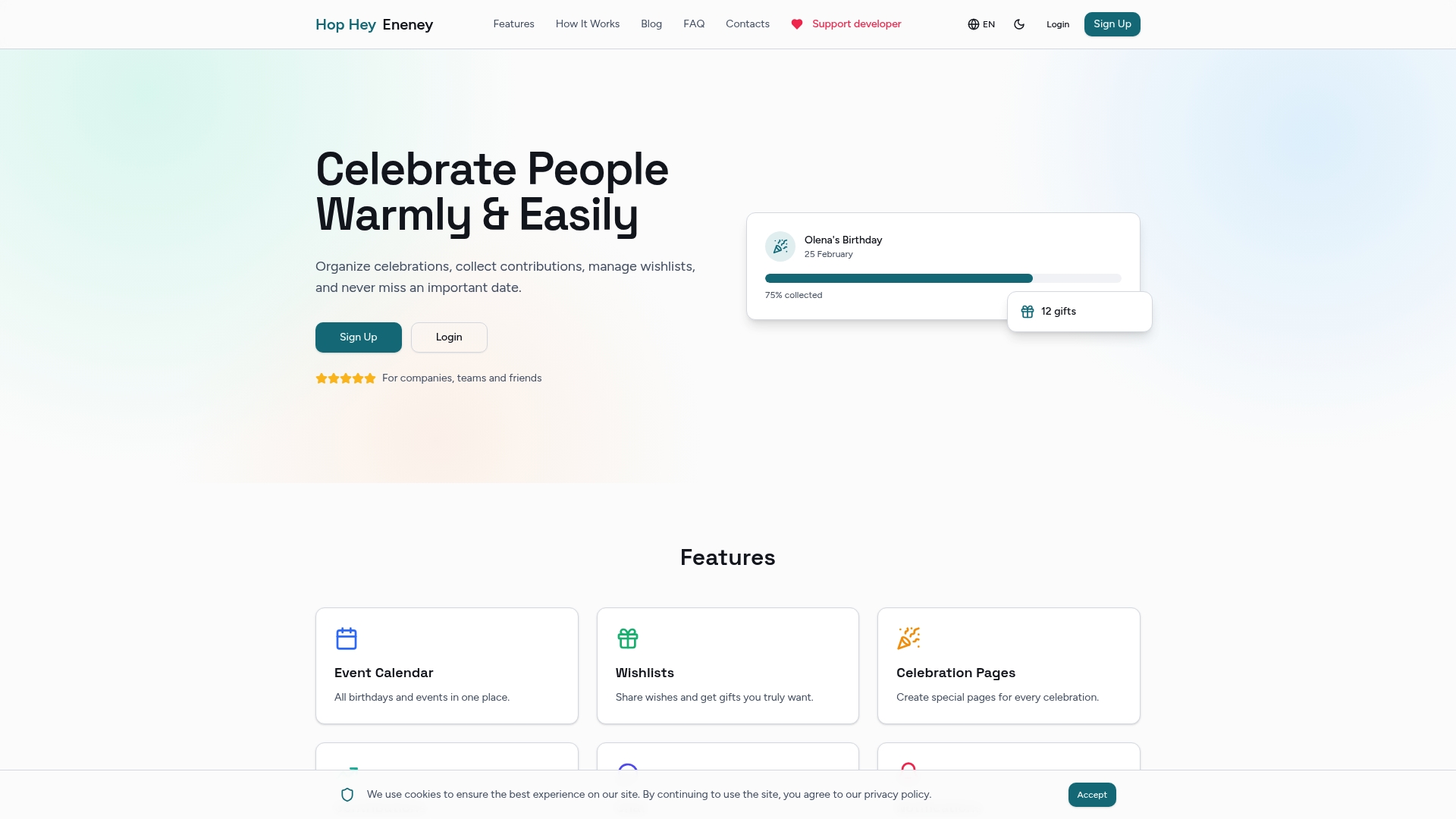
Coordinating group Christmas gifts gets complicated fast, especially when you're managing contributions from multiple people, tracking who has paid, and trying to keep the whole thing a surprise. That's exactly the problem Hophey was built to solve.
Hophey gives groups a single place to create private celebration pages, collect contributions transparently, manage wishlists, and coordinate without revealing the surprise to the recipient. Whether you're running a company christmas party gift campaign for 80 employees or pooling funds for a friend's holiday present, the platform handles the logistics so you don't have to.
With support for multiple currencies, automated reminders, and Telegram notifications, Hophey works for offices, remote teams, and friend groups alike. Check out meaningful gifts for groups to start planning your holiday exchange today.
FAQ
What is a good budget for group Christmas gifts?
For office settings, spending around $62 per person is a common benchmark, though secret Santa exchanges typically run $15 to $50. The most important rule is consistency: every recipient should receive a gift of comparable value.
Are gift cards a good choice for group Christmas gifts?
Gift cards are convenient and inclusive, but the IRS treats them as taxable income regardless of amount. Physical gifts of low fair market value can qualify as non-taxable, making them a better choice for employer-funded group gifts.
How early should you start planning a group Christmas gift?
Start planning in mid-November to allow time for sign-ups, budget collection, and delivery. Gifts sent before the December rush consistently receive higher appreciation and avoid shipping delays.
What is the best group gift format for large offices?
Choice-based gift catalogs or multi-brand gift cards work best for large offices because they scale easily, require no personal information, and respect diverse preferences across a big group.
How do you coordinate a secret Santa exchange for a remote team?
Use an online platform to handle name drawing, wishlist sharing, and anonymity. Online tools that track shipping make remote secret Santa exchanges easy to manage and keep the surprise intact for virtual participants.