
TL;DR:
- Workplace wish lists serve as tools for employees to express recognition and resource preferences, enhancing communication. They improve engagement, trust, and inclusivity by tailoring rewards and support to individual needs. Regularly updating and simplifying these lists encourages participation and strengthens team culture.
Wish lists at work are structured tools that let employees express preferences, capture goals, and guide intentional gifting across teams. Known in HR circles as preference registries or employee interest lists, they serve a function well beyond holiday gift exchanges. The role of wish lists at work spans communication, culture-building, and even workflow improvement. Modern wish lists have evolved from simple shopping catalogs into strategic tools that align teams around shared priorities. For HR professionals and team leaders, understanding how to build and use them is one of the more underrated moves you can make in 2026.
How do wish lists improve employee engagement?
Wish lists function as direct communication channels between employees and leadership. When a team member fills out a preference list, they are telling you what motivates them, what they need, and how they want to be recognized. That signal is far more reliable than guessing.
Digital wish lists enable intentional gifting by aligning expectations and reducing stress for both givers and recipients. That matters in a workplace context because poorly chosen recognition gifts can feel impersonal or tone-deaf, which actively damages morale rather than building it.
Wish lists also support inclusivity in a way that generic reward programs cannot. A standard gift card treats everyone the same. A wish list treats everyone as an individual. Consider a distributed team with members across different time zones and cultural backgrounds. One person values a professional development course. Another wants a home office upgrade. A third prefers a donation to a cause they care about. A wish list captures all three without requiring a manager to guess.
Here is what wish lists do for engagement when used consistently:
- Reduce guesswork in recognition and gifting, so managers spend less time second-guessing and more time acting
- Give employees a voice in how they are celebrated and supported, which builds psychological safety
- Signal that leadership listens, which is one of the strongest drivers of employee trust
- Support diverse preferences across generations, cultures, and work styles without requiring separate programs
Pro Tip: Ask employees to update their wish lists at the start of each quarter. Preferences shift, and a stale list produces the same guesswork problem you were trying to solve.
What role do wish lists play in team culture?
Wish lists shape team culture by making social exchanges predictable, low-anxiety, and genuinely thoughtful. The clearest example is the workplace gift exchange. Secret Santa programs are a staple in many offices, but they generate real stress when participants have no guidance on what to buy.

Effective holiday wish lists for coworkers should be lighthearted, humble, and organized around 3–5 broad categories rather than specific costly items. That structure removes the awkward dynamic where one person receives an expensive item and another receives something generic. It also gives introverted or newer employees a way to participate without feeling exposed.
Beyond gifting, wish lists serve as roadmaps for shared goals that align teams on professional growth and resource needs. A team wish list might include a shared request for a new project management tool, a training workshop, or a standing meeting room. That kind of collective list gives HR leaders concrete data to bring to budget conversations.
Here is a practical sequence for rolling out wish lists as a culture tool:
- Introduce the concept at onboarding. New employees should create a basic preference list during their first week, before they feel any social pressure to conform.
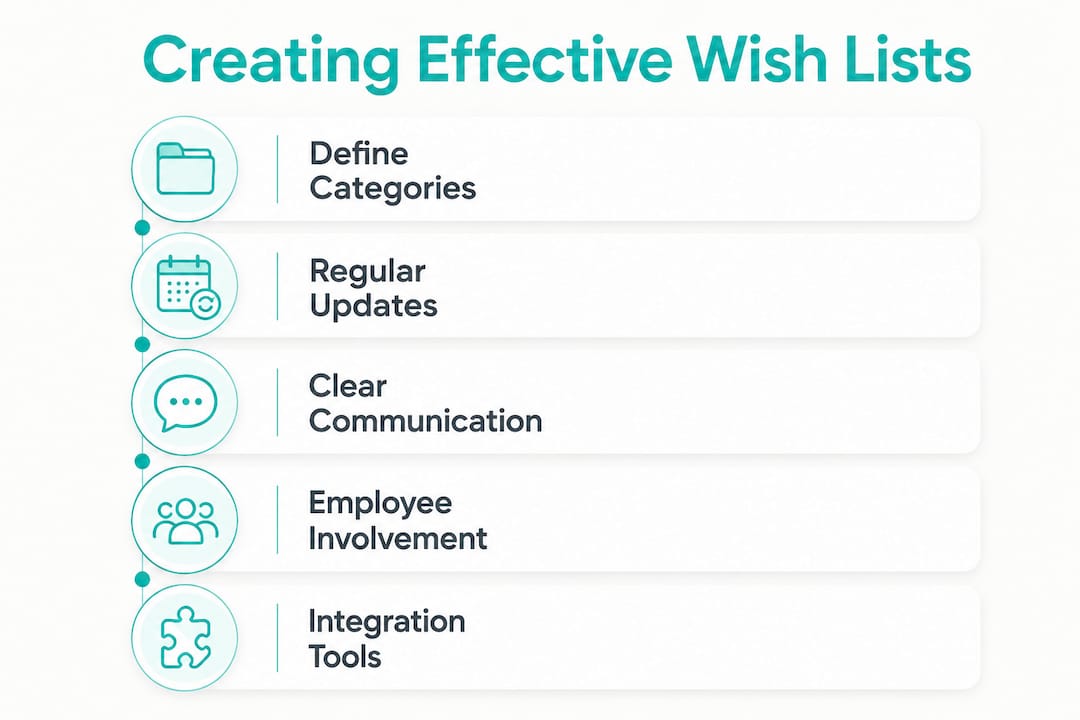
- Normalize updates at team rituals. Tie wish list reviews to quarterly check-ins or annual reviews so they stay current.
- Share aggregated insights with leadership. Anonymized wish list data reveals patterns in what your team actually needs, from software to wellness benefits.
- Celebrate using the list. When you act on a wish list item, say so. "We got the Slack integration you all asked for" closes the feedback loop and proves the system works.
Pro Tip: Keep a shared team wish list in a visible location, like a pinned document in your team's Slack channel or a shared Notion page. Visibility encourages contribution and accountability.
Gift lists vs. productivity lists vs. resource lists: which type fits your team?
Not all workplace wish lists serve the same purpose. HR leaders who treat them as a single category miss most of the value. The three most useful types are gift wish lists, productivity wish lists, and resource wish lists.
Maintaining a personal AI wish list of 5–10 manual tasks helps employees identify automation opportunities with the highest return on investment. Blocking ten minutes weekly to document friction points builds a clear picture of where time is being lost. That is a productivity wish list in action.
Resource wish lists track tools, subscriptions, training materials, and equipment that teams need but have not yet requested formally. They function as a living budget request that HR can reference during planning cycles.
| Wish List Type | Primary Purpose | Best Use Case | Key Benefit |
|---|---|---|---|
| Gift wish list | Intentional recognition and gifting | Holidays, birthdays, work anniversaries | Reduces guesswork, improves morale |
| Productivity wish list | Identifying automation and process gaps | Weekly team retrospectives | Cuts decision fatigue, surfaces ROI |
| Resource wish list | Tracking tools and training needs | Quarterly planning cycles | Gives HR concrete budget data |
Each type works best when it is maintained regularly and tied to a specific workflow. A gift wish list that is updated once a year is useful. A productivity wish list that is reviewed weekly is transformative.
How to create effective wish lists for your team
Creating wish lists that actually get used requires removing friction at every step. The biggest reason wish list programs fail is over-engineering. Teams build elaborate systems that require logins, approvals, and formatting rules, and participation drops to near zero within a month.
Avoiding forced signups and enabling guest or anonymous access dramatically increases adoption. The same principle applies internally. If an employee has to navigate three approval layers to add an item to a team resource list, they will not bother. Keep the entry point as simple as a shared document or a dedicated platform feature.
Here are the core practices that separate high-adoption wish list programs from abandoned ones:
- Keep categories broad. A wish list template guide built around 3–5 flexible categories outperforms a rigid form with twenty fields every time.
- Audit quarterly. Structured wishlists with monthly audits report 52% lower cognitive fatigue on the NASA-TLX scale compared to ad-hoc lists. Regular reviews keep lists relevant and reduce mental clutter.
- Allow anonymity where appropriate. For sensitive requests like mental health resources or ergonomic equipment, anonymous submission removes the barrier of self-disclosure.
- Connect lists to recognition programs. A wish list that feeds directly into your employee rewards program creates a closed loop. Employees see that their input produces real outcomes.
- Avoid forced participation. Mandating wish list completion turns a culture tool into a compliance task. Invite, remind, and model the behavior from leadership instead.
| Practice | Why It Works |
|---|---|
| Broad categories | Lowers the barrier to entry and encourages more honest responses |
| Quarterly audits | Keeps lists current and reduces the cognitive load of outdated items |
| Anonymous access | Removes social risk for sensitive or personal requests |
| Tied to rewards | Creates a visible feedback loop that proves the system delivers |
| No forced participation | Preserves psychological safety and keeps engagement voluntary |
Shared wish lists also improve employee well-being by reducing the anxiety of unmet or miscommunicated needs. When people know their preferences are recorded and visible to the right people, they spend less mental energy managing expectations.
Key takeaways
Wish lists at work deliver the most value when they are simple, regularly updated, and directly connected to recognition and planning workflows.
| Point | Details |
|---|---|
| Wish lists reduce guesswork | Structured preference lists give managers reliable data for recognition and gifting decisions. |
| Three list types serve different goals | Gift, productivity, and resource wish lists each solve a distinct problem for HR and team leaders. |
| Simplicity drives adoption | Removing signup friction and keeping categories broad increases participation across all team types. |
| Regular audits cut cognitive load | Teams using structured, audited wish lists report significantly lower cognitive fatigue than those using ad-hoc approaches. |
| Wish lists build culture | When leadership acts on wish list input and communicates it, employees trust the system and engage more deeply. |
Why i think HR leaders are still underusing wish lists
I have watched teams spend thousands of dollars on recognition programs that miss the mark because no one ever asked employees what they actually wanted. The irony is that the fix costs almost nothing. A shared document, a quarterly reminder, and a manager willing to act on the input is all it takes to start.
What surprises most HR leaders I talk to is how much productivity value lives inside a well-maintained wish list. Curated wish lists reduce idea-to-execution time by 57% by cutting context switches and decision fatigue. That finding comes from engineering teams, but the mechanism applies anywhere people are managing competing priorities. When your team has a documented list of what they need, they stop carrying that mental load in their heads.
The cultural dimension is equally underrated. Gifting programs tied to employee preferences produce measurably stronger motivation outcomes than generic reward structures. That is not a soft claim. It shows up in retention data, in engagement scores, and in the quality of relationships between managers and their reports.
My honest recommendation is to start smaller than you think you need to. One team, one list type, one quarter. See what the data tells you. The teams I have seen get the most out of wish lists are not the ones with the most sophisticated systems. They are the ones where a manager looked at the list and actually did something about it.
— Konstantin
How Hophey makes workplace wish lists work
Managing wish lists across a whole organization gets complicated fast, especially when you are coordinating birthdays, work anniversaries, and team milestones at the same time.
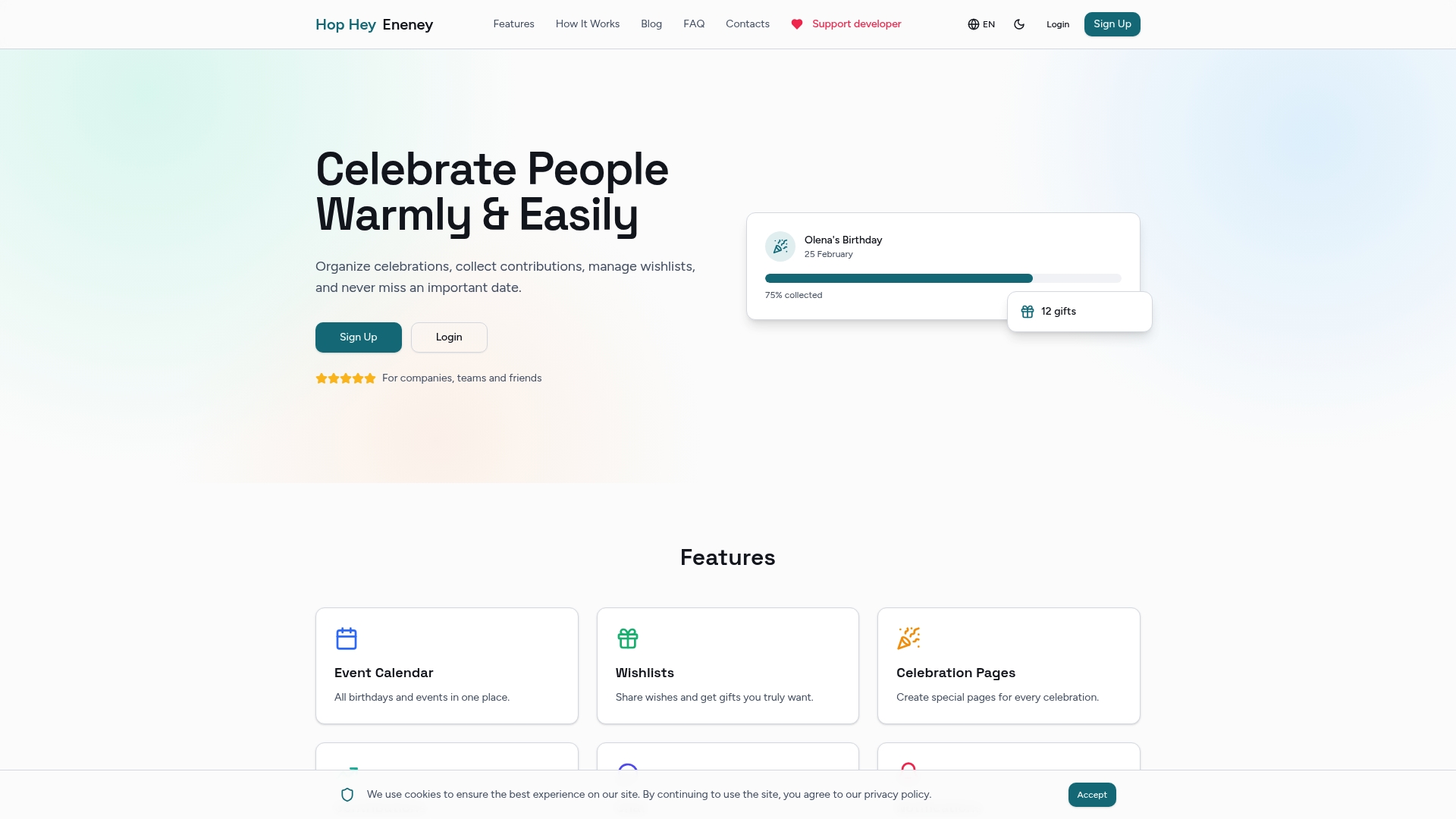
Hophey is built for exactly this problem. The platform lets HR teams and team leaders create private celebration pages, collect gift contributions transparently, and manage personalized wish lists, all without the person being celebrated seeing any of it. Automated reminders, multi-currency support, and Telegram notifications mean nothing falls through the cracks. If you are ready to move your workplace gift exchanges from chaotic to coordinated, Hophey gives you the structure to do it. Explore Hophey and see how it fits your team's celebration workflow.
FAQ
What is the role of wish lists at work?
Wish lists at work are structured tools that capture employee preferences for recognition, gifting, and resource needs. They reduce guesswork for managers and give employees a direct way to communicate what motivates them.
How do wish lists improve employee engagement?
Wish lists improve engagement by making recognition more personal and relevant. When employees see their stated preferences reflected in how they are celebrated or supported, trust in leadership increases.
What types of wish lists are most useful in the workplace?
The three most useful types are gift wish lists for recognition events, productivity wish lists for identifying automation opportunities, and resource wish lists for tracking tools and training needs.
How often should workplace wish lists be updated?
Quarterly updates are the standard best practice. Teams that audit wish lists on a regular schedule report significantly lower cognitive fatigue than those using static or ad-hoc lists.
How do you get employees to actually use a wish list program?
Remove friction first. Avoid mandatory signups, keep categories broad, and allow anonymous submissions where appropriate. Participation rises when the process feels voluntary and the outcomes are visible.