
TL;DR:
- Unclear event terminology causes delays, misunderstandings, and last-minute chaos in corporate event management. Standardizing key terms across procurement, program design, and live execution enhances communication, efficiency, and event success. Building a shared glossary and assigning clear ownership foster smoother workflows and stronger team credibility.
You've just received a vendor email referencing an SOW, a production cue sheet, and a session plan. Your team lead is asking about the ROS, and someone from procurement wants to know when the RFP goes out. If any of that sentence made you pause, you're not alone. Unclear or inconsistent event planning terminology is one of the most underrated sources of stress in corporate event management, causing missed deadlines, vendor misunderstandings, and last-minute chaos even in experienced HR teams. This article breaks down the essential terms you need to know and shows you how mastering them makes every event run smoother.
Table of Contents
- Why industry terminology matters in event planning
- Essential event planning terms you need to know
- Comparison: How terminology standardization streamlines event success
- Applying the language: Best practices for your next event
- Why terminology mastery is a hidden superpower for HR
- Take the guesswork out of workplace celebrations
- Frequently asked questions
Key Takeaways
| Point | Details |
|---|---|
| Standardize terminology | Using consistent event planning terms streamlines communication and reduces costly errors. |
| Master key documents | Understanding RFPs, SOWs, agendas, and production templates is essential for HR-led events. |
| Assign ownership | Designate clear responsibility for updating and sharing core documents to avoid confusion. |
| Embed best practices | Adopt a shared glossary and editable templates to create repeatable, efficient event cycles. |
Why industry terminology matters in event planning
Event planning has its own language, and when HR managers and team leads don't speak it fluently, the gaps show up fast. A vendor interprets "agenda" as a rough outline while you expected a timed session plan. Someone sends an RFP when the project needed an SOW. These aren't minor miscommunications; they're the kind of errors that delay contracts, inflate budgets, and push execution timelines off track.
The impact goes beyond paperwork. When your internal team and external vendors aren't aligned on what each document means, you end up in extra alignment meetings, rewriting briefs, and chasing approvals that should have been settled weeks earlier. According to our employee engagement guide, misaligned planning processes are one of the top reasons corporate events fail to meet their engagement goals.
The good news is that terminology confusion is fixable, and the fix is simpler than most teams expect. Standardizing three layers of terminology is the fastest path to alignment for mid-sized and large organizations:
- Procurement layer: RFP (Request for Proposal) and SOW (Statement of Work)
- Program architecture layer: Agenda and session plan
- Live execution layer: ROS (Run of Show) and production cues, with a single designated owner for updates
"For mid-sized and large HR teams, the fastest terminology alignment usually comes from standardizing three layers: procurement, program architecture, and live execution, with a single owner for updates."
When every person on your team uses these terms consistently and correctly, vendor communication becomes faster, briefings become cleaner, and event-day execution becomes predictable. That's not a small win. That's the difference between a chaotic event and a memorable one.
Essential event planning terms you need to know
Let's get specific. Here are the core terms you'll encounter at each stage of planning an HR-managed event, along with what they actually mean and who typically owns them.
The six terms every HR event planner must master
-
RFP (Request for Proposal): A formal document you send to vendors outlining your event's needs, goals, budget range, and expectations. It invites vendors to submit proposals so you can compare options. The HR or procurement lead typically owns this document. Think of it as your "job posting" for vendors.
-
SOW (Statement of Work): This is the document that comes after you've chosen a vendor. SOW defines scope, deliverables, timelines, responsibilities, and acceptance criteria in legally binding detail. It removes ambiguity from the vendor relationship. If the RFP is the job posting, the SOW is the contract.
-
Agenda: A high-level overview of the event program, showing the flow of activities for attendees. It's the document you'd share with participants before the event. Your event coordinator or communications lead typically owns this.
-
Session plan: A more detailed version of the agenda, often used internally. It breaks down each segment of the program with timing, speakers, objectives, and logistics notes. This is your internal roadmap, not the polished attendee-facing version.
-
ROS (Run of Show): A minute-by-minute timeline used by the production team and event staff on the day of the event. It includes every cue, transition, speaker change, and technical note. The event producer or on-site coordinator owns this document, and it should be treated as the single source of truth during live execution.
-
Production cues: Specific instructions embedded in the ROS that tell the AV team, lighting technicians, or stage managers exactly when to trigger a sound, switch a slide, or dim the lights. These are the operational signals that keep the live event synchronized.
Pro Tip: Build a shared glossary document that lives in your team's shared drive or project management tool. Include each term, its definition, and who owns it. New team members and vendors can reference it immediately, cutting onboarding time for every event cycle.
Here's a quick reference table to keep these terms organized:
| Term | Stage | Owner | Purpose |
|---|---|---|---|
| RFP | Pre-event, sourcing | HR or procurement lead | Solicit vendor proposals |
| SOW | Pre-event, contracting | Legal or HR lead | Define scope and deliverables |
| Agenda | Pre-event, communications | Event coordinator | Attendee-facing program overview |
| Session plan | Pre-event, internal | Program designer | Detailed internal event roadmap |
| ROS | Live execution | Event producer | Minute-by-minute live guide |
| Production cues | Live execution | AV or production team | Technical execution signals |
Understanding these celebration planning steps in sequence helps you see how each term builds on the last. You start with an RFP, move into an SOW, develop your agenda and session plan, and then translate everything into an ROS with production cues. Each document is a layer of precision added to the one before it.

If you're newer to managing corporate events, it also helps to understand what celebration planning really involves at an organizational level before diving into the documents themselves.
Comparison: How terminology standardization streamlines event success
Breaking down each term shows its power, but what happens when a team puts terminology standardization into practice versus when it doesn't?
The difference is measurable. Teams that use clear, aligned terminology move through the RFP-to-execution process faster and with significantly fewer errors. Teams that don't use standardized terms spend more time in clarification meetings, rewrite documents multiple times, and often experience scope drift, where the event gradually expands or shifts from the original brief without anyone formally approving the change.
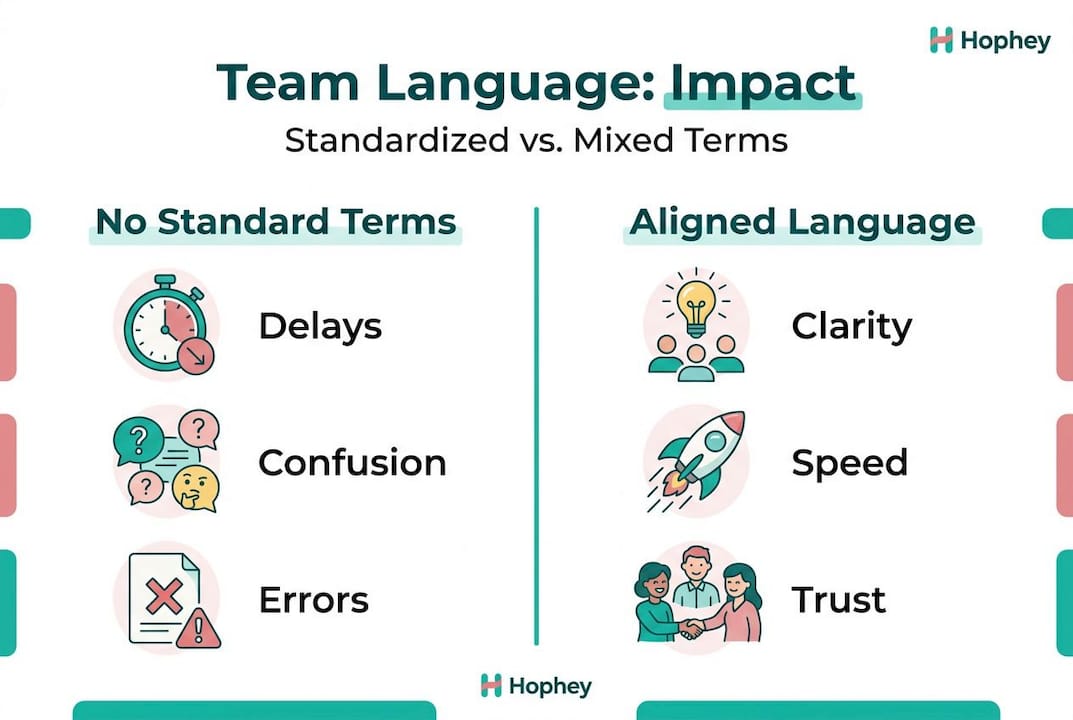
Here's a side-by-side look at what each scenario actually looks like in practice:
| Scenario | Without standardized terms | With standardized terms |
|---|---|---|
| Vendor communication | Multiple back-and-forth emails to clarify scope | Clear SOW sent once, fewer revisions needed |
| Internal briefings | Confusion about who owns what document | Defined ownership per terminology layer |
| Budget management | Scope drift leads to unplanned costs | Deliverables locked in SOW prevent overruns |
| Event-day execution | Team unsure of cues and transitions | ROS and production cues guide every moment |
| Post-event review | Hard to identify what went wrong | Clear documentation makes gaps easy to spot |
| New team onboarding | Steep learning curve each event cycle | Shared glossary accelerates alignment |
SOW is used alongside or after RFPs to define scope, goals, expectations, deliverables, timelines, and responsibilities. When teams skip or misuse this document, they lose the legal and operational clarity that protects both sides of the vendor relationship.
The numbers support this approach too. Research on project management practices suggests that standardized templates and terminology can reduce project confusion by up to 30%, saving significant time across planning cycles. For corporate celebration strategies at scale, that efficiency gain compounds quickly across multiple events per year.
Here's where to start if your team isn't yet standardized:
- Audit your last three events and identify where miscommunication occurred
- Map each gap to a specific document or term that was unclear or missing
- Create or adopt templates for your RFP, SOW, agenda, session plan, and ROS
- Assign a named owner for each document type before the next event kicks off
- Run a 30-minute team workshop to align everyone on definitions before planning begins
The investment is small. The payoff, in time saved and events delivered cleanly, is significant.
Applying the language: Best practices for your next event
After seeing the advantages of terminology standardization, here's how you can make it a repeatable part of your HR team's process.
-
Start with procurement documents. Build your RFP and SOW templates first. These are the foundation of every vendor relationship, and getting them right protects your budget and timeline from the start. Use a consistent structure across all events so vendors know exactly what to expect from your organization.
-
Assign ownership before planning begins. Every document needs a named owner, not a team or a department. One person is responsible for the RFP, one for the SOW, one for the session plan, and one for the ROS. When everyone knows who to go to for each document, decisions happen faster and nothing falls through the gaps.
-
Integrate terms into every brief. When you kick off a new event, your internal brief should use the correct terminology from the first sentence. This sets the tone for the whole planning cycle and signals to vendors and stakeholders that your team operates at a professional level.
-
Use collaborative documents for live editing. A shared Google Doc or Notion page means everyone is working from the same version of the ROS or session plan. No one is operating from an outdated printout on event day. This is especially important for flexible event planning roles, where responsibilities shift depending on the event type.
-
Review and update your glossary after every event. Post-event reviews are the right moment to add new terms you encountered, clarify definitions that caused confusion, and retire terms that no longer apply. Your glossary should be a living document, not a one-time creation.
Pro Tip: After each event, hold a 20-minute "terminology debrief" separate from your general post-event review. Ask specifically: were there any terms that caused confusion with vendors or internally? This targeted question surfaces language gaps that would otherwise get buried in broader feedback.
The fastest terminology alignment for large HR teams comes from standardizing all three layers together, not just one. Fixing only your RFP process while leaving your ROS undefined still leaves your live execution vulnerable to confusion.
Why terminology mastery is a hidden superpower for HR
Here's a perspective that most event planning guides won't give you: mastering event terminology isn't about sounding professional. It's about creating psychological safety for your entire team.
When everyone on your team knows exactly what an ROS is, who owns it, and when it gets finalized, no one is operating in uncertainty on event day. That certainty reduces anxiety, prevents the last-minute scrambles that burn people out, and creates the kind of calm, confident execution that makes HR look like a strategic function rather than a logistics department.
There's also a trust dimension that's easy to overlook. When your team uses precise language consistently, vendors take you more seriously. Executives see a structured, professional operation. Employees experience events that feel intentional and well-organized. All of that builds credibility for HR as a function, and credibility is what gets you budget approval for the next event.
The uncomfortable truth is that many HR teams treat event terminology as a nice-to-have rather than a core competency. They improvise document names, assign vague ownership, and wonder why every event cycle feels like starting from scratch. The teams that invest in event planning trends and standardized language don't just run better events. They build institutional knowledge that makes every future event faster and easier to execute.
Shared language is the foundation of shared understanding. And shared understanding is what turns a group of stressed planners into a high-performing event team.
Take the guesswork out of workplace celebrations
Ready to put your mastery of event planning terms to work for your next team event? Understanding the language is the first step. Having the right tools to execute is the second.
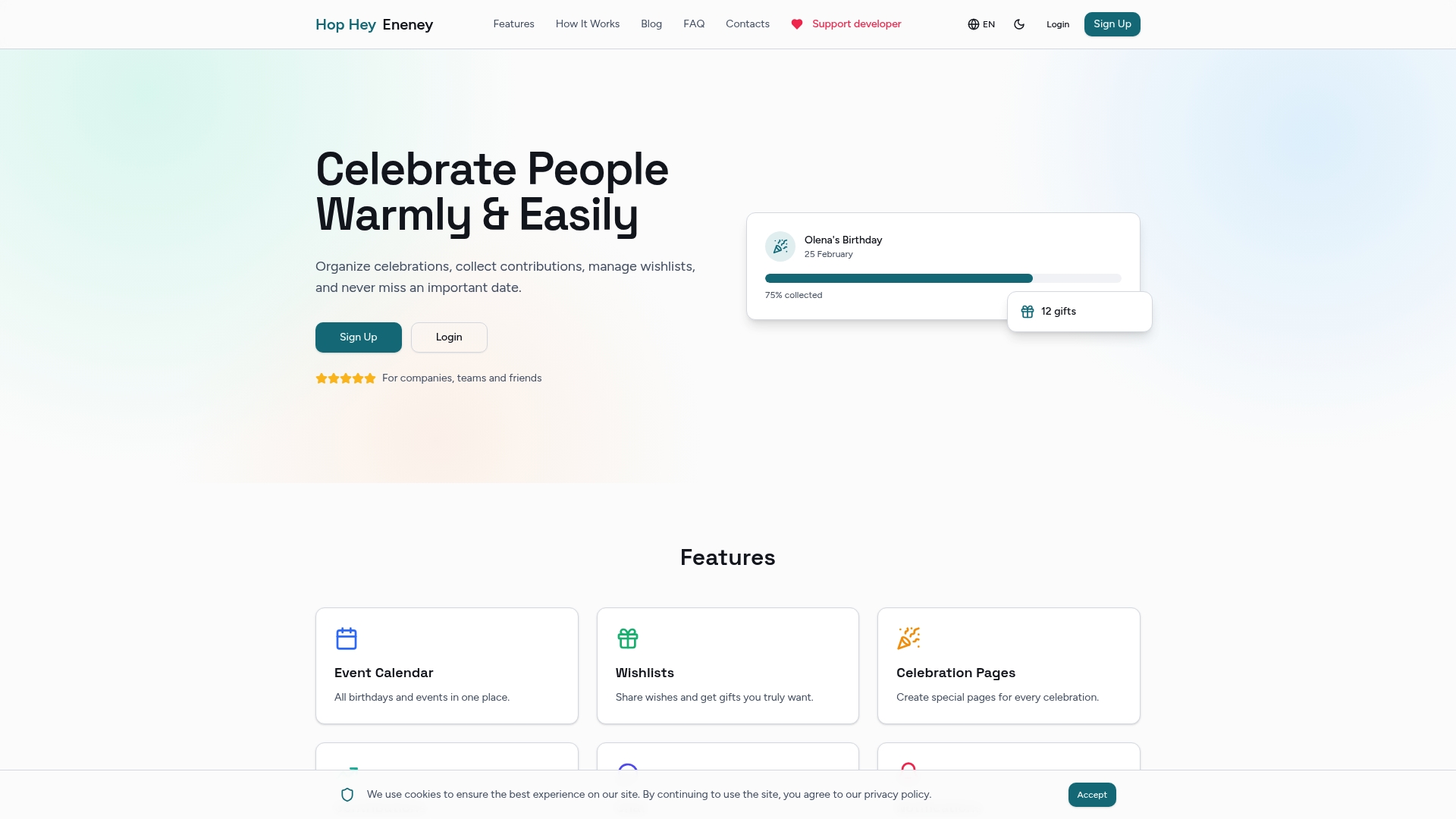
Streamline celebration planning with Hop Hey Eneney, a platform built specifically for HR teams and team leads who want to organize meaningful workplace celebrations without the chaos. From shared event calendars and private celebration pages to transparent gift fund collection and real-time Telegram notifications, every feature is designed around how modern HR teams actually work. You've already got the terminology down. Now let the platform handle the coordination, so you can focus on what actually matters: creating experiences your team will remember.
Frequently asked questions
What is an RFP in event planning?
An RFP is a Request for Proposal, a formal document used to solicit event proposals from vendors by outlining your event's needs, goals, and budget. RFP is standard language in venue and vendor contracting across the events industry.
How is a Statement of Work (SOW) different from an RFP?
An RFP invites vendors to submit proposals, while an SOW is a legally binding document that locks in scope, deliverables, timelines, and responsibilities after a vendor is selected. SOW defines scope and deliverables in a way that protects both parties throughout the project.
What is a Run of Show (ROS)?
A Run of Show is a minute-by-minute guide used by event staff and production teams during live execution to keep every activity, cue, and transition on schedule. It's the single source of truth on event day.
Why should HR teams standardize event planning terms?
Standardizing terms reduces errors, speeds up planning cycles, and creates clear accountability for every document and decision. Standardizing all three terminology layers across procurement, program design, and live execution is the fastest way to improve event outcomes.
When should an HR team create a shared glossary?
The best time to create a shared glossary is before your next event kicks off, but it's never too late to start. Build it once, update it after every event, and it becomes one of the most valuable tools in your planning toolkit.