
TL;DR:
- Online celebration tools streamline event planning and boost attendee engagement through automation and real-time updates. They also cut costs significantly by eliminating venue and material expenses and increase lead generation. Using centralized hubs and early adoption improves coordination, reduces stress, and creates lasting team memories.
Online celebration tools are digital platforms that centralize event planning, automate coordination, and enrich social connections across in-person, remote, and hybrid settings. The core benefits of online celebration tools include reduced planning stress, higher attendee engagement, measurable cost savings, and tighter team collaboration. Platforms like Cvent, Envitely, and Party Checklist each address a different layer of the planning process, from shared checklists to live event hubs. Whether you are an HR manager organizing quarterly recognition events or a friend group planning a surprise birthday, celebration management software removes the chaos that kills momentum before the first invitation goes out.
How do online celebration tools improve event planning efficiency?
Digital celebration platforms reduce planning anxiety by shifting the memory burden out of your head and into an automated system. Digital party checklists reduce planning anxiety by 70%, driven by real-time collaboration and automated reminders. That number reflects a real psychological shift: when deadlines and tasks live in a shared system, you stop carrying the mental weight of remembering everything yourself.
The most common failure point in group event planning is silent divergence. Two people update the same task separately, and nobody catches the conflict until the day of the event. Shared digital checklists prevent this divergence by maintaining a single source of truth, with task assignment and progress tracking visible to every collaborator.
The online party planning benefits go beyond checklists. Automated reminders notify vendors, guests, and co-planners at preset intervals. Deadline tracking surfaces overdue tasks before they become crises. Tools like Party Checklist let teams filter tasks by owner, category, or due date, so nothing falls through the gaps.
Key efficiency gains from digital celebration platforms:
- Real-time task updates prevent double-booking and conflicting instructions
- Automated reminders replace manual follow-up emails and texts
- Centralized deadline tracking surfaces risks before they become problems
- Role-based task assignment clarifies who owns each action item
- Version control keeps all planners working from the same current plan
Pro Tip: Set up your shared checklist at least three weeks before the event date. Teams that start early catch vendor conflicts and budget gaps while there is still time to fix them.
What features of digital celebration platforms boost attendee engagement?
Attendee engagement is the metric most event planners underestimate. Getting people to show up is one challenge. Keeping them active and connected throughout the event is another. Mobile event apps act as the home base for attendees, providing session selection, live agenda updates, and networking through direct messaging tools. Cvent's platform, for example, gives organizers real-time engagement metrics so they can adjust pacing or content mid-event.
The data on virtual interaction is clear. 75% of attendees use chat features during live virtual events, and 60% watch session recordings afterward to stay engaged. Those numbers show that engagement does not end when the live session closes. Post-event archives and asynchronous messages extend the social life of any celebration well beyond the event itself.
Features that drive the strongest participation include:
- Live chat and Q&A tools that give every attendee a voice, not just the loudest ones in the room
- Polling and reaction features that create real-time feedback loops between hosts and guests
- Session recordings and archives that let people revisit moments and share highlights
- Networking hubs that connect attendees with shared interests before and after the event
- Pre-event messaging that builds anticipation and reduces no-show rates
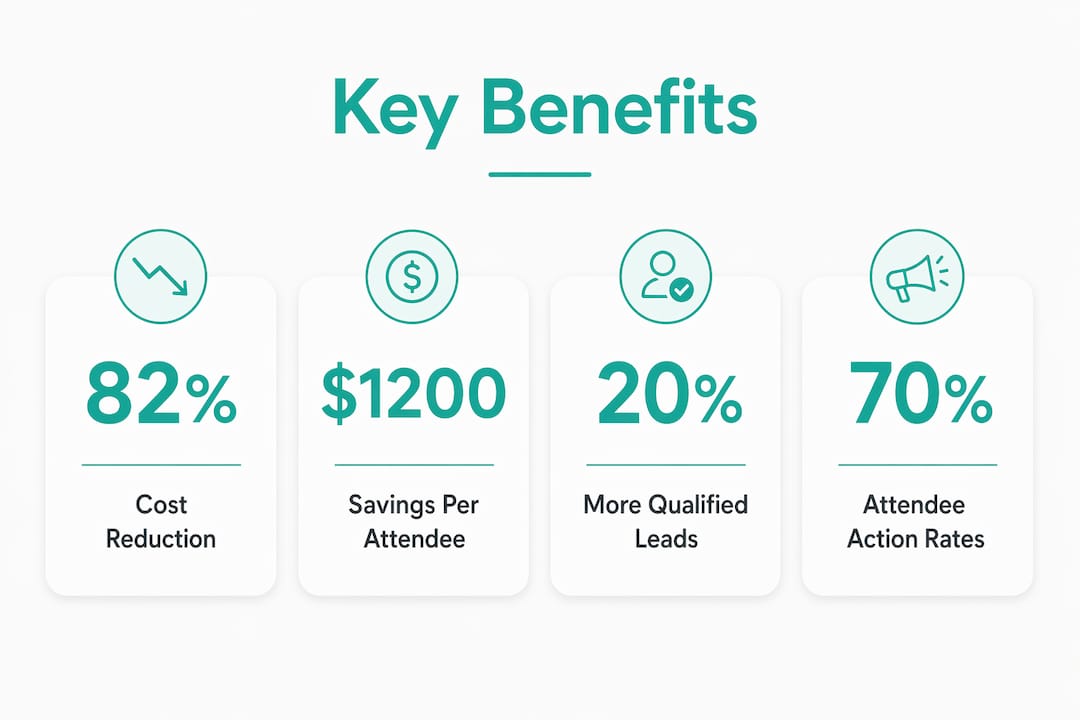
The social connection benefit is not just a nice-to-have. 70% of attendees take action, such as sign-ups or follow-up outreach, within 48 hours of a virtual event. That follow-through rate reflects genuine engagement, not passive attendance. For remote and hybrid team celebrations, these features are the difference between a forgettable video call and a memorable shared experience.
How do online celebration tools deliver cost savings and ROI?
The financial case for virtual and digital celebration tools is one of the strongest arguments for adoption. Virtual events cut production costs by 82% compared to in-person events and deliver 17% higher ROI. That gap exists because digital formats eliminate venue rental, catering, printed materials, and on-site staffing.
The per-attendee savings are significant. Companies save $1,200 per attendee on travel and logistics costs with virtual events. For a team of 50 people spread across multiple cities, that math adds up fast.
| Metric | Virtual Events | In-Person Events |
|---|---|---|
| Production cost reduction | 82% lower | Baseline |
| ROI advantage | 17% higher | Baseline |
| Cost per lead | 66% lower | Baseline |
| Savings per attendee | $1,200 | $0 |
| Sponsor ROI boost | 300% via content shelf-life | Limited to event day |
The lead generation advantage is equally compelling. Virtual event formats generate 20% more qualified leads at 66% lower cost per lead than physical events. Sponsors see a 300% boost in ROI through the extended digital shelf-life of recorded content. A single well-produced virtual celebration can generate value for weeks after the event date.
For HR teams managing corporate celebration strategies, these numbers justify moving recurring recognition events to digital platforms. The savings on logistics alone can fund more frequent, higher-quality celebrations throughout the year.
How do online tools support team coordination among multiple planners?
Multi-planner events are where traditional methods break down fastest. Email threads diverge. Spreadsheets get saved locally. Someone updates the guest list without telling anyone else. The result is a planning process that creates more stress than it relieves.
Centralized event coordination reduces cognitive load and eliminates the risk of outdated instructions reaching attendees across time zones and platforms. Envitely's event hub model, for example, keeps schedules, announcements, and guest information in one live location. Changes appear in real-time for every planner and attendee simultaneously.

The coordination benefits compound when teams are distributed. Remote planners working across time zones need a system that does not rely on synchronous communication. A shared event hub with live updates means a planner in Chicago and a co-planner in London are always looking at the same current version of the plan.
Here is a practical workflow for multi-planner coordination:
- Create a single shared event hub before any tasks are assigned. This becomes the only source of truth.
- Assign tasks with clear owners and due dates so accountability is visible to the whole team.
- Set automated reminders at 14 days, 7 days, and 48 hours before the event.
- Use a live update feed to broadcast changes instead of sending individual messages.
- Archive the completed event so the team has a reference template for future celebrations.
Pro Tip: Before your event goes live, run a five-minute sync where every planner confirms their assigned tasks are complete. This single check catches 90% of last-minute surprises.
The connection between celebration software and team culture is well documented. Teams that use structured coordination tools report stronger follow-through and less post-event friction. The tool does not just organize the event. It builds the habit of organized collaboration.
Key Takeaways
Online celebration tools deliver the strongest results when teams adopt them early, assign clear ownership, and use centralized hubs as the single source of truth for every planning decision.
| Point | Details |
|---|---|
| Planning anxiety drops significantly | Digital checklists with automated reminders reduce planning anxiety by 70%. |
| Attendee engagement extends beyond the event | 60% of attendees watch recordings post-event, extending social connection past the live date. |
| Cost savings are measurable and large | Virtual events save $1,200 per attendee and cut production costs by 82%. |
| Centralized hubs prevent team divergence | A single live event hub eliminates conflicting instructions across distributed planners. |
| Lead generation improves with digital formats | Virtual events generate 20% more qualified leads at 66% lower cost per lead. |
What I have learned from using celebration tools across teams
The biggest mistake I see teams make is treating celebration software as a last-minute logistics fix. They adopt a tool two days before the event, import a guest list, and wonder why it does not reduce their stress. The real value of these platforms shows up when you start using them three to four weeks out, when there is still time to catch conflicts and adjust.
The second thing I have learned is that the social layer matters more than most planners expect. The best celebration tools are not just task managers. They are connection infrastructure. Pre-event messaging builds anticipation. Post-event archives give people something to revisit and share. Online celebration tools work best as a connection layer that complements real-life interaction, not a replacement for it. That framing changes how you use them.
The teams I have seen get the most out of these platforms are the ones who treat every event as a template for the next one. They archive their checklists, note what worked, and start the next celebration with a head start. Over time, the tool does not just reduce stress for one event. It builds an institutional memory for how your team celebrates well.
— Konstantin
Hophey: a practical platform for team celebrations
Coordinating a celebration across a team or friend group requires more than a shared calendar. It requires a system that handles the full picture: event tracking, gift coordination, private communication, and contribution management.
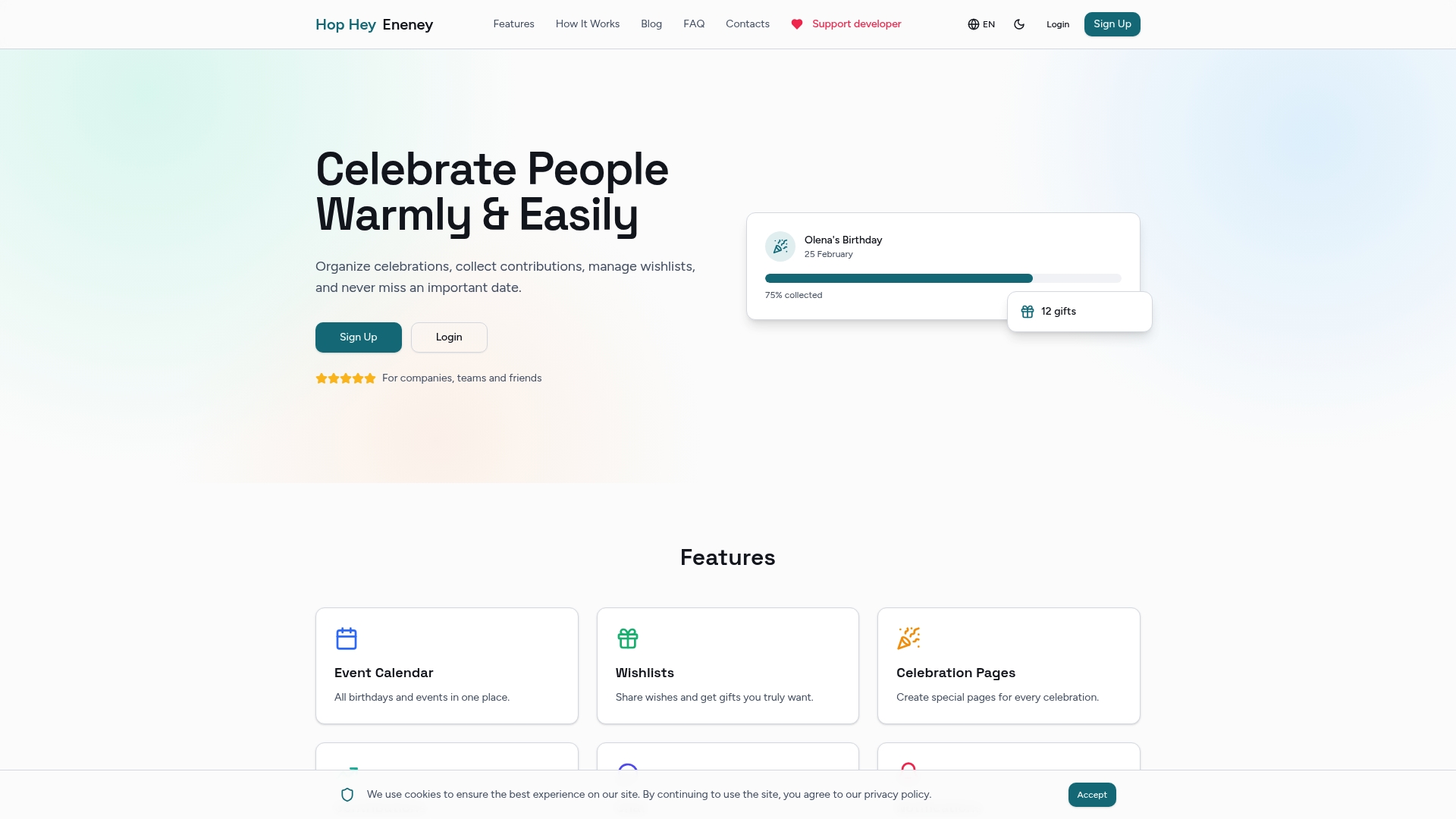
Hophey brings all of those functions into one place. The platform lets teams create private celebration pages, collect gift contributions transparently, manage wish lists, and coordinate through a dedicated chat without involving the person being celebrated. Automated reminders, Telegram notifications, and multi-currency support (UAH, USD, and EUR) make it practical for distributed teams. HR departments use Hophey to automate employee recognition. Friend groups use it to organize surprise parties without the usual chaos. If you want celebrations that actually come together, start with Hophey and see how much simpler the whole process becomes.
FAQ
What are the main benefits of online celebration tools?
Online celebration tools centralize planning, automate reminders, and reduce coordination errors across distributed teams. The core advantages include lower planning stress, higher attendee engagement, and measurable cost savings compared to traditional methods.
How much do virtual events save compared to in-person events?
Virtual events cut production costs by 82% and save approximately $1,200 per attendee on travel and logistics. They also deliver 17% higher ROI than equivalent in-person events.
Why use celebration software for team events?
Celebration software gives every planner access to the same live information, preventing the silent divergence that causes last-minute confusion. It also automates reminders and tracks task ownership, which reduces the coordination burden on any single person.
How do digital platforms improve attendee engagement?
Features like live chat, Q&A, polling, and session recordings keep attendees active before, during, and after the event. Research shows 70% of virtual event attendees take a follow-up action within 48 hours of the event.
What features should I look for in a digital celebration platform?
The most useful features are real-time task collaboration, automated reminders, centralized communication, role-based access, and post-event archives. Platforms like Hophey add gift coordination and private chat to cover the full celebration workflow.