
TL;DR:
- Coordinated gift giving involves organizing contributors to deliver well-timed, meaningful gifts with clear roles and deadlines. It reduces stress, prevents logistical failures, and enhances emotional impact by aligning timing and preferences efficiently. Assigning one person as the organizer is essential for success, ensuring smooth coordination regardless of group size.
Coordinated gift giving is the practice of organizing multiple contributors to collectively provide a thoughtful, well-timed gift that maximizes emotional impact and minimizes stress for everyone involved. Why coordinated gift giving matters becomes clear the moment you watch a group scramble to buy duplicate presents or miss a milestone entirely because no one took charge. 36% of consumers report financial stress tied to festive expenses. Coordination directly addresses that pressure by replacing chaos with clarity, shared purpose, and intention.
Why coordinated gift giving matters for stress and logistics
Uncoordinated group gifting creates a specific kind of anxiety that researchers have now documented. Buying for sharing triggers more anxiety than buying for yourself, a finding drawn from seven experiments with more than 2,000 participants. The core driver is uncertainty: when you do not know what others prefer or what they have already bought, every decision feels risky.

This anxiety compounds quickly in group settings. Without a single point of coordination, contributors second-guess their choices, organizers chase payments through scattered text threads, and the recipient ends up with three of the same item. The logistical breakdown is not a personality problem. It is a structural one.
The fix is structural too. Assigning one organizer with a single plan and timeline removes the ambiguity that fuels anxiety. That person owns the budget, the deadline, and the communication. Everyone else has a clear, lightweight role.
- One organizer, one plan. A single person tracks contributions, sets the deadline, and makes the final purchase decision.
- Preference sharing upfront. Collecting wish list items or gift preferences before contributions open eliminates guesswork.
- A fixed deadline. Open-ended collection windows invite procrastination. A hard date creates accountability.
- A transparent tracker. A shared spreadsheet, sign-up sheet, or dedicated platform shows who has contributed and how much remains.
- A backup plan. If contributions fall short, the organizer adjusts the gift rather than chasing stragglers indefinitely.
Pro Tip: Ask the recipient's close friend or partner to share two or three specific preferences before you open contributions. Concrete options reduce contributor hesitation and speed up collection by days.
What are the social and emotional benefits of group gifting?
Gift giving functions as social technology, a mechanism groups use to mark important life thresholds together. Birthdays, weddings, retirements, and promotions all carry ritual weight. A coordinated group gift amplifies that weight because it signals collective recognition, not just individual goodwill.
The timing of that signal matters as much as the gift itself. Aligning the gift exchange with the actual milestone event strengthens its ritual message. A gift that arrives two weeks after a wedding or a birthday feels like an afterthought, even when the item is generous. Shared timing tells the recipient: we planned this for you, together, right now.
"Mindful gifting is about intentional care rather than restricting giving, with meaning extending beyond monetary value to impact both giver and receiver." — University of Stirling researchers
The psychology behind this is well established. Gifts temporarily suspend self-defense barriers between giver and receiver, creating a moment of genuine openness and recognition. A coordinated group gift multiplies that effect. It tells the recipient that multiple people invested attention and care at the same time. That is a qualitatively different experience from receiving one item from one person.
Mindful gifting research, synthesized from 85 articles, confirms that intention and awareness matter more than expense. Coordination is the mechanism that makes intention visible. When contributors align on a shared goal, a budget, and a timeline, the resulting gift carries the weight of collective care rather than collective convenience.
How do you organize a successful group gift?
Successful group gift coordination follows a clear sequence of roles and decisions. Skipping any step creates the exact confusion that makes group gifting frustrating. The separation of organizer and contributor roles is the single most important structural choice. When everyone is equally responsible, no one is actually responsible.
- Appoint one organizer. This person sets the budget range, collects contributions, and makes the final purchase. They are not a committee.
- Gather preferences early. Ask the recipient's inner circle for wish list items or gift categories before announcing the collection to the wider group.
- Set a contribution amount and deadline. Specific numbers reduce friction. "Contribute $20 by friday the 14th" outperforms "chip in whatever you can."
- Use a tracking tool. Sign-up sheets, shared spreadsheets, or platforms like Hophey give every contributor visibility into progress without requiring the organizer to send constant updates.
- Confirm the purchase window. Build in two to three days between the contribution deadline and the event date. Last-minute shipping kills otherwise well-planned gifts.
- Communicate the outcome. Tell contributors what was bought and when it will be delivered. Closing the loop builds trust for the next group gift.
Pro Tip: For workplace gifts, keep contribution amounts optional within a stated range rather than fixed. This respects salary differences and increases participation rates across the full team.
The table below compares two common approaches to group gift coordination.
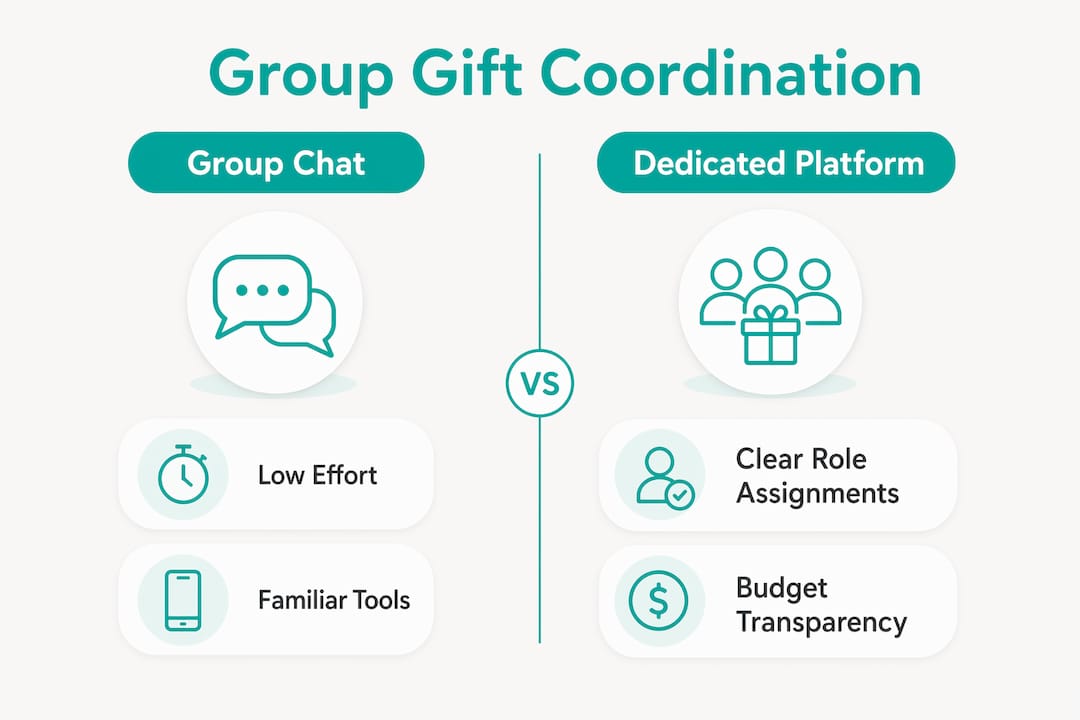
| Approach | Strengths | Weaknesses |
|---|---|---|
| Group chat coordination | Low setup effort, familiar tools | No tracking, easy to lose messages, payment confusion |
| Dedicated coordination platform | Transparent tracking, clear roles, automated reminders | Requires brief onboarding for contributors |
For recurring events like annual birthdays or team milestones, a dedicated platform pays back its setup cost quickly. For a one-time gift among close friends, a shared spreadsheet with a clear deadline works well. The gift contribution workflow you choose should match the size and frequency of your group's gifting needs.
What challenges does coordination solve in group gifting?
Group gifting without structure produces predictable failures. Understanding them makes the case for coordination concrete rather than abstract.
- Duplicate purchases. Without a shared list, two contributors buy the same item. The recipient receives redundancy instead of generosity.
- Payment confusion. Informal collection through Venmo, cash, or bank transfers with no tracker creates disputes about who paid and how much.
- Responsibility overlap. When multiple people believe someone else is handling the purchase, nothing gets bought. This is responsibility anxiety in its most damaging form.
- Timing mismatches. A gift that arrives after the milestone loses most of its emotional value, regardless of quality.
- Budget drift. Without a stated target, some contributors give $10 and others give $50, creating awkwardness and an underfunded gift.
Transparent tracking systems and clear role assignments address every item on that list. Visibility of budgets and checklists reduces blame cycles and keeps collaboration calm. The psychology of gift giving confirms that coordination makes gifts feel intentional rather than accidental. Intentional gifts build trust. Accidental ones erode it.
The emotional risk in group gifting is real. When a gift misses the mark because no one coordinated preferences, the recipient notices. Worse, contributors feel the failure too. Coordination is not administrative overhead. It is emotional risk management. Platforms built for group gift organization reduce that risk by making the process visible and structured from the start.
Key Takeaways
Coordinated gift giving reduces anxiety, prevents logistical failures, and amplifies the emotional impact of group celebrations by aligning timing, preferences, and contributor roles into one clear plan.
| Point | Details |
|---|---|
| Coordination reduces anxiety | Shared purchasing creates measurable anxiety; one organizer with a clear plan removes the uncertainty driving it. |
| Timing amplifies impact | Aligning the gift exchange with the milestone event strengthens its ritual and relational significance. |
| Mindful intention beats expense | Research confirms that care and awareness matter more than cost in creating meaningful gift experiences. |
| Role clarity prevents failure | Separating organizer and contributor roles eliminates responsibility overlap and decision paralysis. |
| Transparency builds trust | Shared trackers and visible budgets keep contributors calm and prevent blame when things shift. |
What I've learned from watching group gifts go wrong
I have seen more group gifts collapse in the final 48 hours than in the planning stage. The pattern is always the same: a group chat, good intentions, no single owner, and a deadline that everyone assumed someone else was tracking. The gift either arrives late, misses the mark, or never materializes at all.
What changed my thinking was realizing that coordination is not about control. It is about giving everyone permission to participate without carrying the full weight of the decision. When one person owns the logistics, everyone else can focus on the part that actually matters: showing up and contributing something meaningful.
The research on mindful gifting reinforced what I had already observed. People do not remember the price of a gift. They remember whether it felt considered. Coordination is what makes a gift feel considered, because it forces the group to slow down, agree on a direction, and act together with intention.
The groups that get this right share one habit: they assign a real person with real authority to own the process. Not a committee. Not a rotating responsibility. One person, one plan, one outcome. That single decision removes more friction than any tool or checklist ever will. Tools help, but structure is the foundation.
— Konstantin
How Hophey makes coordinated gifting easier
Planning a group gift for a birthday, wedding, or team milestone takes real coordination. Hophey is built specifically for that task.
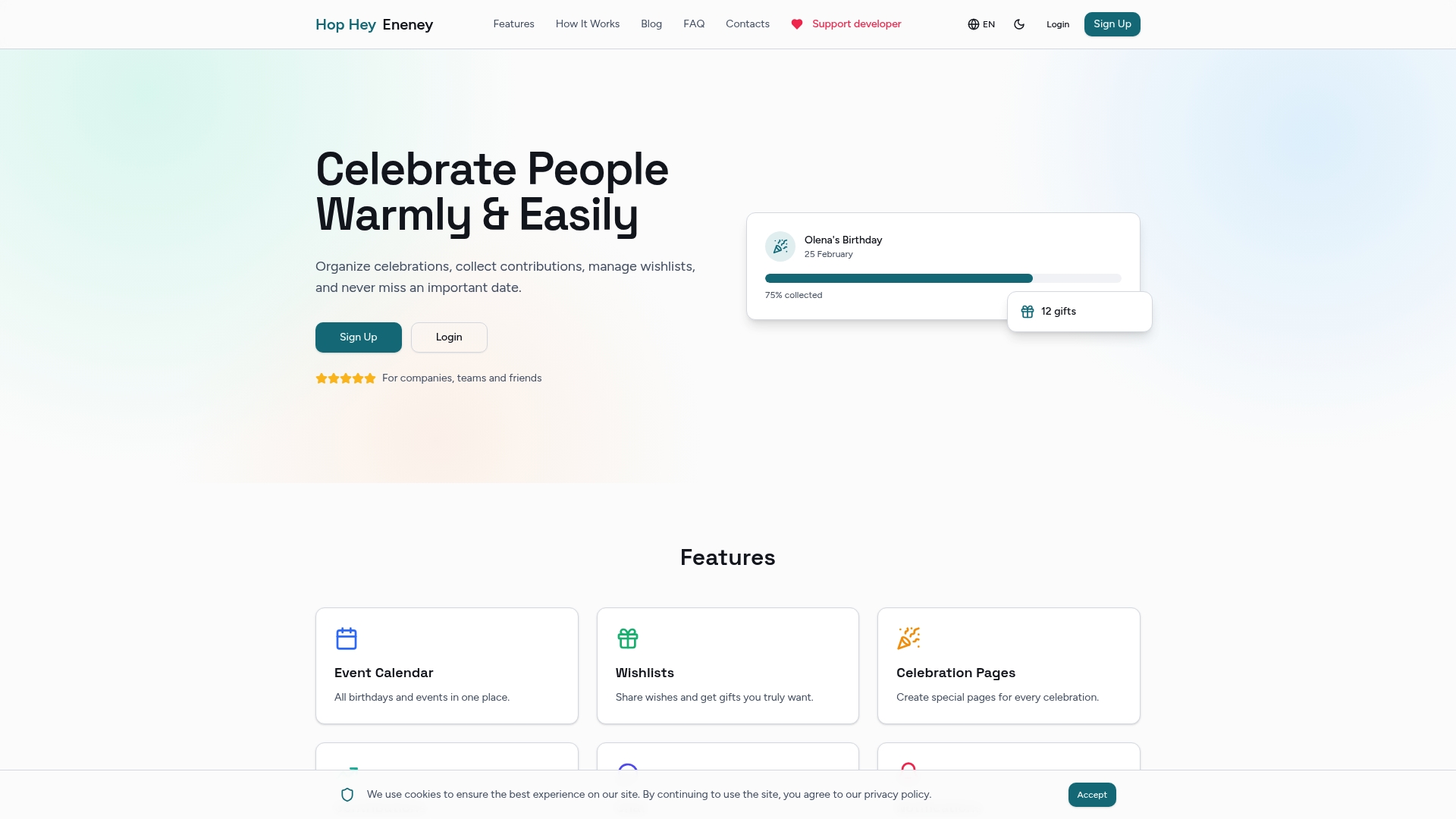
Hophey gives organizers a private celebration page where contributors can see the goal, track the collected amount in real time, and communicate without involving the person being celebrated. Automated reminders handle the follow-up so the organizer does not spend the week before the event chasing payments. The platform supports multi-currency contributions in UAH, USD, and EUR, making it practical for remote teams and international friend groups alike. If you are planning a celebration and want the gift to land on time and feel genuinely coordinated, start with Hophey and remove the chaos before it starts.
FAQ
What is coordinated gift giving?
Coordinated gift giving is the practice of organizing multiple contributors to collectively fund and deliver a single, well-timed gift. It replaces informal group chats with clear roles, shared budgets, and a defined deadline.
Why does group gift giving cause anxiety?
Buying for sharing creates more anxiety than buying for yourself because of uncertainty about others' preferences and overlapping responsibilities. A single organizer with a clear plan directly reduces that anxiety.
How many people should be involved in a group gift?
Group size is less important than role clarity. Whether the group has 5 or 50 contributors, assigning one organizer to own the budget, timeline, and purchase decision prevents confusion at any scale.
What tools help with group gift coordination?
Sign-up sheets and shared spreadsheets work for simple, one-time gifts. For recurring team events or larger groups, dedicated platforms like Hophey offer real-time contribution tracking, automated reminders, and private communication channels.
Does the timing of a group gift really matter?
Timing is critical. Displaced gift timing weakens the ritual significance of a milestone, even when the gift itself is generous. Delivering the gift at the actual event maximizes its emotional and relational impact.