
TL;DR:
- A gift contribution workflow is a structured process that simplifies collecting funds, tracking participation, and managing group gifts for workplace celebrations. Using digital platforms enhances efficiency, maintains privacy, and ensures transparency without spoiling surprises, while also ensuring gift cards are properly taxed. Proper planning and adherence to tax rules prevent complications and streamline the entire process for coordinators and recipients.
A gift contribution workflow is a coordinated process for collecting funds, tracking participation, and executing group gifts in workplace or group celebrations. Without a defined process, coordinators spend hours chasing payments, reconciling spreadsheets, and managing last-minute surprises. The right workflow eliminates that chaos. This guide covers every stage of an effective gift donation workflow, from locking your recipient list to closing the contribution pool, plus the tax rules that catch most HR teams off guard in 2026.
What are the essential steps in a gift contribution workflow?
A reliable gift contribution workflow starts with confirming your recipient list, budget, and deadline before a single dollar is collected. Skipping this step is the single most common reason group gifts run late or over budget.
Step 1: Define the purpose and lock the recipient list. Decide whether the gift marks a birthday, work anniversary, retirement, or team milestone. Confirm the final recipient count before opening any collection. Adding names after contributions start forces awkward recalculations.
Step 2: Set a per-person budget and a hard deadline. Divide your target gift amount by the number of contributors to set a clear ask. Assign a specific closing date for contributions, not a vague "end of the week." A hard cutoff mirrors the batch-style thinking used in nonprofit gift processing checklists, where pools are reconciled precisely before any order is placed.
Step 3: Centralize collection through one digital link or platform. Send a single payment link or platform invitation to all contributors. Multiple payment methods (Venmo, bank transfer, cash) create reconciliation nightmares. One channel means one source of truth for your gift tracking management.
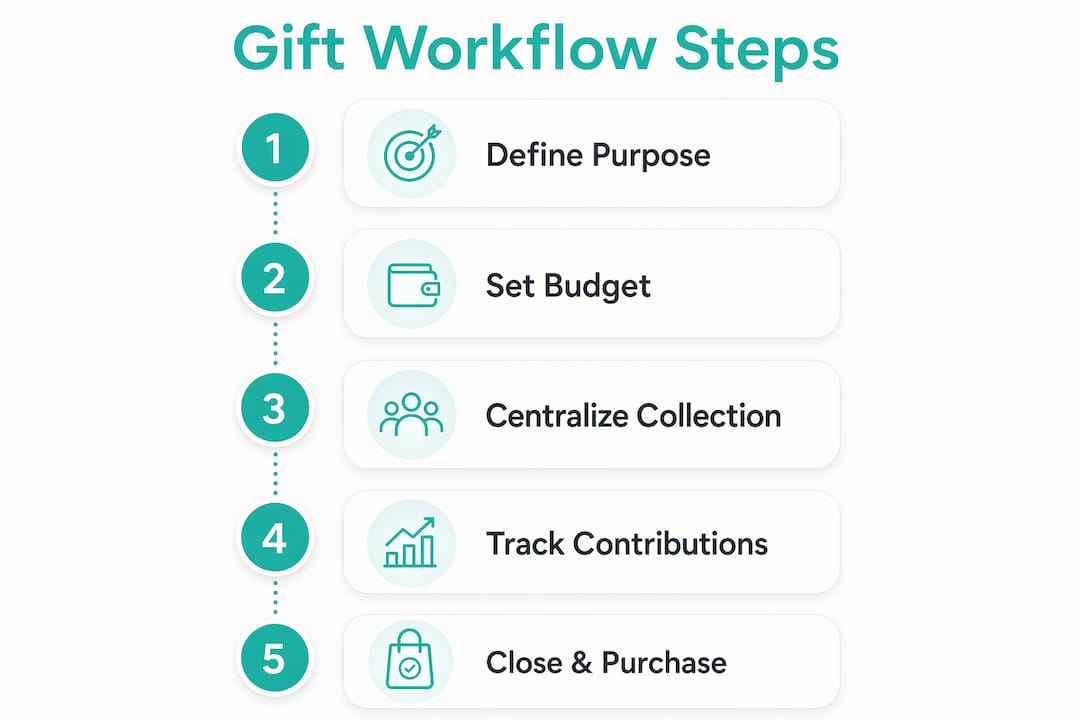
Step 4: Track contributions in real time against your target total. Use a dashboard or shared tracker that shows the running total without revealing individual amounts publicly. Transparency about the total builds momentum. Pressure on individuals kills goodwill.

Step 5: Close the pool, purchase the gift, and report back. Once the deadline passes, finalize the total, place the order, and send a brief summary to all contributors. Acknowledgment closes the loop and builds trust for the next collection.
Pro Tip: Set your contribution deadline two days before you actually need the funds. That buffer covers late payers and payment processing delays without derailing delivery.
How do digital platforms transform the gift donation workflow?
Digital gifting platforms reduce setup and execution time from weeks to a single afternoon. That is not a minor efficiency gain. For HR teams managing dozens of employee milestones per year, it is the difference between a manageable process and a constant fire drill.
Here is what a modern digital gift tracking management workflow looks like in practice:
- Recipient upload. Coordinators upload a CSV of recipients or add them manually. The platform generates individual invitation links automatically.
- Automated invitations. Contributors receive an email or Telegram notification with a direct link to contribute. No coordinator needs to manually message 30 people.
- Self-service address input. Recipients enter their own shipping address, eliminating the privacy problem of coordinators collecting home addresses.
- Real-time dashboard. The coordinator sees a live total of contributions and who has paid, without needing a spreadsheet. Platforms record all contributors and amounts, enabling automated thank-you reporting without extra work.
- Automated reminders. The system sends one or two reminders before the deadline, removing the coordinator from the awkward role of chaser.
The contrast with traditional bulk gifting is stark. Traditional methods require sourcing vendors, collecting addresses, coordinating shipping, and manually tracking payments across weeks. Digital platforms compress that entire process.
Pro Tip: When evaluating platforms for your donation processing system, check whether the tool separates coordinator and recipient views. If a recipient can accidentally see the gift selection or contribution total, the surprise is gone.
For teams managing workplace gift exchanges at scale, digital platforms also support multi-organization environments and role-based permissions, so a department head cannot accidentally see what their own team is planning for them.
What are the tax rules for gift cards in group gift workflows?
Gift cards are taxable compensation. Full stop. HR tax guidance for 2026 confirms that cash equivalents, including gift cards, are always taxable with no de minimis exception. This surprises most coordinators who assume a $25 gift card is too small to matter.
IRS Publication 15-B is explicit: there is no dollar threshold below which a gift card escapes taxation. A $10 gift card carries the same reporting obligation as a $500 one. HR teams that treat small gift cards as tax-free perks are creating quiet compliance risk.
The rule is simple: if it can be exchanged for cash or used like cash, it is taxable compensation and must be included in the employee's wages.
Here is what that means for your workflow:
- Document every gift card distribution. Record the recipient, date, amount, and occasion. This documentation supports payroll reporting and protects the organization during audits.
- Coordinate with payroll before distributing. Gift card values need to be added to the employee's gross wages for the relevant pay period. Doing this after the fact creates correction headaches.
- Know the exception for item-specific vouchers. A voucher redeemable only for a specific item (a turkey, a company-branded product) may qualify as a de minimis fringe benefit. A general-purpose gift card does not.
- Avoid the common misconception. HR teams often mistakenly treat small gift cards as tax-free. The IRS does not recognize a small-amount exception for cash equivalents.
For coordinators building a repeatable charitable contribution process or employee recognition program, the safest approach is to treat every gift card as taxable from day one and build that assumption into your budget. You can review popular digital gift card options that work well for employee rewards, but always confirm the tax treatment with your payroll team first.
How do you keep contributions transparent without spoiling the surprise?
Separating coordinator-facing tracking from recipient-facing communication is the core design principle of any privacy-respecting gift workflow. Modern workflows keep gift tracking private to coordinators and contributors, while the recipient sees only the surprise gift upon delivery.
This separation requires deliberate choices at every stage.
Communication cadence matters more than most coordinators realize. A planned messaging cadence of one initial ask and a single reminder before the deadline reduces coordinator workload and avoids the social pressure that makes group gifting feel coercive. After one reminder, stop chasing. Non-contributors have made their choice.
Role separation protects the surprise. Assign one coordinator who manages the contribution pool and another who handles the actual gift selection and delivery. When the same person does both, details leak. In smaller teams where one person must do both, use platform features that hide the gift selection from the recipient's view entirely.
Transparent totals build participation. Showing contributors the running total (without individual amounts) creates social momentum. People are more likely to contribute when they can see the pool growing. Hiding the total entirely tends to reduce participation.
Remote and multi-location teams need extra structure. For distributed teams, use a platform that supports collecting funds for group gifts across time zones and currencies. A coordinator in New York should not be manually converting contributions from a colleague in London.
After the gift is delivered, use the contributor list from your dashboard to send personalized thank-you acknowledgments. This step closes the loop, reinforces participation, and makes the next collection easier to organize.
Key takeaways
A structured gift contribution workflow reduces coordinator burden, prevents budget overruns, and keeps celebrations genuinely surprising for recipients.
| Point | Details |
|---|---|
| Lock the recipient list first | Confirm final counts before opening any contribution pool to avoid mid-process recalculations. |
| Use one collection channel | A single digital link or platform eliminates reconciliation errors across multiple payment methods. |
| Treat gift cards as taxable | IRS Publication 15-B confirms no de minimis exception exists for gift cards; coordinate with payroll before distributing. |
| Separate coordinator and recipient views | Keep gift selection and contribution totals hidden from recipients to protect the surprise. |
| Close with a report | Send contributors a brief summary after delivery to build trust and encourage future participation. |
Why most coordinators are still doing this the hard way
I have watched the coordinator role shift dramatically over the past several years. The teams that struggle most are not the ones with the smallest budgets. They are the ones still running group gifts through a shared Google Sheet and a group chat.
The real cost of manual coordination is not the time spent chasing payments. It is the social friction. When a coordinator has to personally message someone three times about a $20 contribution, the relationship takes a small but real hit. Multiply that across a dozen events per year and you have a coordinator who quietly dreads every upcoming birthday.
The shift to digital platforms changes that dynamic entirely. The coordinator becomes an overseer, not a chaser. The platform sends reminders. The dashboard shows the total. The coordinator's job becomes approving the final purchase, not managing a spreadsheet.
What I still see teams get wrong, even with good tools, is the planning phase. Locking the recipient list and the budget before opening the collection is not a bureaucratic step. It is the step that prevents every downstream problem. I have seen well-intentioned coordinators open a contribution pool before confirming who is actually in the group, then spend two days adjusting the target amount as names get added and removed.
The tax piece also catches teams off guard every single year. The assumption that a small gift card is too minor to report is wrong, and it is the kind of mistake that creates real compliance exposure. Build the taxable treatment into your workflow from the start, not as an afterthought.
Build a documented, repeatable process. Write it down. The next coordinator should not have to reinvent this from scratch.
— Konstantin
Run your next celebration on Hophey
Managing a group gift should not require a project manager's skill set. Hophey is built specifically for teams, HR departments, and event coordinators who need a structured way to collect contributions, track participation, and keep celebrations private until the right moment.
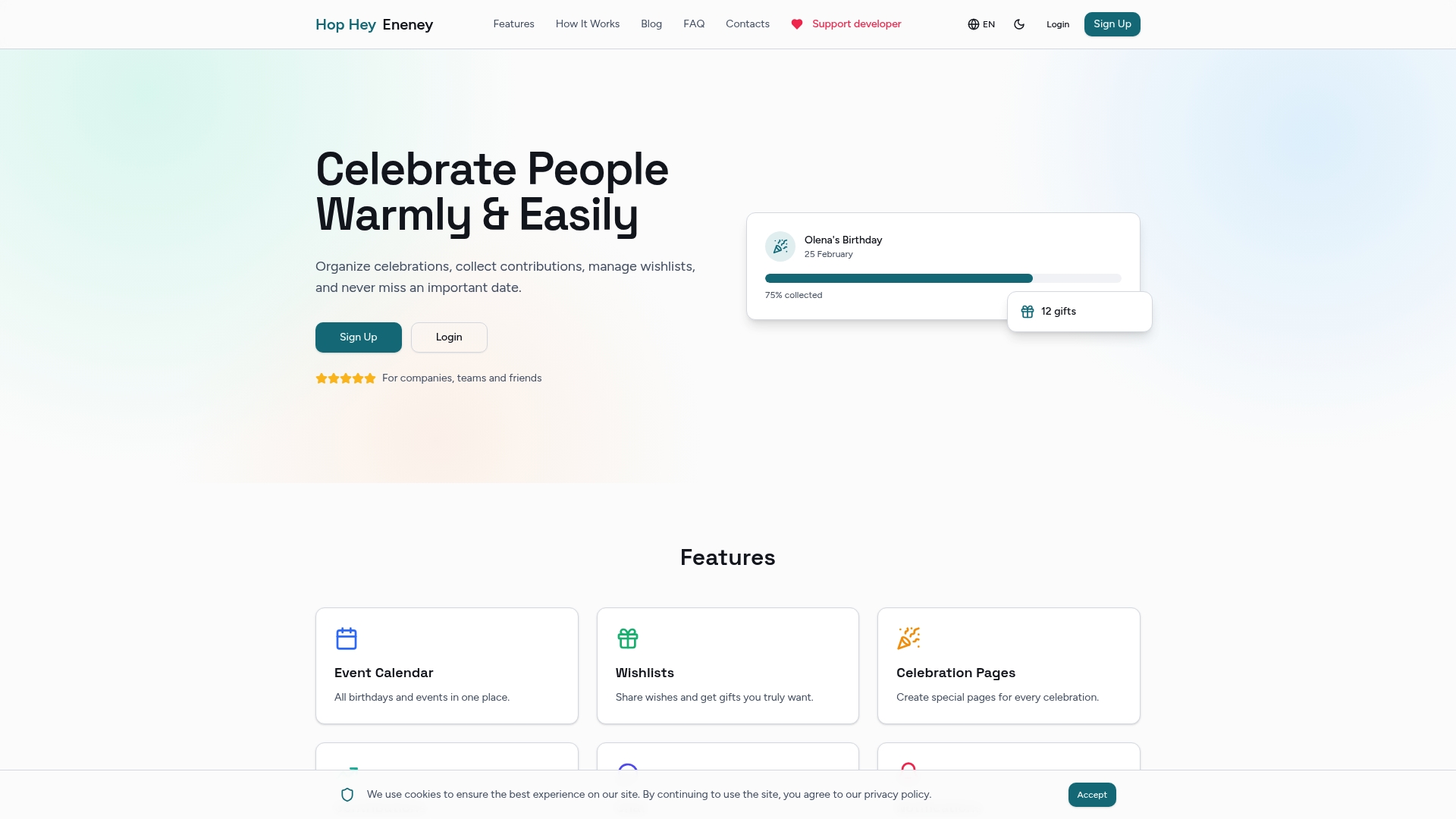
Hophey combines real-time contribution tracking, automated reminders, multi-currency support (UAH, USD, EUR), and private chat coordination in one place. Remote teams, multi-department organizations, and friend groups all use it to remove the manual work from group gifting. If your team has more than a few celebrations per year, a dedicated platform pays for itself in coordinator time alone. Start organizing your next celebration and see how much simpler the whole process becomes.
FAQ
What is a gift contribution workflow?
A gift contribution workflow is a structured process for collecting, tracking, and fulfilling group gifts in workplace or social settings. It covers every stage from defining the recipient and budget through closing the contribution pool and delivering the gift.
How do i track contributions without revealing individual amounts?
Use a platform or shared dashboard that displays the running total but hides individual contributor amounts. This approach, recommended in centralized gifting guides, builds participation momentum without creating social pressure.
Are gift cards taxable in employee gift programs?
Yes. IRS Publication 15-B confirms that gift cards are cash equivalents and must be included in employee wages regardless of the dollar amount. There is no de minimis exception for gift cards.
How many reminders should i send to contributors?
Send one initial ask and one reminder before the deadline. A single-reminder cadence reduces coordinator workload and avoids the social friction that comes from repeated follow-ups.
What is the fastest way to set up a group gift collection?
Digital gifting platforms allow coordinators to upload a recipient list, send automated invitations, and open a contribution pool in a single afternoon. Traditional bulk gifting methods require a minimum of 3–4 weeks for the same result.