
TL;DR:
- Peer celebration involves colleagues recognizing each other's contributions directly, fostering trust and engagement. Regular, specific, and inclusive acknowledgment improves team cohesion, performance, and psychological safety. Using simple routines like weekly shoutouts and digital tools enhances recognition and strengthens team culture.
Peer celebration is defined as the practice of individuals recognizing and appreciating each other's contributions directly, without waiting for a manager or authority figure to initiate the acknowledgment. This form of recognition, also called peer-to-peer recognition in organizational psychology, sits at the heart of high-functioning teams and close-knit social groups. Research shows that employee satisfaction correlates 23.3% more strongly with peer relationships than with manager relationships. That single finding reframes how teams should think about appreciation: the person in the next seat often matters more than the person at the top.
What is peer celebration and why does it matter?
Peer celebration matters because it captures what managers structurally cannot. A manager oversees outcomes. Peers witness the process: the late night spent fixing a broken build, the patient explanation given to a confused new hire, the creative idea floated in a side conversation that quietly shaped the whole project. That visibility is irreplaceable.

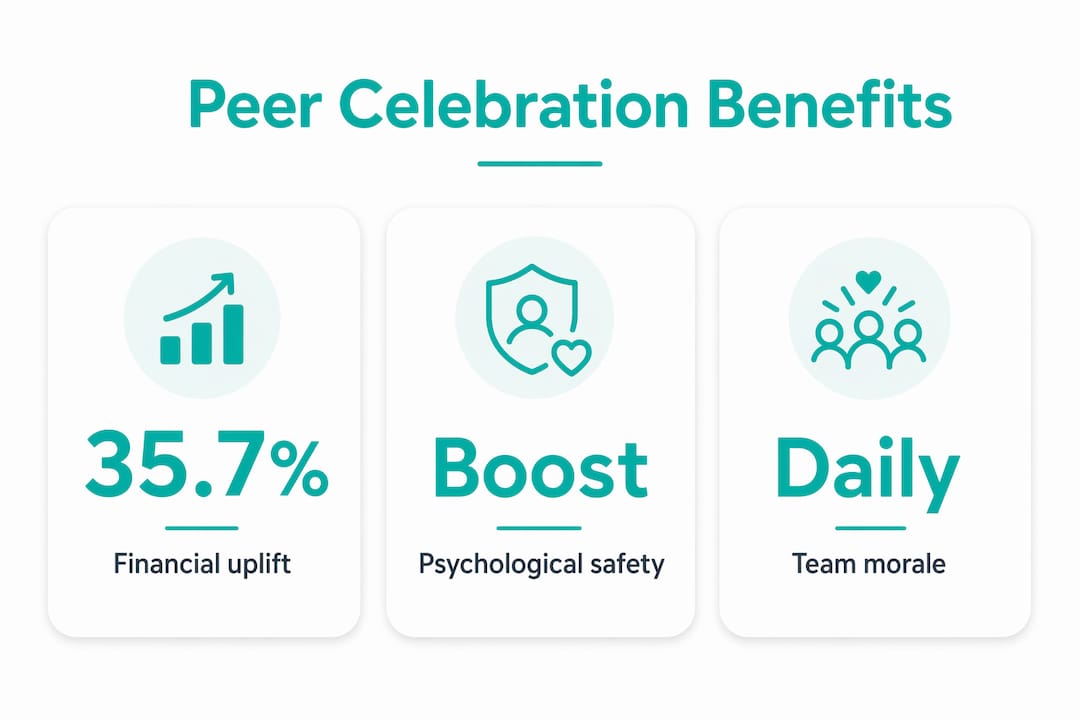
The business case is equally clear. Peer-to-peer recognition improves financial results by 35.7% compared to manager-only recognition programs. Organizations with peer-based recognition systems also see employee retention improve by 23.4%. These are not marginal gains. They represent the difference between a team that stays together and one that churns every 18 months.
Beyond the numbers, peer celebration builds psychological safety. When appreciation flows horizontally across a team, people feel safe enough to share half-formed ideas, admit mistakes, and ask for help. Peer appreciation fosters exactly this kind of collaborative culture by breaking down silos and encouraging open idea sharing. A team that celebrates each other is a team that trusts each other.
The importance of peer celebration also extends to personal settings. Friend groups that mark each other's milestones, study partners who acknowledge each other's progress, and community members who recognize volunteer contributions all experience the same core benefit: a sense of being seen and valued by the people whose opinions matter most.
How does peer celebration typically happen?
Peer celebration takes many forms, and the channel matters as much as the message. The most common formats include:
- Verbal shoutouts in team meetings or huddles, where a colleague names a specific contribution out loud
- Private messages sent directly to a peer, often more meaningful for introverted team members
- Digital badges or points awarded through recognition platforms, creating a visible and shareable record
- Handwritten notes, which carry weight precisely because they require deliberate effort
- Peer nominations for awards or spotlights, which add a layer of formal acknowledgment to informal appreciation
- Group celebrations organized around milestones like project completions, work anniversaries, or personal life events
Public and private recognition serve different purposes. Some people thrive on public acknowledgment. Others find it uncomfortable. Flexible recognition channels improve both comfort and impact, so the best peer celebration programs offer both options rather than defaulting to one.
In personal settings, peer celebration looks like throwing a surprise party for a friend's promotion, organizing a group gift for a colleague's new baby, or simply sending a voice note to say "I noticed how hard you worked on that, and it paid off." The format is less important than the intention behind it.
Pro Tip: When giving a peer shoutout in a meeting, name the specific action and its effect on the team. "You stayed late to finish the client deck, and it landed us the contract" lands far harder than "great job this week."
What are best practices for effective peer celebration?
Effective peer celebration is specific, timely, and genuine. Generic praise erodes trust over time. Specific recognition messages detail what was done, what impact it had, and why it matters to the team or project. That specificity is what separates a meaningful acknowledgment from a hollow one.
A practical framework for writing a strong peer recognition message follows three steps:
- Name the observable behavior. Describe exactly what the person did, not a vague impression of their attitude. "You rewrote the onboarding guide from scratch" is observable. "You're always so helpful" is not.
- State the impact. Connect the behavior to a real outcome. "That guide cut new hire ramp time by two weeks" gives the recognition weight and context.
- Explain why it matters. Tie the contribution to a shared goal or value. "That's exactly the kind of initiative that makes this team better for everyone" closes the loop and reinforces culture.
Recognition fatigue is a real risk. Forced or performative recognition creates fatigue and erodes the credibility of the entire program. Quality beats quantity every time. One genuine, specific acknowledgment per week does more than five generic ones.
Balancing public and private recognition is also critical. Not every team member wants their name announced in an all-hands meeting. Offering both a public channel and a private option respects individual comfort levels and makes peer celebration more inclusive.
Pro Tip: Build peer celebration into existing routines rather than creating a separate process. A standing "wins" segment at the end of your weekly team meeting costs nothing and takes three minutes. That consistency compounds over months into a noticeably stronger team culture.
How can teams implement peer celebration to improve culture?
Implementation works best when peer celebration becomes a habit rather than an event. Regular peer recognition strengthens a connected, motivated workforce over time. The key word is regular. A single recognition program launch followed by silence does not change culture. Consistent, low-friction moments of appreciation do.
Peer celebration also decentralizes appreciation, scaling recognition beyond what any management layer can sustain alone. A team of 50 people has far more capacity to notice and celebrate each other than a single manager does. Building systems that activate that capacity is the real goal.
Practical steps for teams getting started:
| Implementation step | What it looks like in practice |
|---|---|
| Start with a weekly wins ritual | Reserve 5 minutes at the end of team meetings for peer shoutouts |
| Create a dedicated recognition channel | Use a Slack channel, group chat, or platform thread for ongoing peer appreciation |
| Tie recognition to team values | Ask people to tag which team value a peer's action demonstrated |
| Celebrate personal milestones too | Acknowledge birthdays, work anniversaries, and life events, not just work wins |
| Use a shared platform for group gifts | Coordinate contributions and surprises without chaos or awkward money conversations |
Remote and hybrid teams face an extra challenge: the casual "nice work" moment that happens naturally in an office does not exist on a video call. Digital tools fill that gap. Platforms that combine event tracking, group messaging, and gift coordination keep peer celebration visible and organized even when teams are spread across time zones.
Team-building activities that include structured peer recognition exercises also accelerate culture change. When people practice celebrating each other in a low-stakes environment, they carry that behavior back into daily work. Peer celebration activities like group reflection exercises, appreciation circles, and collaborative milestone events all reinforce the habit.
One underrated implementation strategy is celebrating "quiet wins." Peer recognition acts as a real-time feedback system that surfaces contributions managers often miss. The team member who mentors others informally, who writes clear documentation nobody asked for, or who de-escalates tension in a difficult meeting rarely gets formal recognition. Peer celebration is the mechanism that makes those contributions visible. For more employee recognition examples that highlight these less visible contributions, the pattern is consistent: specificity and consistency drive the most lasting impact.
Key Takeaways
Peer celebration works because it makes appreciation consistent, specific, and democratic across every level of a team or social group.
| Point | Details |
|---|---|
| Peer recognition outperforms manager-only recognition | Financial results improve by 35.7% when recognition flows peer-to-peer rather than top-down only. |
| Specificity makes recognition land | Name the exact behavior, its impact, and why it matters to avoid hollow praise. |
| Flexible channels increase inclusion | Offering both public and private recognition options respects different comfort levels. |
| Consistency beats intensity | A brief weekly wins ritual builds stronger culture than a quarterly recognition event. |
| Personal milestones count too | Celebrating birthdays, life events, and personal achievements deepens peer bonds beyond work tasks. |
Why peer celebration changed how I think about team culture
I used to believe that recognition was a management responsibility. A good manager notices good work and says so. That framing is not wrong, but it is incomplete in a way I did not fully appreciate until I watched a team transform without any change in management at all.
The shift happened when a team started a simple practice: a five-minute "wins" segment at the end of every Friday meeting. No platform, no points system, no budget. Just people naming something a colleague did that week that made a difference. Within two months, the team's communication changed. People started helping each other more visibly. Conflict dropped. New ideas surfaced faster.
What I learned is that peer celebration does not require a program. It requires permission and a small amount of structure. Most people want to acknowledge their colleagues. They just need a moment and a format that does not feel awkward.
The nuance I would add is this: peer celebration works differently across team cultures. A tight-knit startup team may thrive on public shoutouts. A more reserved engineering team may respond better to private messages and written acknowledgments. The practice has to fit the people, not the other way around. Forcing a public celebration culture onto a team that values quiet recognition produces the opposite of psychological safety.
Timing also matters more than most guides admit. Recognition given the same day as the contribution carries three times the emotional weight of recognition given a week later. The closer the acknowledgment is to the moment, the more it feels like genuine noticing rather than scheduled appreciation.
— Konstantin
How Hophey helps teams celebrate each other
Peer celebration is most effective when it is easy to act on. Hophey is a platform built specifically to remove the friction from organizing team celebrations, coordinating group gifts, and marking milestones without the chaos of group chats and split payments.
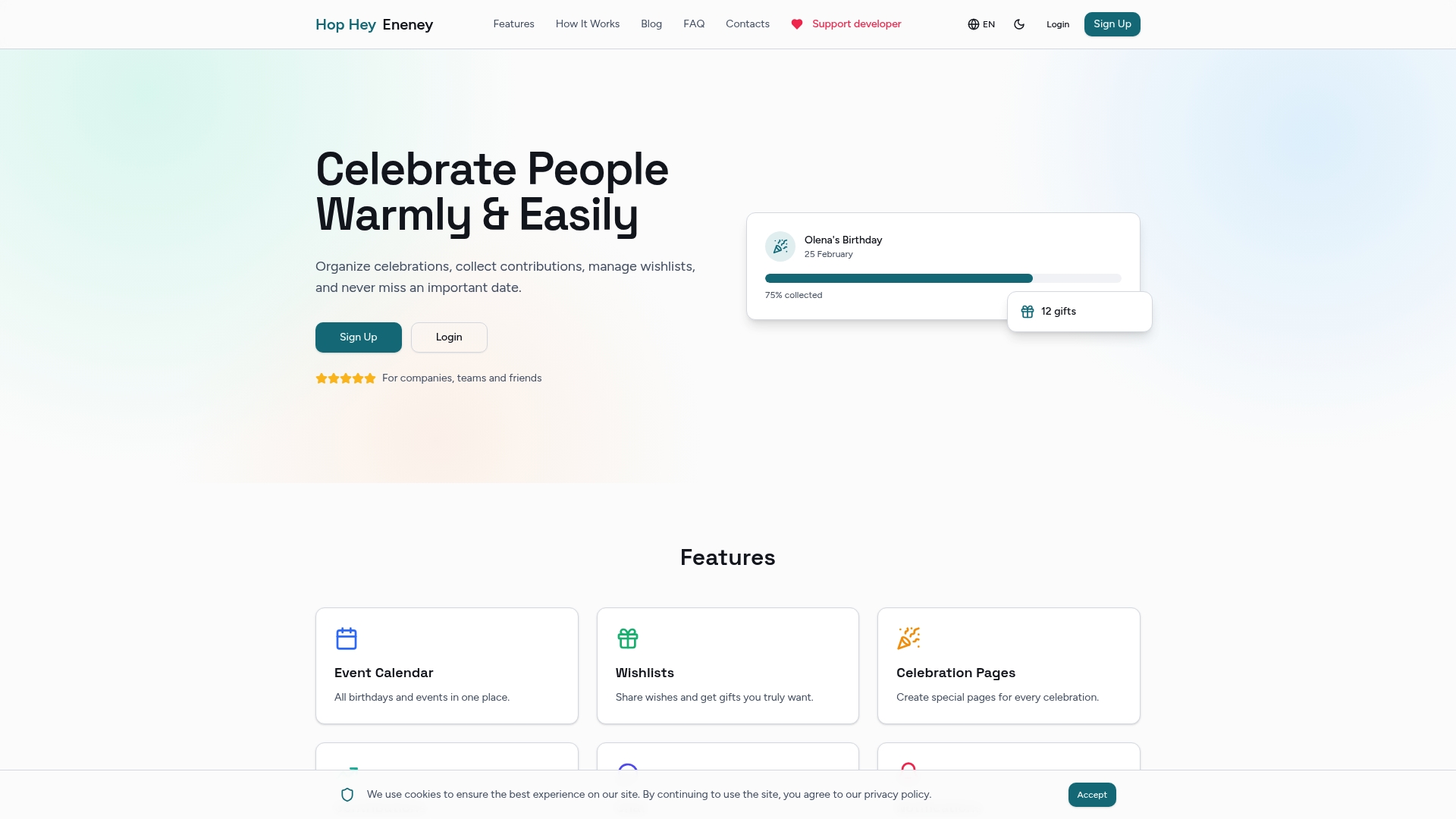
With Hophey, teams create private celebration pages, track upcoming events in a shared calendar, and collect gift contributions transparently. Every team member knows what is happening and can participate without spoiling the surprise for the person being celebrated. HR teams use Hophey to automate employee recognition across large organizations. Remote teams use it to stay connected across time zones. For any team ready to make peer recognition consistent, Hophey provides the structure to do it well.
FAQ
What is the peer celebration meaning in a workplace context?
Peer celebration in the workplace is the practice of colleagues recognizing each other's contributions directly, without requiring manager involvement. It builds morale, psychological safety, and team cohesion.
What are some examples of peer celebration?
Common examples include verbal shoutouts in team meetings, private appreciation messages, digital badges, peer nominations for awards, and group gifts organized around personal or professional milestones.
How does peer celebration differ from manager recognition?
Managers recognize outcomes. Peers witness the day-to-day effort and process, giving peer celebration unique credibility and emotional impact. Research shows satisfaction correlates more strongly with peer relationships than manager relationships.
How often should teams practice peer celebration?
Consistency matters more than frequency. A brief weekly ritual, such as a five-minute wins segment in a team meeting, builds stronger culture than occasional large recognition events.
What makes peer celebration activities effective?
Effective peer celebration activities are specific, timely, and genuine. Naming observable behaviors and their real impact makes recognition feel authentic rather than performative.