
TL;DR:
- Remote team celebrations recognize and connect employees through inclusive virtual events, boosting productivity and culture. Planning involves varied formats like award ceremonies, games, and asynchronous threads, with tools supporting coordination and personalization. Regular, small, optional celebrations foster genuine morale and build stronger team bonds across time zones.
Remote team celebrations are structured events designed to recognize, connect, and reward distributed employees across digital channels. Organizations that run consistent recognition programs report 67% productivity gains linked directly to those efforts. The top remote team celebration ideas share three traits: they prioritize inclusivity, they work across time zones, and they feel personal rather than performative. This article covers the most effective formats, how to plan them without burning out your team, and the tools that make coordination simple.
1. Virtual award ceremonies and peer recognition events

Virtual award ceremonies give remote teams a structured moment to celebrate wins publicly. The format works best when recognition comes from multiple directions: managers, peers, and even cross-functional colleagues. Layered recognition deepens emotional impact far more than a single top-down announcement.
Keep the ceremony focused. Announce categories in advance, prepare short video clips or slides for each winner, and invite teammates to submit written tributes beforehand. Reading those tributes aloud during the event adds a personal touch that generic trophies cannot replicate.
Pro Tip: Record the ceremony and post it in your team channel so members in different time zones can watch and react asynchronously.
2. Online trivia nights and game competitions
Trivia nights are among the most reliable remote team bonding activities because they require no special equipment and scale easily from five to fifty participants. Platforms like Kahoot! and Mentimeter let you build custom question sets around your company's history, industry knowledge, or pop culture.
Mix team-based rounds with individual challenges to keep energy high. Rotate who hosts each session so the experience does not always feel like a work meeting with a different label. A rotating host also surfaces natural leaders across the team.
3. Virtual happy hours with themed formats
A standard "let's all get on a call and chat" format rarely produces genuine connection. Themed happy hours work better. Pick a specific concept: a cocktail or mocktail mixing tutorial, a "show us your home office" tour, or a cooking challenge where everyone makes the same simple recipe on camera.
Themes give people something to do, which removes the awkward silence that kills unstructured social calls. Virtual happy hours and games consistently rank among the top formats for improving team connection. The theme also gives quieter team members a natural entry point into the conversation.
4. Asynchronous celebration threads and digital memory boards
Not every celebration needs a live call. Asynchronous celebration threads let team members post congratulations, photos, GIFs, and voice notes on their own schedule. This format is especially valuable for global teams spread across more than three time zones.
A digital memory board, built in tools like Miro or Notion, can collect milestone moments throughout the year. When a project ships or a teammate hits a work anniversary, the board becomes a living record of the team's shared history. That record builds culture in a way that a single Zoom call cannot.
5. Birthday and work anniversary spotlights
Personal milestones deserve personal recognition. A work anniversary spotlight can include a short video from the team, a written post in the company channel, and a small gift sent to the employee's home. Sending physical gifts ahead of a celebration creates a shared physical moment even when the team is fully remote.
The key is consistency. Recognizing every birthday and anniversary, not just those of senior staff, signals that the team values every person equally. Platforms like Hophey automate reminders and coordinate group gift contributions so no milestone slips through the cracks.
6. Virtual cooking or mixology classes
Shared experiences that produce something tangible create stronger memories than passive entertainment. A virtual cooking class, led by a professional chef over video, gives everyone a task, a result, and a story to tell afterward.
Send ingredient kits to participants in advance so the experience feels coordinated rather than improvised. This format works especially well for end-of-quarter celebrations or onboarding events where new hires need to build rapport quickly. It also works for teams that have grown tired of standard trivia formats.
7. Collaborative online playlists and digital scrapbooks
Low-effort, high-impact activities fill the gap between major celebrations. A shared Spotify playlist where everyone adds their current favorite song takes five minutes to set up and generates genuine conversation. A digital scrapbook built in Canva or Google Slides, where teammates add photos and captions from the past quarter, creates a visual record of the team's personality.
These micro-celebrations matter. Frequent, small recognitions boost morale more consistently than large events held only at the end of the year. Think of them as the connective tissue between bigger milestones.
8. Virtual escape rooms and collaborative challenges
Virtual escape rooms require communication, problem-solving, and trust, which makes them one of the best online celebration games for teams that want to bond while doing something genuinely challenging. Many providers offer custom-branded experiences with company-specific puzzles.
The debrief after the escape room matters as much as the activity itself. Ask the team what strategies worked, who stepped up unexpectedly, and what the experience revealed about how the group communicates under pressure. That conversation often produces more connection than the game did.
How to plan remote celebrations without causing Zoom fatigue
Scheduling is where most virtual team events fail. The fix is straightforward once you know the rules.
- Cap live sessions at 60–90 minutes. Optimal session length for remote events tops out at 90 minutes before fatigue sets in. Build in a break if the event runs longer.
- Find the 2–3 hour overlap window. Most global teams have at least a short window where working hours intersect. Schedule live events inside that window.
- Rotate event timing. Rotating schedules prevents the same time zone from always attending at an inconvenient hour. Track which regions hosted the last three events and adjust accordingly.
- Offer a 24–48 hour async window. Asynchronous participation lets team members who missed the live event contribute reactions, messages, and content after the fact. This keeps everyone included without requiring attendance.
- Send a calendar invite with a clear agenda. Ambiguity about what will happen on a call increases no-show rates. A one-sentence agenda per agenda item is enough.
Pro Tip: Survey your team quarterly about preferred event times and formats. Preferences shift as teams grow and time zones change.
Best practices for inclusivity in virtual team events
Inclusivity is the difference between a celebration that builds culture and one that quietly excludes. These practices close that gap.
- Make attendance optional. Optional attendance preserves the celebratory spirit. Mandatory fun is not fun. When people choose to show up, their energy is genuine.
- Design for remote-first, not remote-friendly. Prioritize remote employees in hybrid event design. If the in-person group dominates the experience, remote participants disengage quickly.
- Use polls, reactions, and chat. Not everyone is comfortable speaking on camera. Chat reactions and polls give quieter team members a way to participate without pressure.
- Recognize individuals and teams equally. Celebrating only team wins ignores individual contributions. Celebrating only individuals misses the collective effort. Alternate between both throughout the year.
- Customize to your team's culture. A team of engineers may prefer a hackathon-style celebration. A creative team may prefer a showcase. Match the format to the people, not to a generic template.
Technology that supports a smooth remote team celebration workflow
The right tools reduce coordination overhead and make celebrations feel polished rather than improvised. The table below compares key feature categories to look for when evaluating platforms.
| Feature category | What to look for |
|---|---|
| Group gift coordination | Transparent fund collection, multi-currency support, real-time contribution tracking |
| Event reminders | Automated alerts via email and messaging apps like Telegram or Slack |
| Async participation | 24–48 hour contribution windows, rich media support (photos, videos, voice notes) |
| Private coordination | Dedicated chat that excludes the person being celebrated |
| Calendar management | Shared event calendar with milestone tracking and role-based permissions |
Platforms supporting rich media and group signing make digital celebrations feel authentic. Hophey covers all five categories above, including multi-currency support in UAH, USD, and EUR, automated reminders, and private coordination channels that keep surprises intact.
Pro Tip: Choose tools that integrate with your existing communication stack. A platform your team already uses daily will see far higher adoption than a standalone app.
Key Takeaways
Consistent, inclusive remote celebrations drive measurable productivity gains and build team culture that survives distance and time zones.
| Point | Details |
|---|---|
| Frequency beats scale | Small, regular celebrations raise morale more than one large annual event. |
| Async-first design | Offer 24–48 hour participation windows to include every time zone. |
| Optional attendance | Voluntary participation keeps energy genuine and morale positive. |
| Layered recognition | Combine manager, peer, and cross-team recognition for deeper impact. |
| Use the right tools | Platforms with gift coordination, reminders, and private chat reduce planning friction. |
What I've learned from running remote celebrations that actually work
Most teams treat remote celebrations as a logistics problem. They are not. They are a culture problem dressed in a logistics costume.
The teams I have seen get this right share one habit: they celebrate small things constantly instead of saving everything for the holiday party. A shipped feature, a five-year anniversary, a new personal record on a side project. These moments cost almost nothing to acknowledge and pay back far more than their weight in goodwill.
The second thing I have noticed is that the best celebrations rarely involve the whole company at once. Smaller group events, ten people or fewer, produce more genuine connection than all-hands events where most people are passive observers. Scale is the enemy of intimacy.
The third lesson is harder to accept: the person organizing the celebration should not also be the person running it. When the HR lead or team manager is both coordinator and host, something always falls through. Separate those roles, even informally, and the quality of the event jumps immediately.
Peer recognition is the piece most teams underinvest in. When a colleague calls out your work, it lands differently than when a manager does. Build peer shoutouts into your regular celebration workflow and watch the culture shift within a quarter.
— Konstantin
Hophey makes remote team celebration coordination simple
Running a great remote celebration takes coordination across multiple people, time zones, and budgets. That coordination is where most well-intentioned events break down.
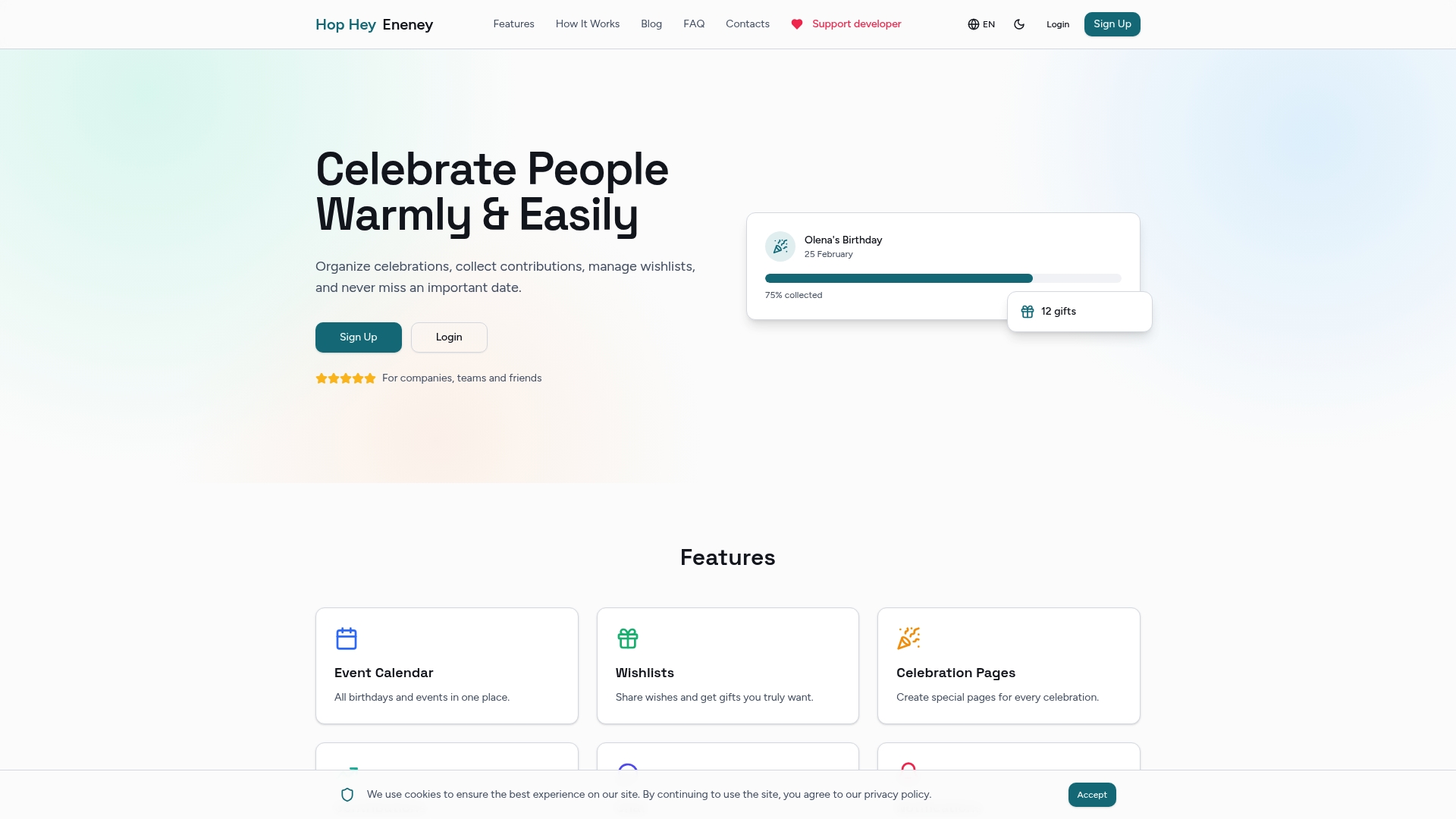
Hophey is built specifically for this problem. The platform lets HR teams and team leaders create private celebration pages, collect group gift contributions transparently, and coordinate everything in a dedicated chat that keeps the surprise intact. Automated reminders via email and Telegram mean no milestone gets missed, and multi-currency support in USD, EUR, and UAH removes friction for global teams. If you manage remote employee recognition across multiple departments or time zones, Hophey removes the chaos so you can focus on the people.
FAQ
What are remote team celebrations?
Remote team celebrations are structured events or recognition moments designed to engage and reward distributed employees through digital channels. They include virtual award ceremonies, online games, asynchronous recognition threads, and coordinated gift programs.
How long should a virtual team celebration last?
Live virtual events should run 60–90 minutes to prevent Zoom fatigue. Asynchronous participation windows of 24–48 hours allow team members in different time zones to contribute on their own schedule.
How do you make remote celebrations feel genuine?
Use layered recognition from managers and peers, personalize messages, and send physical gifts ahead of live events. Optional attendance and themed formats also increase authentic participation.
How often should remote teams celebrate?
Frequent, small celebrations throughout the year build morale more effectively than large events held only at year-end. Aim to recognize individual and team milestones at least monthly.
What tools help coordinate remote team celebrations?
Look for platforms that support group gift collection, automated reminders, async participation, and private coordination channels. Hophey combines all of these features with multi-currency support and Telegram notifications for global teams.