TL;DR:
- Team celebrations convert achievements into motivation, trust, and retention, with integrated recognition outperforming isolated events. The four core categories—events, rituals, recognition, and community activities—should be rotated based on milestones, team energy, and budget; virtual rituals offer low-cost, scalable ways to maintain engagement. Building a predictable celebration system that prioritizes specificity and team input enhances morale, especially in remote or hybrid work environments.
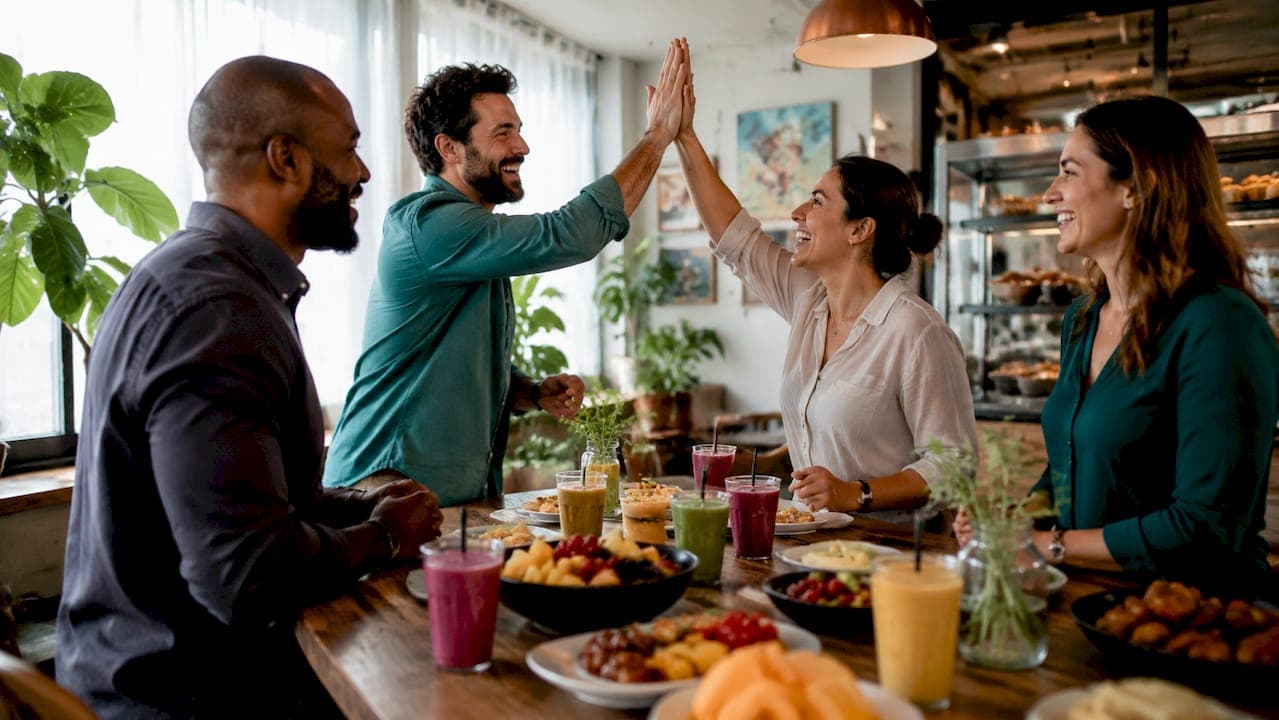
Team celebrations are structured recognition events that convert shared achievements into lasting motivation, stronger trust, and measurable retention gains. Research from O.C. Tanner's 2026 State of Employee Recognition Report shows that integrated recognition built into daily culture outperforms isolated parties by every metric that matters. The types of team celebrations you choose signal what your organization values, and that signal reaches every employee, whether they sit in a shared office or log in from a different time zone. Getting the format right is not a nice-to-have. It is a direct input to team performance.
1. Types of team celebrations: the four core categories
Before selecting a specific format, every team leader needs a working map of the celebration space. The four core categories are event-based in-person gatherings, virtual and remote-friendly rituals, recognition-focused ceremonies, and community or wellbeing activities. Each category serves a different psychological need. Events create shared memories. Rituals create consistency. Recognition ceremonies create individual visibility. Community activities create purpose. The most effective teams do not pick one and stop. They rotate across all four based on the milestone, the team's current energy, and the budget available.

2. In-person and hybrid event-based celebrations
Location-based events remain the highest-impact format for building social bonds because physical presence accelerates trust in ways that digital channels cannot fully replicate. Company-wide parties, team luncheons, open houses, and milestone dinners all fall into this category. The key planning insight from outside.so is that one anchor moment beats a packed itinerary every time. A clear start, middle, and end reduces planning stress and keeps attendance high.
Hybrid teams face a specific challenge: remote employees often feel like spectators at in-person events. The fix is designing shared experiences that work simultaneously across locations. O.C. Tanner's research confirms that virtual participation options built into company-wide events keep remote staff genuinely included rather than passively watching. Practical tactics include sending identical catering gift cards to remote employees, running a shared Spotify playlist, and opening a live video feed that remote attendees can interact with in real time.
Scaling considerations by team size:
- Teams under 15 people: a shared meal or escape room experience works without a coordinator
- Teams of 15 to 50: assign a single event owner and use a shared planning doc
- Teams over 50: split into smaller pods for the core experience, then reunite for a group moment
Pro Tip: Pick your anchor moment first, then build the rest of the event around it. A product launch toast, a team award reveal, or a group photo moment all work. Without an anchor, celebrations drift and lose energy.
3. Virtual and remote-friendly celebration rituals
Remote teams benefit most from low-pressure, pre-scripted rituals that require zero real-time decision-making. The Groove Management blog calls these end zone dances: repeatable, team-specific victory behaviors that fire automatically when a goal is hit. Examples include emoji storms in Slack, GIF parties in Microsoft Teams, victory dance cams on Zoom, themed virtual backgrounds for wins, and Slack badges tied to specific achievements.
The power of these rituals is consistency. When a team knows exactly what happens after a sprint closes or a client deal lands, the celebration becomes part of the workflow rather than an afterthought. Pre-decided rituals also remove the awkward silence that kills remote celebrations. Nobody has to ask "should we do something?" The answer is already yes, and the format is already set.
- Emoji storm: Every team member floods the Slack channel with a pre-agreed emoji the moment a goal is hit. Takes three seconds. Creates instant shared energy.
- Victory dance cam: A 60-second Zoom segment where anyone who wants to celebrates on camera. Optional but infectious.
- Slack badge system: Assign digital badges tied to specific behaviors, such as "first client close" or "bug-free sprint." Badges accumulate and become visible on profiles.
- Themed Zoom backgrounds: The whole team switches to a celebration background for the first five minutes of the post-win meeting.
- Shout-out reel: A recorded 90-second video where the team lead names specific contributions. Shared in the team channel and saved as an artifact.
Digital trophies and shout-out reels matter because they create instant artifacts that remote employees can revisit. A Slack message disappears in the feed. A pinned shout-out reel does not.
Pro Tip: Record your shout-out reels and pin them in your team channel. Remote employees who miss a live celebration can watch it later, and the recognition lands just as hard.
4. Recognition-based celebration rituals
Recognition rituals are the most research-backed category of team celebration, and the data is not subtle. Employees with frequent visible recognition have 43 times higher odds of trust, 25 times higher odds of doing great work, and 26 times higher odds of planning to stay for another year. That is not a marginal benefit. It is a structural advantage for any team that builds recognition into its regular rhythm.
The critical distinction is specificity. Todoist's research on team rituals confirms that specific praise tied to concrete actions resets the assumption that effort goes unnoticed. "Great job this quarter" does nothing. "You caught the API error that would have delayed the launch by two weeks" does everything. The more precisely you name the behavior, the more the recipient believes you actually saw it.
Recognition is a communication tool. When it names a specific action, it tells the employee that their work is visible, valued, and worth repeating. Vague praise does the opposite.
Practical formats for recognition rituals include:
- Peer nomination boards: Team members nominate each other weekly using a shared form. The top nomination gets read aloud in the Monday standup.
- Milestone badges in tools like Donut: Donut integrates with Slack to automate peer shoutouts and track recognition frequency across the team.
- Point-based reward systems: Employees earn points for recognized behaviors and redeem them for experiences or gifts.
- 1:1 recognition moments: Managers dedicate the first three minutes of every 1:1 to naming one specific thing the employee did well since the last meeting.
Gallup and Workhuman data shows that high-quality recognition makes employees 45% less likely to leave over a two-year period. High quality means personalized, authentic, and culturally embedded. A generic "Employee of the Month" plaque does not qualify.
5. Community and wellbeing-oriented celebrations
Wellbeing celebrations shift the focus from what the team achieved to who the team is. These are group activities that provide rest, social connection, and a sense of shared values. They work especially well after high-pressure delivery periods when the team needs recovery as much as recognition.
Volunteering together is one of the most effective formats in this category. O.C. Tanner's research lists corporate volunteer activities such as food bank shifts, Habitat for Humanity builds, hospital care package assembly, and pet shelter support as proven morale boosters. The mechanism is straightforward: doing something meaningful together creates a shared identity that goes beyond the job title.
Other formats in this category include:
- Group wellness events: Yoga sessions, guided meditation, or a team walk. These work in person and virtually with a shared video link.
- Peer learning days: Team members teach each other a skill they have outside of work. One person leads a cooking demo. Another runs a photography workshop. The content is irrelevant. The connection is the point.
- DEI celebration days: Recognizing cultural holidays, heritage months, or team member milestones that reflect the team's diversity. These signal that the whole person is valued, not just the employee.
- Team mentorship celebrations: Marking the end of a mentorship cycle with a shared reflection session and a small recognition moment for both mentor and mentee.
The link between altruistic activities and morale is well established. When people feel they belong to something larger than a project or a quarterly target, their engagement with the work itself rises.
6. Comparing celebration types: when to use each
The right celebration format depends on four variables: team structure, budget, frequency needs, and the specific milestone being recognized. This table maps each category against those variables to help you choose.
| Celebration type | Best for | Cost level | Frequency | Hybrid-friendly |
|---|---|---|---|---|
| In-person events | Major milestones, annual wins | Medium to high | Quarterly or less | Moderate with planning |
| Virtual rituals | Sprint wins, weekly goals | Very low | Weekly or daily | Fully inclusive |
| Recognition ceremonies | Individual and peer achievements | Low | Weekly to monthly | Fully inclusive |
| Community activities | Team recovery, culture building | Low to medium | Monthly to quarterly | Partially inclusive |
For teams new to structured celebration, virtual rituals are the lowest-risk starting point. They cost almost nothing, require no scheduling overhead, and create consistent celebration behaviors that compound over time. Once those rituals are established, layer in recognition ceremonies to add individual visibility. Then add in-person or community events for the larger milestones.
Hybrid teams get the most value from combining virtual rituals with recognition ceremonies as the weekly baseline, then using in-person events for quarterly anchors. The goal is that no employee, regardless of location, goes more than a week without seeing their team celebrate something.
Key takeaways
The most effective team celebration strategy combines frequent virtual rituals, specific recognition ceremonies, and periodic in-person or community events tailored to team structure and milestone size.
| Point | Details |
|---|---|
| Frequency beats intensity | Weekly rituals outperform annual parties for sustained motivation and retention. |
| Specificity drives recognition impact | Name the exact action, not the general outcome, to make praise land. |
| Hybrid teams need simultaneous artifacts | Digital trophies and shout-out reels keep remote employees as included as onsite ones. |
| Community activities rebuild energy | Volunteer events and peer learning days restore morale after high-pressure periods. |
| One anchor moment per event | Focused celebrations with a clear centerpiece reduce planning stress and boost attendance. |
What I've learned from watching teams celebrate badly
Most teams either over-engineer celebrations or forget them entirely. I have seen both failure modes up close, and the damage is real in both directions. Over-engineered celebrations create what I call celebration sprawl: too many activities, too many speakers, too much time, and an exhausted team that associates winning with more work. Forgotten celebrations create the quieter damage of invisible effort, where people stop going above the minimum because nobody notices when they do.
The fix is not finding the perfect celebration. It is building a repeatable system. The teams I have seen sustain high morale over multiple years are not the ones with the biggest budgets or the most creative events. They are the ones where celebration is predictable. Every sprint close has a ritual. Every major milestone has a named moment. Every individual contribution gets called out by name.
The other thing I would push back on is the assumption that celebration planning is an HR function. The best celebrations I have seen were designed by the team members themselves. When people have input into how their wins get recognized, the recognition actually lands. Handing someone a generic award they had no say in feels like a checkbox. Celebrating the way the team actually wants to celebrate feels like belonging.
Remote and hybrid work has not made celebration harder. It has made lazy celebration more obvious. The teams that figured out creative remote celebration early are now ahead on culture, retention, and engagement. The ones still waiting for everyone to be in the same room are falling behind.
— Konstantin
How Hophey makes team celebrations easier to organize
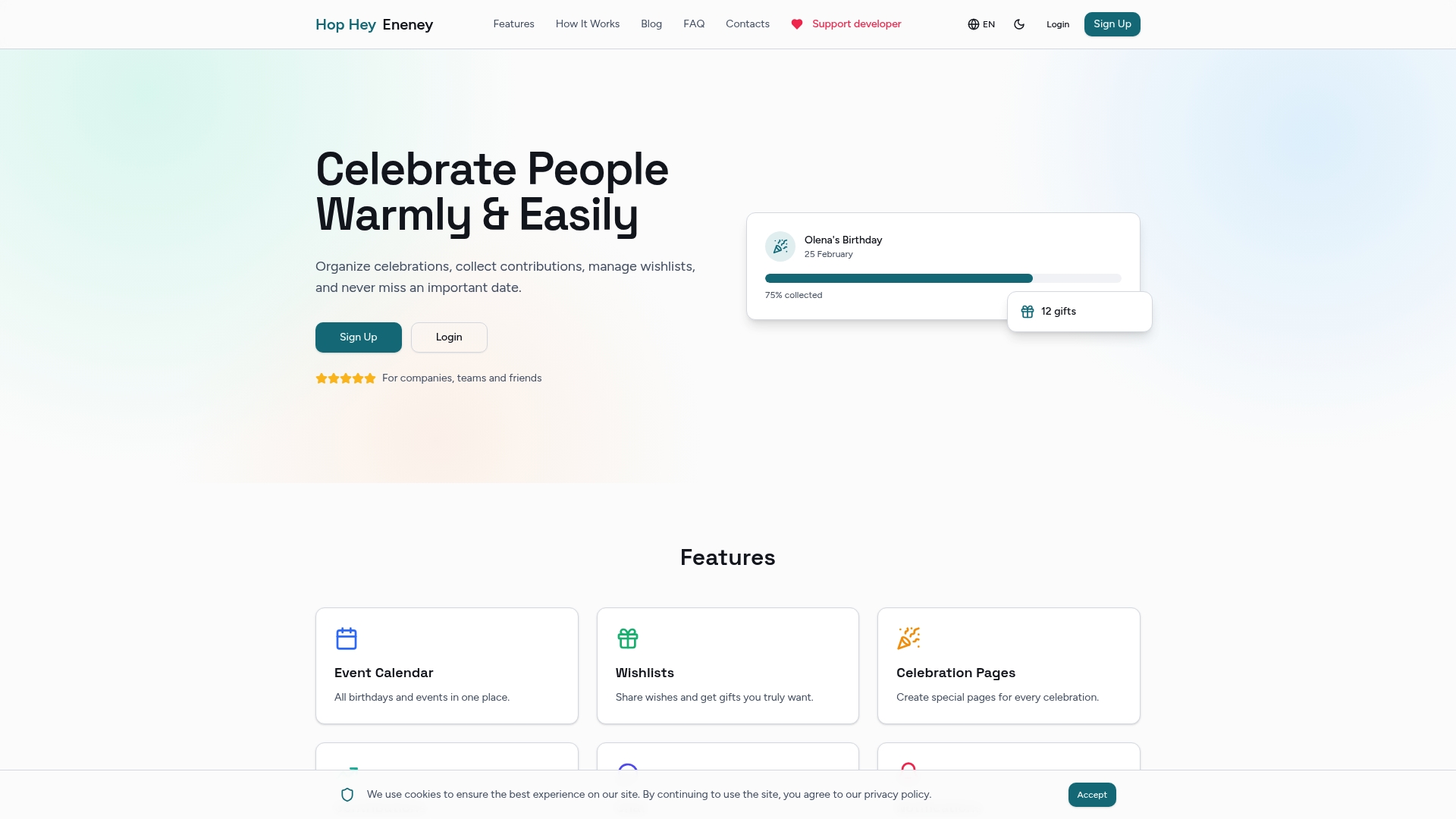
Organizing any of the celebration types above gets complicated fast, especially when you are coordinating across time zones, collecting gift contributions, and trying to keep the surprise intact. Hophey is built specifically for this problem. The platform lets you create private celebration pages, track team events in a shared calendar, collect gift funds transparently, and coordinate everything in a dedicated chat without the person being celebrated ever seeing it. For HR teams managing employee recognition celebrations at scale, Hophey handles automated reminders, multi-currency contributions, and role-based permissions so nothing falls through the cracks. Start your first celebration at hophey.gifts.
FAQ
What are the main types of team celebrations?
The four main types are in-person events, virtual rituals, recognition ceremonies, and community or wellbeing activities. Each serves a different purpose and works best at different frequencies and milestone sizes.
How often should teams celebrate wins?
Virtual rituals and peer recognition work best on a weekly cadence. In-person events and community activities fit a monthly to quarterly schedule. Research from O.C. Tanner confirms that frequent embedded recognition outperforms isolated annual events on every engagement metric.
What celebration types work best for remote teams?
Pre-scripted virtual rituals such as emoji storms, Slack badge systems, and recorded shout-out reels work best for fully remote teams. These formats require no scheduling overhead and create shareable artifacts that remote employees can revisit.
Does recognition really affect retention?
Gallup and Workhuman data shows employees who receive high-quality recognition are 45% less likely to leave over two years. High quality means personalized, specific, and culturally embedded, not a generic annual award.
How do you celebrate a team win on a tight budget?
Virtual rituals cost almost nothing and deliver consistent morale benefits. Peer nomination boards, Slack shoutouts, and recognition moments in existing meetings require zero budget and produce measurable engagement gains when done with specificity and regularity.