
TL;DR:
- Secure gift contributions use verified methods to prevent fraud, ensure compliance, and protect trust among donors. Most group gifts fall below the IRS reporting threshold, with digital security and role separation crucial for safeguarding funds. Using dedicated platforms with automation simplifies management and enhances security during the collection process.
Secure gift contributions are defined as safe, compliant methods for collecting, tracking, and distributing monetary gifts from a group of people for a shared celebration or milestone event. The term covers everything from how you accept funds to how you document them for tax purposes. The 2026 IRS annual gift tax exclusion sits at $19,000 per recipient, which means most group gifts fall well below the threshold that triggers a tax filing. Understanding gift contribution security from the start saves organizers from fraud, compliance headaches, and broken trust among contributors.
What are the fundamental security measures for gift contributions?
Separation of duties is the primary defense against internal fraud in gift processing. The person who receives funds must never be the same person who records or reconciles them. This single rule eliminates the most common path for theft in group gift situations.
Beyond role separation, digital security measures protect online collection. The three most critical controls are:
- reCAPTCHA v3 bot protection to block automated form submissions before they reach your payment processor
- AVS (Address Verification System) to confirm a contributor's billing address matches their card records
- CVV verification to confirm the contributor physically holds the card being charged
Setting a minimum contribution amount, even as low as $5, deters card testing fraud. Fraudsters use small test charges to verify stolen card numbers. A minimum threshold makes bulk testing economically pointless.
For groups collecting physical checks, the rule is immediate restrictive endorsement. Physical checks must be stamped "For Deposit Only" the moment they are opened. This prevents unauthorized cashing and preserves the IRS-accepted postmark date for record-keeping.

Pro Tip: When running a group collection, assign one person as the "receiver" and a separate person as the "recorder." Even in a small friend group, this two-person check prevents honest mistakes and eliminates any suspicion of mishandling.
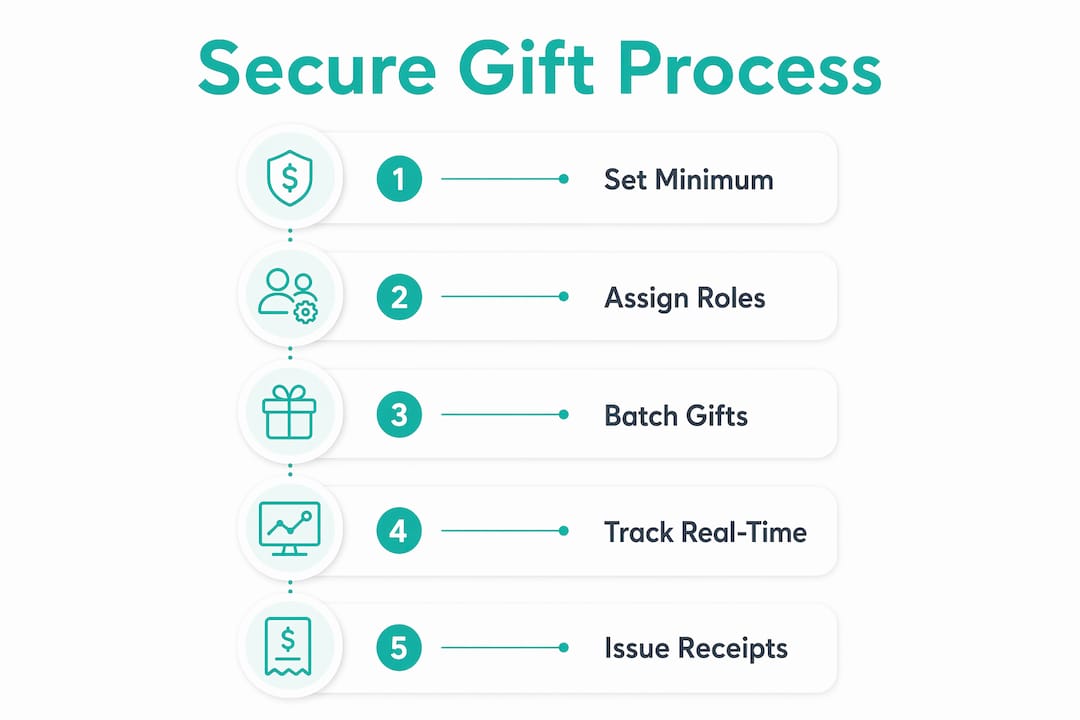
For larger collections, batching gifts with control totals and unique batch IDs improves accuracy and prevents data entry errors. Each batch gets a unique identifier, a total dollar amount, and a count of contributions. At the end of processing, the numbers must match exactly. If they do not, you find the error before it becomes a problem.
How do tax rules and reporting affect secure gift contributions?
The 2026 gift tax rules create a clear safe harbor for most group gifting situations. The annual exclusion is $19,000 per recipient, meaning any individual can give up to that amount to one person without filing a gift tax return. For a group gift pooled from 10 contributors, each giving $500, the tax implications are zero.
The table below summarizes the key thresholds organizers need to know for 2026:
| Situation | Threshold | Action Required |
|---|---|---|
| Individual gift to one recipient | Up to $19,000 | No filing required |
| Trump Account contribution | Up to $5,000 | Safe harbor applies, no filing |
| Non-cash gift contribution | Over $500 | File IRS Form 8283 |
| Non-cash gift requiring appraisal | Over $5,000 | Qualified appraisal required |
| Cash donation deduction (single filer) | Up to $1,000 | Above-the-line deduction available |
| Cash donation deduction (joint filers) | Up to $2,000 | Above-the-line deduction available |
Donors who itemize deductions face a 0.5% AGI floor on charitable deductions in 2026. Non-itemizers can deduct cash donations above the line, up to $1,000 for single filers and $2,000 for joint filers. This matters for contributors who want to claim a tax benefit from their gift.
The distinction between conditional and unconditional contributions also affects when you record and report funds. Unconditional contributions are recognized upon receipt, while conditional contributions with barriers or rights of return delay recognition until those conditions are met. For a birthday fund, contributions are typically unconditional. For a fundraising event with a refund policy, the conditional rules may apply.
Pro Tip: Send donor receipts within 48 hours of receiving a contribution. Tax-compliant receipts must include IRS-required language, note any benefits the contributor received, and confirm the amount. This protects contributors at tax time and builds goodwill for future collections.
For groups working with a charitable giving budget, understanding these thresholds upfront prevents surprises at year-end. Most personal celebration gifts never trigger a filing, but knowing the rules lets you advise contributors with confidence.
What best practices support smooth, secure coordination for group gifting?
Organizing a group gift collection without a clear structure leads to confusion, missed contributions, and awkward follow-ups. These five practices keep the process clean and the contributors confident.
-
Assign clear roles before you launch. Designate one organizer to manage the collection, one person to handle communications, and one to track the funds. Overlapping responsibilities create gaps where contributions get lost or miscounted.
-
Use a dedicated account or platform for the funds. Mixing group gift money with personal accounts creates reconciliation problems and erodes contributor trust. A separate account or a purpose-built platform keeps the funds visible and distinct.
-
Communicate transparently with all contributors. Share a running total, a deadline, and a clear goal amount. Contributors who can see progress give more consistently and follow up with others who have not yet contributed.
-
Protect the surprise. When the gift is for a colleague or friend, keep all coordination in a private channel that excludes the recipient. Platforms like Hophey create private celebration pages specifically so organizers can coordinate without the honoree seeing any messages or fund totals.
-
Thank contributors promptly and specifically. A generic "thanks everyone" message does less than a personal acknowledgment. If your organization offers matching gifts, confirm eligibility and submit matching requests before the deadline. Matching programs can double the value of a group gift at no extra cost to contributors.
For teams managing multiple events across the year, a group gift collection guide helps standardize the process so each new event does not require rebuilding the workflow from scratch.
How does technology improve secure gift contribution collection?
The right platform removes most of the manual security work from organizers. A well-configured digital collection tool handles fraud prevention, tracking, and communication automatically.
The core features to look for in any secure gifting platform include:
- Encryption in transit and at rest to protect contributor payment data from interception
- Bot protection such as invisible reCAPTCHA v3, which flags suspicious behavior based on repeated attempts and IP patterns rather than isolated transactions
- AVS and CVV checks integrated with the payment processor to verify card legitimacy at the point of entry
- Real-time contribution tracking so organizers see the running total without manually tallying spreadsheets
- Automated reminders sent to contributors who have not yet given, reducing the need for awkward personal follow-ups
Fraud monitoring deserves special attention. Platforms that detect high-velocity submissions prevent automated card testing before it drains your collection pool or triggers a payment processor review. A single card testing attack can generate dozens of failed transactions in minutes, which some processors flag as suspicious activity on your account.
Hophey addresses this directly. The platform supports real-time contribution tracking, role-based permissions, and private coordination channels, so organizers maintain full visibility without exposing sensitive details to the recipient. Multi-currency support across UAH, USD, and EUR makes it practical for international teams and remote groups. Automated email and Telegram notifications keep contributors informed without requiring the organizer to send manual updates.
For HR teams and event organizers managing recurring celebrations, a secure event fund collection system that runs automatically is far more reliable than a spreadsheet and a group chat. The technology handles the repetitive work so organizers can focus on making the event meaningful.
Pro Tip: Set a fraud monitoring alert for any single contribution that exceeds your stated maximum. Unusually large contributions sometimes indicate a data entry error or a test transaction. Catching these early prevents reconciliation problems at the end of the collection period.
Key Takeaways
Secure gift contributions require role separation, digital fraud controls, and clear tax awareness to protect both organizers and contributors throughout the collection process.
| Point | Details |
|---|---|
| Separate roles from day one | Never let the same person receive and record contributions; this single control prevents most internal fraud. |
| Apply digital security controls | Use reCAPTCHA v3, AVS, and CVV verification on any online collection form to block card testing and bot attacks. |
| Know the 2026 tax thresholds | The $19,000 annual exclusion covers most group gifts; non-cash gifts over $500 require IRS Form 8283. |
| Send receipts within 48 hours | IRS-compliant receipts protect contributors at tax time and build trust for future collections. |
| Use a dedicated platform | Purpose-built tools handle tracking, reminders, and privacy controls automatically, reducing organizer workload. |
Why I think most organizers underestimate the security side
Most group gift organizers focus entirely on the fun part: choosing the gift, setting the goal, and building excitement. The security infrastructure gets treated as an afterthought, if it gets considered at all. That is the mistake I see most often, and it is the one that causes the most damage.
The problems rarely look dramatic. A contribution gets recorded twice. A check sits unendorsed in a desk drawer for a week. A contributor's card gets tested by a bot because the collection form had no protection. None of these feel catastrophic in isolation. Together, they erode the trust that makes group gifting work in the first place.
The organizers who run the smoothest collections are the ones who set up the structure before they send the first message. They assign roles, choose a platform, and establish a clear deadline. They do not improvise these decisions mid-collection when the pressure is on. Small donations deserve the same controls as large ones. A $20 contribution from a junior team member carries the same trust obligation as a $200 contribution from a manager.
Technology makes this easier than it has ever been. The tools exist to handle fraud detection, receipt generation, and contributor tracking automatically. The only remaining job for the organizer is to choose the right tool and use it consistently. That is a much smaller ask than most people expect.
— Konstantin
How Hophey handles secure group gift collection
Planning a birthday, work anniversary, or team celebration involves more coordination than most people expect. Hophey brings the entire process into one private space, from building the wish list to collecting contributions and sending reminders.
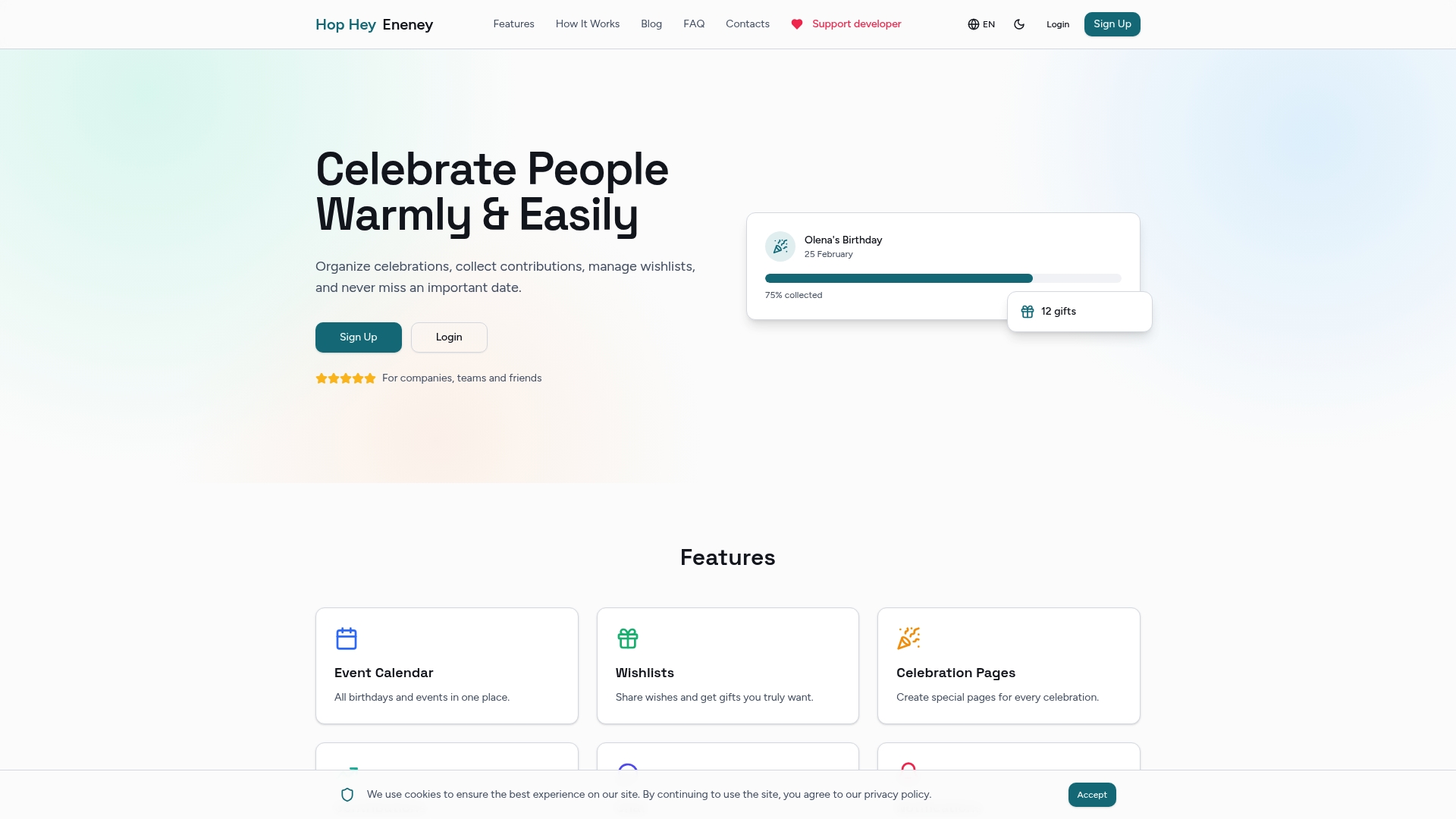
The platform tracks every contribution in real time, supports multiple currencies, and keeps all coordination hidden from the person being celebrated. Role-based permissions let you assign an organizer, a treasurer, and contributors without giving everyone the same level of access. Automated Telegram and email notifications replace manual follow-up messages. If you want a cleaner, more secure way to manage group gift funds, Hophey is built for exactly that.
FAQ
What does "secure gift contribution" mean?
A secure gift contribution is a monetary gift collected through verified, fraud-protected methods that ensure the funds reach the intended recipient accurately and in compliance with applicable tax rules.
Do group gift contributions trigger a gift tax return?
Most group gifts do not. The 2026 annual gift tax exclusion is $19,000 per recipient, so individual contributors giving a share of a pooled gift rarely approach the filing threshold.
What IRS forms apply to non-cash gift contributions?
Donors must file IRS Form 8283 for non-cash contributions over $500. Gifts exceeding $5,000 also require a qualified appraisal before the form can be submitted.
How do I prevent fraud in an online gift collection?
Use a platform with reCAPTCHA v3 bot protection, AVS, and CVV verification. Set a minimum contribution amount and monitor for high-velocity submissions, which signal automated card testing attacks.
What is the best practice for gift contribution receipts?
Send an IRS-compliant receipt within 48 hours of receiving each contribution. The receipt must state the amount, note any benefits the contributor received, and include the required IRS acknowledgment language.