
TL;DR:
- Managing gift lists helps prevent duplicate gifts and reduces waste by enabling real-time coordination. Organizing and sharing structured lists before events ensures contributor confidence, budget control, and a more meaningful gifting experience. Using digital tools enhances efficiency, minimizes logistical stress, and results in recipients receiving gifts they truly want and need.
Managing gift lists is the most reliable method to prevent duplicate gifts, control spending, and deliver meaningful contributions at any celebration. Whether you are organizing a wedding, a birthday, or a corporate milestone, a structured gift list transforms chaotic gifting into a coordinated experience. Tools like Giftster, Giftful, and Amazon Gift Lists have made this process accessible to anyone with a smartphone. The core reason why manage gift lists matters comes down to one fact: unmanaged gifting wastes money, creates awkward duplicates, and leaves recipients with items they never wanted.
Why managing gift lists is the foundation of great gifting
The primary purpose of managing gift lists is to give every contributor a clear, current picture of what is needed and what has already been claimed. Without that shared view, two aunts buy the same blender, three coworkers chip in for the same candle set, and the guest of honor spends three weeks returning gifts.

The financial stakes are real. Approximately one-third of all returned gifts cannot be resold, creating direct financial and environmental waste. That means a significant portion of every dollar spent on uncoordinated gifts simply disappears. A managed list eliminates most of that loss by anchoring purchases to specific, requested items.
The benefits of gift lists extend beyond the recipient. Givers feel more confident. They know their contribution lands well. That confidence shortens the time spent shopping and removes the anxiety of wondering whether a gift will be appreciated.
Pro Tip: Start your gift list at least six weeks before the event. Early lists give contributors time to plan purchases within their own budgets, which increases the average quality of gifts received.
What are the primary benefits of managing gift lists?
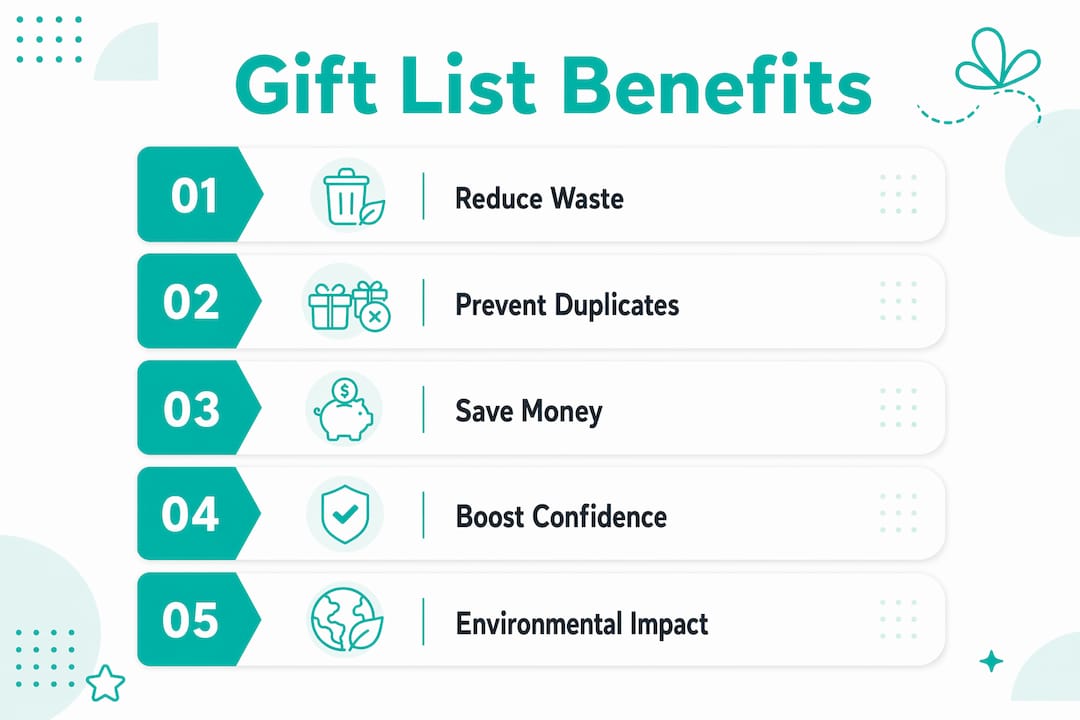
Organized gift list management delivers four concrete advantages that unstructured gifting simply cannot match.
- Duplicate prevention. Centralized gift list tracking is the primary mechanism for stopping duplicate purchases. When one person reserves an item, every other contributor sees it marked as claimed in real time.
- Budget control. Proper gift planning reduces overspending by 20–30%, prevents forgotten recipients, and eliminates panic purchases. That range represents real money across a holiday season or a large wedding guest list.
- Waste reduction. Since managed lists direct purchases toward requested items, return rates drop sharply. Fewer returns means less packaging waste, fewer shipping emissions, and less time spent at customer service counters.
- Better gifting relationships. When givers know their gift was specifically wanted, the social exchange feels more meaningful. Recipients remember thoughtful, useful gifts far longer than generic ones.
The environmental angle deserves more attention than it usually gets. Returns generate carbon emissions through reverse logistics, and unsellable returned goods often end up in landfills. A well-managed gift list is a small but measurable act of responsible consumption.
Gift lists vs. wishlists: what is the difference?
Most people use the terms interchangeably, but gift lists and wishlists serve fundamentally different functions. Confusing them is one of the most common mistakes event planners make.
| Feature | Wishlist | Gift List |
|---|---|---|
| Purpose | Personal idea collection | Event-specific coordination |
| Real-time purchase tracking | No | Yes |
| Shared with contributors | Optional | Standard |
| Duplicate prevention | None | Built in |
| Group gifting support | Rare | Common |
| Best use case | Ongoing inspiration | Active event planning |
A wishlist is a private scratchpad. You add items whenever inspiration strikes, with no expectation that anyone will act on them immediately. A gift list is a live coordination tool. It shows what is available, what is reserved, and what has been purchased. That real-time layer is what makes gift lists critical for actual events.
The best practice is to use both in sequence. Build a wishlist throughout the year as ideas surface. When an event approaches, pull the most relevant items from that wishlist and convert them into a structured gift list that you share with contributors. This two-stage approach captures the creative freedom of wishlists while delivering the organizational power of gift lists.
For workplace contexts, wishlists in professional settings follow slightly different norms, but the same structural distinction applies.
What practical methods and tools optimize gift list management?
Effective gift list management follows a repeatable process. The steps below work for birthdays, weddings, baby showers, and corporate events alike.
- Capture ideas immediately. Quick-capture methods outperform extensive categorization for retaining gift ideas. The goal is to log an idea within 30 seconds of thinking of it. A note in your phone, a voice memo, or a dedicated app all work. The enemy is "I'll remember this later." You won't.
- Tag every entry with one piece of metadata. The only metadata that matters in a gift list is who the gift is for. Recipient name, item, and price. Everything else is optional and rarely maintained.
- Separate your tracking into two lists. One list tracks who you need to buy for. The second tracks what you have already purchased. This dual-structure approach eliminates last-minute stress and maintains budget discipline across a full event season.
- Set a budget per recipient before you shop. Assign a dollar amount to each person or group before browsing. This prevents the common trap of falling in love with an item that is 40% over budget.
- Share the list strategically. For surprise events, share the gift list only with contributors, not the recipient. Use tools that support role-based access so the guest of honor never accidentally sees their own list.
- Schedule a shopping calendar. Assign purchase deadlines for each item, especially for gifts that require shipping or custom orders. A calendar prevents the last-week scramble that drives up costs and stress.
Digital tools make steps 1 through 6 significantly easier. Platforms like Pingwish offer real-time reservation tracking for family groups. Giftster supports private lists with purchase status updates. Amazon Gift Lists integrate directly with a major retailer's inventory. For teams and companies, Hophey combines event coordination, fund collection, and wishlist management in one place, which removes the need to juggle multiple apps.
Pro Tip: When sharing a gift list with a large group, include a price range for each item. Contributors with smaller budgets can choose lower-priced items without feeling awkward, and the list gets completed faster.
How does effective gift list management impact event outcomes?
The downstream effects of organized gift management show up in ways most people do not anticipate until they experience the contrast firsthand.
"The difference between a well-managed gift list and no list at all is the difference between a celebration and a logistics crisis." — Experienced event coordinators consistently report that gift coordination is the single most overlooked element of event planning.
Stress levels drop measurably when contributors have a clear list to reference. There are no group text threads asking "did anyone already get the coffee maker?" There are no awkward moments when two people show up with identical wrapped boxes. The event itself feels lighter because the organizational work happened in advance.
Recipients report higher satisfaction when gifts align with their actual needs and preferences. This is not a small effect. A gift that fits someone's life creates a lasting positive memory of the giver. A generic or duplicate gift creates a mild but real sense of disappointment, even when the recipient is gracious about it.
- Time savings are concrete. Shoppers who work from a managed list spend less time browsing and less time second-guessing. They arrive at the store or website with a specific target and leave with a purchase.
- Social dynamics improve when overspending comparisons are removed from the equation. A shared list with price ranges signals to every contributor what is appropriate, which prevents the uncomfortable situation where one person's gift dramatically outspends everyone else's.
- Shared family wishlists reduce duplication, align gifts with recipients' actual interests, and simplify coordination across multiple relatives who may not communicate regularly.
For group events, the coordination benefit compounds. Ten people trying to organize a group gift without a shared system will spend more time on logistics than on the actual celebration. A structured list with clear contribution tracking resolves that friction in minutes. You can explore group gifting coordination strategies in more detail if you are managing a larger event.
Key takeaways
Managing gift lists is the single most effective way to prevent duplicates, reduce waste, and deliver gifts that recipients actually want and use.
| Point | Details |
|---|---|
| Prevent duplicates with shared lists | Centralized, real-time tracking stops two contributors from buying the same item. |
| Budget control reduces overspending | Proper planning cuts overspending by 20–30% compared to unstructured gifting. |
| Gift lists outperform wishlists for events | Gift lists track purchases in real time; wishlists are idea collections with no coordination layer. |
| Capture ideas within 30 seconds | Fast-entry habit prevents idea loss, the most common failure point in gift management. |
| Separate tracking into two lists | One list for recipients, one for purchases made, keeps planning organized and stress-free. |
What i have learned from years of watching gift coordination go wrong
The most common mistake I see is treating a wishlist as a gift list. Someone shares a Pinterest board or an Amazon favorites list and assumes contributors will figure out the coordination. They never do. Two people buy the same item. Three people skip the list entirely because it feels overwhelming. The recipient ends up returning half the gifts.
The second mistake is waiting too long to capture ideas. I have watched people forget genuinely perfect gift concepts because they thought they would remember them later. The 30-second capture rule is not a productivity trick. It is the difference between a thoughtful gift and a last-minute gift card.
My honest recommendation is to pick one tool and commit to it. The specific platform matters less than the habit. Whether you use a dedicated app, a shared spreadsheet, or a platform like Hophey, consistency is what makes the system work. A perfect tool used inconsistently will always lose to a simple tool used every time.
The gift-giving experience improves for everyone when the organizer takes the coordination seriously. Contributors feel guided rather than lost. Recipients feel genuinely seen. And the event itself carries less logistical weight, which means more room for the actual celebration.
— Konstantin
How Hophey makes gift list management effortless
Managing gift lists across a group of contributors is exactly the problem Hophey was built to solve.
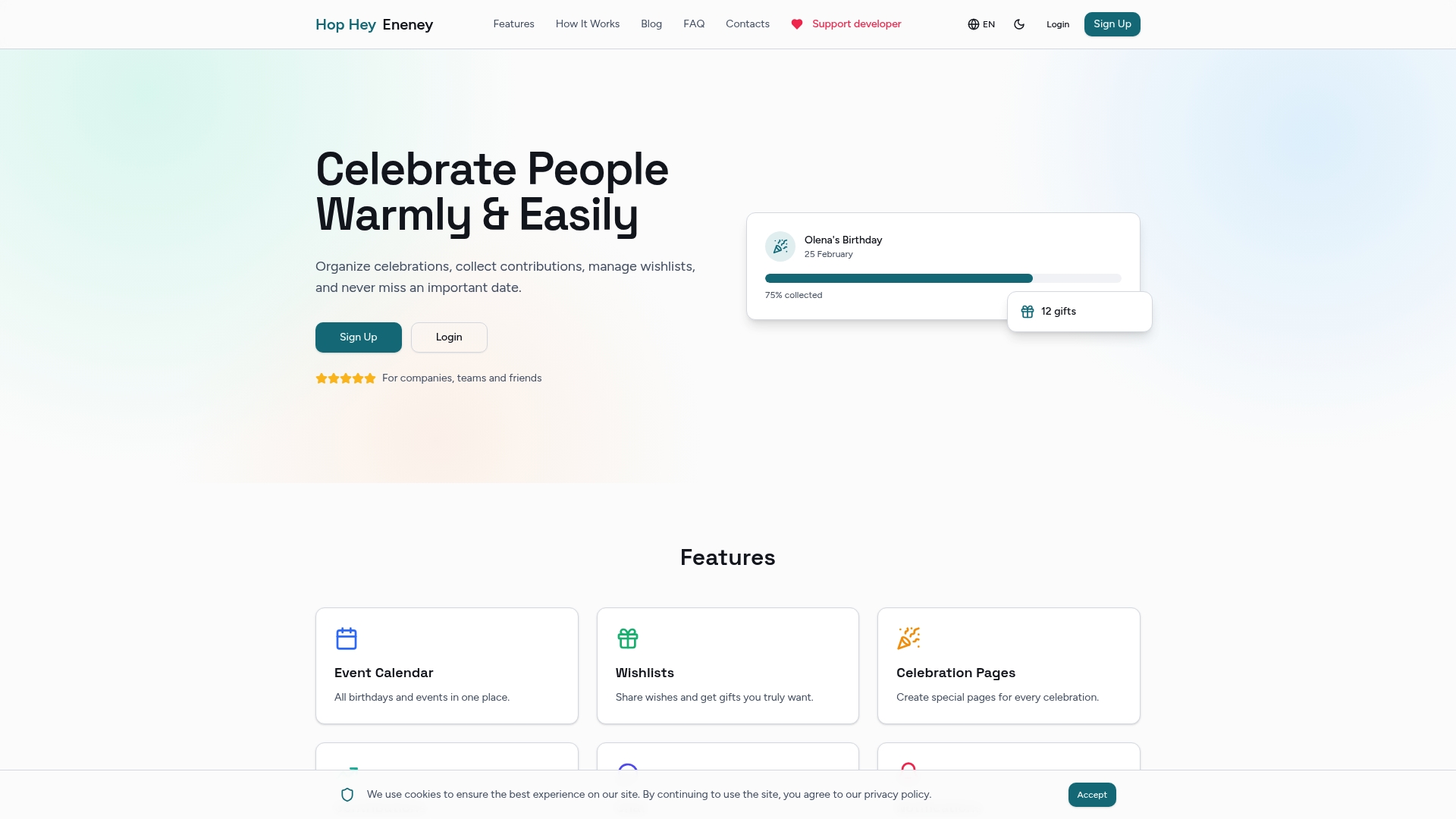
Hophey gives event organizers a private celebration page where contributors can view the gift list, reserve items, and pool funds transparently, all without the recipient ever seeing the coordination happening behind the scenes. Automated reminders, real-time contribution tracking, and multi-currency support (UAH, USD, EUR) remove the manual follow-up that drains organizers. Whether you are planning a birthday, a wedding, or a corporate milestone, start organizing your event on Hophey and turn gift coordination from a chore into a five-minute setup.
FAQ
What is a gift list, exactly?
A gift list is an event-specific, shared tracking system that shows which gifts are available, reserved, and purchased in real time. Unlike a wishlist, it is designed for active coordination among multiple contributors.
How do gift lists prevent duplicate gifts?
Centralized gift lists update in real time when a contributor reserves or purchases an item. Every other contributor immediately sees that item as claimed, which eliminates the most common source of duplicates.
How early should i create a gift list before an event?
Create your gift list at least six weeks before the event. This gives contributors time to plan purchases, arrange group contributions, and order items that require shipping or customization.
What is the best way to organize a gift list?
The most effective method separates recipients from purchases using two distinct lists. Tag each item with the recipient's name, set a budget per person, and share the list only with contributors to maintain any surprise element.
Do i need a special app to manage gift lists?
No special app is required, but digital tools like Giftster, Pingwish, Giftful, and Hophey make real-time updates and sharing significantly easier than spreadsheets or paper lists, especially for larger groups.