
TL;DR:
- Private celebration pages are secure, invitation-only platforms that centralize event details, RSVPs, and contributions. They enhance privacy, reduce guest communication friction, and support smaller, more intentional gatherings. Their popularity is rising due to increased demand for private, authentic event experiences.
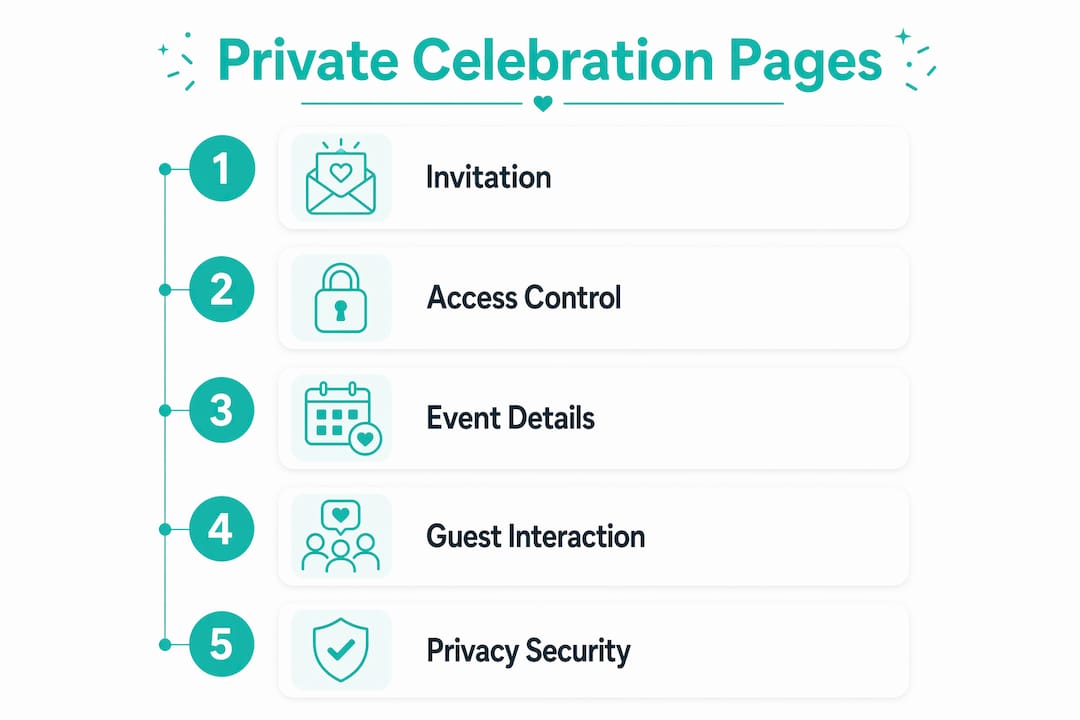
A private celebration page is a secure, invitation-only digital platform that centralizes event logistics, guest communication, RSVPs, and contribution tracking behind a single restricted link. Unlike a public event post on social media, these pages control exactly who sees your event details, your guest list, and your gift coordination. With demand rising sharply among event planners, understanding how private celebration pages work is now a practical skill for anyone organizing a birthday, wedding, or corporate milestone. Hophey is one platform built specifically for this purpose, combining private event pages with wish lists, fund collection, and team chat in one place.
What are private celebration pages defined as, and how do they work?
A private celebration page is best understood as a dedicated event microsite with access controls. The standard industry term is "private event page," and the phrase "private celebration page" describes the same concept applied specifically to personal and group milestones. Access is limited to invited guests who receive a private shareable link, meaning no search engine indexes the page and no uninvited person stumbles across it.

Professional-grade celebration pages can be created for a one-time cost around $20 as of 2026. That price point makes them accessible to individuals, not just corporate event teams. The page typically supports up to 1,000 invited guests, handles secure RSVPs, and stores sensitive event information without public exposure.
The core value is consolidation. Instead of sending venue details by text, RSVP links by email, and gift preferences by a separate message thread, everything lives in one place. Guests click one link, see everything they need, and respond in the same spot.
How do private event pages manage event details and guest interactions?
Private celebration pages consolidate schedules, venue information, real-time RSVPs, and contribution tracking into a single dashboard. This eliminates fragmented logistics spread across multiple apps and message threads. Hosts update one page; every guest sees the change instantly.
The operational flow works like this:
- Create the page with event details: date, time, location, dress code, and schedule.
- Set access controls so only invited guests can view or interact with the page.
- Share the private link directly with your guest list via email, Telegram, or a messaging app.
- Track RSVPs in real time through a contribution dashboard that shows who has confirmed, declined, or not yet responded.
- Collect gift contributions transparently, with each guest seeing the total raised and their own contribution recorded.
- Post live updates if plans change, so guests never rely on outdated information buried in a chat thread.
Central event details like schedules, directions, and RSVP updates reduce guest communication friction significantly. Guests appreciate single-link access with live updates rather than searching through old messages for the venue address.
Pro Tip: Send the private link through a channel your guests already use daily. If your team lives in Telegram, share it there. Adoption drops when guests have to open an unfamiliar app just to RSVP.
Why has demand for private celebration pages grown so fast?
68% of event planners reported sustained increased demand for intimate, quality-focused events as of 2024. That figure reflects a real cultural shift away from large public broadcasts toward smaller gatherings where every guest is intentionally chosen.
"Private celebrations serve as strategic tools for morale and resilience, creating controlled environments for meaningful social connection during uncertain times. The shift is not about exclusivity. It is about intentionality." — Envogue Events
The emotional logic is straightforward. Public social media celebrations create performance pressure. The host feels obligated to present a polished version of the event. Guests feel obligated to comment publicly. Private pages remove that dynamic entirely. The celebration becomes about the people in the room, not the audience watching online.
Private pages also protect authenticity. When a surprise birthday party is coordinated on a public platform, the guest of honor might see a notification or a tagged photo before the event. A private page keeps the coordination invisible to the person being celebrated. Hophey is designed specifically around this principle, with a dedicated chat that excludes the honoree entirely.
The shift toward intentionality in event planning also shows up in how hosts think about guest lists. Smaller, curated gatherings consistently produce stronger emotional outcomes than large open events. Private pages make that curation practical by giving hosts hard control over who receives access.
What are the best practices for privacy and security on private event pages?
Not all "private" pages offer the same level of protection. The three main configurations are private pages, unlisted pages, and password-protected pages. Each works differently.
- Private pages restrict access to a specific invited list. Only guests who receive a direct invitation can view the page. This is the strongest default setting for personal celebrations.
- Unlisted pages do not appear in search results but can be accessed by anyone who has the URL. This is weaker than a true private page because a forwarded link grants access to anyone.
- Password-protected pages add a second layer of security. Even if someone receives the link, they cannot view the page without the password. This is the recommended approach for sensitive events.
The most common mistake is assuming that "private" means invisible. Platforms that allow password protection and individual access revocation are more secure than those relying on unlisted URLs alone. Hosts should confirm their platform supports both features before sharing any event details.
For corporate events, role-based access control (RBAC) adds another layer of precision. RBAC lets event admins grant specific permissions to specific users. A team member can manage RSVPs without seeing contribution totals. A department head can view the full dashboard without editing the event details. This separation of permissions protects sensitive administrative data while keeping coordination efficient.
Event coordinators also recommend a hybrid setup: a public announcement page for general awareness, paired with a separate password-protected private page for logistics. The public page tells people an event is happening. The private page tells invited guests where, when, and how to contribute. This structure prevents search engines from indexing sensitive details and keeps uninvited guests from accessing venue information.
Pro Tip: Revoke access links immediately after an event ends. Leaving an active private link open after the celebration creates unnecessary exposure of guest data, contribution records, and personal details.
How can groups effectively use private celebration pages for any event type?
The most effective private celebration pages share a few structural qualities. They include all essential information upfront, use RSVP customization to capture guest needs, and update in real time as plans evolve.
For any event type, the page should include:
- Event name, date, time, and full location with directions or a map link
- Dress code or theme details
- Schedule of activities or agenda
- RSVP form with fields for dietary restrictions, plus-one names, and any guest wishes
- Gift contribution section with a transparent fund tracker
- A private photo or media gallery for sharing memories after the event
Different event types use these features in different ways:
| Event type | Primary page use | Key feature |
|---|---|---|
| Birthday party | Surprise coordination | Honoree-excluded chat |
| Wedding | Guest logistics and RSVPs | Dietary and plus-one tracking |
| Corporate milestone | Team contribution collection | Role-based access control |
| Remote team celebration | Async participation | Multi-currency fund collection |
| Gender reveal | Controlled guest access | Password-protected link |
Managing guest groups within the page also matters. For a wedding with 200 guests, the host might create separate communication threads for the wedding party, immediate family, and general guests. Each group sees only what they need. Tiered content circulation protects privacy while maintaining connection across different guest relationships.
Hophey supports all of these use cases with multi-currency contribution tracking in UAH, USD, and EUR, automated reminders, and Telegram notifications. For remote teams, the platform's online celebration tools make async participation feel as connected as an in-person event. For event guest engagement, the combination of a private page with a live contribution tracker and dedicated chat produces measurably better participation than email-based coordination.
Key Takeaways
Private celebration pages give hosts secure, centralized control over every element of an event, from invitations and RSVPs to gift contributions and guest communication.
| Point | Details |
|---|---|
| Core definition | A private celebration page is an invitation-only digital platform restricting access to invited guests only. |
| Demand is growing | 68% of event planners reported increased demand for intimate, private events as of 2024. |
| Security levels vary | Password protection and individual access revocation are stronger than unlisted URLs alone. |
| RBAC for corporate events | Role-based access control lets admins grant specific permissions without exposing sensitive data. |
| One page, all logistics | Centralizing schedules, RSVPs, and contributions eliminates fragmented communication across multiple apps. |
Why I think private pages are the future of event planning
The most interesting thing I have observed in event planning over the past few years is not the technology. It is the psychology. Hosts who switch from public social media events to private pages consistently report feeling less anxious about their celebrations. That is not a small thing.
Public event posts create a strange obligation. You feel watched. You feel like the event has to perform for an audience that was never invited. Private pages remove that pressure entirely. The celebration belongs to the people in it, not to whoever happens to scroll past.
I have also seen how private pages change the guest experience. When someone receives a private link, they feel chosen. That feeling of intentional inclusion changes how they show up. They RSVP faster, contribute more readily, and engage more genuinely. The team morale benefits of this dynamic are real and measurable in corporate contexts.
The future of event planning is not bigger and more public. It is smaller, more intentional, and more private. Platforms built around that principle, like Hophey, are positioned well for where event culture is heading. The question for any host is not whether to go private. It is how to do it well.
— Konstantin
Hophey makes private celebration pages practical
Organizing a private event should not require five different apps, a shared spreadsheet, and a group chat that the guest of honor accidentally joins.
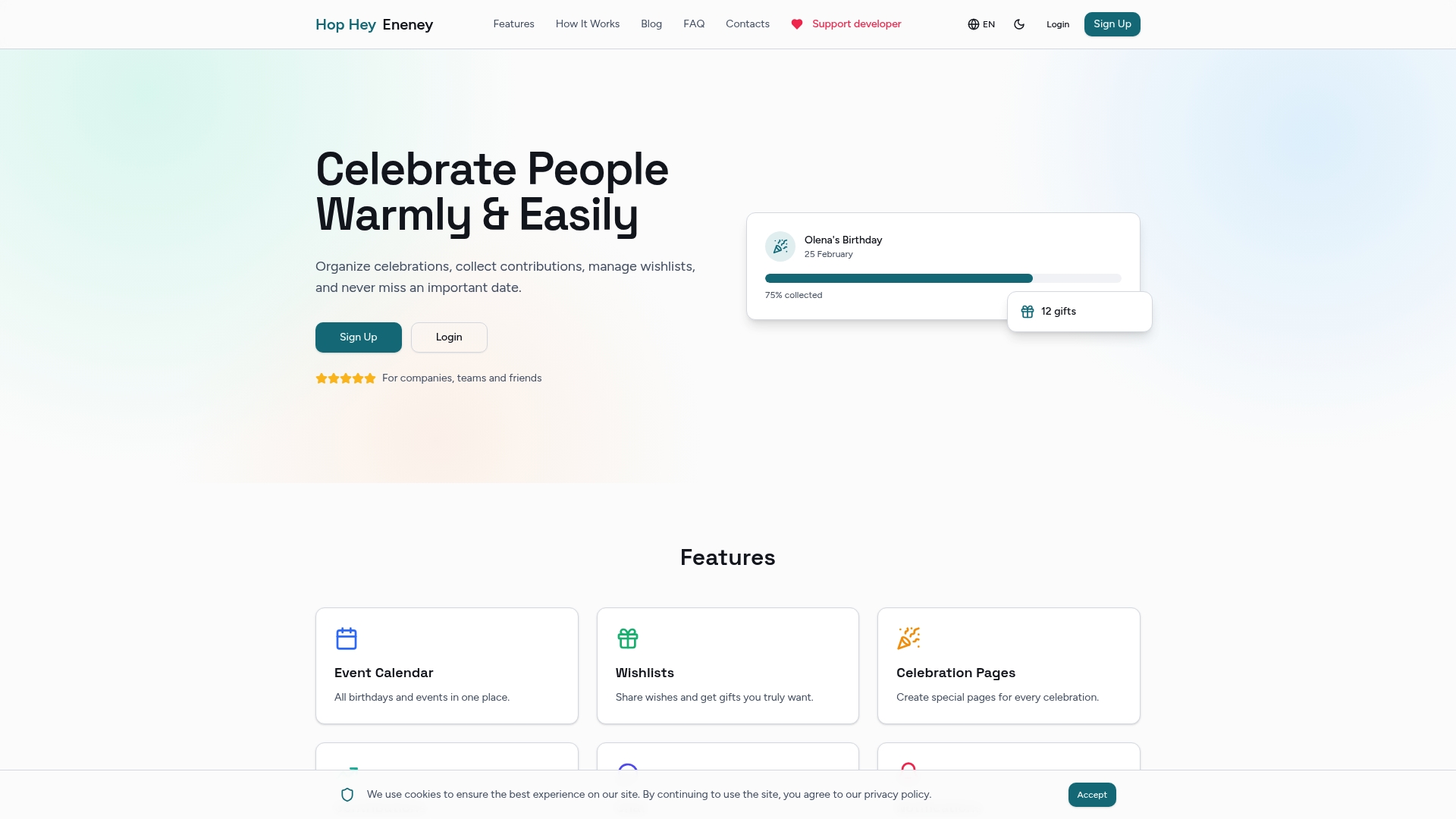
Hophey brings every element of private event coordination into one place. Hosts create a private celebration page, set access controls, collect gift contributions in multiple currencies, and communicate with guests through a dedicated chat that excludes the person being celebrated. Automated reminders via email and Telegram keep guests informed without the host manually following up. Whether the event is a surprise birthday, a corporate milestone, or a remote team celebration, Hophey handles the logistics so the host can focus on the moment itself.
FAQ
What is a private celebration page?
A private celebration page is an invitation-only digital event platform that restricts access to invited guests, centralizes RSVPs, and manages event logistics behind a single private link.
Why use private celebration pages instead of social media events?
Private pages prevent uninvited access, eliminate performance pressure, and keep sensitive logistics like venue details and contribution amounts away from public view.
What is the difference between a private and an unlisted event page?
A private page restricts access to a specific invited list. An unlisted page is not searchable but can be accessed by anyone who receives the URL, making it less secure.
How do private celebration pages handle gift contributions?
Most private event platforms include a contribution tracker that shows the total raised and each guest's contribution in real time, keeping the process transparent for all invited participants.
Can private celebration pages work for corporate events?
Role-based access control allows corporate event admins to grant specific permissions to team members, so contributors, organizers, and viewers each see only the information relevant to their role.