
TL;DR:
- Group gifting succeeds when roles are clear, budgets are set, and automated tools manage contributions. Personalization and thoughtful presentation enhance the emotional impact, making even moderate budgets memorable. Using dedicated platforms ensures transparency, automates reminders, and streamlines coordination for both personal and professional celebrations.
Group gifting works when everyone knows their role, the budget is clear, and no one has to chase down Venmo payments at the last minute. Whether you're an HR team celebrating a colleague's milestone, a remote crew pooling for a going-away present, or a friend group planning a surprise party, the core process is the same. Here's what makes it work:
- Define the occasion and recipient. A birthday calls for something personal; a work anniversary might lean toward an experience or elevated essential.
- Set a realistic budget upfront. Agree on a per-person contribution range before inviting anyone, so no one feels pressured.
- Use a dedicated platform. Ad hoc group chats and spreadsheets create confusion. A centralized tool with transparent fund tracking prevents duplicate payments and protects contributor privacy.
- Send automated reminders. Contribution deadlines get missed without them. Platforms that send scheduled nudges keep the timeline intact.
- Keep the recipient out of the loop. Private event pages and contributor-only chats preserve the surprise.
- Personalize the delivery. A shared note, a group photo, or a short video message turns a good gift into a memorable one.
Table of Contents
- How do you organize a successful collective gift step by step?
- Which digital platforms help you manage group gifting well?
- 1. Prioritize experiences over generic items
- 2. Shop for the person, not the price tag
- 3. Add a personalized group message
- 4. Accommodate dietary and cultural preferences
- 5. Choose budget-conscious options that maximize impact
- Why the gift experience and presentation matter as much as the gift itself
- How should you set budgets and contribution limits for group gifts?
- What are the tax and legal considerations for collective gifting in the US?
- Key Takeaways
How do you organize a successful collective gift step by step?
A standard group gifting process starts with an event page, a set budget, and a private link — but the details between those steps determine whether it goes smoothly or falls apart.
Step 1: Define the event and recipient profile. Note their hobbies, dietary preferences, and any cultural considerations. This shapes every decision that follows.
Step 2: Create a dedicated event or wish list page. Set a total budget and, if the platform supports it, a per-contributor minimum and maximum. Platforms like Hophey let you build a private celebration page with a shared calendar entry so contributors always know the deadline.
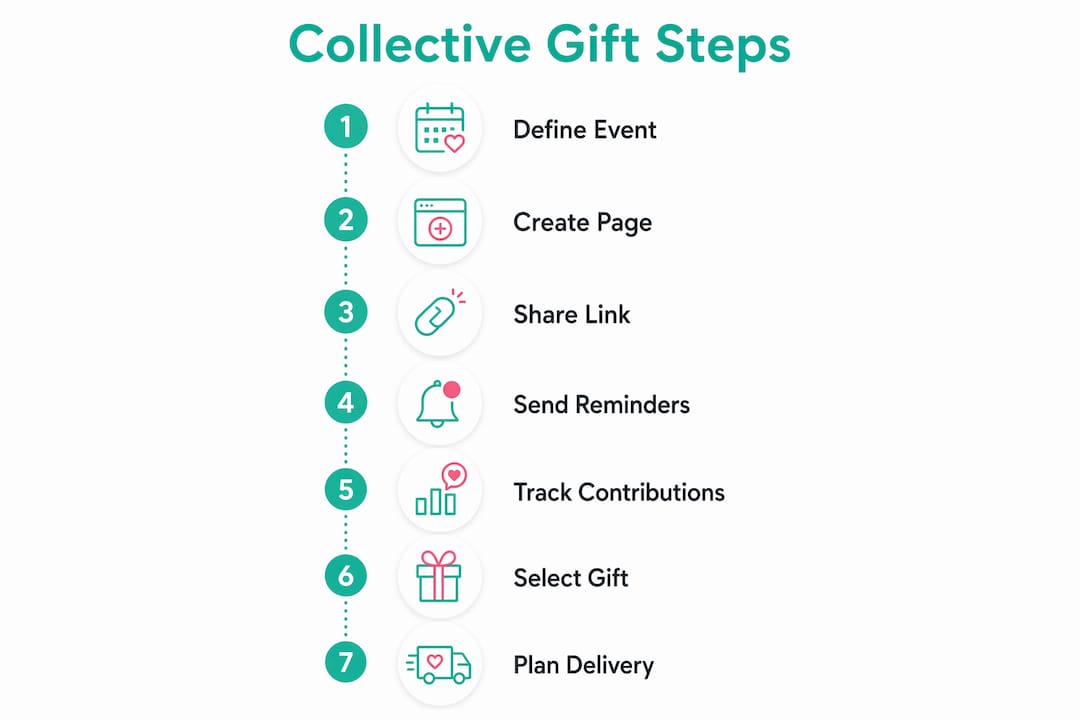
Step 3: Distribute a private link. Send it only to contributors, not the recipient. Include a short note explaining the contribution method and deadline.
Step 4: Let automated reminders do the follow-up. Nobody wants to personally chase coworkers for $20. Schedule two or three reminder notifications before the deadline. Hophey supports both email and Telegram notifications, which covers most contributor preferences.
Step 5: Track contributions transparently. Real-time progress tracking lets contributors see how close the group is to the goal without revealing individual amounts. This builds momentum.
Step 6: Coordinate gift selection. Either the organizer selects the gift once the fund is complete, or the recipient receives a budget-controlled redemption link to choose their own. The second option works especially well in professional settings where preferences are harder to predict.
Step 7: Plan delivery and confirm logistics. Confirm the recipient's address or, if using a digital redemption link, verify the link delivery method. Build in a buffer for last-minute changes. If a contributor cancels or a contribution falls short, have a backup plan: either reduce the gift scope or cover the gap from a small buffer built into the original budget.
Which digital platforms help you manage group gifting well?
The platform you choose shapes the entire contributor experience. A clunky tool with no reminders will leave you chasing people manually; a well-designed one runs most of the process for you.
Key features worth evaluating:
- Transparent fund tracking. Contributors should see real-time progress toward the goal. Centralized platforms with automated tracking prevent the confusion and privacy issues that come with manual collections.
- Automated reminders. Email and push notifications reduce the organizer's workload significantly.
- Anonymous contribution options. Some contributors prefer privacy. A platform that masks individual amounts while showing total progress handles this cleanly.
- Multi-currency support. Distributed teams often span multiple countries. Hophey supports multiple major currencies, including those common among US-based teams with international members.
- Digital redemption links. Sharing a redemption link lets recipients choose their own gift within a set budget, eliminating the guesswork entirely. This is particularly effective in corporate settings.
- Integrated communication. A private chat tied to the event keeps coordination off personal text threads and away from the recipient.
- Personalized digital unwrapping. Platforms that support animated or multimedia gift delivery create a richer recipient experience. The unwrapping moment matters as much as the gift itself.
Hophey combines all of these in one place: private celebration pages, a shared event calendar, real-time contribution tracking, role-based permissions, and both email and Telegram notifications. HR teams use it to automate employee recognition; friend groups use it to coordinate surprise parties without the usual chaos.
Pro Tip: Build a small buffer into your contribution target to cover last-minute changes or dropouts. Last-minute dropouts happen, and a buffer means the gift doesn't shrink at the finish line.
1. Prioritize experiences over generic items
Experiences, personalized keepsakes, and high-quality consumables consistently outperform generic gifts for recipients who are hard to shop for. A cooking workshop, a curated tasting box, or a spa day gives the recipient something to look forward to rather than another item to find shelf space for.
2. Shop for the person, not the price tag
Focusing on the recipient's values and daily routine makes a gift feel personal in a way that a higher budget alone never does. A gift tied to someone's actual hobby lands better than a generic gift basket that is more expensive.
3. Add a personalized group message
A collective note signed by every contributor, a shared photo album, or a short group video message adds emotional weight that no physical item can replicate. The most successful group gifts combine a meaningful item with personalized digital elements like shared memories or video messages.
4. Accommodate dietary and cultural preferences
If the celebration includes food, confirm dietary restrictions and cultural considerations before ordering. A catered lunch that excludes half the team is worse than no catering at all. Build a quick preference check into your event page or contributor chat.
5. Choose budget-conscious options that maximize impact
A group of contributors pooling a moderate amount can have a useful budget to work with. Spent on one well-chosen experience or a high-quality personalized item, that budget creates a memorable gift. Spread across a generic gift set, it disappears. Prioritize depth over breadth.
The emotional value of a group gift depends far more on shared intentionality than on the total amount spent. A gift is a social token of care aimed at strengthening relationships, not a transaction.
Why the gift experience and presentation matter as much as the gift itself
The moment of receiving a gift shapes how it's remembered. A thoughtful present delivered through a generic email lands flat. The same gift delivered through a personalized page with a group message, photos, and an animated reveal creates a genuinely memorable moment.

Digital platforms that support multimedia delivery, scheduled reveals, and personalized unwrapping pages close the gap between "we got you something" and "we made this for you." For remote teams especially, where in-person delivery isn't possible, the digital presentation is the entire experience. Invest in it.
Presentation also signals effort. A well-organized contribution page, a clean delivery method, and a personal note from the group tell the recipient that people coordinated specifically for them. That coordination is visible, and it counts.
How should you set budgets and contribution limits for group gifts?
Start with a total gift target, then divide by the expected number of contributors to get a per-person figure. If that number feels high, either reduce the gift scope or open contributions to a wider group.
A few practical guidelines:
- Set a suggested contribution, not a mandatory one. Letting contributors give more or less than the suggested amount reduces friction and increases participation.
- Use a platform with a progress bar. Visual progress toward a goal motivates contributors to chip in before the deadline.
- Cap individual contributions if needed. In corporate settings, some companies set a maximum per-person contribution to keep the gift from feeling like an obligation.
- Account for platform fees. Some platforms charge a processing fee on contributions. Factor this into your target so the final gift amount isn't short.
For HR teams managing recurring employee recognition, a corporate gifting checklist helps standardize budgets across departments and prevents inconsistency in how milestones are celebrated.
What are the tax and legal considerations for collective gifting in the US?
For most friend groups and informal team collections, collective gifting has no tax implications. Contributors are simply pooling personal funds, and the IRS does not treat personal gifts as taxable income for the recipient, provided the total gift from any one individual stays under the annual gift tax exclusion, which the IRS sets an annual gift tax exclusion per recipient (the 2025 figure was not yet published at the time of writing).
Corporate gifting has different rules. The IRS generally allows businesses to deduct up to a modest amount per recipient per year for business gifts. Gifts above that threshold may need to be reported as compensation, depending on the relationship and context. HR teams should confirm current thresholds with a tax advisor before running large-scale employee gift programs.
Cash gifts and gift cards are treated differently from physical gifts in some corporate contexts. A gift card is typically considered a cash equivalent and may be taxable as employee income regardless of amount. A physical gift under the $25 deduction limit is generally not. When in doubt, consult a CPA familiar with your company's structure.
Key Takeaways
Organizing a group gift well requires clear process, the right platform, and genuine personalization — not just a bigger budget.
| Point | Details |
|---|---|
| Start with a clear process | Define the occasion, set a budget, and distribute a private link before collecting a single contribution. |
| Use a dedicated platform | Tools like Hophey handle fund tracking, reminders, and private coordination so organizers aren't chasing contributors manually. |
| Personalize beyond the item | Shared messages, group photos, and multimedia delivery create emotional impact that the gift alone cannot. |
| Set flexible contribution limits | A suggested amount with room to give more or less increases participation and reduces friction. |
| Know the tax rules | The IRS allows businesses to deduct up to $25 per recipient per year for business gifts; cash equivalents like gift cards may be taxable as employee income. |