
TL;DR:
- A celebration planning checklist provides a structured, phase-by-phase guide to organize events in 2026 and prevent missed details.
- It emphasizes defining goals, budgeting with contingency, booking key vendors early, creating realistic timelines, and following up promptly after the event.
A celebration planning checklist is a structured, step-by-step guide that prevents critical details from slipping through the cracks when organizing any event in 2026. Whether you are coordinating a birthday party for 20 friends or a corporate milestone event for 200 colleagues, the same principle applies: plan in phases, assign ownership, and build in buffers. The most common reason celebrations fall short is not a lack of enthusiasm. It is a lack of structure. This guide covers every phase, from defining your goals to wrapping up after the last guest leaves.
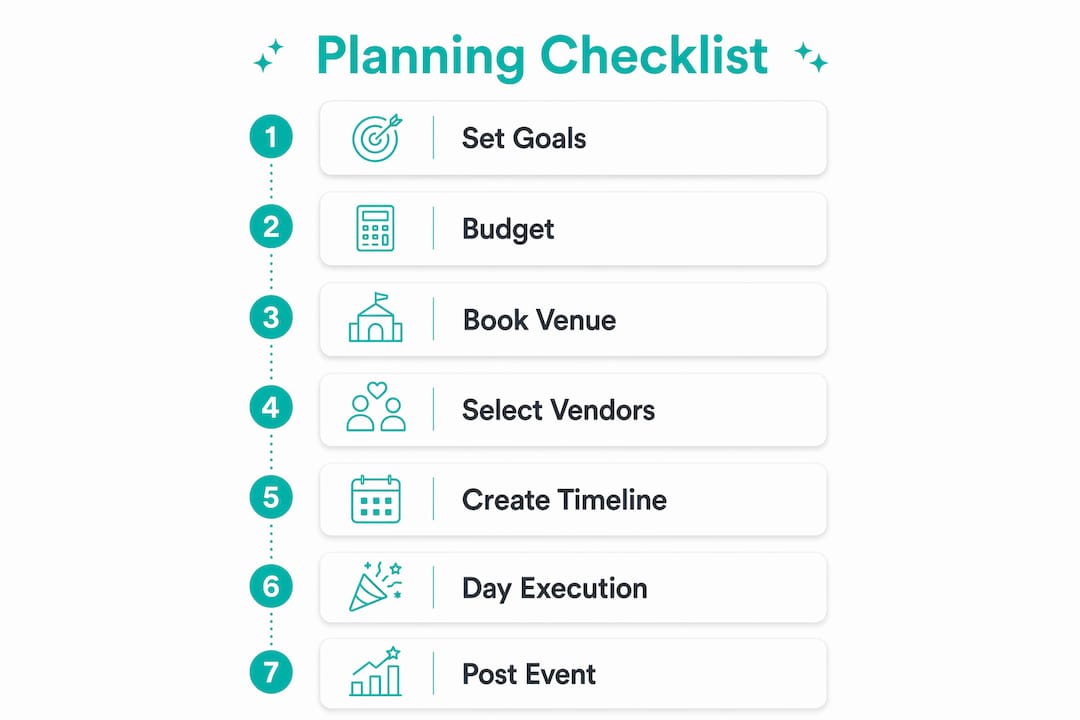
What does a solid celebration planning checklist cover in 2026?
A strong event checklist covers six distinct phases: goal setting, budgeting, venue and vendor booking, timeline management, day-of coordination, and post-event follow-up. Skipping any phase creates gaps that show up at the worst possible moment. The checklist format works because it externalizes your planning. You stop relying on memory and start relying on a system.

The industry term for this structured approach is event project management. It borrows from project management methodology: define scope, set milestones, assign tasks, and review outcomes. Applying that framework to personal and group celebrations is exactly what separates a smooth event from a stressful one.
How do you set goals, budget, and audience before anything else?
Defining a single clear event purpose is the most critical first step. Write it in one sentence: "We are celebrating Maria's retirement with a dinner for 40 colleagues to honor her 20-year career." That sentence guides every decision that follows, from venue size to catering style to entertainment choices. Without it, planning becomes reactive and scope creep sets in fast.
Budget comes next, and it requires honesty. List every expected cost category: venue, catering, decor, entertainment, invitations, and transportation. Then add a 10–15% contingency fund on top of your total. That buffer covers the cake upgrade you did not expect, the last-minute AV rental, or the vendor who charges a delivery fee not listed in the quote.
Understanding your audience shapes the entire event. Key questions to answer before booking anything:
- How many people are you inviting, and how many will actually attend? RSVP attendance typically runs around 60%, so plan catering and seating for realistic turnout, not the full invite list.
- What is the age range and mobility needs of your guests?
- Are there dietary restrictions, cultural considerations, or accessibility requirements?
- What time of day and day of the week works best for your group?
Pro Tip: Write your event goal on a sticky note and put it on your monitor. Every time a new idea or request comes in, check it against that sentence before saying yes.
How do you choose the right venue and vendors for your 2026 celebration?
Venue selection is where most planners lose time. The right venue matches your guest count, fits your budget, and is available on your date. Evaluate every option against five factors: capacity, location and transit access, on-site amenities (parking, AV, kitchen), venue policies on outside vendors, and cancellation terms.
Lead times matter more than most people expect. Small events need 6–8 weeks of lead time, mid-size events need 4–6 months, and large celebrations require 9–12 months to secure top venues and speakers. Booking late means settling for second-choice options at higher prices.
Follow the Critical Path method when sequencing your bookings:
- Book the venue first. Every other decision depends on the date and location being confirmed.
- Confirm catering second. Caterers with strong reputations fill their calendars fast, especially on weekends.
- Lock in entertainment third. Bands, DJs, and keynote speakers have limited availability and often require deposits months in advance.
- Coordinate secondary vendors. Florists, photographers, and rental companies can be confirmed once the core three are set.
- Review every contract carefully. Check cancellation policies, overtime fees, and what happens if a vendor cancels on you.
The Critical Path approach prioritizes the vendors that are hardest to replace. Venue, catering, and entertainment have the least flexibility. Everything else can be adjusted.
| Vendor type | Recommended lead time | Key contract clause to check |
|---|---|---|
| Venue | 4–12 months | Cancellation and force majeure policy |
| Catering | 2–6 months | Final headcount deadline and overage fees |
| Entertainment | 2–6 months | Deposit amount and substitution clause |
| Photography | 2–4 months | Image delivery timeline and usage rights |
| Decor and rentals | 4–8 weeks | Delivery window and damage liability |
Pro Tip: Ask every vendor for a written confirmation of your booking date within 24 hours of agreeing verbally. Verbal agreements disappear in busy seasons.
How do you build a planning timeline that actually works?
Work backward from your event date. Set your event date as Day Zero, then assign milestones at fixed intervals before it. This reverse-engineering approach forces you to see whether your timeline is realistic before you commit to anything.
Typical milestone structure by event scale:
- Large events (200+ guests): Start planning 9–12 months out. Confirm venue and anchor vendors at month 10. Send save-the-dates at month 8. Begin promotion and registration 8–12 weeks before the event to build attendance momentum.
- Mid-size events (50–200 guests): Start 4–6 months out. Confirm venue and catering at month 5. Send invitations at month 3. Finalize headcount at month 1.
- Small events (under 50 guests): Start 6–8 weeks out. Confirm venue and catering at week 6. Send invitations at week 5. Finalize details at week 2.
Print materials deserve their own deadline. Finalize badge and signage designs at least 14 days before the event to avoid costly rush fees or errors that cannot be corrected in time. That two-week freeze date should appear on your master timeline as a hard stop.
The most underused tactic in event planning is the 24-hour buffer. Building a 24-hour buffer before event day gives you time to handle last-minute vendor issues, venue setup problems, or guest communication without the pressure of the clock running out. Treat the day before your event as a working day, not a rest day.
| Timeline milestone | Large event | Mid-size event | Small event |
|---|---|---|---|
| Venue confirmed | 10–12 months out | 4–5 months out | 6–8 weeks out |
| Invitations sent | 8 months out | 3 months out | 5 weeks out |
| Promotion launched | 8–12 weeks out | 6–8 weeks out | 3–4 weeks out |
| Print materials frozen | 14 days out | 14 days out | 14 days out |
| 24-hour buffer day | Day before event | Day before event | Day before event |
Pro Tip: Use a shared digital calendar or a group event organization tool to assign each milestone to a specific person. Tasks without owners do not get done.
What are the critical checklist items for the day of your event?
Day-of execution depends on one document: the run-of-show. This is a minute-by-minute schedule that every key person holds. It lists arrival times, setup windows, guest arrival, program segments, catering service windows, and wrap-up. Distribute it to all vendors and team members the day before.
Assign a single Point Person to manage day-of logistics. A designated day-of coordinator handles vendor check-ins, troubleshoots problems, and keeps the schedule on track. The host should be greeting guests and enjoying the event, not chasing down the caterer. These are two different jobs, and one person cannot do both well.
Day-of execution steps:
- Arrive at the venue at least 90 minutes before guests. Walk the space and confirm setup matches the plan.
- Check in with every vendor on arrival. Confirm their timeline and point of contact.
- Open your emergency kit. A well-stocked kit includes tape, scissors, a phone charger, pain reliever, stain remover, extra name tags, and a printed copy of all vendor contacts.
- Brief your Point Person on the run-of-show and give them authority to make small decisions without consulting you.
- Communicate with guests using a pre-written message template for directions, parking, or schedule updates.
Pro Tip: Print two copies of your vendor contact list and run-of-show. Keep one with you and give one to your Point Person. Phones die at the worst moments.
For teams coordinating larger group events, reviewing team coordination best practices before the event day helps everyone understand their role clearly.
What should you do in the 48 hours after your celebration?
The 48 hours after an event are the most neglected phase of celebration planning. Post-event follow-up within 48 hours maximizes attendee goodwill and keeps the positive energy of the event alive. A thank-you message sent three weeks later lands flat.
Post-event actions to complete within 48 hours:
- Send personalized thank-you messages to guests, vendors, and any sponsors or contributors.
- Collect feedback through a short survey (three to five questions maximum) while the experience is fresh.
- Share event highlights on social media or in a group chat to extend the celebration's reach.
- Compare actual attendance against your RSVP count. That gap informs your planning estimates for next time.
Within one week, hold a debrief with your planning team. Document what worked, what did not, and what you would change. Update your master checklist with those notes. A checklist that improves after every event becomes one of your most valuable planning assets over time.
Key Takeaways
A structured, phase-based celebration planning checklist is the single most effective way to organize any 2026 event, from small birthday parties to large corporate milestones.
| Point | Details |
|---|---|
| Define your goal first | Write your event purpose in one sentence to guide every planning decision. |
| Budget with a contingency fund | Add 10–15% above your estimated total to cover unexpected costs. |
| Follow the Critical Path | Book venue, catering, and entertainment before all other vendors. |
| Build a 24-hour buffer | Reserve the day before your event for last-minute fixes, not rest. |
| Follow up within 48 hours | Send thank-you messages and collect feedback before goodwill fades. |
Why I think most people plan celebrations in the wrong order
Most people start planning a celebration by picking a theme or browsing decor ideas. That is the wrong starting point. Theme is a downstream decision. It flows from your goal, your audience, and your budget. When you start with aesthetics, you end up with a beautiful event that does not quite fit the people in the room.
The advice I give every first-time planner is this: write your goal sentence before you open a single vendor website. Then set your budget ceiling. Then think about who is actually coming and what they need. Only after those three things are locked in should you start making creative decisions.
The contingency fund is the other piece most people skip until they regret it. Amateur planners treat the budget as a fixed number and assume everything will go as quoted. It never does. A 10–15% buffer is not pessimism. It is the difference between a stressful phone call the morning of your event and a calm one.
Delegating day-of coordination is the hardest thing for hosts to do and the most important. You planned this event for weeks or months. You deserve to be present for it. Hand the run-of-show to someone you trust and let them handle the details. Your guests will notice the difference. The communication strategies you put in place before the event day make that handoff much smoother.
Finally, reuse your checklists. Every event you plan teaches you something. Document it, update your template, and start the next event smarter than you started this one.
— Konstantin
How Hophey fits into your 2026 celebration planning
Planning a celebration involves more than a checklist. It involves coordinating people, collecting contributions, managing wishlists, and keeping surprises intact.
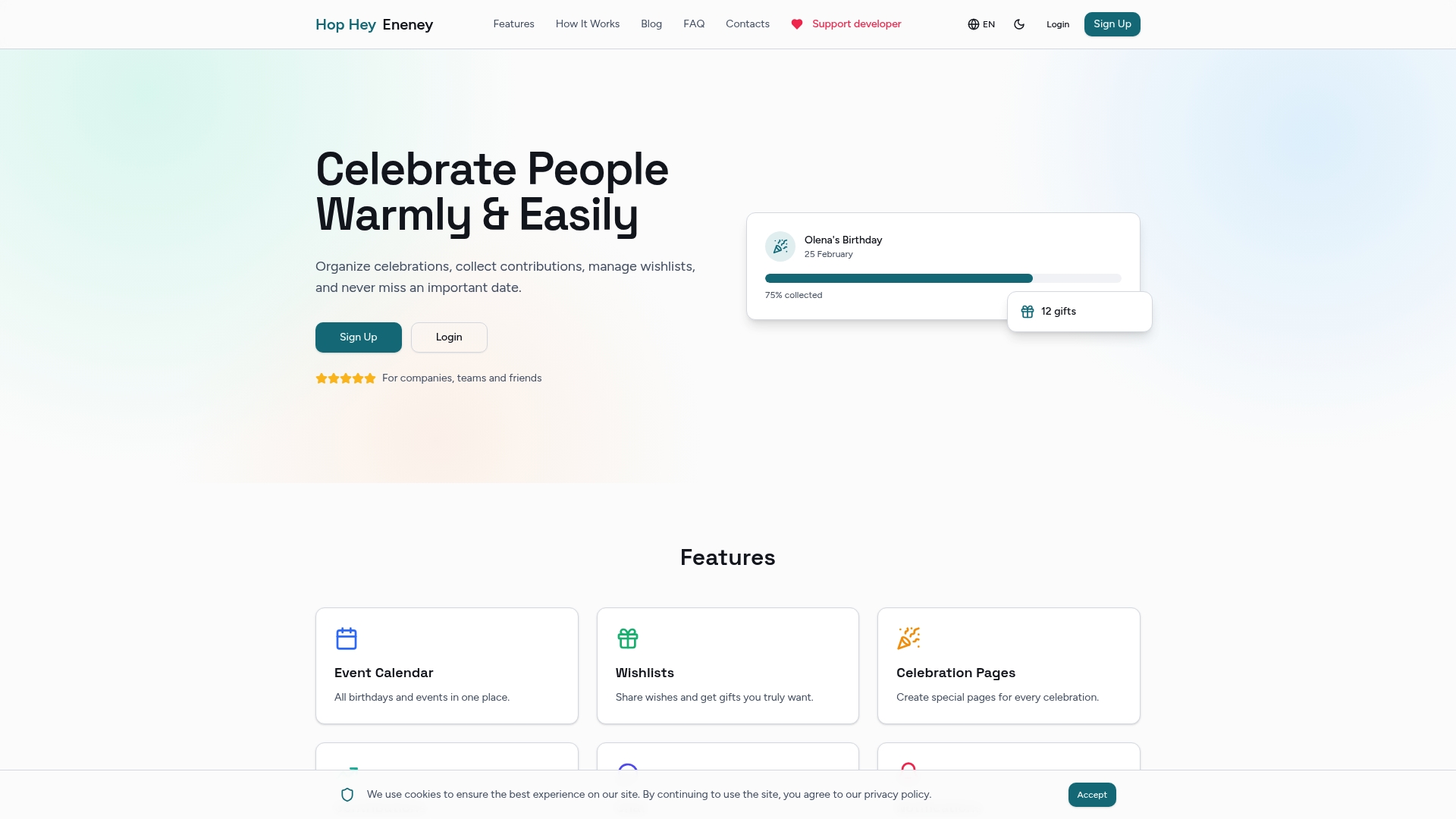
Hophey is built for exactly that. The platform lets teams, friend groups, and HR departments create private celebration pages, track events in a shared calendar, collect gift funds transparently, and communicate in a dedicated chat without spoiling the surprise. Automated reminders, Telegram notifications, and multi-currency support (UAH, USD, EUR) mean nothing falls through the cracks. If you are organizing a birthday, a work anniversary, or a group milestone in 2026, start your celebration on Hophey and keep every detail in one place.
FAQ
What is a celebration planning checklist?
A celebration planning checklist is a structured list of tasks organized by phase, covering goal setting, budgeting, vendor booking, timeline management, day-of execution, and post-event follow-up. It prevents critical details from being missed during event preparation.
How far in advance should I start planning a celebration?
Lead times vary by event size: small events need 6–8 weeks, mid-size events need 4–6 months, and large events require 9–12 months to secure top venues and vendors.
How much contingency budget should I include?
Add a 10–15% contingency fund on top of your total estimated budget. This covers unexpected costs like last-minute rentals, vendor fee changes, or catering overages.
What is the Critical Path in event planning?
The Critical Path means booking your venue, caterer, and entertainment before all other vendors. These three have the least flexibility and the longest lead times, so securing them first protects the rest of your plan.
When should I send post-event thank-you messages?
Send thank-you messages and feedback requests within 48 hours of the event. Post-event follow-up within this window maximizes goodwill and keeps response rates high while the experience is still fresh.