
TL;DR:
- Modern event management is a comprehensive process that connects strategy, execution, and measurement to deliver measurable business results. It relies on technology, data analytics, and operational discipline to enhance engagement and ROI, moving beyond traditional logistics. Effective management treats each phase as equally vital and emphasizes clear KPIs, planning lead times, and virtual attendee inclusion for success.
Modern event management is the strategic, full-lifecycle discipline of planning, executing, and measuring events that produce measurable business outcomes through integrated technology, personalized attendee experiences, and disciplined operations. Unlike traditional event coordination, which stops at logistics, modern event management connects strategy, audience engagement, branding, and execution into one unified process. The industry has matured significantly, with ROI measurement improving from 70% of organizers struggling to prove event ROI in 2025 down to 40% in 2026. That shift reflects a profession that has moved from gut-feel planning to data-driven decision-making.
What is modern event management, and how does it differ from traditional planning?
Modern event management is defined by its scope. Traditional event planning covers the preparatory phase: booking venues, coordinating vendors, and building run-of-show documents. Modern event management extends far beyond that. It covers the full lifecycle from initial strategy through post-event analysis, with clear KPIs attached to every phase.

Event strategy is foundational, not optional. A cohesive strategy aligns every event format, from a 20-person executive dinner to a 5,000-person conference, with organizational goals and measurable success criteria. Without that alignment, events become expensive activities with unclear returns.
The distinction between planning and management matters operationally. Planning is preparatory. Management covers execution, real-time problem solving, stakeholder communication, and post-event measurement. Treating them as the same role creates gaps in accountability and execution quality.
Pro Tip: Assign separate owners for the planning phase and the execution phase on any event over 100 attendees. The skills required are genuinely different, and one person rarely excels at both.
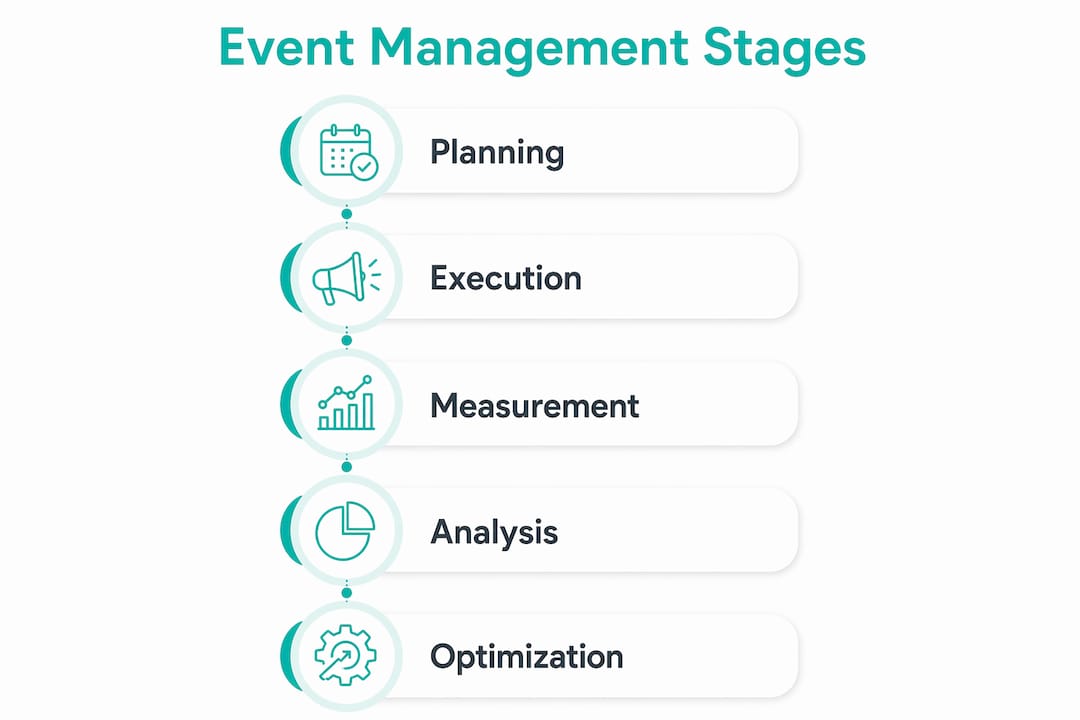
Key components of a modern event management process
Every well-run event follows a structured process with five core components. Each one builds on the last, and skipping any phase creates compounding problems downstream.
- Strategy development. Define the event's purpose, target audience, and success metrics before any logistics decisions. Events without a clear strategic brief consistently underperform on ROI.
- Planning and budgeting. Build a detailed budget with line items for every cost category. Large events require a venue search lead time of 6–12 months, while smaller events typically need 3–6 months. Starting late on venue selection in major markets means settling for second-choice spaces.
- Vendor coordination. Identify, contract, and manage every external partner, from AV providers to catering teams. Centralize all vendor contacts and deliverables in one shared document so nothing falls through the cracks.
- Execution and real-time management. Run the event against a live production timeline shared with all staff and vendors. Real-time communication channels, such as a dedicated group chat or radio system, keep the team aligned when problems surface.
- Post-event measurement. Collect attendee feedback, analyze engagement data, and calculate ROI against the original KPIs. This data feeds directly into the strategy for the next event.
The modern event management approach treats each of these phases as equally important. Teams that skip post-event analysis repeat the same mistakes and lose the institutional knowledge that makes future events better.
How does technology transform event management today?
Technology has changed what event teams can accomplish with the same headcount. The gains are real, but they require deliberate implementation rather than tool adoption for its own sake.
- AI and data analytics. AI tools now personalize attendee agendas, predict no-show rates, and surface engagement patterns that human analysts would miss. The result is better session design and more targeted follow-up after the event.
- Event management platforms. End-to-end platforms handle registration, badging, session tracking, and post-event surveys in one system. That integration eliminates the manual data transfers between spreadsheets that historically consumed hours of staff time.
- Hybrid and virtual event tools. Hybrid events require dedicated platforms that give virtual attendees live polling, breakout rooms, and networking features. Virtual attendees need the same intentional design and resources as in-person attendees to avoid tokenism and maximize engagement.
- Workflow automation. Automation recovers 35–45% of billable hours lost to manual coordination for teams managing 50 or more events annually. That productivity gain allows teams to scale their event programs without adding headcount.
- Communication channel integration. Modern teams connect their event platforms to Slack, Microsoft Teams, or Telegram so that alerts, approvals, and updates reach the right people instantly. Fragmented communication is the leading cause of day-of execution failures.
Pro Tip: Before selecting any event technology, map your current workflow gaps first. The best platform is the one that solves your specific bottlenecks, not the one with the longest feature list.
The top trends transforming corporate events in 2026 all point toward tighter integration between technology and human judgment. Automation handles the repetitive work. People handle the decisions that require context and creativity.
What are the key trends and challenges in event management for 2026?
The 2026 event industry operates under a cautious financial outlook combined with rising expectations for personalization and measurable outcomes. Understanding both sides of that tension is what separates effective event teams from reactive ones.
| Trend or Challenge | What It Means in Practice |
|---|---|
| Budget uncertainty | 40% of organizers expect budget growth, 40% foresee flat budgets, and 20% anticipate cuts in 2026 |
| ROI measurement progress | Only 40% of organizers still struggle to prove ROI, down from 70% in 2025 |
| Agenda-driven personalization | Attendees expect session recommendations and content paths tailored to their roles |
| Purposeful space design | Event environments now map attendee movement and interaction rather than filling rooms |
| Micro-event growth | Curated, smaller gatherings deliver higher engagement per attendee than large general sessions |
The budget data tells an important story. With 80% of organizers facing flat or shrinking budgets, efficiency and prioritization matter more than ever. Teams that cannot demonstrate ROI will face cuts before teams that can.
The shift toward purposeful environments reflects a broader rethinking of what events are for. Space design now starts with the question "What do we want attendees to do and feel?" rather than "How many people fit in this room?" That change in framing produces measurably better networking outcomes and attendee satisfaction scores.
Proving ROI remains the profession's central challenge, even as the numbers improve. Event strategy alignment with clear KPIs set before the event is the most reliable method for generating the data needed to demonstrate value after it.
How to plan and manage successful modern events
Effective modern event management requires operational discipline applied consistently across every event, regardless of size. The following practices separate teams that deliver reliably from those that scramble every time.
- Set lead times based on event scale. Large events need venue searches to begin 6–12 months out. Smaller events need 3–6 months. Compressing these timelines forces compromises on venue quality and vendor availability.
- Build a contingency budget. A 10–15% budget buffer and a live, shared production timeline are the two most effective tools for preventing failures caused by miscommunication and unexpected costs.
- Design for attendee movement. Map how attendees will flow through the space during breaks, meals, and networking periods. Purposeful design increases the number of meaningful connections attendees make, which directly affects satisfaction scores.
- Engage hybrid attendees equally. Give virtual participants dedicated moderators, live Q&A access, and networking tools. An afterthought virtual experience damages your brand and reduces the ROI of the hybrid investment.
- Align every event outcome to a business objective. Before the event, define what success looks like in measurable terms: pipeline generated, employee satisfaction scores, media impressions, or customer retention rates. That definition makes post-event reporting straightforward.
Flexible team roles also matter in execution. Teams that can reassign responsibilities in real time when problems surface outperform rigid hierarchies every time. Build that flexibility into your staffing plan before event day.
Boosting employee engagement through well-designed internal events produces returns that extend well beyond the event itself. Recognition events, team celebrations, and milestone gatherings build culture in ways that no memo or email can replicate.
Key Takeaways
Modern event management succeeds when strategy, technology, and operational discipline work together from the first planning meeting through the final post-event report.
| Point | Details |
|---|---|
| Strategy before logistics | Define KPIs and business objectives before booking venues or vendors. |
| Lead times protect quality | Large events need 6–12 months of venue lead time; smaller events need 3–6 months. |
| Automation scales teams | Workflow automation recovers 35–45% of hours lost to manual coordination. |
| ROI measurement is improving | Only 40% of organizers struggle to prove ROI in 2026, down from 70% in 2025. |
| Hybrid needs equal investment | Virtual attendees require dedicated tools and design, not a secondary experience. |
What I've learned after years of watching event teams succeed and fail
The most common mistake I see is treating event management as a series of tasks rather than a system. Teams check off vendor confirmations, send invitations, and build run-of-show documents, then wonder why the event still feels chaotic on the day. The problem is not the tasks. The problem is the absence of a repeatable operating model that connects every task to a clear outcome.
Maturity in event teams means disciplined operating models with predictable execution and measurable outcomes, not larger events or bigger budgets. I have seen small teams run 50-event annual programs with less stress than large teams running 10, because the small teams built systems and the large teams relied on heroics.
The other lesson that took me time to internalize: virtual attendees are not a secondary audience. They are a parallel audience. Every time a team treats the virtual stream as an afterthought, they cut the effective reach of their event in half and signal to remote participants that their attendance does not matter. That signal has real consequences for future registration rates.
Automation is the force multiplier that most teams underuse. The hours recovered from manual coordination do not just reduce stress. They create space for the creative and strategic work that actually improves event quality. If your team is still manually sending confirmation emails and chasing vendor invoices, that is the first problem to solve.
The modern event management strategies that work in 2026 share one trait: they treat every event as a data-generating opportunity, not just a production challenge. The teams that collect and act on that data get better with every event. The teams that do not stay stuck at the same level indefinitely.
— Konstantin
How Hophey supports your event coordination needs
Corporate teams and HR departments running internal celebrations, recognition events, and team milestones face the same coordination challenges as professional event managers, just with fewer resources and less time.
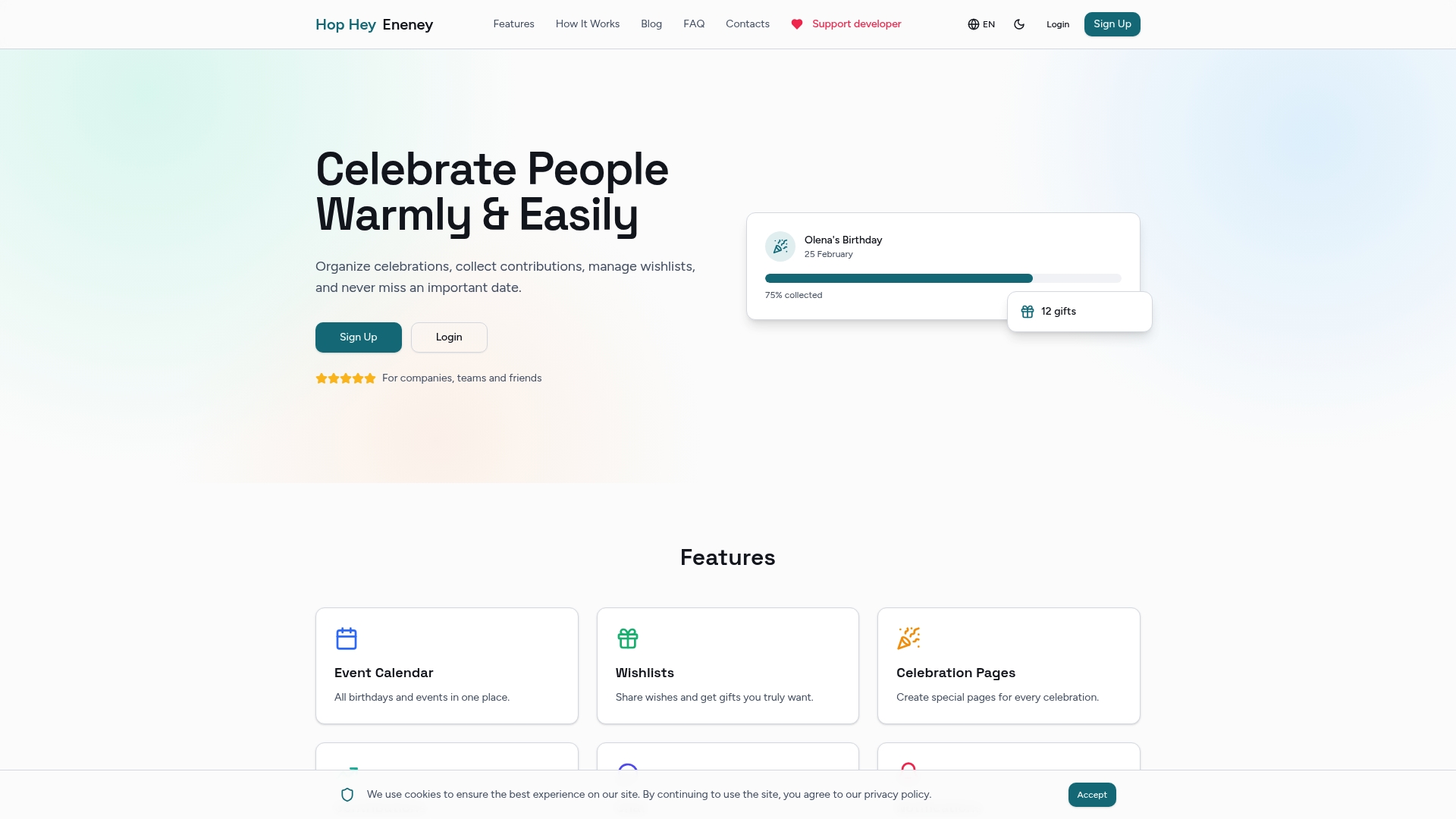
Hophey is built for exactly that situation. The platform combines a shared event calendar, private celebration pages, transparent gift fund collection, and dedicated chat coordination into one place. Teams can organize birthdays, work anniversaries, and corporate milestones without the back-and-forth that usually derails these efforts. Automated reminders, role-based permissions, and multi-currency support in UAH, USD, and EUR mean the logistics handle themselves. Start organizing with Hophey and see how much simpler team celebrations can be.
FAQ
What is modern event management?
Modern event management is the full-lifecycle discipline of planning, executing, and measuring events to deliver measurable business outcomes. It integrates technology, data analytics, and personalized attendee experiences into a single coordinated process.
How is event management different from event planning?
Event planning covers the preparatory phase, including budgeting, venue selection, and vendor coordination. Event management extends through execution, real-time problem solving, and post-event ROI measurement.
What technology do modern event managers use?
Modern event teams use end-to-end event management platforms, AI-powered personalization tools, hybrid event streaming platforms, and workflow automation systems. These tools reduce manual coordination and improve attendee engagement.
How far in advance should you start planning an event?
Large events require a venue search lead time of 6–12 months. Smaller events typically need 3–6 months, since popular venues in major markets book well in advance.
How do you prove ROI for an event?
Define measurable success criteria, such as pipeline generated, satisfaction scores, or retention rates, before the event begins. Post-event data collection against those benchmarks is the most reliable method for demonstrating event value.