
TL;DR:
- Wish lists transform passive event attendance into active participation by enabling guests to view, reserve, and purchase gifts. Digital wish list tools improve engagement, reduce duplicate gifts, and provide valuable data insights for future event planning. They have become essential, scalable infrastructure that enhances gift coordination, guest confidence, and overall experience across various event types.
Wish lists in events are interactive tools that let guests view, reserve, and purchase specific gifts, turning passive attendance into active participation. The role of wish lists in events extends well beyond gift coordination. They capture declared guest intent, reduce duplicate gifting, and create a structured experience that benefits everyone involved. Retailers deploying wish list features have seen conversion lifts of 332% and 277%, which shows how powerfully a curated list drives decisions. For event planners, HR professionals, and community organizers, that same psychology applies directly to guest engagement and gift satisfaction.
How do wish lists enhance participant engagement at events?
Wish lists create psychological ownership before an event even begins. When guests browse a curated list, they mentally connect with the person being celebrated. That connection builds anticipation and increases the likelihood they will show up, contribute, and engage meaningfully.

The practical benefits are just as significant. Wish lists reduce decision fatigue by giving guests clear, pre-approved options instead of forcing them to guess. A guest who knows exactly what to buy spends less time deliberating and more time looking forward to the event. That simplicity directly improves the guest experience.
Real-time reservation features take engagement further. When a guest claims a gift, the item is instantly marked as taken for all other viewers. This prevents the frustration of duplicate gifts and gives each guest a sense of individual contribution. Platforms like Inviteera build this logic directly into their event pages.
Wish lists also extend the interaction window. A guest who visits the list three times before the event has three touchpoints with the celebration. That repeated engagement strengthens their emotional investment in the event outcome.
Key benefits of a well-designed event wish list include:
- Reduced duplicate gifting through real-time reservation updates
- Higher guest confidence when selecting gifts, since preferences are explicit
- Longer pre-event engagement as guests return to browse and reserve
- Stronger emotional connection between guests and the person being celebrated
- Lower organizer workload because gift coordination happens automatically
Pro Tip: Keep your wish list to 15–25 items across a range of price points. Lists that are too short feel limiting; lists that are too long overwhelm guests and reduce reservation rates.
What types of wish lists work best for different events?
Not every event calls for the same wish list format. The right type depends on the audience, the occasion, and whether the list is tied to a specific invitation or shared independently.
Gift registries are the most familiar format. Weddings and baby showers have used them for decades through retailers like Target, Crate & Barrel, and Amazon. These registries work because they are expected, widely understood, and easy to share. The etiquette is established, which lowers friction for guests.
Workplace wish lists serve a different purpose. When an HR team organizes a birthday or work anniversary, a shared wish list removes the guesswork from group gifting. Instead of collecting cash and hoping the gift lands well, the team buys something the recipient actually wants. This approach, covered in depth in workplace gifting guides, consistently improves employee satisfaction with recognition programs.
Charity-focused wish lists appear at community fundraisers and nonprofit events. Instead of personal gifts, organizers list specific items or donation amounts that support a cause. This format gives donors a concrete action and shows them exactly where their contribution goes.
Standalone wish lists operate independently of any event invitation. Platforms like Inviteera enable creation and sharing of wish lists outside formal invitations, which broadens their usability for ongoing community engagement or long-term gift coordination.
| Wish list type | Best use case | Key feature |
|---|---|---|
| Gift registry | Weddings, baby showers | Retailer integration, broad item selection |
| Workplace wish list | Team birthdays, work anniversaries | Group contribution, HR-managed |
| Charity wish list | Fundraisers, community events | Donation tiers, cause-specific items |
| Standalone wish list | Ongoing gifting, informal groups | Shareable anytime, no event required |
| Invitation-integrated list | Formal celebrations, corporate events | RSVP and gifting in one place |
How do digital tools make wish list management more efficient?
Modern event platforms have moved wish list management far beyond a printed sheet or a retailer registry link buried in an email. The most effective tools combine RSVP tracking, wish list management, and guest communication in a single interface.
Apps that combine RSVP tracking with wish lists reduce confusion by centralizing all guest responses and gift preferences in one place. An organizer no longer needs to cross-reference a spreadsheet with a registry link. Everything lives together, and updates appear in real time.
Real-time reservation and purchase buttons are the most impactful feature in this category. When a guest clicks "reserve," the item is immediately marked across all views. Duplicate gifting is prevented instantly without any manual intervention from the organizer. This single feature eliminates one of the most common complaints about event gifting.
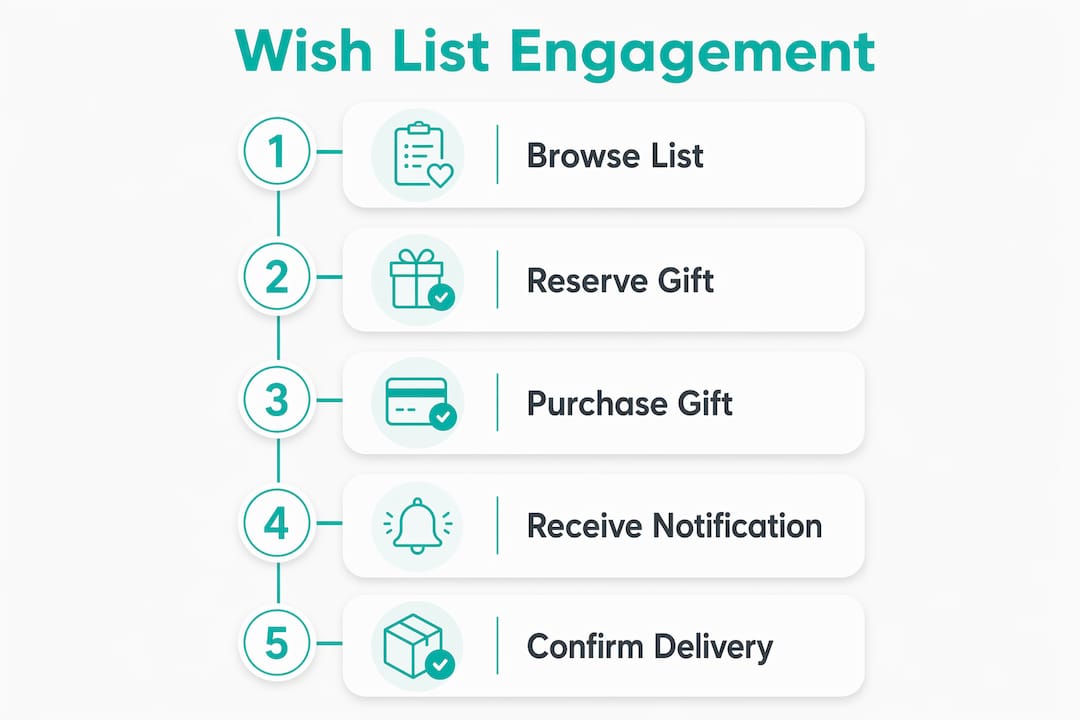
Automated guest notifications add another layer of value. When a new item is added to the list, or when a popular item is nearly claimed, guests receive an alert. That notification pulls them back to the event page and re-engages their interest. Wishlist saves act as declared purchase intent signals, and platforms that act on those signals with follow-up messages see significantly higher return rates.
Integration with online stores matters for practical reasons. A wish list item linked directly to a purchase page removes every barrier between intent and action. A guest who has to search for a product separately will often abandon the effort.
Core features to look for in a digital wish list platform:
- Real-time reservation logic that marks items instantly across all guest views
- Purchase link integration connecting list items directly to online stores
- Automated notifications that re-engage guests when items are added or nearly claimed
- RSVP and wish list combination to centralize event communication
- Analytics and tracking to show organizers which items are most viewed and reserved
Pro Tip: Before selecting a platform, confirm it supports your event's communication channels. A tool that sends Telegram notifications alongside email covers both tech-forward and traditional guests without extra effort.
What best practices maximize the benefits of event wish lists?
The wish list strategy for gatherings fails most often not because of the tool, but because of how it is introduced to guests. Clear communication is the single most important factor in wish list adoption.
Gift list etiquette guidelines recommend that wish lists be requested and clearly shared to avoid guest discomfort. The framing matters. A wish list presented as a helpful resource feels different from one that feels like a demand. Include a short note in the invitation explaining that the list is optional and designed to make gift selection easier.
Linking the wish list directly in the invitation is non-negotiable. A list that requires a separate search will be ignored by a significant portion of guests. The link should appear in the invitation body, in any follow-up reminders, and on the event page itself.
Encouraging guests to use the reservation feature requires a brief explanation. Many guests do not realize they can claim an item. A single sentence in the invitation, such as "click 'reserve' to let others know you've chosen this gift," eliminates that confusion entirely.
Wish list analytics offer an underused advantage for event planners. Tracking which items receive the most views but fewest reservations reveals price sensitivity or unclear descriptions. That data informs better list design for future events. HR professionals managing recurring employee celebrations can use this insight to build more effective lists over time. The HR wish list template guide from Hophey provides a practical starting framework for this process.
The most common pitfalls to avoid:
- Sharing the wish list too late, leaving guests with insufficient time to reserve and purchase
- Including items at only one price point, which excludes guests with smaller budgets
- Failing to update the list after items are purchased outside the platform
- Neglecting to send a reminder to guests who viewed the list but did not reserve
43% of e-commerce traffic consists of users browsing without committing. That same behavior appears in event gifting. A well-timed reminder to guests who viewed but did not reserve converts passive interest into confirmed gifts.
Key Takeaways
Wish lists work best when they combine real-time reservation, direct purchase links, and clear guest communication within a single digital platform.
| Point | Details |
|---|---|
| Wish lists reduce decision fatigue | Clear gift options with real-time reservation increase guest confidence and reduce duplicate gifts. |
| Digital platforms outperform manual methods | Tools combining RSVP and wish lists centralize communication and eliminate coordination errors. |
| Etiquette framing drives adoption | Presenting wish lists as optional resources, not demands, increases guest participation rates. |
| Analytics improve future events | Tracking views and reservations reveals guest price sensitivity and informs better list design. |
| Standalone lists extend engagement | Wish lists shared outside invitations maintain guest connection across the full event lifecycle. |
Why wish lists have become the backbone of modern event gifting
I have watched event organizers spend hours chasing down duplicate gift situations, mediating awkward conversations about who bought what, and apologizing to recipients who received three of the same item. Every one of those problems is solved by a properly implemented wish list. The tool is not new, but the way planners use it has changed dramatically.
The shift I find most significant is the move from registry as afterthought to wish list as event infrastructure. The best events I have seen treat the wish list as a core communication channel, not an optional add-on. When the list is linked in the invitation, updated in real time, and paired with automated reminders, it functions like a coordination layer that runs itself.
What I expect to see more of in the next few years is AI-driven wish list personalization. Platforms will start suggesting items based on past event data, guest demographics, and purchase history. That capability will make the [wish list impact on event planning](https://blog.hophey.gifts/blog/why-manage-gift-lists-smarter-gifting-for any-event) even more measurable and direct.
My advice to any HR professional or event planner reading this: stop treating wish lists as a courtesy feature. They are a data asset. Every reservation, every view, every abandoned list tells you something about your guests. The planners who learn to read that data will run better events, year after year.
— Konstantin
Take your event wish lists further with Hophey
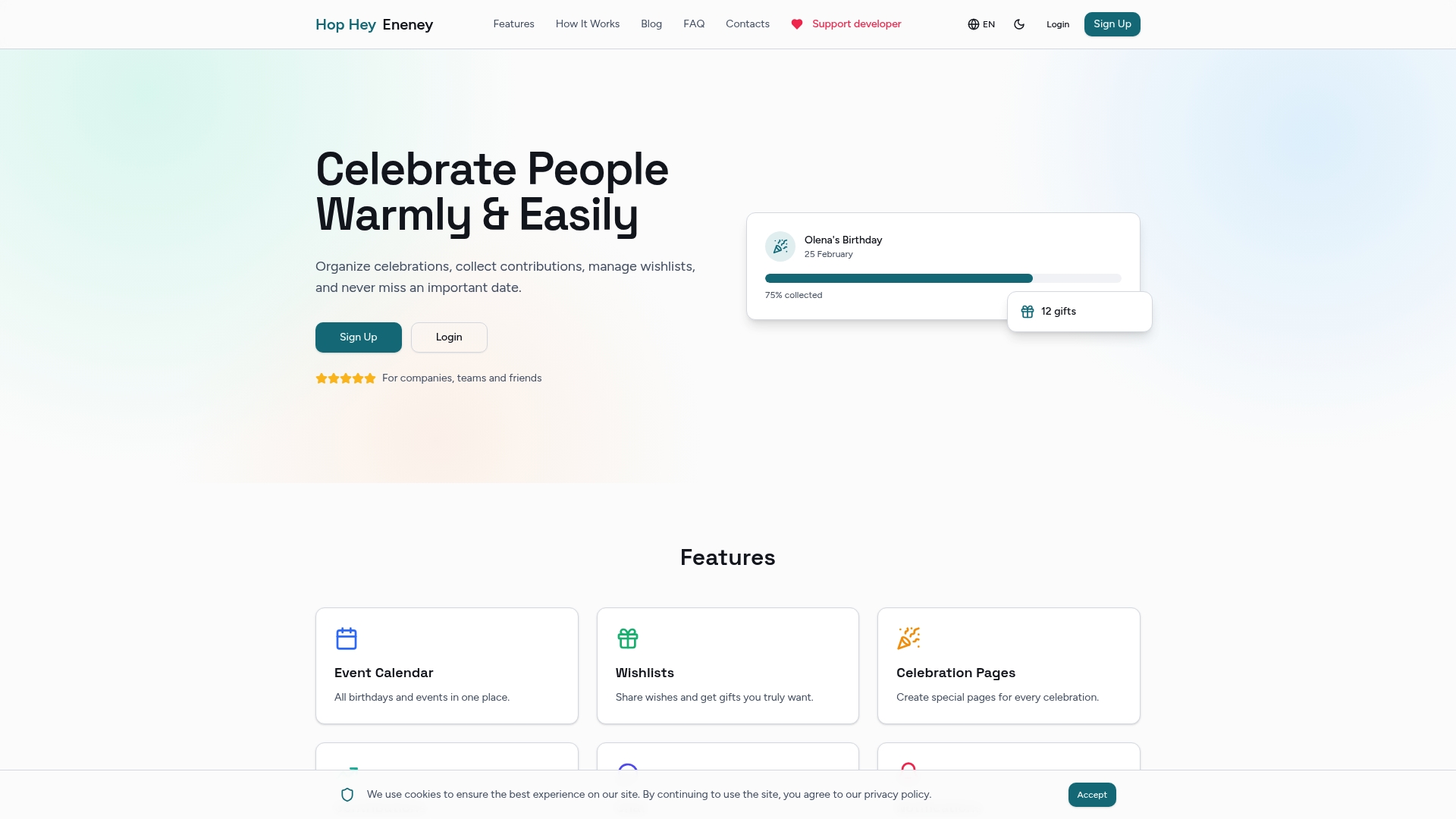
Hophey is built for exactly the scenarios this article describes. The platform combines private celebration pages, a shared event calendar, transparent gift fund collection, and personalized wish lists in one place. HR teams use it to automate employee birthday recognition. Remote teams use it to coordinate surprise celebrations without spoiling the moment. Friend groups use it to collect contributions and manage gift preferences without a single group chat argument.
Every wish list on Hophey supports real-time reservation, multi-currency contributions in UAH, USD, and EUR, and automated reminders via email and Telegram. If you are ready to replace manual coordination with a system that actually works, start managing your event gifts on Hophey today.
FAQ
What is the main role of wish lists in events?
Wish lists in events capture explicit gift preferences from the person being celebrated, allowing guests to select, reserve, and purchase items without duplication. They reduce organizer workload and improve guest satisfaction by removing guesswork from the gifting process.
How do wish lists prevent duplicate gifts at events?
Digital wish lists use real-time reservation logic that marks an item as taken the moment a guest claims it. That update appears instantly for all other guests, so no two people can select the same gift.
When should I share a wish list with event guests?
Share the wish list at the same time as the invitation, or no later than two to three weeks before the event. Late sharing reduces the time guests have to browse, reserve, and purchase, which lowers overall participation rates.
Can wish lists be used outside of formal event invitations?
Yes. Standalone wish lists can be created and shared at any time, independent of a specific event. This format works well for ongoing community gifting, workplace recognition programs, and informal friend group celebrations.
What types of events benefit most from wish lists?
Weddings, baby showers, workplace birthdays, work anniversaries, and community fundraisers all benefit from structured wish lists. Any event where multiple guests are expected to contribute gifts gains from the coordination and duplicate-prevention features a wish list provides.