TL;DR:
- Planning effective friend group celebrations relies on choosing a strong theme, matching activities to the group size, and early coordination. Using tools like sign-up sheets and dedicated platforms helps prevent last-minute issues, ensuring a memorable event.
Friend group celebration ideas are curated plans and activities designed to bring friends together in fun, engaging ways that fit any occasion and group size. The best celebrations combine a clear theme, interactive activities, and solid coordination. Without at least one of those three elements, even a well-funded party falls flat. This guide covers the formats, timelines, and practical tips that turn a casual hangout into a genuinely memorable event, whether you are planning a birthday, a reunion, or any milestone worth marking.
1. What are the best friend group celebration ideas by theme?
A strong theme does more than set the mood. Theme selection answers planning questions automatically by providing consistent cues on music, dress code, and decor. That single decision cuts coordination time in half.
Popular themes that work across group sizes include:
- Decades Night: Guests dress and act as a chosen era, from the 1970s to the 1990s. Music playlists and decor follow naturally.
- Black-and-White Soirée: A dress code theme that looks polished with minimal decor investment.
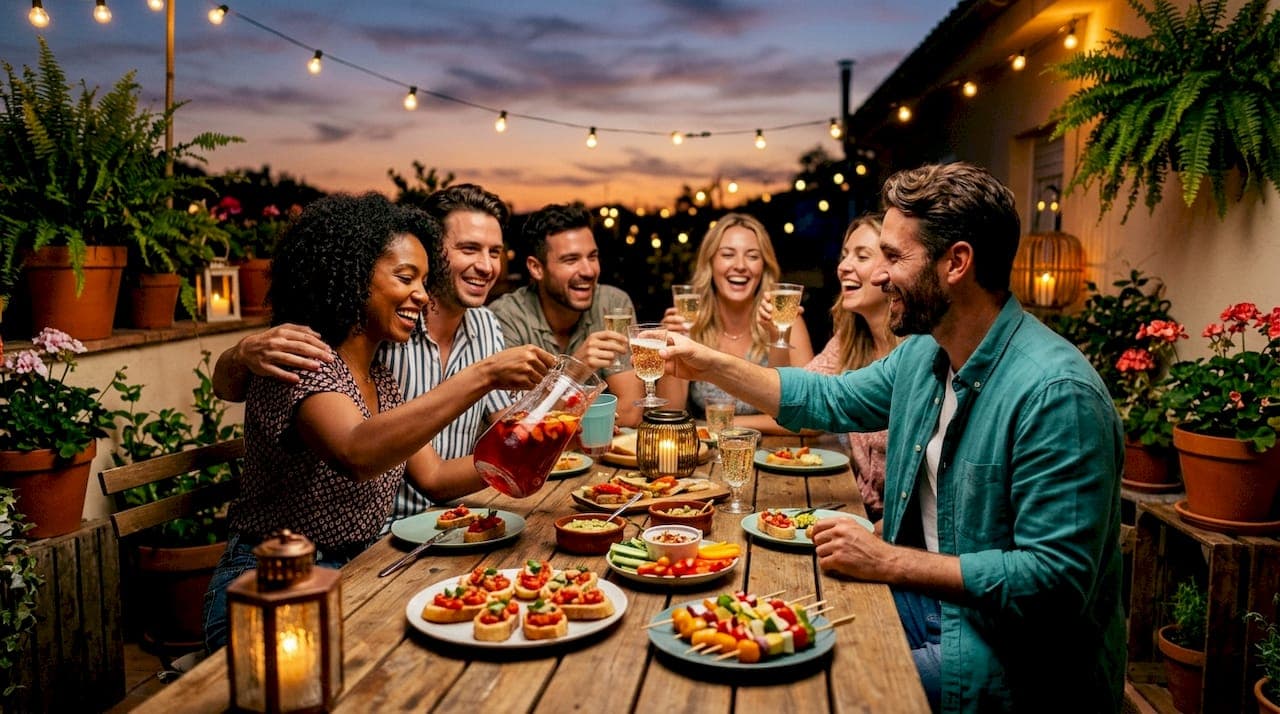
- Enchanted Forest: String lights, greenery, and earthy tones create atmosphere without a large budget.
- Murder Mystery Evening: Guests receive character roles in advance and follow a scripted storyline throughout the night.
- Casino Night: Card tables, poker chips, and a dress code make this format work for groups of 12 or more.
Formats matter as much as themes. A cocktail party suits groups that prefer mingling over structured activities. A potluck works well when the group enjoys cooking and sharing food. A game night fits medium-sized groups that want friendly competition.
Pro Tip: Pick a theme that answers at least three planning questions on its own. If your theme tells you what music to play, what to wear, and how to decorate, you have a winner.

2. How to plan a potluck for your friend group
Potlucks are one of the most cost-effective group gathering activities available, but poor coordination produces three pasta salads and no dessert. Sending sign-up sheets 2–4 weeks ahead and reminders around 3 days before cuts no-shows dramatically and prevents duplicate dishes.
The key step most groups skip is category assignment. Dish assignment by household prevents duplication and last-minute panic shopping. Assign categories like appetizers, mains, sides, and desserts before anyone volunteers. Once categories are set, guests choose within their assigned group.
Here is a simple potluck planning sequence:
- Set the date and confirm the guest count.
- Divide dishes into categories based on group size (one dish per 4–6 guests is a reliable ratio).
- Send a sign-up sheet with category labels, not open slots.
- Add a theme to unify the menu. An Italian night or a taco bar makes sign-ups easier and menus more cohesive.
- Send a reminder 3 days before with the full dish list so guests can check for gaps.
- Prepare a serving station with labels, utensils, and heating options on the day.
| Planning step | Timing |
|---|---|
| Set date and guest count | 4–6 weeks before |
| Send category sign-up sheet | 3–4 weeks before |
| Confirm all dish assignments | 2 weeks before |
| Send reminder with full dish list | 3 days before |
| Prepare serving station | Day of event |
Pro Tip: Add a "wild card" category for guests who want to bring something unexpected. It fills gaps and adds variety without disrupting your planned menu.
3. Activities and entertainment by group size
The right activity depends entirely on how many people are coming. Game nights suit groups of around 8–16 people; casino nights or stakes-based games handle 12–20 guests comfortably. Matching the activity to the headcount prevents the two most common problems: dead time and overcrowding.
For groups of 6–12, structured options work best:
- Murder mystery parties scale well because scripted formats handle groups from 6 to 30 or more, using individual or team roles depending on size.
- Trivia nights with 3–4 person teams keep everyone involved without requiring one person to host the whole event.
- Escape room outings work well for groups that prefer a shared challenge over passive entertainment.
For larger groups of 15 or more, team-based formats are more reliable than individual games. Scavenger hunts, relay challenges, and group cooking classes all divide naturally into teams. Structured activities with clear roles reduce host improvisation and keep energy flowing during complex celebrations.
Food pacing matters more than most hosts realize. Aligning heavier finger food appetizers with game round breaks enhances guest satisfaction and prevents the energy dip that hits mid-event.
Pro Tip: Schedule your most interactive activity 45–60 minutes after guests arrive. That window lets latecomers settle in without making early arrivals wait too long.
4. Budget and timeline tips for group celebrations
Budget planning is where most friend groups underestimate costs. Typical adult birthday party budgets allocate roughly 30–40% to venues, 40–50% to food and drinks, 10–15% to decor, and 5–10% to entertainment. Those ratios shift when you move the event home, where venue costs drop to zero and food becomes the dominant expense.
Start planning earlier than feels necessary. For a birthday or reunion with 15 or more guests, a 6–12 week lead time gives you room to book vendors, confirm RSVPs, and handle surprises. Smaller gatherings of 8–10 friends can come together in 3–4 weeks if the format is simple.
Key budget and timeline milestones:
- 8–12 weeks out: Lock the date, confirm the format, and book any paid venue or vendor.
- 4–6 weeks out: Send invitations and open RSVPs. Order a custom cake if needed.
- 2–3 weeks out: Finalize headcount and adjust food or activity quantities.
- 1 week out: Confirm all vendor bookings and send a reminder to guests.
- Day before: Prepare decor, set up any game materials, and confirm the food plan.
Home events cut venue costs but add setup labor. Factor that time into your planning. Assigning one person to handle decor and another to manage food logistics prevents both from falling on the same person.
5. How coordination tools improve group celebration planning
Clear communication is the difference between a smooth celebration and a chaotic one. The most common failure point is assuming everyone saw the group chat message. Dedicated sign-up tools and structured reminders fix that assumption.
Effective coordination for friend group celebrations includes:
- Using a shared sign-up sheet with category labels instead of an open group chat thread.
- Sending reminders through the channel your group actually uses, whether that is WhatsApp, email, or a group text.
- Designating one person as the RSVP and logistics coordinator so questions have a clear destination.
- Sharing a photo album or thank-you note after the event to close the loop and build anticipation for the next one.
Designating a photographer at adult birthday parties ensures the host enjoys the event without stress. Most hosts end up with the fewest photos of any guest because they are managing everything else. Assigning that role in advance solves the problem before it starts.
For groups that celebrate together regularly, a shared event calendar removes the "when is everyone free?" conversation. Platforms built for group celebration coordination handle reminders, RSVPs, and contribution tracking in one place, which is especially useful when the group is large or spread across different cities.
Key takeaways
The most effective friend group celebrations combine a clear theme, activity formats matched to group size, and early coordination that removes guesswork from every step.
| Point | Details |
|---|---|
| Theme first | Choose a theme that answers music, dress code, and decor questions automatically. |
| Match activity to headcount | Game nights work for 8–16 guests; team formats suit groups of 15 or more. |
| Assign potluck categories early | Send sign-up sheets 3–4 weeks out with category labels to prevent duplicate dishes. |
| Budget by category | Allocate 40–50% to food and drinks, 30–40% to venue, and the rest to decor and entertainment. |
| Designate roles | Assign a coordinator and a photographer before the event to reduce host stress. |
What actually makes a friend group celebration memorable
The format matters more than the venue. I have seen beautifully decorated spaces produce forgettable evenings and living room game nights become the events people talk about for years. Matching the format to the guest of honor's social style is the single most important decision you make, and most groups skip it entirely.
The second thing I have learned is that structure and flexibility are not opposites. The best celebrations have a clear spine, a theme, a main activity, a food plan, and a rough timeline. But they leave room for the conversation that runs long, the game that gets extended, and the spontaneous moment nobody planned. Rigid schedules kill the energy that makes celebrations worth having.
Coordination roles are underrated. Assigning someone to take photos, someone to manage the food timeline, and someone to handle music means the host actually gets to enjoy the party. Without those assignments, everything defaults to one person, and that person spends the night managing logistics instead of celebrating.
My honest advice: stop trying to make it perfect. A celebration with a clear theme, good food, and people who genuinely want to be there will always beat an overproduced event where the host is too stressed to laugh. Plan enough to prevent chaos, then let the night do the rest.
— Konstantin
Hophey makes group celebration planning easier
Organizing a friend group celebration involves a lot of moving parts: RSVPs, gift contributions, reminders, and keeping the surprise intact. Hophey is a platform built specifically for that coordination challenge.
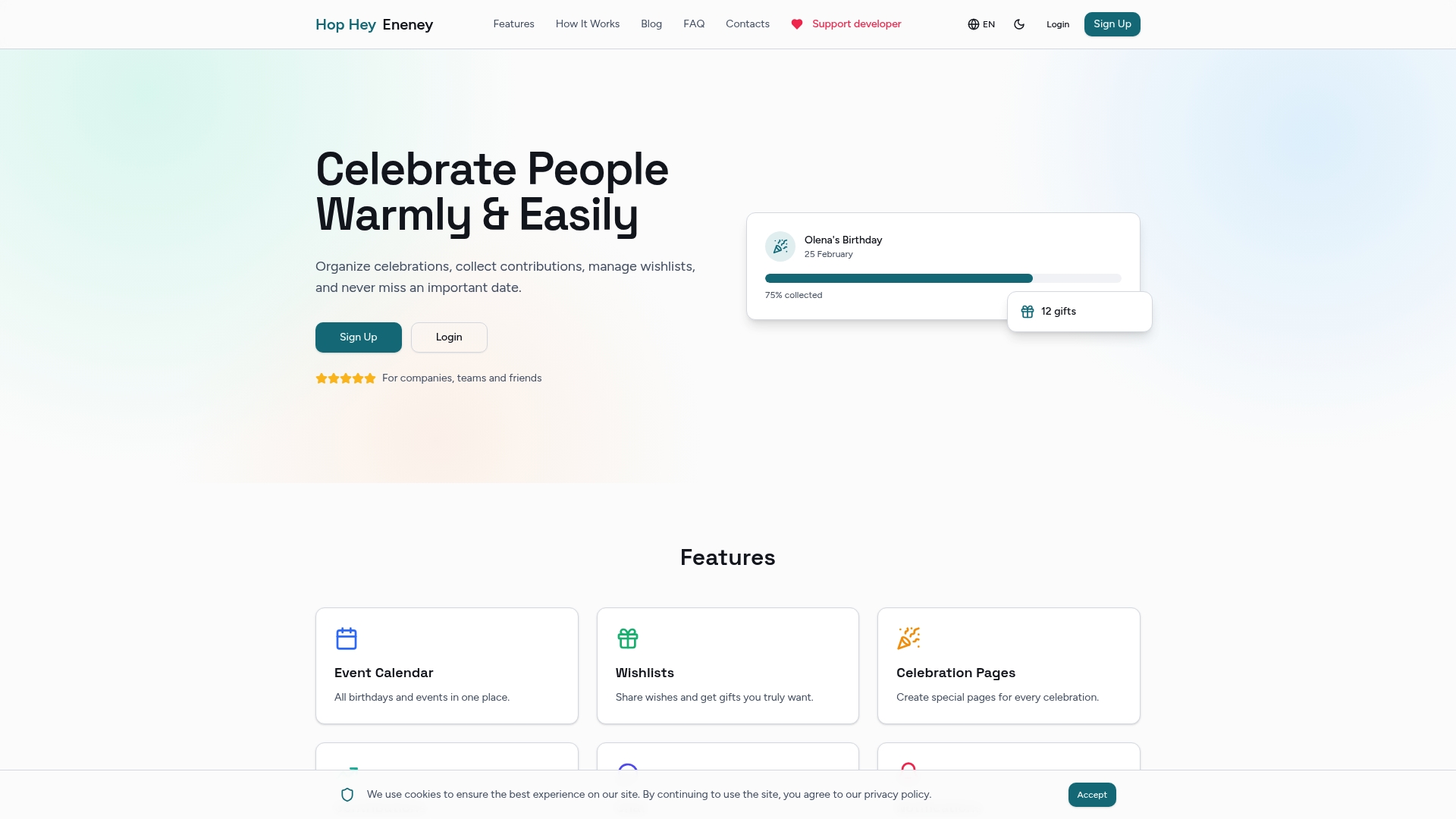
With Hophey, friend groups create private celebration pages, collect gift contributions transparently, and communicate in a dedicated chat without the guest of honor seeing any of it. The platform supports group gift coordination with multi-currency options in UAH, USD, and EUR, automated reminders via email and Telegram, and real-time contribution tracking. Whether you are planning a birthday, a reunion, or any milestone, Hophey removes the back-and-forth that makes group planning exhausting. You can also find party planning tips on the Hophey blog to help your group get started.
FAQ
What are the easiest friend group celebration ideas for large groups?
Casino nights, team trivia, and murder mystery parties scale well for groups of 12 or more because they divide naturally into teams and require minimal host improvisation.
How far in advance should you plan a friend group celebration?
Plan 6–12 weeks ahead for gatherings of 15 or more guests. Smaller groups of 8–10 can organize a solid event in 3–4 weeks with a simple format.
How do you prevent potluck disasters at friend group parties?
Send a sign-up sheet with assigned dish categories 3–4 weeks before the event, then send a reminder 3 days out. Category assignments prevent duplicates and last-minute gaps.
What is the best budget split for a friend group birthday party?
Allocate roughly 40–50% of the budget to food and drinks, 30–40% to the venue, 10–15% to decor, and 5–10% to entertainment as a reliable starting point.
How can you keep a group celebration a surprise?
Use a private coordination channel that excludes the guest of honor. Platforms like Hophey offer dedicated private chat and contribution tracking specifically designed to keep celebrations secret until the moment arrives.