
TL;DR:
- Effective Christmas wishes combine a clear greeting, specific emotion or blessing, and a personal touch that resonates with the recipient.
- Matching the tone to the relationship, avoiding generic phrases, and incorporating sincerity make holiday messages memorable and meaningful.
Finding the right words at Christmas is harder than it looks. A generic "Happy Holidays!" gets the job done, but it doesn't do much else. The best wishes for Christmas are the ones that make someone stop, smile, and actually feel something. Whether you're writing to your grandmother, your boss, or a friend you haven't seen in two years, the message you choose says something about how much you care. This guide covers everything from ready-to-use templates to personalization strategies that turn ordinary holiday greetings into something people actually keep.
Table of Contents
- Key Takeaways
- 1. What makes the best wishes for Christmas actually work
- 2. Criteria for choosing the right Christmas message
- 3. Warm and informal wishes for family and close friends
- 4. Formal and professional Christmas greetings
- 5. Faith-based and religious Christmas blessings
- 6. Inclusive and non-denominational holiday wishes
- 7. Techniques for personalizing Christmas wishes at scale
- 8. Comparison of Christmas wish tones and formats
- My honest take on Christmas messages most people get wrong
- Make every Christmas wish count with Hophey
- FAQ
Key Takeaways
| Point | Details |
|---|---|
| Start with your goal | Decide if your message aims for cheer, gratitude, or reconnection before writing a single word. |
| Match tone to relationship | Formal messages suit colleagues; warm and personal ones work best for family and close friends. |
| Avoid generic phrases | Adding one relationship-specific detail makes any Christmas greeting feel genuine and memorable. |
| Use inclusive wording wisely | Phrases like "peace, health, and joy" work across diverse audiences without losing warmth. |
| Personalization beats perfection | A specific, heartfelt line matters more than polished, impersonal prose. |
1. What makes the best wishes for Christmas actually work
Not all Christmas greetings land the same way. Some feel warm and personal. Others feel like they were copied from the inside of a store-bought card. The difference usually comes down to three things: intent, specificity, and tone.
Effective Christmas wishes combine a direct holiday greeting, an emotion or blessing, and a forward-looking line. That structure alone takes a message from flat to complete. But what makes it truly work is deciding your goal first. Are you expressing gratitude? Offering comfort to someone who had a rough year? Reconnecting with a distant relative? The intent behind a message guides your tone, length, and word choice more than any template can.
Personalization is the other non-negotiable. Heartfelt holiday messages are valued more when they reflect on the recipient's specific life and your relationship with them. That does not mean writing a novel. Even one sentence referencing a shared memory or a recent milestone transforms the message completely.
Pro Tip: Think of your Christmas card as a short "reason + wish" note. Mention one specific thing about the relationship, then add your blessing. That formula works for everyone from your closest friend to a work acquaintance.
2. Criteria for choosing the right Christmas message
Before you write anything, ask yourself a few quick questions. Who is this person to you? What do you want them to feel when they read it? How much time do you have, and how many people are you writing to?
These questions shape everything:
- Purpose first. A message meant to cheer someone up reads differently than one meant to say thank you. Gratitude calls for warmth and acknowledgment. Reconnection calls for nostalgia and openness.
- Relationship type. Personal relationships allow for informal, playful, or emotional language. Professional ones generally call for sincerity without oversharing.
- Level of personalization. One-to-one messages deserve specific references. Bulk-sent cards still benefit from a brief personal line, even if the core message is the same.
- Tone consistency. A jokey, casual message sent to your sister would feel odd sent to a client. Match the energy of the relationship.
Sincerity and genuine reflection turn holiday cards into keepsakes rather than social obligations. That standard is worth holding yourself to, even when you're writing quickly.
3. Warm and informal wishes for family and close friends
Close relationships give you the most creative freedom. These messages can be funny, sentimental, or playfully over the top. Here are some directions you can take them:
- "Wishing you the coziest Christmas yet. You deserve every good thing coming your way this year and next."
- "Merry Christmas to the person who makes every celebration better just by showing up. Love you more than words."
- "Here's to a Christmas full of laughter, great food, and absolutely zero awkward silences. Missing you this year."
- "This season, I'm most grateful for you. Merry Christmas, and here's to a New Year that treats you even better."
The best informal merry Christmas messages feel like something you'd actually say out loud. If you read it back and it sounds like a greeting card wrote it, revise until it sounds like you.
Pro Tip: Reference something specific from your shared year. Did you travel together? Go through something hard? Celebrate a win? One line about that turns a warm wish into something unforgettable.

4. Formal and professional Christmas greetings
Professional messages need to be warm without crossing into overly personal territory. The goal is to make the recipient feel valued and seen, not like they received a form letter.
Try these templates as starting points:
- "Wishing you a peaceful and joyful holiday season. It has been a genuine pleasure working with you this year, and I look forward to what we'll accomplish together in the year ahead."
- "Season's greetings and warm holiday wishes to you and your team. May this time of year bring rest and renewed energy for all that's ahead."
- "Thank you for your partnership this year. Wishing you a wonderful Christmas and a prosperous New Year."
Formal messages work best when they acknowledge the professional relationship directly. A single line of gratitude for the working relationship takes the message from generic to respectful.
5. Faith-based and religious Christmas blessings
For recipients who share a faith tradition, religious wishes carry special weight. Faith-affirming Christmas wishes often include themes of joy, gratitude, remembrance, and prayers for peace. Official messages at the highest levels blend goodwill with these themes for good reason. They create emotional grounding.
The Vatican's 2025 Christmas greetings centered on joy, hope, humility, and peace, wishing a holy Christmas and blessings of light. That framing works beautifully in personal cards too.
Here are a few examples to adapt:
- "May the peace and light of Christmas fill your home and heart this season. Wishing you a blessed and holy Christmas."
- "As we celebrate the birth of Christ, I'm grateful for your presence in my life. May God's grace surround you now and throughout the New Year."
- "Praying that this Christmas brings you deep joy, quiet peace, and the company of those you love most."
Faith-based wishes land best when religious language follows naturally after goodwill and gratitude, rather than leading with it.
6. Inclusive and non-denominational holiday wishes
Not everyone you write to celebrates Christmas the same way, and some recipients may not celebrate it religiously at all. Inclusive festive season greetings let you extend genuine warmth without making assumptions.
Inclusive holiday wishes that avoid religious specificity still maintain warmth and bridge diverse celebrations effectively. Phrases like peace, health, and joy translate well across cultures and platforms.
Some options that work across diverse audiences:
- "Wishing you a joyful holiday season filled with warmth, laughter, and everything you've been hoping for."
- "Happy holidays to you and yours. May the coming year bring good health, connection, and plenty of reasons to celebrate."
- "Sending you the warmest best wishes for the holiday season. Thank you for being part of this year."
When you're unsure about a recipient's beliefs, lean toward these kinds of warm holiday wishes. They feel genuine without requiring you to guess.
7. Techniques for personalizing Christmas wishes at scale
Sending cards to fifty people doesn't mean all fifty have to feel like they got a mass mailing. Personalizing bulk Christmas cards with small personal notes enhances sincerity and warmth significantly.
Here's a practical approach:
- Write one core message. Draft a single base message that captures your tone and intent.
- Create a short personal insert list. For each recipient, note one thing: a shared experience, a milestone they hit, or something you admire about them.
- Add the personal line at the top or bottom. Something like "Watching you launch your business this year was genuinely inspiring" takes ten seconds to write and means everything to the reader.
- Group similar relationships. Write one version for close friends, one for extended family, one for colleagues. That cuts repetition while still keeping messages appropriate.
- Handwrite at least the signature. Even if the rest is printed, a handwritten name and short note at the bottom signals real effort.
You can also use a tool like Hophey's Christmas card organizer to track who you've sent to and keep notes on personal details to reference each year.
8. Comparison of Christmas wish tones and formats
Choosing the right tone is easier when you can see the options side by side. Here's how the main styles compare:
| Style | Tone | Typical length | Best used for |
|---|---|---|---|
| Informal/warm | Casual, emotional, playful | 2 to 4 sentences | Close friends, immediate family |
| Formal/professional | Respectful, appreciative | 2 to 3 sentences | Colleagues, clients, acquaintances |
| Faith-based/religious | Reverent, hopeful, prayerful | 2 to 4 sentences | Shared-faith family or friends |
| Inclusive/non-denominational | Warm, neutral, uplifting | 1 to 3 sentences | Diverse groups, mixed-faith recipients |
A few situational notes worth knowing:
- Distant family often responds best to warm, slightly nostalgic messages that acknowledge the time apart without making it awkward.
- Group cards benefit from inclusive wording so no one in the group feels left out of the sentiment.
- Colleagues you don't know well deserve a professional message that still sounds human, not corporate-boilerplate.
- For those sending team-wide holiday wishes for groups, inclusive phrasing keeps the message welcoming for everyone.
The same core wish can stretch across all four styles. "Wishing you joy and peace this season" works formally, casually, and inclusively. The surrounding words and personal details are what shift the register.
My honest take on Christmas messages most people get wrong
I've watched people spend more time picking a card design than writing what's inside it. That's backwards. The words are what someone reads three times. The envelope gets recycled.
The biggest mistake I see is defaulting to joyous Christmas phrases that sound borrowed rather than felt. "Season's greetings and best wishes!" is technically fine and emotionally empty. The second biggest mistake is over-editing. People write something real, then sand down all the edges until it no longer sounds like them.
What I've learned is that the messages people actually save are the ones that name something specific. Not "you mean so much to me," but "watching you push through everything you faced this year and still show up with a smile genuinely moved me." That second version takes an extra thirty seconds. It creates a different result entirely.
There's also a tendency to treat Christmas as the one time per year you can say something meaningful, so the pressure builds and people freeze. My suggestion: lower the bar on perfection, raise the bar on sincerity. An imperfect message that feels true is worth infinitely more than a polished one that could have been sent to anyone.
The holidays are one of the few moments people actually pause and think about the people in their lives. Use that moment. Don't waste it on a phrase someone's already seen on a thousand other cards.
— Konstantin
Make every Christmas wish count with Hophey
Sending heartfelt Christmas greetings is only half the challenge. Organizing who gets what, coordinating group gifts, and keeping track of everyone's preferences is where things get chaotic fast. Hophey is built exactly for that.
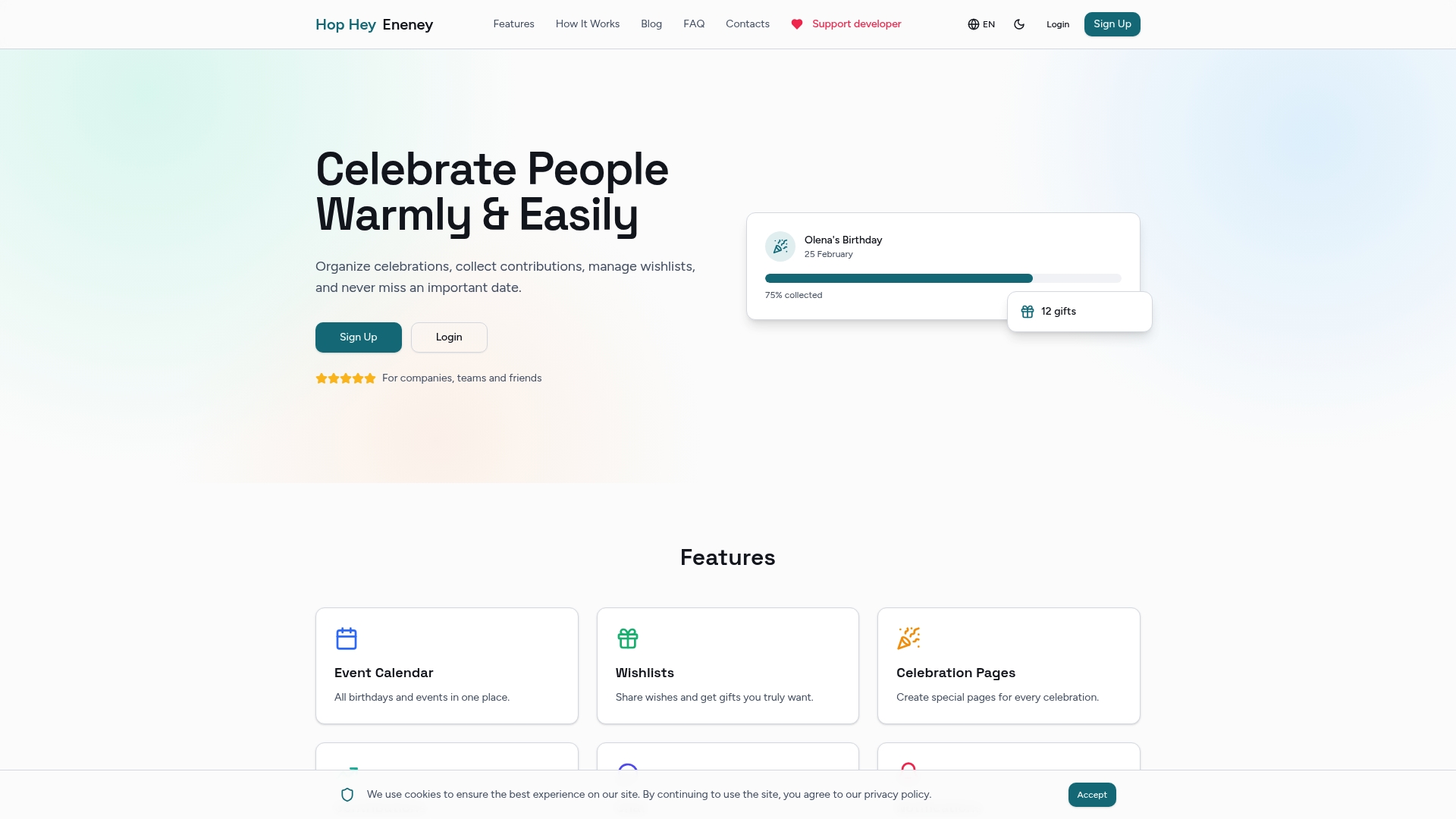
Hophey's platform lets you create a celebration page, coordinate group gift contributions, and manage wish lists for everyone on your list, all in one place. Whether you're an HR team sending company-wide holiday wishes or a friend group pulling together a surprise, Hophey removes the back-and-forth and keeps everyone organized. Reach out through the contacts page to see how Hophey can make your holiday season feel less like logistics and more like genuine celebration.
FAQ
What should I write in a Christmas card?
Effective Christmas wishes include a greeting, an emotion or blessing, and a forward-looking line. Adding one personal detail about your relationship makes the message feel sincere rather than generic.
How do I write inclusive holiday wishes?
Use phrases like "peace, health, and joy" that carry warmth without religious specificity. These work well for diverse groups, workplace greetings, and anyone whose beliefs you're unsure about.
How long should a Christmas message be?
Two to four sentences is the sweet spot for most recipients. Shorter works for professional contacts; slightly longer is fine for close family and friends when you have something specific to say.
How do I personalize Christmas cards I'm sending in bulk?
Write one core message, then add a single personalized line for each recipient referencing something specific about them or your shared year. Small personal notes dramatically improve how sincere bulk cards feel without taking much extra time.
Are religious Christmas wishes appropriate for everyone?
No. Faith-based messages are meaningful for recipients who share your beliefs, but for colleagues or diverse groups, inclusive holiday wishes that focus on warmth, peace, and joy are the safer and equally heartfelt choice.