
TL;DR:
- Transparent gift collection involves openly sharing contribution details and progress to build trust and encourage participation. Success relies on choosing a specific gift, setting a clear per-person amount, using one communication channel, and sharing real-time updates. Common pitfalls include poor messaging, unclear deadlines, and multiple platforms, which reduce group engagement and cause confusion.
Transparent gift collection is the practice of openly organizing group gift contributions by sharing the gift choice, per-person amount, and payment progress with every participant. Most group gifts fall short not because people are unwilling to give, but because the organizer never clearly stated what was needed or why. This guide to transparent gift collection covers every step: from crafting the first message to closing the fund and delivering the gift. Whether you are planning a birthday, a wedding, or a corporate milestone, the same core principles apply.
What is transparent gift collection and why does it matter?
Transparent gift contribution means every participant knows the gift, the target amount, the per-person ask, and the current progress. Nothing is hidden, and no one has to guess whether their contribution was received or whether the group hit its goal. That openness builds trust and makes people far more willing to participate.
The biggest mistake in group gifting is leading with the money ask rather than explaining the sentimental value and purpose of the gift first. When people understand why the gift matters, the financial request feels natural rather than transactional. Experts consistently find that messages explaining the gift's history or meaning create emotional buy-in before requesting payment, which leads to higher engagement across the group.
Transparency also protects the organizer. When everyone can see the running total and who has contributed, disputes about missing funds or unfair contributions simply do not arise. The process feels like a shared celebration rather than a collection drive.
How to start a transparent gift collection: key prerequisites
Before you send a single message, three decisions must be locked in: the specific gift, the monetary goal, and the communication channel. Skipping any one of these creates confusion later.

Decide on the gift first. Asking people to contribute to a vague "gift fund" produces lower participation than naming the exact item or experience. A specific gift gives contributors something to feel excited about.
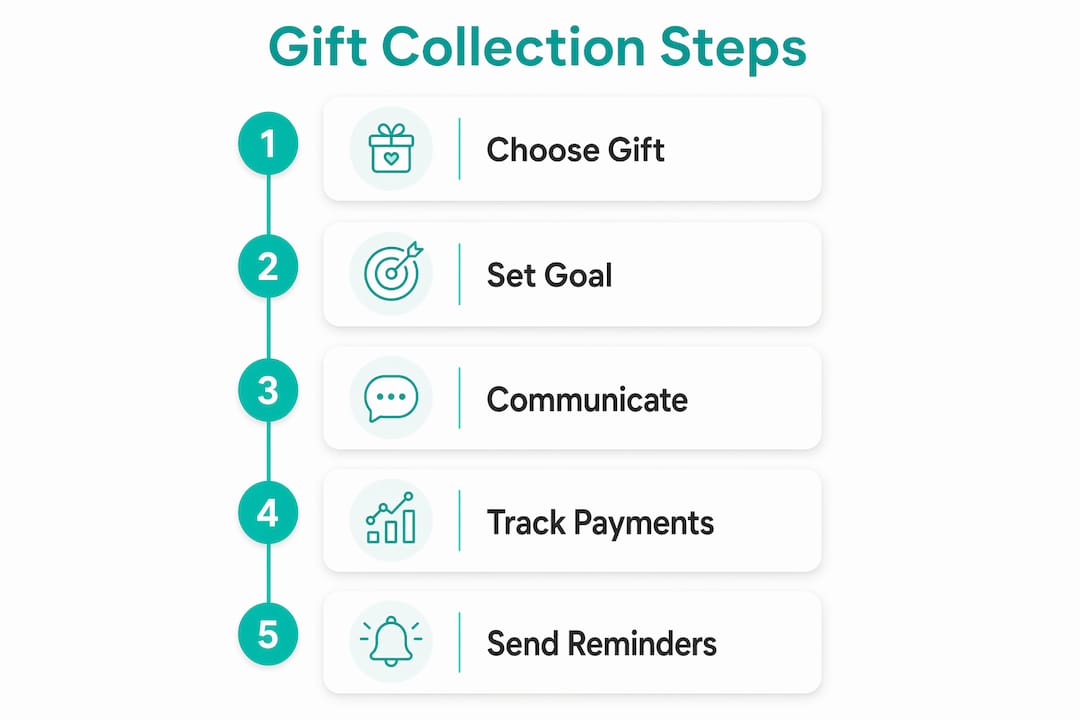
Set a clear per-person amount. Naming one clear amount produces a pool closer to the target than asking for "whatever feels right," which often comes in 30–40% under target. Divide the total cost by the number of expected contributors and round to a clean number.
Choose one communication channel. Switching between multiple platforms increases bookkeeping complexity and delays collection progress. Pick the app your group already uses, whether that is a team chat, a group text, or a dedicated platform like Hophey.
Prepare a short group card message. Write two to three sentences explaining who the gift is for, what it is, and why the group chose it. This message goes out with the payment link, not separately.
Pro Tip: Before setting the per-person amount, check whether any group members have already mentioned budget constraints. Adjusting the ask by $5–$10 upfront is far easier than handling partial payments later.
| Prerequisite | Why it matters |
|---|---|
| Specific gift chosen | Gives contributors something concrete to support |
| Clear per-person amount | Prevents under-collection and awkward follow-ups |
| Single payment channel | Reduces confusion and speeds up the process |
| Group card message ready | Combines emotional context with the payment request |
| Collection timeline set | Keeps the process moving toward a firm deadline |
How to execute a transparent gift collection step by step
A well-run collection follows six steps in order. Skipping steps or reordering them is the most common cause of low participation and organizer stress.
-
Craft the invitation message. Open with the "why." Describe who you are celebrating, what the gift is, and what makes it meaningful. Keep this to two or three sentences. The financial ask comes second, not first.
-
State the amount and deadline clearly. Write the exact per-person contribution and the closing date in plain language. "We are collecting $25 per person by Friday, June 6" is better than "sometime this week." Starting invitations 5–7 days before the deadline gives people enough time without letting the request fade from memory.
-
Send everything in one message. Combine the group card, the payment link, and the deadline in a single communication. Sending them separately creates extra steps and reduces follow-through.
-
Combine signing and contributing in one workflow. Most successful strategies combine signing a group card and making a contribution in one workflow rather than treating them as separate tasks. When the emotional act and the financial act happen together, the payment feels like part of the celebration.
-
Send one reminder. One courteous message 24 hours before the deadline is enough. Sending more than one reminder risks turning the gift into a chore and can damage group goodwill.
-
Close on the deadline and finalize the purchase. Set the collection deadline two days before the gift delivery date. That buffer gives you time to buy and wrap the gift without rushing.
Pro Tip: Write your reminder message before you launch the collection. Having it ready means you send it calmly on day six instead of scrambling to find the right tone under pressure.
What tools help you track contributions transparently?
Tracking who has paid and how much the group has collected is where many organizers lose control. The right tool depends on group size and how much automation you want.
Simple spreadsheets
A shared Google Sheet works for groups of up to ten people. Create three columns: contributor name, amount pledged, and amount paid. Share the sheet with view-only access so every participant can check the running total without editing anything. The limitation is manual entry. Every payment requires someone to update the sheet, and that person is usually the organizer.
Airtable for larger or recurring collections
Airtable supports tables for contributors, payments, rollup fields for total paid, and formula fields for balance owed, with read-only sharing options to keep participants informed. For a team of 20 or more, or for HR teams running monthly employee celebrations, Airtable's linked records and formula automation save significant time. You can build a contributor table linked to a payments table, then use a rollup field to calculate each person's balance automatically.
Dedicated platforms
Platforms built specifically for group gift coordination handle payment collection, tracking, and communication in one place. Hophey, for example, provides real-time contribution tracking, multi-currency support across UAH, USD, and EUR, and a private chat so the group can coordinate without involving the person being celebrated.
Transparent tracking reduces confusion and disputes around who contributed what. Whichever tool you choose, the key rule is the same: every contributor should be able to see the current total and their own payment status at any time.
| Tool | Best for | Main limitation |
|---|---|---|
| Google Sheets | Groups of up to 10 | Manual updates required |
| Airtable | Teams of 20+ or recurring events | Setup time for formulas |
| Dedicated platform (e.g., Hophey) | Any size, ongoing celebrations | Requires account creation |
How do you handle common transparency problems in group collections?
Even well-organized collections hit friction. Knowing the most common problems in advance lets you handle them without damaging the group's mood.
Participation shortfalls are normal. Participation rates typically range from two-thirds to three-quarters of invited contributors in group gift collections. Plan your budget assuming not everyone will contribute. If the full group pays in, treat the surplus as a bonus toward a nicer gift or a group card.
Non-payers deserve a quiet approach. Never call out individuals publicly in the group chat. A private message works far better and preserves the celebratory atmosphere. Most non-payment is forgetfulness, not refusal.
Partial payments need a clear policy. Decide before you launch whether you will accept partial contributions. If you do, note the partial amount in your tracker and follow up privately for the remainder after the deadline.
Over-collection is a good problem with one right answer. If you collect more than the gift costs, spend the surplus on a better version of the gift, add a gift card, or put it toward the celebration itself. Never pocket the difference or leave it unaccounted for. Transparency means accounting for every dollar.
"The goal is to make contributing feel like joining a celebration, not paying a bill. Every message you send should reinforce that the group is doing something meaningful together, not just splitting a cost."
For a deeper look at managing contribution workflows across teams, the principles of clear communication and single-channel coordination apply just as much in a corporate setting as in a friend group.
Key Takeaways
Transparent gift collection succeeds when you name the gift, set a specific per-person amount, use one communication channel, and share real-time progress with every contributor.
| Point | Details |
|---|---|
| Lead with sentiment, not money | Explain the gift's meaning before stating the per-person amount to drive participation. |
| Name one clear amount | A specific ask produces a pool closer to target than an open-ended request. |
| Use a single channel | One platform for communication and payment reduces confusion and speeds collection. |
| Track and share progress | Read-only access to contribution totals builds trust and prevents disputes. |
| One reminder only | A single follow-up 24 hours before the deadline improves rates without creating friction. |
Why I think most group gift collections fail before they start
The failure usually happens in the first message. The organizer writes something like "Hey everyone, we're collecting for Sarah's gift, Venmo me $20." That sentence skips the entire emotional foundation of the gift. Sarah has been on the team for five years. She covered for three people during the pandemic. The gift is a weekend spa package because she has been running on empty. None of that is in the message, and so the $20 ask feels like a toll rather than an invitation.
I have seen this pattern repeat across birthday collections, wedding funds, and corporate farewell gifts. The organizer knows the full story but assumes everyone else does too. They do not. Write the story down, even in two sentences, and participation climbs noticeably.
The second thing I have learned is that channel choice matters more than people expect. A group that lives in Slack will not check a separate payment app. A family that texts will not log into a web portal. Match the tool to the group's existing behavior, and the collection almost runs itself. Fight the group's habits, and you will spend the week chasing people.
Finally, transparency is not just about showing the numbers. It is about making every contributor feel like a co-author of the celebration rather than a line item in a spreadsheet. When people can see that 14 out of 18 colleagues have already contributed, they feel social momentum. That momentum does more work than any reminder message.
— Konstantin
How Hophey makes transparent gift collection easier
Group gift coordination gets complicated fast, especially when you are managing a team of 20 or planning a surprise celebration across time zones.
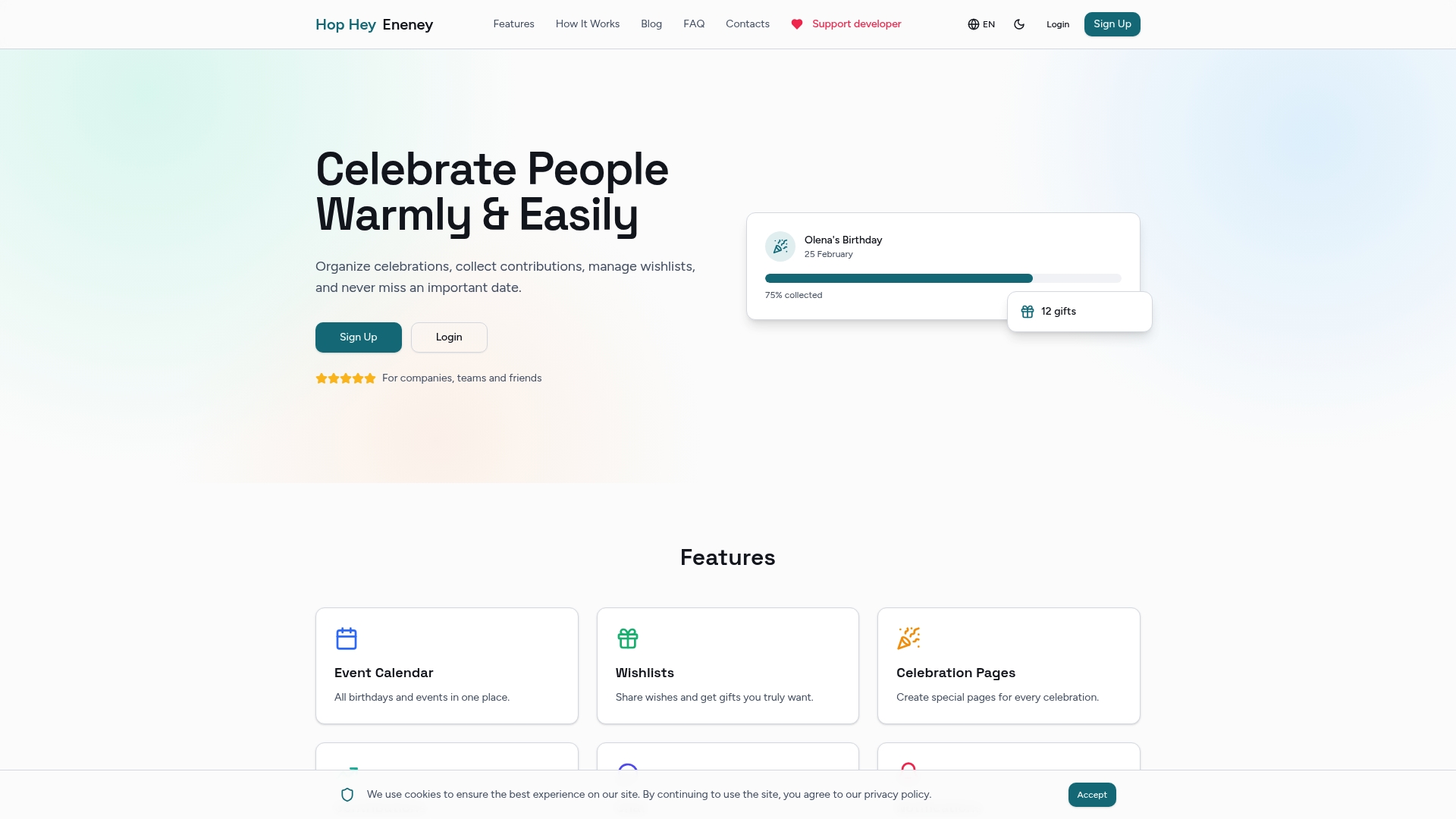
Hophey brings together private celebration pages, real-time contribution tracking, and a dedicated group chat into one place. Contributors can sign a group card and submit their payment in a single step, which is exactly the combined workflow that drives higher participation. The platform supports multi-currency payments in UAH, USD, and EUR, sends automated reminders via email and Telegram, and keeps the whole process hidden from the person being celebrated. For HR teams, remote groups, and anyone who wants to run a transparent group gift without managing three separate tools, Hophey is the practical choice.
FAQ
What is transparent gift collection?
Transparent gift collection is the process of openly sharing the gift choice, per-person contribution amount, and payment progress with all group participants. It builds trust and reduces disputes by keeping every contributor informed in real time.
How much should each person contribute to a group gift?
Divide the total gift cost by the number of expected contributors and round to a clean number. Naming one specific amount produces a pool closer to the target than asking for an open-ended contribution.
How do you track who has paid in a group gift collection?
A shared Google Sheet with view-only access works for small groups. Larger teams benefit from tools like Airtable, which supports linked contributor and payment tables with automatic balance calculations, or a dedicated platform like Hophey with built-in real-time tracking.
How many reminders should you send for a group gift collection?
Send one reminder 24 hours before the collection closes. Sending more than one reminder risks turning the gift into a chore and can reduce group goodwill.
When should you close a group gift collection?
Close the collection two days before the gift delivery date. Starting invitations 5–7 days before the deadline gives contributors enough time to pay without letting the request lose urgency.