
TL;DR:
- Celebration budgeting involves planning and allocating funds for events before spending to control costs and reduce stress. It includes key expense categories like venue, food, entertainment, decorations, and contingency funds, all of which should be carefully prioritized and tracked in advance. Implementing early planning, setting clear budgets, and maintaining transparency help ensure meaningful, stress-free celebrations that strengthen relationships and promote intentional spending.
Celebration budgeting is the deliberate process of allocating funds for events and special occasions before spending begins, so you control costs rather than costs controlling you. Whether you're planning a birthday party, a corporate milestone, or a wedding, event budgeting gives you a financial framework that keeps joy intact and stress at bay. Most people skip this step and pay for it later, literally. This guide covers the key expense categories, practical steps for budget-friendly celebrations, and strategies for managing the social calendar costs that quietly drain your finances every year.
What is celebration budgeting and why does it matter?
Celebration budgeting is defined as the structured financial planning process applied specifically to events and special occasions, covering everything from venue deposits to party favors. It differs from general budgeting because it accounts for the emotional and social pressures that push people to overspend. A birthday dinner can balloon from $200 to $800 when you add last-minute decorations, upgraded catering, and a gift you didn't plan for.
The importance of celebration budgeting goes beyond saving money. Financial experts say celebration budgeting promotes intentional money decision-making rather than restriction. That shift matters because it moves you from asking "where did my money go?" to asking "what does this money need to do?" That question alone changes every purchasing decision you make during event planning.
For teams and HR departments, the stakes are even higher. A corporate birthday program or quarterly team event without a defined budget often results in inconsistent spending, awkward conversations, and resentment. Setting a clear budget upfront aligns expectations and makes the celebration itself more meaningful.
What expense categories make up a typical celebration budget?
A well-structured celebration budget breaks down into five core categories. Understanding these categories before you spend a dollar is the foundation of effective celebration cost management.
| Category | Typical Allocation | Notes |
|---|---|---|
| Venue | 30–40% | Largest single cost; book early for better rates |
| Food and beverages | 25–35% | Scales directly with guest count |
| Entertainment | 10–15% | DJ, band, activities, or AV equipment |
| Decorations | 5–10% | Often overspent; set a hard cap |
| Contingency buffer | 5–10% | Minimum; see note below |
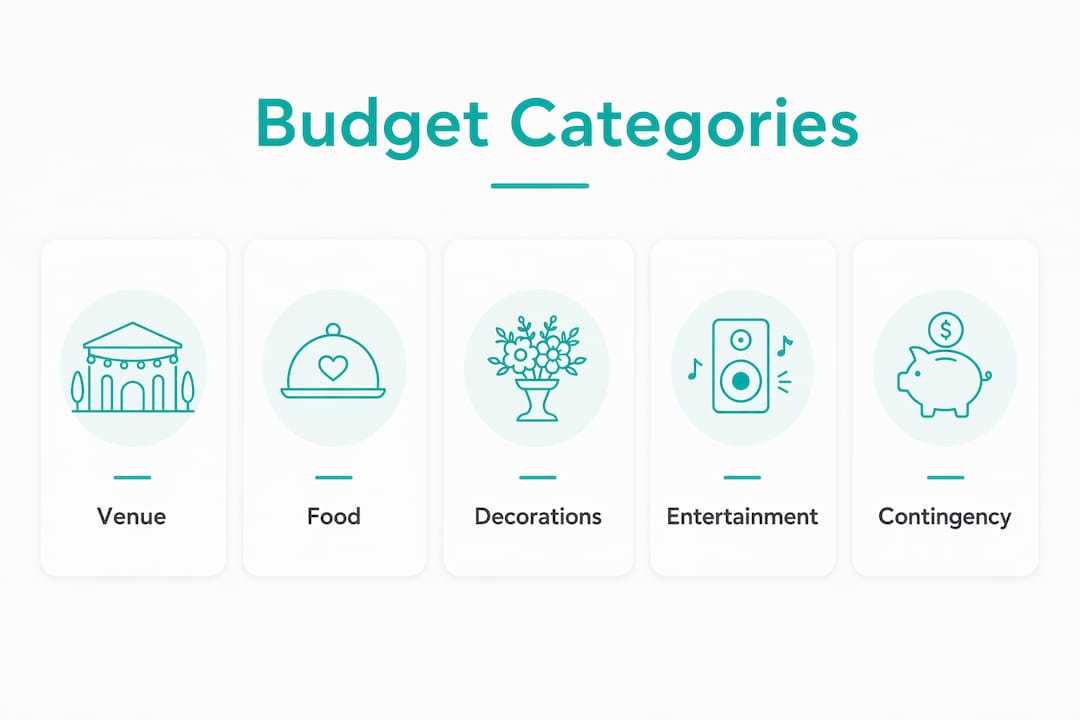
Typical budget allocations show venue and food together consuming more than half of most event budgets. That concentration means a small price increase from your caterer or a venue upgrade request can throw your entire plan off balance.
The contingency line deserves special attention. A 10% buffer is common, but a 15–20% buffer is safer for complex, multi-vendor events. Extended hours, last-minute supply runs, and vendor no-shows all cost money you didn't plan for. Treating the contingency as a fixed line item rather than a vague safety net is what separates experienced planners from first-timers.
Allocation percentages shift based on event type. A corporate team lunch skews heavily toward food and barely touches entertainment. A wedding skews toward venue and entertainment. A children's birthday party may spend 30% on entertainment and almost nothing on venue if it's held at home. Always recalibrate your percentages to match the specific event before you finalize any numbers.
Pro Tip: Set your decoration budget before you visit any party supply store or browse online. Decoration costs are the most common impulse-spending category in celebration budgeting, and a hard cap set in advance is your best defense.
How to create a celebration budget step by step
Building a celebration budget from scratch takes less time than most people expect. The process below works for a birthday party, a team event, or a wedding reception.
-
List every expected expense. Start with the obvious categories: venue, food, entertainment, decorations. Then go deeper. Add invitations, transportation, photography, party favors, gratuities, and any permits or insurance your venue requires. The goal is zero surprises.
-
Research realistic costs. Pull quotes from at least two vendors per category. Check local pricing for venues and catering. Use past event receipts if you have them. Guessing costs is the single biggest reason celebration budgets fail.
-
Set your total spending limit first. Before you assign dollars to categories, decide the maximum you will spend. Work backward from that number. If your total budget is $2,000, your venue cannot be $1,500 unless you're willing to cut everything else to almost nothing.
-
Prioritize by event purpose. A retirement party where the guest of honor loves live music should allocate more to entertainment and less to decorations. A corporate product launch prioritizes catering and AV. Prioritizing event goals transforms budgeting from a task into an outcome-driven decision process.
-
Track spending in real time. Use a spreadsheet, a budgeting app, or a platform like Hophey to log every expense as it occurs. Reviewing your budget only at the end is how overruns happen.
-
Start planning 3 to 6 months in advance. 89% of professional event planners recommend beginning at least six months early to secure better vendor pricing and avoid expensive last-minute bookings. Even for smaller events, a 3-month runway gives you time to compare options and negotiate.
-
Apply the 24-hour rule to non-essential purchases. Implementing a '24-hour rule' before any non-essential purchase over $20 reduces impulse spending and prevents budget blowouts. That extra balloon arch or upgraded centerpiece looks less urgent after a night's sleep.
Pro Tip: Create a sinking fund for recurring celebrations. If you know you spend roughly $1,200 per year on birthdays, holidays, and team events, set aside $100 per month in a dedicated account. When the event arrives, the money is already there.
How to budget for celebrations you attend as a guest
Being a guest has a price tag that most people dramatically underestimate. Attending a wedding as a guest costs approximately $580 on average, with bridesmaids incurring around $1,900 on average. That figure includes travel, accommodations, attire, and gifts. Across a social calendar with multiple events per year, these costs add up to thousands of dollars that most people never planned for.
The solution is treating guest attendance as a line item in your annual budget, not a surprise expense. Decide at the start of each year how much you will spend on celebrations you attend. Then allocate that total across the events you expect to be invited to, leaving room for unexpected invitations.
Here are practical strategies for managing your guest attendance costs:
- Set a gift budget per relationship tier. Close family gets more than a work colleague. Decide the ranges in advance so you're not making emotional decisions at the checkout.
- Book travel early. Flights and hotels booked 6 to 8 weeks in advance cost significantly less than last-minute bookings for destination events.
- Discuss financial limits openly. Open conversations about financial boundaries with friends and event hosts maintain relationships and reduce shame. Most hosts would rather know your budget than have you skip the event entirely.
- Propose cost-sharing for group gifts. Coordinating a group contribution for one meaningful gift is almost always better value than five separate small gifts.
- Account for hidden costs. Hidden costs like VAT, service charges, and travel expenses catch most guests off guard. Research and include these in your budget before you RSVP.
- Prioritize strategically. You don't have to attend every event you're invited to. Decide which celebrations matter most to you and your relationships, then commit fully to those.
For teams using group event organization tips, transparent contribution tracking removes the awkwardness of who paid what and prevents the quiet resentment that derails team culture.
How celebration budgeting reduces stress and strengthens relationships
The most underrated benefit of budgeting for special occasions is what it does to your mental state before, during, and after the event. When you know exactly what you've committed to spend, you stop second-guessing every purchase. That clarity is what makes celebrations feel joyful rather than anxious.
"Budgeting for celebrations is not about restriction. It's about empowerment and gaining visibility over your finances to reduce emotional spending." — Sense Central
That mindset shift is real and measurable. People who plan celebrations with a defined budget report less post-event financial regret and more satisfaction with the event itself. The reason is simple: intentional spending aligns your money with your actual priorities rather than with in-the-moment impulses.
For teams and companies, celebration budgeting does something additional. It creates equity. When every employee birthday or team milestone gets the same thoughtful, budgeted treatment, it signals that recognition is a policy, not a favor. That consistency builds trust and engagement in ways that ad-hoc celebrations simply cannot. Hophey's platform is built around exactly this principle, giving HR teams and group organizers a structured way to collect contributions, track spending, and coordinate events without chaos.

Including a flexibility buffer in your plan also accounts for human factors. Someone gets sick. A vendor cancels. The weather changes your outdoor plan. A budget with room to adapt is a budget that survives contact with reality.
Key takeaways
Celebration budgeting works because it replaces emotional, reactive spending with a deliberate plan that aligns your money with what the event actually needs to achieve.
| Point | Details |
|---|---|
| Define your total limit first | Set the maximum spend before assigning dollars to any category. |
| Use the five core categories | Venue, food, entertainment, decorations, and contingency cover nearly every celebration cost. |
| Build in a 15–20% buffer | Complex events need more than a 10% contingency to absorb unexpected costs safely. |
| Start planning 3 to 6 months early | Early planning secures better vendor pricing and eliminates last-minute premiums. |
| Budget for events you attend | Guest costs average $580 per wedding; treat attendance as a planned annual expense. |
Why I think most people budget celebrations backwards
Most people I've seen plan celebrations start with the vision and then try to fit a budget around it. They fall in love with a venue, book it, and then scramble to cut costs everywhere else. That sequence almost always produces a mediocre event and financial stress.
The planners who consistently pull off great celebrations do the opposite. They decide what the event needs to accomplish, set the total budget, and then find the best possible execution within that number. A $500 team lunch that everyone actually enjoys beats a $2,000 catered event that felt obligatory.
The other mistake I see constantly is treating the contingency buffer as optional. People view it as money they're "wasting" if they don't spend it. That thinking is backwards. The contingency is the line item that keeps everything else intact when reality doesn't cooperate with your plan. And it almost never does, completely.
The most effective celebration budgets I've encountered share one trait: they were written down, shared with everyone involved, and reviewed at least twice before the event. Accountability is the mechanism that makes budgets work. Without it, a budget is just a wish list.
— Konstantin
Plan your next celebration with Hophey
Hophey is built for exactly the kind of structured, stress-free celebration planning this guide describes. The platform lets teams, companies, and friend groups create private celebration pages, track contributions transparently, coordinate gift wishlists, and communicate in a dedicated chat without spoiling the surprise. Whether you're an HR manager running a monthly birthday program or a friend group organizing a destination bachelorette, Hophey removes the financial chaos from the process. Visit hophey.gifts to set up your first celebration page and see how organized event budgeting feels when the right tools are doing the heavy lifting.
FAQ
What is celebration budgeting in simple terms?
Celebration budgeting is the process of planning and allocating money for events and special occasions before spending begins. It covers all costs from venue and food to gifts and contingency funds.
How much should I set aside for a contingency buffer?
A 10% contingency is the minimum, but a 15–20% buffer is safer for complex or multi-vendor events. This covers unexpected costs like extended vendor hours or last-minute supply needs.
When should I start planning a celebration budget?
89% of professional event planners recommend starting at least six months in advance for larger events. For smaller gatherings, a 4 to 6 week runway is usually sufficient.
How do I budget for celebrations I'm invited to as a guest?
Set an annual guest attendance budget at the start of each year and allocate it across expected events. Include travel, attire, gifts, and hidden costs like service charges to avoid surprises.
Can teams use celebration budgeting for corporate events?
Yes. Teams benefit from defined per-event budgets that create consistent, equitable recognition. Platforms like Hophey support party planning for teams with transparent contribution tracking and shared event coordination tools.