
TL;DR:
- Online tools enable quick, fair, and transparent name draws suitable for various group sizes and events. They offer customization, audit trails, and instant results, reducing disputes and increasing trust among participants. Using these platforms ensures accurate, verifiable, and efficient virtual drawings for anyone from casual office raffles to official sweepstakes.
Whether you're organizing a Secret Santa, a classroom raffle, or a team activity, the old-school method of folding paper slips into a bowl creates more problems than it solves. Names get lost. Someone always suspects the draw wasn't fair. And coordinating a physical drawing across a remote group? Nearly impossible. When you need to draw names from a hat online, modern tools handle all of it in seconds, with full transparency and zero paper cuts.
Table of Contents
- Key takeaways
- How to draw names from a hat online: tools and setup
- Step-by-step: running an online name draw for any group
- Common mistakes to avoid when drawing names online
- What to expect after the draw is done
- My honest take on online name pickers
- Simplify your next event with Hophey
- FAQ
Key takeaways
| Point | Details |
|---|---|
| Speed over manual draws | Online tools can process multiple winners from large lists in about 30 seconds. |
| True randomness matters | Quality pickers use cryptographic algorithms, not basic random functions, for genuinely fair results. |
| Customization boosts engagement | You can add images, set weighted entries, and configure multiple winners to fit any event type. |
| Transparency builds trust | Spinning wheels and exportable results eliminate disputes about whether a draw was honest. |
| Audit trails for official draws | Events like charity raffles need timestamped public records, a feature only some platforms provide. |
How to draw names from a hat online: tools and setup
Before you run your first virtual drawing, a little preparation goes a long way. The good news is that you don't need to install anything or create an account on most platforms. A modern browser on any device, phone, tablet, or computer, gets you there immediately.
Here's what to have ready before you start:
- Your participant list. Compile all names in a simple text format. Most online name generators accept one name per line or comma-separated entries. Double-check for typos and duplicates before pasting.
- Group size awareness. Some platforms cap free entries at 100 or 200 names. If your group is larger, confirm the tool you choose handles your count.
- Browser compatibility. Chrome, Firefox, Safari, and Edge all support the major name selection tools without issues. Avoid older browsers that may not render the wheel animations correctly.
- Optional images. Some platforms let you upload images up to 2MB per wheel slice, which is great for live events where you want faces next to names.
- Weighted entries. If certain participants should have a higher chance of winning, look for tools that let you assign entry counts per name.
Here's a quick reference table for what different use cases need:
| Event type | Names needed | Customization priority | Audit trail needed? |
|---|---|---|---|
| Holiday gift exchange | 6–30 | Low | No |
| Office raffle | 20–200 | Medium | Recommended |
| Classroom activity | 10–40 | Low | No |
| Charity sweepstakes | Any | High | Yes |
| Live stream giveaway | 50–500+ | High | Recommended |
Pro Tip: Before the actual draw, run a test spin with dummy names to confirm your settings look right. It takes 30 seconds and prevents embarrassing mistakes during live events.
Step-by-step: running an online name draw for any group
Choosing the right random name picker online comes down to one question: what does this draw need to accomplish? A Secret Santa exchange among eight coworkers needs something simple and fun. A legally binding sweepstakes needs verifiable documentation. Match the tool to the stakes.
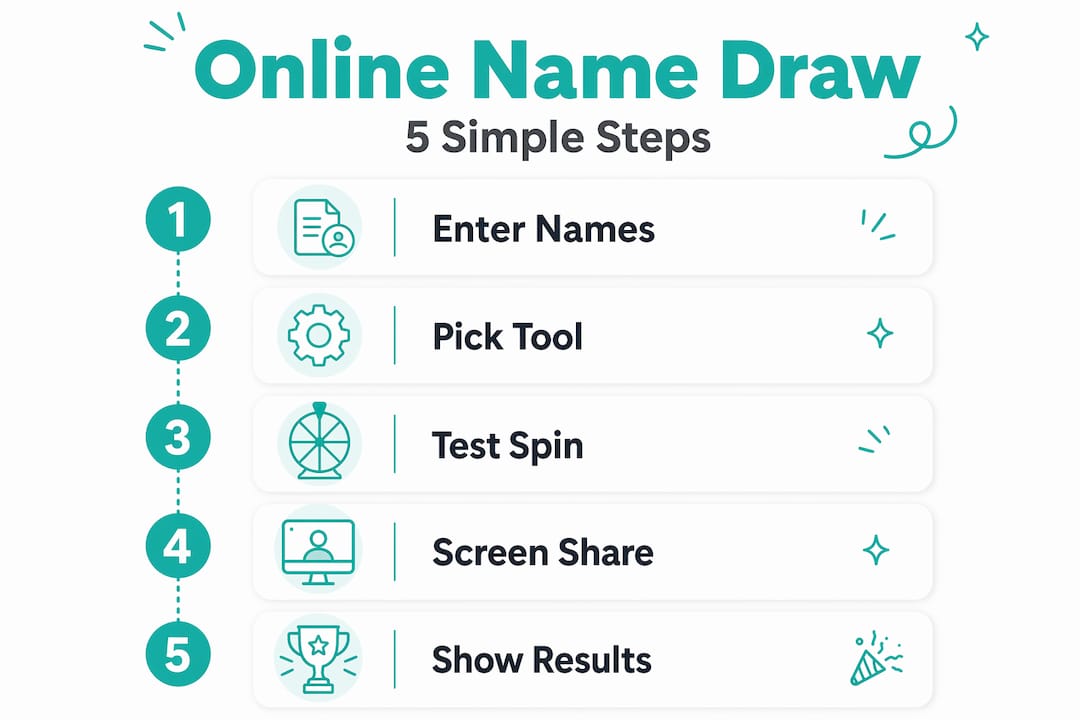
Here's how to run a clean, confident draw from start to finish:
- Open your chosen name selection tool in a browser. No downloads required on reputable platforms.
- Enter your participant names one by one, or paste your full list. Remove any blank entries that might skew the draw.
- Configure your settings. Choose the number of winners, decide whether to remove each name after it's drawn, and apply any weights if certain entries should appear more often.
- Customize the display if you're sharing the draw live. Adding colors, images, or custom labels makes the experience more memorable for participants watching in real time.
- Run the draw. Click spin or "pick a name." The actual winner is determined instantly by algorithm the moment you click. The spinning animation that follows is purely for suspense and participant engagement.
- Record the result. Screenshot the outcome, export a PDF, or copy the shareable link generated by the tool. This creates your record.
- Repeat for additional winners as needed, with removed names excluded from subsequent rounds.
The difference between a good and great draw often comes down to step four. When participants can see a spinning wheel projected on screen, doubts about fairness disappear. This is especially true for team events where someone might otherwise suspect favoritism.
Here's how common features compare across typical name drawing apps:
| Feature | Basic tools | Mid-tier tools | Professional tools |
|---|---|---|---|
| Multiple winners | Sometimes | Yes | Yes |
| Weighted entries | No | Yes | Yes |
| Image uploads | No | Yes | Yes |
| Shareable result link | Sometimes | Yes | Yes |
| Audit trail / public record | No | No | Yes |
| Anti-fraud measures | No | No | Yes |
For official sweepstakes and raffles, always choose a professional-grade platform. The difference in accountability is significant.
Pro Tip: If you're running a draw over video call, share your screen before clicking spin so everyone watches simultaneously. This one step eliminates virtually all fairness disputes before they start.

Common mistakes to avoid when drawing names online
Even with a solid tool, draws go sideways for predictable reasons. Here are the most common pitfalls and exactly how to fix them:
- Duplicate names. Two entries for "Sarah" means Sarah gets double the odds. Always review your list before drawing. Most platforms don't flag duplicates automatically.
- Missing participants. Copy your list from a spreadsheet rather than typing names manually. A missed name causes real friction, especially in gift exchanges where someone ends up without a recipient.
- Browser crashes mid-draw. Open the tool on a stable connection and avoid running heavy background applications. If a crash happens, the platform's saved settings often let you restart without re-entering all names.
- Using basic tools for official draws. Casual randomizers are fine for picking who brings dessert. But documented drawing processes with anti-fraud measures are necessary when prizes, money, or legal compliance are involved.
- Not removing drawn names. If you need multiple unique winners and forget to toggle the "remove after draw" option, the same person can win twice. Check this setting before every multi-winner draw.
- Losing the results. Plenty of people run a draw, close the tab, and realize they have no record. Always export or screenshot results immediately. Some tools let you export winner history as a PDF with timestamps built in.
Pro Tip: For high-stakes draws, run a private test round first with the same list, confirm the settings are right, then reset and run the official draw. Treat the test like a rehearsal.
One underrated issue: group size. When you're drawing from a list of 200 names, scrolling through to verify accuracy becomes painful. Break the list into batches, confirm each batch is correct, then combine in the tool. This small habit catches errors that a quick glance misses.
What to expect after the draw is done
Running the draw is only half the job. What happens next determines whether participants actually trust the result.
Here's what a good post-draw process looks like:
- Share the result immediately. Whether through a group chat, email, or a shareable link from the tool, get the outcome out fast. Delays create speculation.
- Keep a record. Timestamped public records matter for charity events or workplace prizes. Even for casual draws, a screenshot shared in the group chat creates a paper trail that prevents later disputes.
- Acknowledge every participant. In Secret Santa setups, confirm that every person has received their assignment. A missed notification means someone has no gift buyer.
- Follow up with next steps. Tell participants what happens now. A name draw for a raffle should be followed immediately by prize information. A Secret Santa draw should include wish list guidelines and budget reminders. Hophey makes this part easy with coordinated group gift planning built right into the platform.
- Archive the event. If your group runs recurring draws, keep a history. Knowing who won last year's raffle or who had which Secret Santa assignment prevents repeat pairings.
The transparency advantage of online tools over physical draws is substantial. A visible spin shared on screen removes ambiguity entirely. Nobody questions whether names were folded the same way or whether the person running the draw peeked. The result is a group that moves forward with confidence rather than lingering doubt.
My honest take on online name pickers
I've watched groups spend more time arguing about a name draw than actually planning the event it was supposed to support. Paper slips in a bowl feel folksy and fun until someone questions why the same two people always seem to "randomly" get paired together.
What I've found is that the real value of a virtual drawing isn't just speed. It's the social neutrality it creates. When a spinning wheel visible to everyone determines the outcome, the tool becomes the neutral party. Nobody feels singled out or suspicious. Online spins remove social friction from group decisions in a way that no human-run process can match.
That said, I'd push back on one thing people overlook. The quality of randomness actually varies between tools. The best ones use cryptographic hardware entropy to generate outcomes, not simple pseudo-random functions. For casual gift exchanges, the difference is academic. For draws with real prizes or legal implications, it matters. Check what randomization method your chosen tool uses before running anything official.
My advice: for workplace events especially, combine a great drawing tool with a solid team celebration coordination process. The draw is one moment. The event around it is what people remember.
— Konstantin
Simplify your next event with Hophey
You've run the draw and everyone knows their assignment. Now comes the part that actually takes effort: coordinating who buys what, collecting contributions, and keeping the celebration a surprise. That's where Hophey comes in.
Hophey is built for exactly this moment. Whether you're managing a workplace Secret Santa, a group birthday gift, or a team celebration, Hophey.gifts brings the whole coordination process into one place. Participants can share wish lists, contribute to group gifts transparently, and communicate in a private chat without tipping off the person being celebrated. Automated reminders mean nothing falls through the cracks, and multi-currency support handles groups spread across different countries. After your name draw is done, let Hophey handle everything that comes next.
FAQ
How long does it take to draw names online for a large group?
Online random name pickers can process multiple winners from 50 names in approximately 30 seconds, far faster than any manual method.
Are online name drawing tools truly random?
Quality tools use cryptographically secure algorithms that pull from hardware entropy sources, making results genuinely unpredictable and fair.
Do I need an account to use an online name generator?
Most basic random name picker online tools work directly in your browser without registration, though some advanced features like saved history may require an account.
Can I use a name drawing app for an official raffle or sweepstakes?
Yes, but only if the platform provides documented processes, timestamped results, and anti-fraud measures. Casual tools are not suitable for legally binding draws.
How do I share the results after drawing names from a hat online?
Most platforms offer shareable links or PDF exports of winner history, which you can send directly to your group for full transparency.