
TL;DR:
- Creating a well-organized family gift registry minimizes duplicate and unwanted gifts at major events.
- Using a universal registry allows adding items from multiple stores and including cash funds for greater flexibility.
Getting gifts wrong at major life events is more common than anyone admits. Duplicate toasters at weddings, three copies of the same baby book, birthday presents that go straight to the donation pile. A well-built family gift registry solves this problem at the root by giving your guests a clear, curated list of what you actually want. Whether you're planning a wedding, a baby shower, a birthday party, or a holiday celebration, this guide walks you through everything you need to know to create a registry that works for your whole family.
Table of Contents
- Key takeaways
- What is a family gift registry and how does it work
- Universal gift registries: advantages and how to set them up
- Creating your family gift registry for different occasions
- Etiquette and best practices for sharing a family gift registry
- Tech tips to maximize your registry experience
- My honest take on family gift registries after years of watching them work and fail
- Start your registry today with Hophey
- FAQ
Key takeaways
| Point | Details |
|---|---|
| Centralize your wish list | One registry page reduces duplicate gifts and removes the guesswork for every guest. |
| Use a universal registry | Adding items from multiple stores into one link gives you and your guests far more flexibility. |
| Balance your price points | Include affordable, mid-range, and premium gifts so guests with any budget feel comfortable. |
| Share registry links selectively | Share only through invitation inserts or when directly asked to avoid putting guests in an awkward spot. |
| Update your registry regularly | Refreshing your list prevents depleted options and keeps the guest experience smooth throughout the event season. |
What is a family gift registry and how does it work
A family gift registry is a centralized wish list shared with family members and guests ahead of a celebration. Instead of guests guessing what you need, they browse a pre-selected collection of items and pick something they know you want. It removes the awkwardness on both sides of the gift exchange.
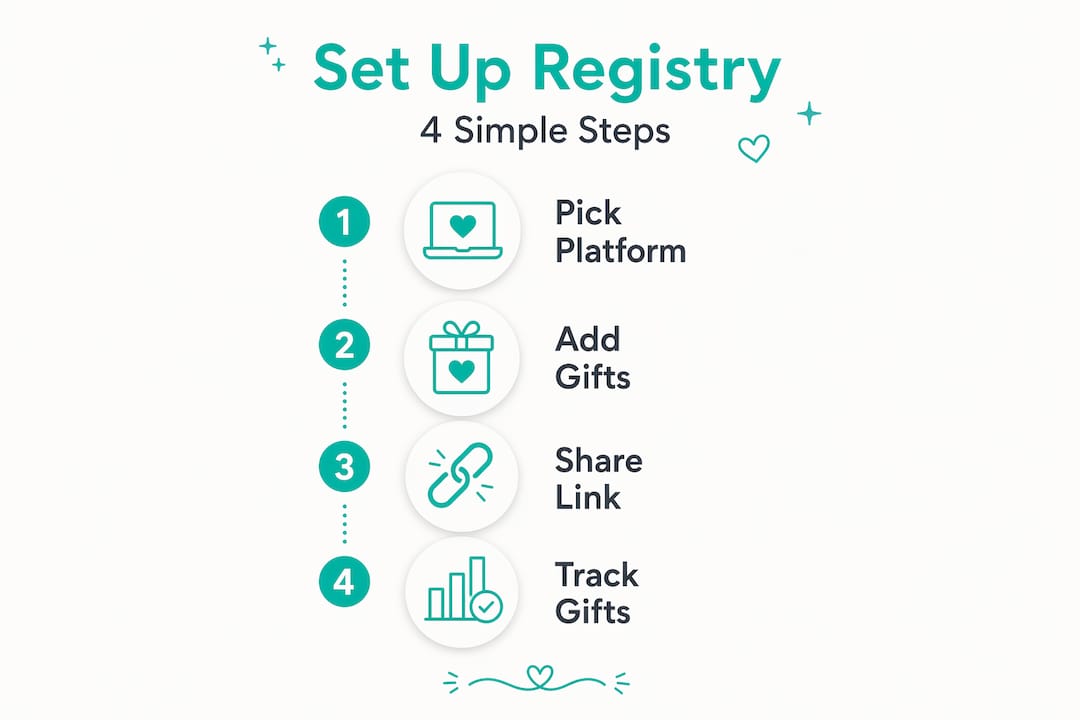
The core mechanics are simple. You create a registry on a platform, add the items or experiences you want, and share the link. Guests visit the list, choose a gift, and mark it as purchased so no one else buys the same thing. The result is fewer surprises of the wrong kind and more of the right ones.
A family gift registry works for a wide range of occasions:
- Weddings and engagement parties
- Baby showers and newborn celebrations
- Birthday parties for children and adults
- Holiday gift exchanges like Christmas or Hanukkah gatherings
- Housewarming events and milestone anniversaries
There are two main types of registries. Traditional registries are tied to a single retailer. A universal registry lets you pull items from any store into one place. Most families today are moving toward the universal model because it gives everyone more control and the ability to add experiences or cash funds alongside physical products.
Universal gift registries: advantages and how to set them up
The biggest limitation of a store-specific registry is the name itself. You're locked into one retailer's inventory, one price structure, and one checkout experience. A universal gift registry removes that ceiling entirely by letting you combine products, experiences, and cash funds from any store into a single shareable link.
Here is what makes a universal registry worth setting up:
- Add from anywhere. Found a lamp you love on a boutique website? A piece of gear on a specialty outdoor retailer? Add it all to one list.
- Include cash funds. Many families use cash fund options to cover honeymoon costs, home down payments, or baby expenses that don't fit neatly into a physical gift.
- One link for everything. You share a single URL across all your invitations regardless of the occasion, and guests don't need accounts on five different websites.
- Group gifting built in. Multiple contributors can pool money toward one higher-priced item, with contributions tracked automatically and the item marked as purchased when it's fully funded.
- Better guest experience. Guests aren't bouncing between tabs trying to figure out where to buy your registry items.
Setting one up is straightforward. You pick a platform that supports multi-store functionality, install their browser extension if available, and start adding items as you shop online. Most platforms let you organize items by category and occasion, so a single registry can serve both your birthday list and your christmas gift registry without confusion.
Pro Tip: When evaluating platforms, check whether they charge fees on cash fund contributions. Some platforms take a percentage of every fund deposit, which means guests' money doesn't fully reach you. Fee-free platforms protect the full value of every gift.
Creating your family gift registry for different occasions
Building a registry that actually gets used comes down to how thoughtfully you set it up. Here's a practical process that works whether you're building a wedding gift registry list, a birthday registry, or a holiday list.
-
Name and frame the occasion. Start by clearly labeling what the registry is for. A registry titled "Sarah and James's Wedding" reads differently than a generic wish list. Context helps guests understand what's appropriate to buy and at what price point.
-
Choose items that match your real life. The biggest mistake people make is adding aspirational items they'd never actually use. Think about your daily routines, your living space, and what genuinely makes your life better. A wedding registry list cluttered with decorative items you'll store in a closet helps no one.
-
Balance the price range deliberately. Mixing price points is one of the most considerate things you can do for your guests. A good rule of thumb: roughly 30% of items under $30, 40% between $30 and $100, and 30% above $100. That way a college student attending your shower and your aunt with a generous budget both find something comfortable to buy.
-
Add a variety of gift types. Physical items are the backbone, but don't stop there. For baby showers, cash funds work especially well because parents inevitably face unexpected expenses in the first few months. For weddings, experience funds like travel or cooking classes often feel more meaningful than another kitchen gadget.
-
Build in group gifting options. If you want a high-ticket item like a stand mixer or a crib, add it as a group gift option. Group gifting platforms automate the contribution tracking so no one has to text around collecting Venmo payments.
-
Maintain and refresh the list. This step is where most families drop the ball. Registries need active updates throughout the event period. For weddings, that means refreshing items after the engagement party, again before the bridal shower, and once more before the wedding day. A depleted registry with nothing left to buy frustrates guests and results in off-list purchases you didn't want.
Pro Tip: For weddings specifically, start building your registry 10 to 12 months before the date. This gives you time to add items thoughtfully and ensures your list is ready for engagement party guests who want to shop early.
Etiquette and best practices for sharing a family gift registry
Having a great registry means nothing if you share it in a way that puts people off. Registry etiquette is one area where good intentions go sideways fast. Here are the rules that actually matter.
The safest and most respectful approach is to share your registry selectively. Include the link inside a formal invitation insert, mention it in the event details page, or let the host share it with guests directly. These channels feel natural and keep the announcement tied to an actual invitation.
What you want to avoid:
- Posting unsolicited registry links on social media. Even well-meaning posts can feel like a public gift demand to people who weren't invited or who have limited budgets.
- Sending the link directly without being asked. Unless someone says, "Do you have a registry?" sending an unsolicited link puts the recipient in a socially awkward position.
- Sharing only one price range. If your list skews heavily toward expensive items, guests with smaller budgets feel excluded. This goes back to the price balance discussed earlier.
- Forgetting the thank-you notes. Responding graciously with a personal thank-you note within two weeks of receiving a gift is standard practice and shows genuine appreciation regardless of what was given.
One thing families often overlook: the host of your event plays a key role in distributing registry information. At a baby shower, the host typically shares the registry with guests. At a birthday party, a family member can mention it in the group chat. Letting a third party share the link often feels less presumptuous than doing it yourself.
Tech tips to maximize your registry experience
Modern registry platforms have gotten significantly more capable, and using the right features makes the whole experience smoother for both you and your guests. The top gift apps in 2026 support real-time purchase tracking, browser extensions, and cross-platform syncing that manual wish lists simply can't match.
The most useful features to look for and use actively:
- Browser extension for adding gifts. Most universal registry platforms offer a browser button you can click on any product page to add that item directly to your list. This is far faster than copying and pasting URLs manually.
- Purchase tracking. When a guest buys an item, good platforms mark it automatically so no one else purchases the same thing. This is the single most important duplicate-prevention feature.
- Syncing multiple registries. Registry syncing tools let you consolidate lists from different stores into one universal link, so guests always have one place to shop.
- Group gift tracking dashboards. If you have group gifts or cash funds, look for a platform that shows contributors how much has been raised in real time. Transparency here encourages more people to contribute.
- Personalized guest views. Some platforms let you customize what guests see. You can filter by occasion, price range, or category so the birthday registry view looks different from the holiday gift list.
For families coordinating gifts across multiple people, tools that handle seamless group gifting are worth prioritizing. The coordination overhead of splitting a gift manually adds up fast, especially for larger extended families.
My honest take on family gift registries after years of watching them work and fail

I've watched a lot of registries fail. Not because the families behind them had bad taste or made obvious mistakes. They failed because the registry was treated as a one-time task instead of a living document. People build the list, share it once, and forget about it until two weeks before the event when half the items are gone and guests are scrambling.
The families I've seen do this well treat the registry like a conversation with their guests. They add items at different price points because they genuinely care about making it easy for everyone. They update the list after each wave of the event season because they understand that a depleted registry is just as unhelpful as no registry at all. And they share it through the right channels, not because of some arbitrary rule, but because respecting your guests' time and comfort actually matters.
The universal registry model has been the biggest shift I've noticed. When families stop being tied to a single store, the whole experience changes. Guests find something they're excited to give instead of something they settled on. The person receiving gifts gets things they actually use. The pressure that used to surround gift giving at major events drops considerably.
One more thing I'd push back on: the idea that cash funds feel impersonal. I've seen baby shower funds for home modifications go toward things that genuinely changed how a family operated in their first year. I've seen wedding travel funds pay for honeymoons that couples never would have taken otherwise. Cash funds, done right, are one of the most genuinely useful gifts you can receive.
— Konstantin
Start your registry today with Hophey
If you're ready to put what you've learned into practice, Hophey makes it straightforward to build a registry that covers every occasion your family celebrates.
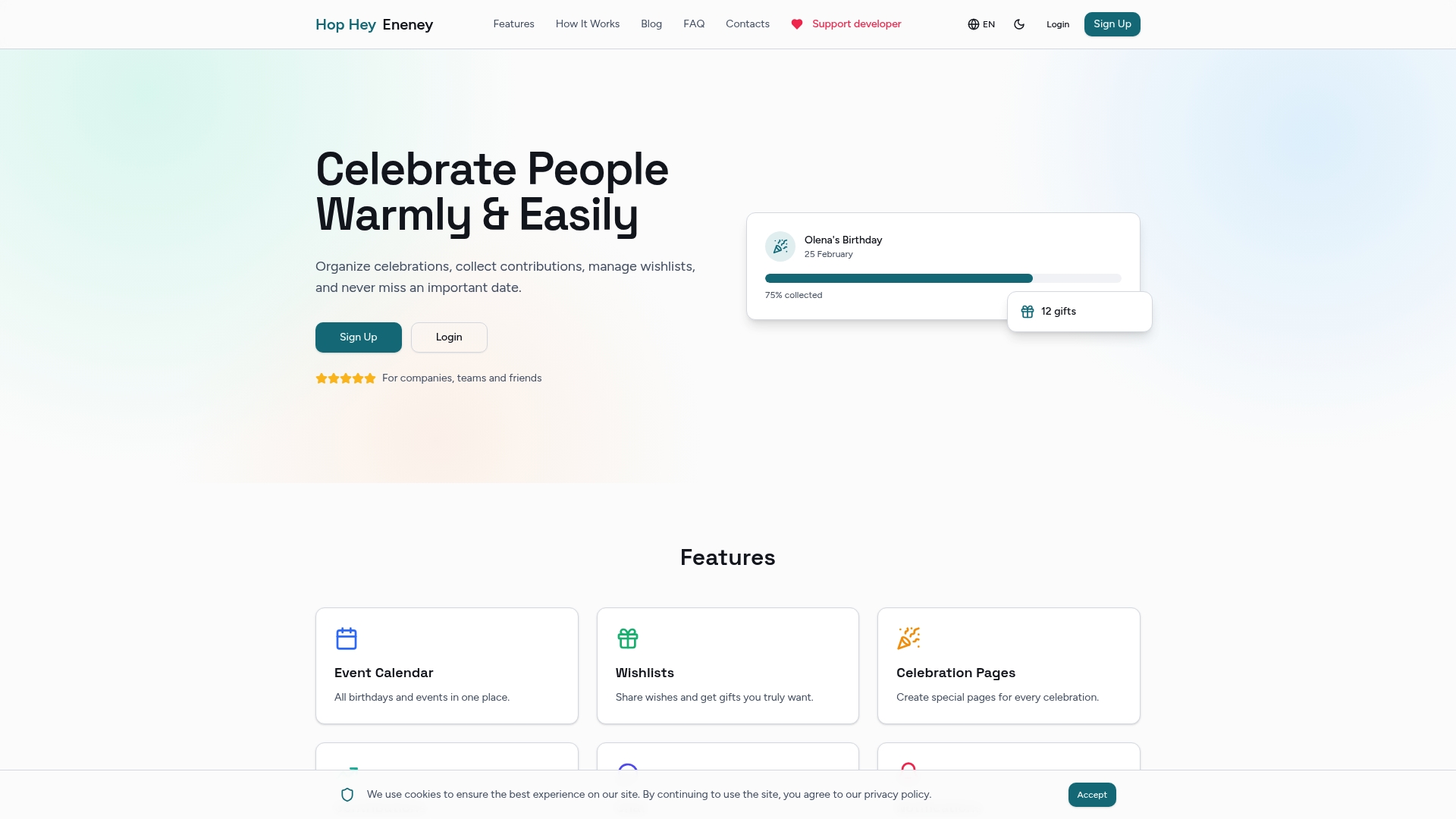
With Hophey, you can create your gift registry by adding items from any store, setting up cash funds, and letting multiple guests contribute to a single group gift. The platform handles contribution tracking in real time so there are no duplicates and no coordination headaches. Whether you're organizing a wedding, a baby shower, a birthday, or a holiday gift exchange, everything lives in one place with a single shareable link. Your guests get a clear, organized list. You get the gifts you actually want.
FAQ
What is a family gift registry?
A family gift registry is a centralized wish list shared with guests before a celebration. It reduces duplicate gifts and helps guests choose items the recipient genuinely wants.
Can one registry work for multiple occasions?
Yes. A universal gift registry lets you organize items by occasion within a single link, so your birthday registry and your christmas gift registry can coexist without confusion.
When should I start building a wedding gift registry?
Wedding registries work best when started 10 to 12 months before the event, giving you time to build and refresh the list through engagement parties, bridal showers, and the wedding itself.
Is it appropriate to include cash funds in a family gift registry?
Absolutely. Cash funds are widely accepted across baby registries, wedding registries, and birthday registries, and they give recipients flexibility to cover needs that don't fit into physical gifts.
How do I share my registry without making guests feel pressured?
Share your registry link through formal invitation inserts, through the event host, or when guests ask directly. Avoid posting unsolicited links on social media or sending them without being prompted.